

How to Grow Oranges in Pots: A Complete Guide for Container Citrus Success
Intro for growing oranges in pots
Growing oranges in pots brings the Mediterranean sunshine to your doorstep, no matter where you live. These vibrant citrus trees not only produce sweet, juicy fruit but also offer glossy evergreen foliage, fragrant blossoms, and ornamental appeal year-round. Container-grown orange trees are perfect for patios, balconies, and small gardens, allowing gardeners in cooler climates to move plants indoors during winter. With proper care, potted orange trees can thrive for years, providing homegrown fruit that surpasses store-bought varieties in flavor and freshness. Even in regions where oranges wouldn’t normally survive outdoors, container cultivation makes growing these tropical treasures possible.
When to plant oranges in pots
Oranges in pots should ideally be planted during spring after all danger of frost has passed. In temperate regions, aim for soil temperatures consistently above 15°C (60°F). For Mediterranean or subtropical climates (US Zones 9-11), planting can occur almost year-round, though spring remains optimal. In cooler regions (UK or US Zones 7-8), it’s crucial to wait until nighttime temperatures remain reliably above 10°C (50°F). Young orange trees are particularly sensitive to cold, so never plant when there’s any frost risk. Most gardeners purchase young trees rather than starting from seed, as seed-grown trees can take 7-15 years to fruit and often don’t produce true to the parent plant.
Best time to plant oranges in pots
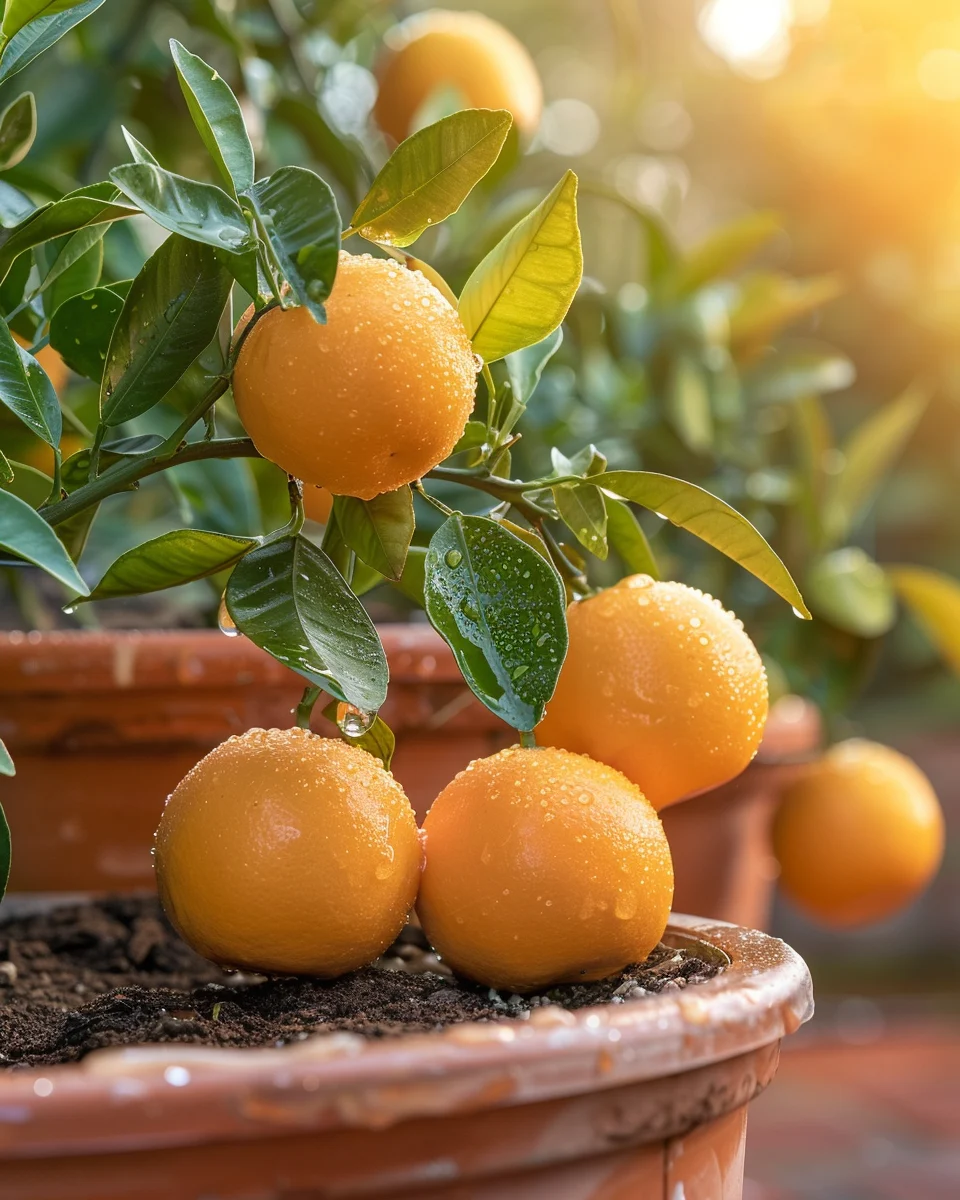
For warm climate regions (US Zones 9-11), the ideal planting window is March through May, when temperatures are mild but not scorching. In cooler temperate areas (UK or US Zones 7-8), wait until May or early June when soil has thoroughly warmed. If purchasing dormant bare-root trees, plant in early spring. For container-grown nursery trees, you have more flexibility—mid-spring to early summer works well in most regions. Avoid planting during midsummer heat waves or in autumn/fall when decreasing temperatures might stress newly planted trees. In frost-prone areas, give trees at least 3-4 months of establishment before the first expected frost date.
Best orange varieties to grow in pots
- Calamondin – Extremely container-friendly with small fruits, perfect for beginners and cool-climate gardeners as it’s more cold-tolerant than most oranges.
- Washington Navel – Seedless, sweet fruits with easy-to-peel skin, naturally compact growth habit ideal for containers.
- Valencia – Late-season producer of sweet, juicy oranges perfect for juicing, with a more compact size than field-grown trees.
- Blood Orange – Distinctive red-fleshed fruits with complex flavor, adapts well to container culture with proper pruning.
- Trovita – Heat-tolerant variety that produces sweet fruit even in less-than-ideal conditions, naturally smaller size suitable for pots.
- Moro – Another blood orange variety with dramatic coloration, compact growth habit, and good container performance.
- Dwarf Satsuma – Naturally small tree with nearly seedless, easy-to-peel fruits that ripen early and tolerate cooler temperatures.
How to plant oranges in pots
Materials needed:
- Young orange tree (1-2 years old)
- Large container (minimum 50cm/20in diameter) with drainage holes
- High-quality citrus potting mix
- Perlite or pumice for drainage
- Slow-release citrus fertilizer
- Watering can or hose with gentle spray
- Trowel and gardening gloves
- Plant saucer (optional)
Step-by-step planting instructions:
- Select a container at least 50cm (20in) in diameter with multiple drainage holes; larger is better for long-term growth.
- Create a drainage layer at the bottom of the pot using 5cm (2in) of perlite, pumice, or broken pottery pieces.
- Fill the container about one-third full with citrus potting mix, which should be slightly acidic (pH 6.0-6.5).
- Carefully remove the orange tree from its nursery container, gently teasing out any circling roots.
- Position the tree in the center of the pot so the top of the root ball sits about 2.5cm (1in) below the container rim.
- Fill around the root ball with potting mix, firming gently but not compacting too much.
- Mix in slow-release citrus fertilizer according to package directions.
- Water thoroughly until water flows from the drainage holes, then allow to drain completely.
- Apply a thin layer of mulch (2.5cm/1in) keeping it away from the trunk to prevent rot.
- Place the container in a sheltered, sunny position protected from strong winds.
How to grow oranges in pots
Potted orange trees need at least 6-8 hours of direct sunlight daily—south or west-facing positions are ideal. In hot summer regions, provide afternoon shade to prevent leaf scorch. Water thoroughly when the top 5cm (2in) of soil feels dry, typically every 3-7 days depending on climate and pot size. During active growth (spring/summer), fertilize monthly with a specialized citrus fertilizer or use slow-release granules according to package directions. Container-grown citrus requires more frequent feeding than garden-planted trees.
Maintain humidity around the plant by misting foliage regularly or placing the pot on a tray of pebbles with water. Prune lightly to maintain shape and remove crossing branches, ideally after fruiting but before new growth begins. For container specifics, choose pots at least 50-60cm (20-24in) in diameter with excellent drainage, and repot every 2-3 years, moving up one pot size each time until reaching a manageable maximum. In winter, reduce watering frequency but never allow the soil to completely dry out.
Caring for oranges in pots
Monitor soil moisture carefully—consistent watering is crucial, but overwatering leads to root rot. During flowering and fruiting, maintain even moisture levels to prevent fruit drop. Inspect leaves regularly for pests like scale insects, aphids, and spider mites. For scale, use horticultural oil; for aphids, a strong water spray or insecticidal soap works well; for spider mites, increase humidity and apply neem oil. Citrus leaf miner tunnels through leaves but rarely threatens tree health—remove severely affected leaves.
Watch for yellowing leaves (often indicating nutrient deficiencies—especially iron, zinc, or magnesium) and apply appropriate supplements. Harvest oranges when they’ve developed full color and detach easily with a slight twist—don’t pull forcefully. Most varieties store well at room temperature for 1-2 weeks or in the refrigerator for 3-4 weeks. In frost-prone areas, move containers indoors before temperatures drop below 7°C (45°F), placing near a sunny window but away from heating vents.
Understanding bolting in oranges in pots
Unlike annual vegetables, orange trees don’t bolt in the traditional sense. However, they can experience stress responses that affect flowering and fruiting. Environmental stressors like dramatic temperature fluctuations, drought, or waterlogging can trigger excessive flowering followed by fruit drop. This is the tree’s survival mechanism—producing more potential offspring when threatened.
To prevent stress responses, maintain consistent care routines, especially regarding watering and temperature. Avoid moving the container frequently between drastically different environments. If your tree produces excessive flowers followed by mass fruit drop, evaluate recent changes in conditions. Stabilize the environment and consider removing some flowers to allow the tree to focus energy on fewer, higher-quality fruits. Remember that some natural fruit drop is normal as the tree self-regulates its crop load.
Why does orange fruit turn bitter?
- Immature harvesting – Picking fruit before it’s fully ripe often results in bitter flavor; wait until fruit has developed full color and detaches easily.
- Temperature extremes – Exposure to frost or prolonged heat waves can alter fruit chemistry and create bitter compounds; protect trees from extreme conditions.
- Drought stress – Inconsistent watering, especially during fruit development, can concentrate bitter compounds; maintain even soil moisture.
- Rootstock influence – Some bitter compounds can transfer from rootstock; ensure you’re growing sweet orange varieties grafted onto appropriate rootstock.
- Nutrient imbalances – Excessive nitrogen or deficiencies in other nutrients can affect fruit flavor; use balanced citrus fertilizers and follow recommended rates.
Companion planting for oranges in pots
When creating mixed container plantings or arranging pots near your orange tree, consider these beneficial companions:
- Marigolds – Repel nematodes and other soil pests while adding cheerful color.
- Nasturtiums – Attract aphids away from citrus and can serve as a trap crop.
- Chives or Garlic Chives – Deter aphids and other insects with their strong scent while providing culinary herbs.
- Lavender – Attracts pollinators, repels some pests, and creates a Mediterranean aesthetic alongside citrus.
- Thyme – Forms a living mulch in larger containers, conserving moisture and suppressing weeds.
Avoid placing these plants near your potted orange tree:
- Fennel – Secretes compounds that can inhibit growth of nearby plants.
- Aggressive vines – Plants like morning glory or jasmine may overwhelm and compete with your citrus.
- Water-hungry plants – Avoid companions with drastically different water needs that might compete for moisture.
Seasonal calendar
- January-February: Protect from frost; reduce watering; apply winter citrus feed if leaves show yellowing.
- March: Resume regular feeding as new growth appears; watch for pests as temperatures rise.
- April: Increase watering as growth accelerates; perfect time for repotting if needed.
- May: Flowering period begins; ensure consistent moisture; apply balanced fertilizer.
- June-August: Water frequently during hot weather; protect from intense afternoon sun; watch for pest outbreaks.
- September: Reduce nitrogen but maintain potassium and phosphorus to support developing fruit.
- October: Begin reducing watering frequency; prepare to move indoors in cold regions.
- November-December: Harvest mature fruit; protect from frost; minimal watering and no fertilizer during dormancy.
Note: In warmer regions (Zones 9-11), growth cycles may extend longer with less distinct dormancy. In cooler regions (Zones 7-8), indoor protection period will be longer.
Problems & solutions
| Problem | Quick Fix |
|---|---|
| Yellowing leaves with green veins | Apply chelated iron supplement; check soil pH and adjust to 6.0-6.5 |
| Leaf curl and sticky residue | Treat for aphids with insecticidal soap or neem oil; check underside of leaves |
| Brown patches on leaves | Move to more sheltered position away from wind; increase humidity; check for sunburn |
| Fruit dropping prematurely | Stabilize watering routine; ensure adequate pollination; some natural drop is normal |
| White cottony patches on branches | Treat mealybugs with alcohol-soaked cotton swab and follow with horticultural oil |
| Split fruit | Maintain consistent watering especially during fruit development; avoid feast-famine cycles |
| Few or no flowers | Ensure adequate sunlight; apply phosphorus-rich fertilizer; check for proper winter chill (some varieties need it) |
Common questions about growing oranges in pots
How often should I water my potted orange tree?
Water when the top 5cm (2in) of soil feels dry to the touch. This typically means every 3-4 days in summer and every 7-14 days in winter, but varies with pot size, temperature, and humidity. Always water thoroughly until it drains from the bottom.
What size container does an orange tree need?
Start with a pot at least 50cm (20in) in diameter, then increase by 10-15cm (4-6in) when repotting every 2-3 years. A mature dwarf orange tree will ultimately need a 60-75cm (24-30in) container.
Can orange trees survive winter outdoors in pots?
In regions where temperatures drop below 7°C (45°F), potted orange trees should be moved indoors or to a greenhouse. In mild climates (Zones 9-11), they can remain outdoors year-round, though protection during occasional frost is advisable.
How long until my potted orange tree produces fruit?
Most container-grown orange trees purchased from nurseries will produce fruit within 1-3 years. Trees started from seed may take 7-15 years to fruit and often don’t produce true to the parent plant.
Do I need two orange trees for pollination?
No, most orange varieties are self-fertile and will produce fruit with just one tree. However, having multiple citrus trees nearby can sometimes increase yield through cross-pollination.
How do I know when oranges are ready to harvest?
Oranges are ready when they’ve developed full color, feel slightly soft when gently squeezed, and detach easily with a slight twist. Unlike many fruits, oranges don’t continue to ripen after picking, so patience is key.
Why are my orange tree’s leaves curling?
Leaf curl can indicate pest infestation (especially aphids), water stress (either too much or too little), or cold damage. Check for pests on the underside of leaves, evaluate your watering routine, and ensure the tree isn’t exposed to cold drafts or temperatures below 7°C (45°F).