

How to Grow Morning Glory in a Pot: The Easiest Climbing Flower You’ll Ever Plant
Intro for Growing Morning Glory in a Pot
Morning glory (Ipomoea purpurea) is one of the most rewarding climbing plants for container gardening, offering spectacular trumpet-shaped blooms that unfurl each morning in vibrant shades of blue, purple, pink, and white. These fast-growing annual vines can transform a plain balcony, patio, or small garden space into a vertical paradise with minimal effort. Perfect for beginners, morning glories in pots require little maintenance while providing abundant flowers throughout summer and into fall. Their vigorous climbing habit makes them ideal for decorating trellises, railings, or any vertical structure, creating a stunning display in even the smallest spaces. With proper care, a single pot of morning glory can produce a cascade of blooms reaching heights of 6-10 feet (1.8-3 meters).
When to Plant Morning Glory in a Pot
Morning glories are warm-season annuals that are extremely sensitive to frost. Plant them outdoors only after all danger of frost has passed and soil temperatures have reached at least 65°F (18°C). In most temperate regions, this means waiting until late spring. Morning glories thrive in warm conditions and will struggle or die if exposed to temperatures below 50°F (10°C). For gardeners in cooler climates (USDA zones 3-5), starting seeds indoors 4-6 weeks before the last frost date gives plants a head start. Those in warmer regions (zones 6-10) can direct sow seeds once nighttime temperatures consistently stay above 50°F (10°C).
Best Time to Plant Morning Glory in a Pot
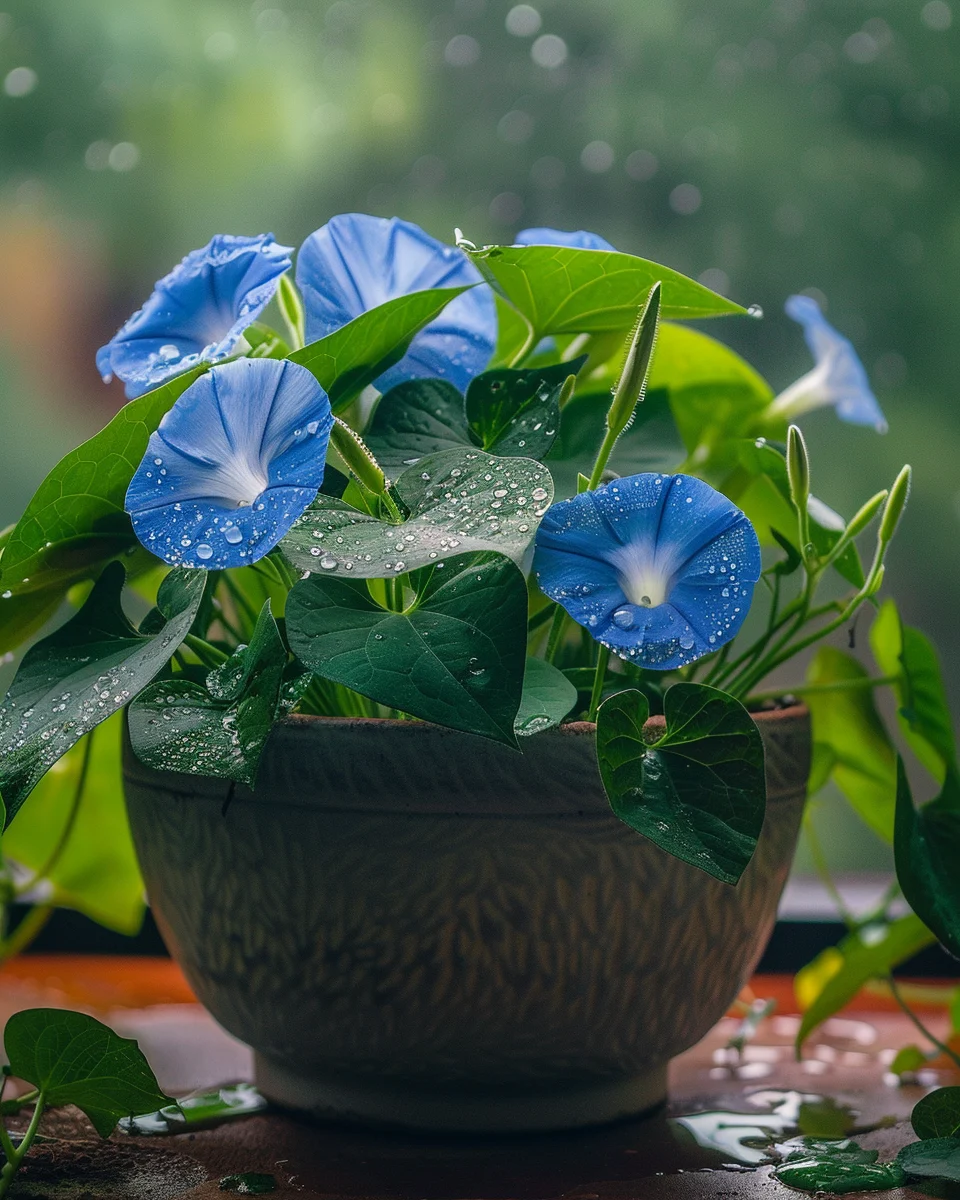
For cool temperate regions (UK, Northern US, Canada), the optimal planting window is mid-May to early June, when warm weather has established. In moderate climates (US zones 6-8), mid-April to late May provides ideal conditions. Warm climate gardeners (US zones 9-11, Mediterranean regions) can plant from March through May, though morning glories may struggle during extreme summer heat. For indoor seed starting, begin 4-6 weeks before your region’s last frost date. Morning glories develop deep taproots quickly, so if starting indoors, use biodegradable pots to minimize transplant shock when moving plants outdoors.
Best Morning Glory Varieties to Grow in Containers
- Heavenly Blue – The classic morning glory with stunning azure blue flowers that reach 4-5 inches across, perfect for creating a dramatic vertical display.
- Scarlett O’Hara – Features rich wine-red blooms that add a bold splash of color to any container garden.
- Grandpa Ott’s – An heirloom variety with deep purple flowers featuring a red star in the throat, known for its reliability and self-seeding capability.
- Flying Saucers – Produces unique white flowers with blue-purple streaks resembling pinwheels, creating a whimsical effect.
- Sunrise Serenade – Offers unusual double flowers in a rosy-red hue, adding texture and dimension to your vertical garden.
- Mini Bar Rose – A more compact variety (6-8 feet) with rose-pink flowers, making it more manageable for smaller containers.
- Moonflower (Ipomoea alba) – A night-blooming relative with large white fragrant flowers that open at dusk, perfect for evening enjoyment.
How to Plant Morning Glory in a Pot
Materials needed:
- Container at least 12 inches (30 cm) in diameter and 12 inches deep
- High-quality potting mix
- Morning glory seeds
- Trellis, stake, or other climbing support
- Small bowl of warm water
- Small file or sandpaper (optional)
- Watering can
Step-by-step planting instructions:
- Select a container with adequate drainage holes that’s at least 12 inches (30 cm) in diameter and depth to accommodate the plant’s root system.
- Fill the container with high-quality potting mix to about 1 inch (2.5 cm) below the rim.
- Nick each morning glory seed lightly with a file or sandpaper and soak in warm water for 24 hours to improve germination rates.
- Plant 3-5 seeds per pot, pushing them about ½ inch (1.3 cm) deep into the soil, spaced evenly around the container.
- Water thoroughly until moisture comes through the drainage holes, then place in a warm location.
- Install a trellis, stake, or other climbing support at planting time to avoid disturbing roots later.
- Once seedlings emerge (typically 5-7 days), thin to the strongest 2-3 plants per container.
- Position the container where it will receive at least 6-8 hours of direct sunlight daily.
- Guide young vines to the support structure; they’ll quickly begin climbing on their own.
How to Grow Morning Glory in a Pot
Morning glories require full sun to thrive, needing at least 6-8 hours of direct sunlight daily for optimal flowering. Water consistently to keep the soil moist but not waterlogged—typically every 2-3 days during hot weather or when the top inch of soil feels dry. These plants prefer lean soil, so fertilize sparingly; a half-strength application of balanced liquid fertilizer once monthly is sufficient. Over-fertilizing promotes lush foliage at the expense of flowers. Apply a 1-inch (2.5 cm) layer of mulch to retain moisture and suppress weeds. As vines grow, gently guide them onto their support structure, though their twining habit means they’ll generally find their way naturally. For container growing, choose a pot at least 12 inches (30 cm) in diameter with good drainage, and ensure your support structure is sturdy enough to handle mature plants that can reach 6-10 feet (1.8-3 meters) in height.
Caring for Morning Glory in a Pot
Morning glories are relatively low-maintenance once established. Deadhead spent blooms regularly to encourage continued flowering and prevent unwanted self-seeding. The main pests to watch for include aphids and spider mites, which can be treated with a strong spray of water or insecticidal soap. Powdery mildew may develop in humid conditions—improve air circulation and avoid overhead watering to prevent this. Leaf miners may occasionally create tunnels in leaves; remove affected foliage promptly. Morning glories don’t require harvesting in the traditional sense, but seed pods can be collected in fall if you wish to save seeds for next year. Allow pods to dry on the plant until they turn brown and begin to crack open, then collect and store in a cool, dry place. In containers, morning glories are annuals in most climates and will die with the first frost.
Understanding Bolting in Morning Glory
Unlike vegetable plants, bolting is not a concern with morning glories. These flowering vines are meant to produce blooms and eventually set seed as part of their natural lifecycle. Morning glories naturally transition from vegetative growth to flowering based on day length and maturity rather than stress factors. If your morning glory seems to be producing fewer flowers than expected, this could be due to excessive nitrogen fertilizer (promoting foliage over flowers), insufficient sunlight, or improper watering. To maximize flowering, ensure plants receive full sun, water consistently without overwatering, and avoid high-nitrogen fertilizers. If plants begin setting seed pods too early in the season, you can pinch these off to redirect energy back into flower production.
Why Does Morning Glory Turn Bitter?
Morning glory plants are not grown for consumption and contain compounds that can be toxic if ingested. If you’re experiencing issues with your morning glory plants, here are some common problems and solutions:
- Yellowing leaves – Usually indicates overwatering; reduce frequency and ensure good drainage.
- Poor flowering – Often caused by too much shade or excessive nitrogen; move to a sunnier location and reduce fertilizer.
- Stunted growth – May result from root constriction; ensure pot is large enough or transplant to a bigger container.
- Wilting despite adequate water – Could indicate root rot; check drainage and allow soil to dry slightly between waterings.
- Leaf discoloration – Might be nutrient deficiency; apply balanced fertilizer at half strength.
Companion Planting for Morning Glory
Good companions:
- Nasturtiums – Attract pollinators and repel aphids that might otherwise attack morning glories.
- Marigolds – Deter nematodes and other soil pests while adding complementary colors to your container display.
- Sweet Alyssum – Attracts beneficial insects and creates an attractive ground cover in larger containers.
- Thunbergia (Black-eyed Susan vine) – Grows at a similar rate and creates a beautiful mixed climbing display.
- Moonflower – A perfect companion that blooms in the evening as morning glories close, providing 24-hour flower interest.
Avoid planting near:
- Vegetables – Morning glory can be aggressive and may overwhelm vegetable plants in shared containers.
- Other vigorous climbers – Plants like cucumber or pole beans will compete for the same vertical space and may become tangled.
- Plants with high water needs – Morning glories prefer soil to dry slightly between waterings, which may not suit moisture-loving companions.
Seasonal Calendar
Early Spring (March-April):
- Start seeds indoors 4-6 weeks before last frost (cool regions)
- Prepare containers and supports
- Direct sow in warm regions after soil warms
Late Spring (May):
- Transplant seedlings outdoors after all frost danger passes
- Direct sow in moderate climates
- Begin regular watering schedule
Summer (June-August):
- Guide young vines to supports
- Apply light fertilizer monthly
- Monitor for pests and diseases
- Enjoy peak flowering period
- Deadhead spent blooms regularly
Fall (September-October):
- Continue deadheading or allow some seed pods to form if desired
- Collect seeds for next year
- Plants will die with first frost in most regions
- Clean up dead vines and prepare for next season
Problems & Solutions
| Problem | Quick Fix |
|---|---|
| Few or no flowers | Increase sunlight exposure; reduce nitrogen fertilizer; ensure pot isn’t too small |
| Yellowing leaves | Check drainage; reduce watering frequency; ensure pot isn’t sitting in water |
| Aphids or spider mites | Spray with strong water jet; apply insecticidal soap; introduce ladybugs |
| Powdery white coating on leaves | Improve air circulation; apply fungicide; avoid overhead watering |
| Vines not climbing | Gently guide young vines to support; ensure support has thin enough elements for vines to twine around |
| Seeds not germinating | Nick seed coat and soak overnight before planting; ensure soil temperature is warm enough |
| Leggy, sparse growth | Increase sunlight; pinch growing tips to encourage branching; check for pests |
Common Questions About Growing Morning Glory in a Pot
How often should I water potted morning glories?
Water when the top inch (2.5 cm) of soil feels dry, typically every 2-3 days in summer and less frequently in cooler weather. Containers dry out faster than garden soil, so check regularly during hot periods.
Can morning glories grow in partial shade?
While morning glories can survive in partial shade, they need at least 6 hours of direct sunlight daily to flower abundantly. Less sun results in fewer blooms and leggier growth.
What size container is best for morning glories?
Use a container at least 12 inches (30 cm) in diameter and depth. Larger pots (14-16 inches) are even better, providing more soil volume for root development and moisture retention.
How tall will morning glories grow in containers?
Even in containers, morning glories can reach 6-10 feet (1.8-3 meters) in height with proper support. Some compact varieties may stay shorter at 4-6 feet (1.2-1.8 meters).
Are morning glories invasive?
Morning glories can be aggressive self-seeders in garden settings, but container growing naturally limits their spread. Remove spent flowers to prevent unwanted self-seeding.
Can I overwinter my morning glory plants?
Morning glories are typically grown as annuals in most climates. In zones 9-11, they may survive winter, but plants are usually most vigorous when grown fresh from seed each year.
Why are my morning glory flowers closing?
This is normal behavior—morning glory flowers open in the morning and close by afternoon. Each flower blooms for just one day, but plants produce new blooms continuously throughout the season.