
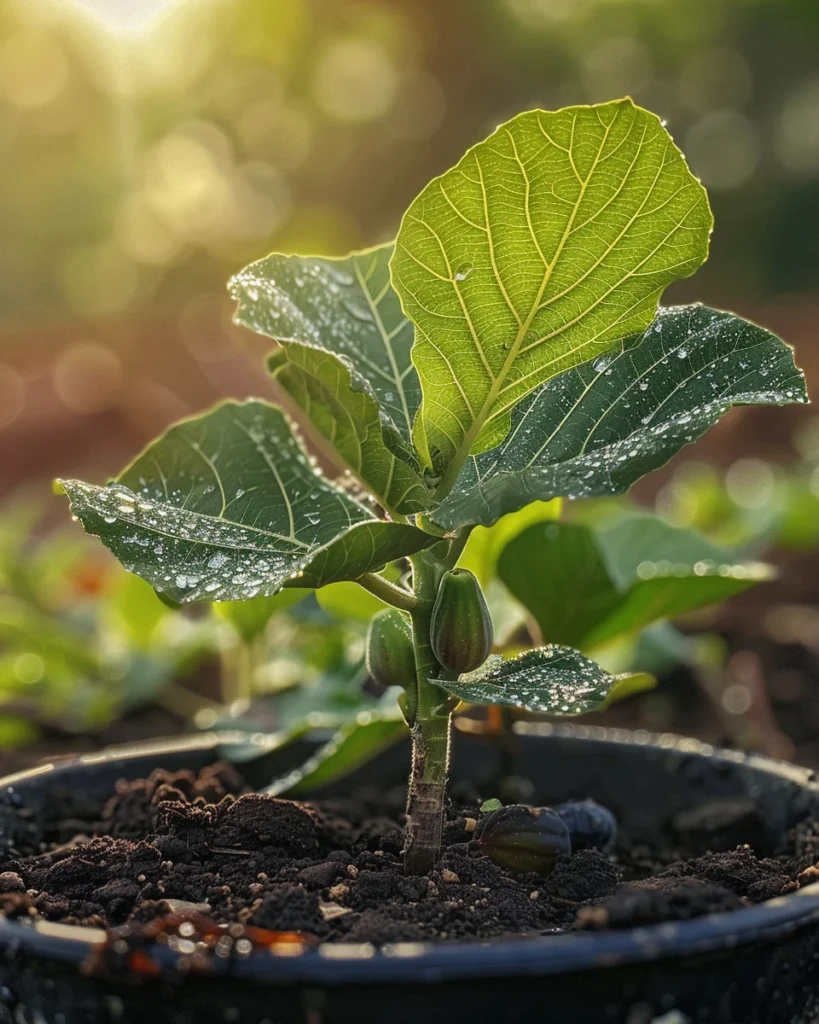
How to Grow Figs in Pots: Complete Guide for Container Success
Intro for growing figs in pots
Fig trees (Ficus carica) make excellent container plants, bringing Mediterranean charm to patios, balconies, and small gardens. Growing figs in pots allows gardeners in cooler climates to enjoy these sweet, honeyed fruits by providing mobility to protect trees from harsh winters. Container cultivation also controls the tree’s size, encourages better fruiting through root restriction, and allows for precise soil and drainage management. With their attractive lobed leaves and compact growth habit when pruned properly, potted figs offer both ornamental value and delicious harvests, making them perfect for gardeners with limited space or challenging climates.
When to plant figs in pots
Figs should be planted in containers during their dormant period, typically late autumn through early spring. In temperate regions (USDA zones 7-10 or UK zones 7-9), the ideal planting window is February to April when the risk of hard frost has passed but before new growth begins. Soil temperatures should be at least 10°C (50°F) for optimal root establishment. In colder regions, it’s best to wait until all frost danger has passed, while in warmer Mediterranean climates, fall planting allows roots to establish before summer heat arrives. Dormant bare-root specimens establish particularly well when planted during these periods.
Best time to plant figs in pots

For cool temperate regions (USDA zones 5-7), plant potted figs in mid to late spring (April-May) when nighttime temperatures consistently stay above 4°C (40°F). In warmer regions (zones 8-10), early spring (March-April) or autumn (September-October) planting works well, avoiding summer heat stress during establishment. Container-grown nursery specimens can be transplanted almost any time during the growing season if properly watered, though they’ll establish most successfully during these optimal windows. Avoid planting during periods of extreme heat or cold, as this stresses the young trees and slows establishment.
Best fig varieties to grow in pots
- Brown Turkey – Reliable, cold-hardy variety that produces two crops annually and adapts well to container culture.
- Chicago Hardy – Exceptionally cold-tolerant (to zone 5), producing medium-sized purple-brown fruits even after die-back.
- Celeste – Compact growth habit with small, sweet fruits perfect for containers and cooler climates.
- Petite Negra – Dwarf variety that fruits when very young and stays naturally small, ideal for pots.
- Violette de Bordeaux – Small tree with intensely flavored small fruits, excellent for container culture.
- Desert King – Reliable producer of large green fruits that ripens well in cooler summers.
- Improved Brown Turkey – Compact form with reliable fruiting and good cold tolerance to -10°C (14°F) when dormant.
How to plant figs in pots
Materials needed:
- Container (minimum 30-40cm/12-16in diameter to start)
- High-quality potting mix
- Drainage material (broken pottery, gravel)
- Young fig tree
- Slow-release fertilizer
- Watering can
- Mulch
Step-by-step planting:
- Select a container at least 30-40cm (12-16in) in diameter with multiple drainage holes.
- Cover drainage holes with mesh or broken pottery to prevent soil loss while maintaining drainage.
- Add a 5cm (2in) layer of drainage material like gravel to the bottom of the pot.
- Fill the container one-third full with high-quality potting mix, ideally one formulated for fruit trees or with added perlite for drainage.
- Remove the fig tree from its nursery container, gently teasing out any circling roots.
- Position the tree in the center of the new container so the top of the root ball sits 2-3cm (1in) below the pot rim.
- Fill around the root ball with potting mix, firming gently as you go to eliminate air pockets.
- Water thoroughly until water flows from the drainage holes.
- Apply a 2-3cm (1in) layer of mulch, keeping it away from the trunk to prevent rot.
- Place the container in a sheltered, sunny position to establish.
How to grow figs in pots
Potted figs require full sun, ideally 6-8 hours daily, with protection from harsh afternoon sun in very hot climates. Water thoroughly when the top 2-3cm (1in) of soil feels dry, typically every 2-3 days during summer and less frequently in cooler months. Container figs need regular feeding—apply a balanced liquid fertilizer monthly during spring and early summer, switching to a low-nitrogen, high-potassium formula in mid-summer to encourage fruiting rather than leaf growth.
Prune container figs in late winter to maintain a manageable size, removing up to one-third of older growth and shaping to an open goblet form. As the tree matures, repot every 2-3 years, moving to a container approximately 5-10cm (2-4in) larger in diameter each time until reaching a maximum size of about 60-75cm (24-30in). In winter, protect container figs by moving to a sheltered location like an unheated garage or shed in zones 7 and below, or wrap the container with bubble wrap and horticultural fleece in milder areas.
Caring for figs in pots
Monitor soil moisture carefully in containers, as potted figs can dry out quickly in summer but are also susceptible to root rot if overwatered. During the growing season, regularly check for pests like spider mites (tiny webs, stippled leaves) and scale insects (brown bumps on stems), treating with insecticidal soap or neem oil at first sign. Watch for leaf rust (orange spots) and treat with organic fungicide if spotted, improving air circulation through pruning.
Harvest figs when they soften and droop slightly on the stem, typically feeling like a ripe peach when gently squeezed. In cooler regions, remove any small, unripe figs in late autumn as these won’t mature and will drain energy from the tree. In winter, reduce watering significantly, providing just enough moisture to prevent the root ball from completely drying out. Fresh figs don’t store well—keep at room temperature for 1-2 days or refrigerate for up to a week, but they’re best enjoyed immediately after harvesting.
Understanding bolting in figs in pots
Unlike annual vegetables, figs don’t bolt in the traditional sense. However, they can experience stress responses that affect fruiting. When container figs experience extreme temperature fluctuations, drought stress, or nutrient imbalances, they may drop immature fruits or enter dormancy prematurely. This stress response is triggered by sudden environmental changes or root constriction.
To prevent stress-related fruit drop, maintain consistent watering schedules, especially during fruit development, and ensure adequate potassium levels through proper fertilization. If your fig experiences fruit drop, stabilize its environment by moving to a more sheltered location, establishing a regular watering routine, and applying a balanced fertilizer. Unlike true bolting in leafy vegetables, this stress response in figs is reversible with proper care.
Why does fig fruit turn bitter?
- Underripe harvesting – Pick figs only when fully ripe; they should be soft and slightly drooping on the branch.
- Inconsistent watering – Drought followed by heavy watering can cause splitting and bitterness; maintain even soil moisture.
- Nutrient imbalance – Excessive nitrogen promotes leaf growth at the expense of fruit quality; use low-nitrogen fertilizer during fruiting.
- Variety characteristics – Some fig varieties naturally have more bitter skin; try peeling before eating or choose sweeter varieties.
- Lack of pollination – Some fig varieties require specialized wasps for pollination; choose self-fertile varieties for container growing.
Companion planting for figs in pots
Good companions:
- Herbs like rosemary, thyme, and lavender – These Mediterranean herbs share similar growing requirements and their strong scents can deter some fig pests.
- Nasturtiums – Attract pollinators and can act as a trap crop for aphids that might otherwise attack figs.
- Strawberries – Make good use of surface soil in large fig containers without competing for root space.
- Chives and garlic – Help repel fig-damaging insects and utilize different soil layers than fig roots.
- Marigolds – Deter nematodes and other soil pests while adding color around the base of fig containers.
Avoid planting near:
- Aggressive vines or climbers – Plants like morning glory or clematis may use the fig as support and compete for nutrients and light.
- Deep-rooted vegetables – Crops like tomatoes compete directly for container space and nutrients.
- Other fruit trees – These compete for the same resources and may increase disease pressure in a confined space.
Seasonal calendar
- January-February: Dormant period; protect from freezing; minimal watering; plan late winter pruning.
- March: Begin bringing trees out of winter storage on mild days; prune for shape and size; repot if needed.
- April: Resume regular watering as new growth appears; apply first fertilizer; plant new trees.
- May: Increase watering as leaf growth accelerates; watch for pests as foliage develops.
- June: Apply second fertilizer dose; ensure consistent watering; early crop (breba) may begin forming.
- July: Switch to high-potassium fertilizer; water deeply during dry periods; early varieties may begin ripening.
- August-September: Main harvest period; monitor ripeness daily; maintain regular watering.
- October: Remove any remaining unripe figs in cool regions; reduce watering as temperatures drop.
- November: Begin preparing for winter protection; clean fallen leaves from container.
- December: Move to protected location or apply winter insulation; minimal watering.
Problems & solutions
| Problem | Quick Fix |
|---|---|
| Yellowing leaves | Check for overwatering; ensure drainage is adequate; may indicate nutrient deficiency—apply balanced fertilizer. |
| Fruit drop before ripening | Stabilize watering schedule; ensure adequate potassium; protect from extreme temperature fluctuations. |
| No fruit production | Ensure adequate sunlight (6+ hours); check variety is suitable for your climate; root restriction through appropriate pot size. |
| Leaf rust (orange spots) | Improve air circulation; remove affected leaves; apply organic copper fungicide; avoid overhead watering. |
| Spider mites (fine webbing) | Increase humidity by misting foliage; apply insecticidal soap or neem oil; introduce predatory mites. |
| Split fruits | Maintain consistent watering, especially during fruit development; mulch to retain soil moisture. |
| Winter damage | Move to protected location when dormant; wrap pot in bubble wrap; consider more cold-hardy varieties. |
Common questions about growing figs in pots
How large should my fig container be?
Start with a 30-40cm (12-16in) diameter pot, increasing by 5-10cm (2-4in) every 2-3 years until reaching a maximum of 60-75cm (24-30in). Root restriction actually encourages fruiting, so don’t rush to overpot.
How often should I water my potted fig?
Water when the top 2-3cm (1in) of soil feels dry—typically every 2-3 days in summer and weekly in spring/fall. In winter, reduce to monthly or when the soil feels dry several inches down.
Can I grow figs in pots in cold climates?
Yes, container growing is ideal for cold regions (down to zone 5) as you can move dormant trees to protected locations like unheated garages or sheds during winter months.
When will my potted fig tree produce fruit?
Most container-grown figs begin producing fruit within 1-2 years of planting. Some varieties like ‘Petite Negra’ and ‘Chicago Hardy’ may fruit in their first year under ideal conditions.
Do I need two fig trees for pollination?
No, common fig varieties grown in containers are self-fertile and don’t require cross-pollination. Choose “common figs” rather than “Smyrna” or “San Pedro” types for container culture.
How do I know when figs are ripe?
Ripe figs soften considerably, droop slightly on their stems, and often develop small cracks in the skin. They should yield to gentle pressure, similar to a ripe peach.
How long will a fig tree live in a container?
With proper care, including regular repotting and pruning, a container-grown fig can thrive for 15-20 years or more, providing decades of harvests.