
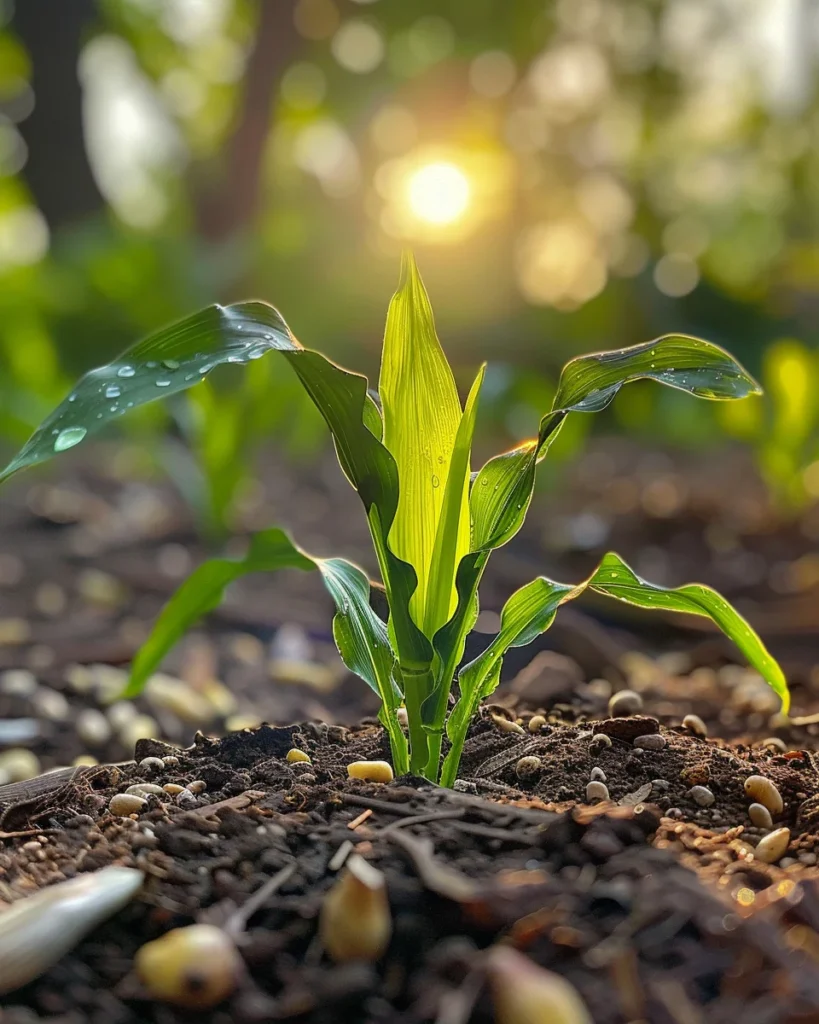
How to Grow Corn in Raised Beds: When to Plant, Best Varieties & Care Guide
Intro for growing corn in raised beds
Corn (Zea mays) is a rewarding summer crop that thrives in the controlled environment of raised beds. Growing corn in raised beds offers several advantages: better drainage, warmer soil temperatures for earlier planting, fewer weeds, and improved soil quality. The elevated growing space also makes maintenance easier on your back. Sweet corn harvested fresh from your garden delivers incomparable flavor that store-bought varieties simply can’t match. While traditionally grown in large fields, corn adapts well to raised beds with proper planning and care, making it accessible even to gardeners with limited space.
When to plant corn in raised beds
Corn requires warm soil to germinate properly. Wait until soil temperatures reach at least 16-18°C (60-65°F) before planting. In most temperate regions, this means waiting until all danger of frost has passed. The advantage of raised beds is that they warm up faster than in-ground gardens, potentially allowing for earlier planting. However, corn is extremely frost-sensitive, so err on the side of caution rather than planting too early. If unexpected late frosts are predicted, be prepared to cover young plants with row covers or cloches for protection.
Best time to plant corn in raised beds
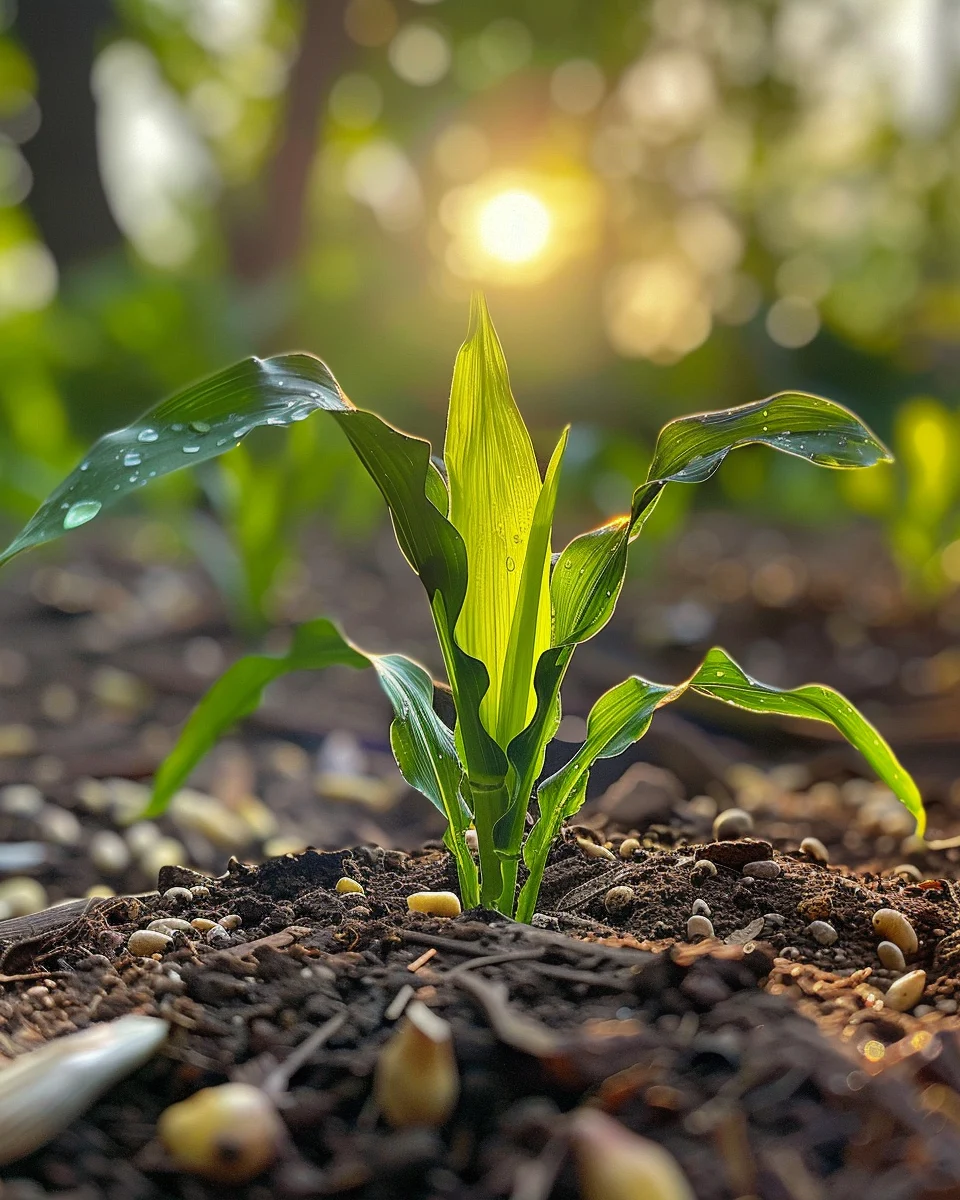
In cool temperate regions (UK, Northern US, Canada), plant corn from mid-May to early June when soil has reliably warmed. In warmer climates (US Zones 7-10, Mediterranean regions), you can plant as early as April or even make successive plantings through July for extended harvests. Direct sowing is strongly preferred for corn as it doesn’t transplant well due to its sensitive root system. If you must start indoors in very cold regions, use biodegradable pots and transplant carefully without disturbing the roots when seedlings are 10-15 cm (4-6 inches) tall, but no more than 2-3 weeks old.
Best corn varieties to grow in raised beds
- Trinity – An early-maturing (67 days) hybrid with excellent sweetness and compact 5-foot stalks perfect for raised beds.
- Honey Select – Award-winning variety with exceptional flavor that holds its sweetness longer after harvest.
- Silver Queen – Classic white sweet corn with excellent disease resistance and reliable production.
- Golden Bantam – Heirloom variety with outstanding flavor that grows to moderate height, making it suitable for raised beds.
- Bodacious – Early-maturing yellow corn with exceptional sweetness and good disease resistance.
- Mirai 301BC – Super-sweet hybrid that maintains its tenderness and flavor longer than most varieties.
- Early Sunglow – Ultra-early variety (63 days) that can be planted earlier than most, with compact 4-5 foot stalks.
How to plant corn in raised beds
Materials needed:
- Corn seeds
- Compost or well-rotted manure
- Balanced organic fertilizer
- Watering can or hose with gentle spray attachment
- Mulch (straw or shredded leaves work well)
- Garden gloves
- Trowel or dibber
Step-by-step planting:
- Prepare your raised bed by incorporating 5-7 cm (2-3 inches) of compost into the top 15 cm (6 inches) of soil.
- Add a balanced organic fertilizer according to package directions, as corn is a heavy feeder.
- Plan your layout carefully – corn should be planted in blocks rather than rows to ensure proper pollination.
- Create a grid pattern with planting holes spaced 30-35 cm (12-14 inches) apart in all directions.
- Plant seeds 2.5 cm (1 inch) deep in cool, moist conditions or up to 5 cm (2 inches) deep in warmer, drier soil.
- Place 2-3 seeds in each hole to ensure good germination.
- Water thoroughly but gently to avoid displacing seeds.
- Apply a light layer of mulch around (but not over) the planting sites to retain moisture.
- Once seedlings emerge (usually within 7-10 days), thin to the strongest plant at each position.
How to grow corn in raised beds
Corn requires full sunlight – at least 6-8 hours daily for optimal growth and ear development. Water consistently, providing about 2.5 cm (1 inch) of water weekly, increasing to 5 cm (2 inches) during tasseling, silking, and ear development. Raised beds dry out faster than ground soil, so monitor moisture levels carefully, especially during hot weather. Apply a side dressing of nitrogen-rich fertilizer when plants are about 45 cm (18 inches) tall and again when tassels begin to form. Mulch around plants with straw or shredded leaves to conserve moisture and suppress weeds. Corn has shallow roots, so weed carefully to avoid root damage. For additional stability in windy areas, mound soil around the base of stalks (called “hilling”) when plants reach 30 cm (12 inches) tall. In raised beds, plant corn in blocks of at least 4×4 plants rather than long rows to ensure proper wind pollination.
Caring for corn in raised beds
Monitor for pests regularly, particularly corn earworms, European corn borers, and aphids. For earworms, apply a few drops of mineral oil to the silk of each ear about 5-7 days after silk appears. For corn borers, look for small holes in stalks and damaged tassels; remove and destroy affected parts. Aphids can be controlled with insecticidal soap or a strong spray of water. Common diseases include corn smut (remove and destroy affected plants) and rust (ensure good air circulation and avoid overhead watering). Harvest corn when kernels are plump and exude a milky substance when punctured with a fingernail, typically 18-24 days after silk appears. To harvest, grasp the ear firmly and pull down with a quick twisting motion. For best flavor, prepare corn immediately after harvest, as sweetness diminishes rapidly once picked.
Understanding bolting in corn
Unlike leafy greens, corn doesn’t bolt in the traditional sense. However, corn can experience premature tasseling or stunted growth under stress conditions. This is typically caused by temperature extremes, drought, or nutrient deficiencies. To prevent stress-related issues, maintain consistent watering, especially during hot periods, and ensure adequate fertility with regular feeding. If corn plants are showing signs of stress (yellowing leaves, stunted growth), increase watering and apply a balanced fertilizer. Unlike bolting vegetables where the crop is lost, stressed corn may still produce ears, though they might be smaller or less filled out than normal.
Why does corn turn bitter?
- Harvested too late – Sweet corn quickly converts sugars to starch after maturity; harvest promptly when kernels are full and milky.
- Poor pollination – Incomplete pollination leads to partially filled ears with starchy, bitter kernels; plant in blocks rather than rows for better pollination.
- Heat stress – Extreme heat can affect sugar development; provide consistent moisture and consider afternoon shade in very hot climates.
- Improper storage – Corn begins losing sweetness immediately after harvest; refrigerate or process quickly for best flavor.
- Variety selection – Standard sweet corn varieties convert sugar to starch faster than supersweet or enhanced varieties; choose appropriate types for your preference.
Companion planting for corn in raised beds
Good companions:
- Beans – Fix nitrogen that corn needs and can use corn stalks as natural supports.
- Squash – Creates living mulch that suppresses weeds and retains soil moisture (the classic “Three Sisters” planting).
- Cucumbers – Similar to squash, provide ground cover and have compatible water/nutrient needs.
- Marigolds – Repel many corn pests including nematodes and some beetles.
- Nasturtiums – Deter aphids and other insect pests that commonly affect corn.
Avoid planting near:
- Tomatoes – Compete for similar nutrients and can share pests and diseases.
- Brassicas (cabbage, broccoli, etc.) – Heavy feeders that compete with corn for nutrients.
Seasonal calendar
- March-April: Prepare raised beds with compost and organic matter; warm soil with black plastic in cooler regions.
- May: Direct sow corn seeds in most temperate regions when soil temperature reaches 16-18°C (60-65°F).
- June: Continue succession plantings in warmer regions; apply first side dressing of nitrogen fertilizer when plants reach knee-height.
- July: Apply second fertilizer application when tassels form; ensure consistent watering during this critical period.
- August-September: Harvest main crop corn when kernels are plump and milky; continue watering late plantings.
- October: Harvest final corn; remove stalks and add to compost or chop and incorporate into soil.
- November-February: Plan next season’s corn patch, rotating location if possible; amend soil in preparation.
Problems & solutions
| Problem | Quick Fix |
|---|---|
| Poor germination | Ensure soil is warm enough (16-18°C/60-65°F); check seed freshness; avoid planting too deep. |
| Yellowing leaves | Apply nitrogen-rich fertilizer; ensure adequate but not excessive watering. |
| Incomplete kernel development | Improve pollination by planting in blocks; hand-pollinate by shaking stalks on still mornings. |
| Earworms | Apply several drops of mineral oil to silks 5-7 days after they appear. |
| Lodging (falling over) | Hill soil around base of plants; plant in protected area; select shorter varieties for raised beds. |
| Corn smut (gray/black growths) | Remove and destroy affected parts; improve air circulation; rotate planting areas. |
Common questions about growing corn in raised beds
Q: How deep should my raised bed be for growing corn?
A: A minimum depth of 30 cm (12 inches) is recommended for corn, though 45 cm (18 inches) is ideal to accommodate the root system and provide stability for the tall stalks.
Q: How many corn plants can I grow in a 1.2 x 2.4 m (4 x 8 ft) raised bed?
A: With proper spacing of 30-35 cm (12-14 inches), you can grow approximately 20-24 corn plants in a grid pattern in a bed this size.
Q: Do I need to hand-pollinate corn in raised beds?
A: Not necessarily, but it helps ensure complete kernel development. Gently shake plants on calm mornings or transfer pollen from tassels to silks by hand for better results.
Q: Can I grow corn in the same raised bed year after year?
A: It’s best to rotate corn to a different bed each year to prevent nutrient depletion and reduce disease buildup. Wait at least 2-3 years before planting corn in the same location.
Q: How often should I water corn in raised beds?
A: Raised beds typically need more frequent watering than in-ground gardens. During hot weather, corn may need water every 2-3 days. Aim for consistently moist but not waterlogged soil, especially during tasseling and ear formation.
Q: Can I grow corn in a container instead of a raised bed?
A: Yes, but choose a large container (at least 45-60 cm/18-24 inches deep and wide) and limit to 2-3 plants per container. Select shorter varieties and be vigilant about watering and fertilizing.
Q: How can I tell when my corn is ready to harvest?
A: Check ears about 18-24 days after silks appear. Silks should be brown and dry. Pierce a kernel with your fingernail – if it releases a milky liquid, it’s ready. If clear, it’s too early; if doughy, it’s too late for optimal sweetness.