

How to Grow Asparagus in Raised Beds: A Long-Term Investment for Delicious Spring Harvests
Intro for growing asparagus in raised beds
Asparagus is a perennial vegetable that, when properly established in raised beds, can produce tender, flavorful spears for 15-20 years. Raised beds provide the perfect environment for asparagus by offering excellent drainage, preventing waterlogged roots, and warming up faster in spring for earlier harvests. The controlled environment of raised beds also makes it easier to maintain the weed-free conditions that asparagus prefers. While asparagus requires patience—you’ll wait 2-3 years before your first full harvest—the long-term payoff of homegrown spears that are sweeter and more tender than store-bought makes it well worth the investment for any serious gardener.
When to plant asparagus in raised beds
Asparagus should be planted in early spring once the soil has warmed and can be worked easily. In most temperate regions, this typically falls between March and April when soil temperatures reach 10-15°C (50-60°F). Asparagus crowns are frost-hardy, but new growth is susceptible to damage, so it’s best to plant after the risk of hard frost has passed. In warmer regions (USDA Zones 8-10), fall planting is also possible, giving the roots time to establish before the growing season begins. The key is ensuring the soil is workable and not waterlogged when you’re ready to plant.
Best time to plant asparagus in raised beds
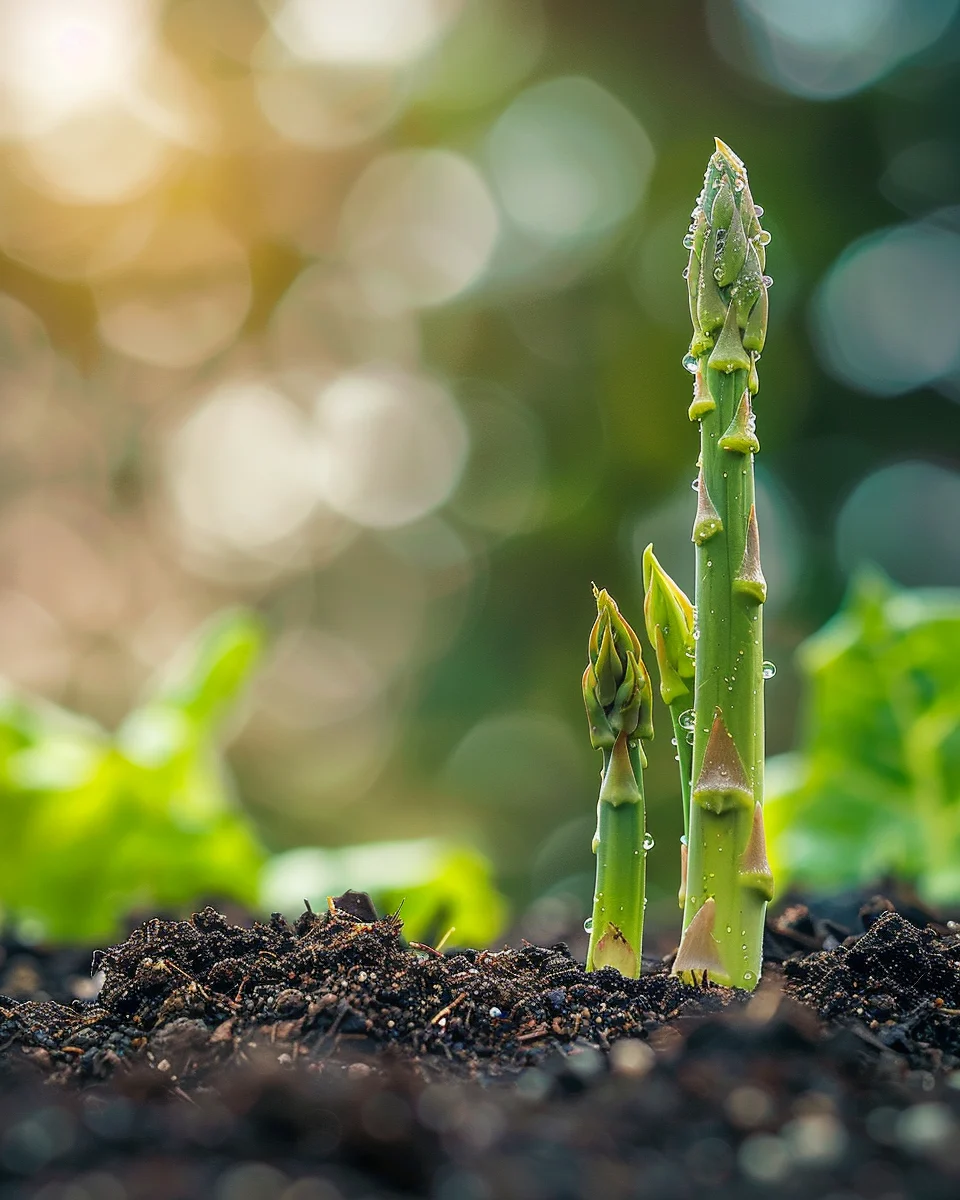
For cool-temperate regions (UK, Northern US, Canada), plant asparagus crowns in mid to late April when soil temperatures consistently reach 10°C (50°F). In warmer climates (US Zones 7-9), early to mid-March is ideal. Mediterranean regions can plant in February or March, or alternatively in October-November. One-year-old crowns are the preferred planting material rather than seeds, as they establish more quickly and reduce the time to harvest by a year. If starting from seed, sow indoors 12-14 weeks before your last frost date, then transplant seedlings once they’re well established and all danger of frost has passed.
Best asparagus varieties to grow
- Jersey Knight – All-male hybrid with excellent disease resistance and high productivity in a range of climates.
- Purple Passion – Produces sweeter, tender purple spears with less fiber and higher sugar content than green varieties.
- Mary Washington – Heritage variety known for excellent flavor and good rust resistance.
- Millennium – Canadian variety bred for cold hardiness, making it perfect for northern gardens.
- Jersey Supreme – Early producer with uniform spears, ideal for shorter growing seasons.
- Guelph Eclipse – Newer variety with excellent tolerance to asparagus beetles and rust.
- Pacific Purple – High-yielding purple variety that retains its color when cooked and has a mild, nutty flavor.
How to plant asparagus in raised beds
Materials needed:
- Raised bed (minimum 30cm/12in deep)
- One-year-old asparagus crowns
- Compost or well-rotted manure
- Balanced organic fertilizer
- Garden fork or trowel
- Garden gloves
- Mulch (straw or compost)
Step-by-step planting:
- Prepare your raised bed by removing any weeds and incorporating 10-15cm (4-6in) of compost or well-rotted manure.
- Dig a trench 20-25cm (8-10in) deep and 30cm (12in) wide along the length of your raised bed.
- Create a 5cm (2in) ridge of soil mixed with compost down the center of the trench.
- Soak the asparagus crowns in water for 15-20 minutes before planting.
- Place crowns on top of the ridge, spreading the roots out evenly on both sides, spacing them 30-45cm (12-18in) apart.
- Cover the crowns with 5-8cm (2-3in) of soil, firming gently.
- Water thoroughly but gently to avoid washing away the soil.
- As spears emerge, gradually fill in the trench over the growing season until it’s level with the surrounding soil.
- Apply a 5cm (2in) layer of mulch around (but not touching) the emerging spears to suppress weeds.
How to grow asparagus in raised beds
Asparagus thrives in full sun, requiring at least 6-8 hours of direct sunlight daily. Water newly planted beds regularly to keep the soil consistently moist but not waterlogged. Once established, asparagus is relatively drought-tolerant, but benefits from deep watering during dry spells, especially in the first two years. Apply a balanced organic fertilizer (such as 10-10-10) in early spring before spears emerge, and again after the final harvest. Mulch beds with 5-7cm (2-3in) of compost, straw, or leaf mold to suppress weeds and retain moisture.
In late fall, after the ferns have turned yellow or brown, cut them back to ground level to prevent disease overwintering. In colder regions, apply a thick layer of mulch for winter protection. Avoid harvesting any spears in the first year after planting to allow the crowns to establish. In the second year, harvest lightly (2-3 weeks), and from the third year onward, you can harvest for 6-8 weeks.
Caring for asparagus in raised beds
Regular weeding is essential as asparagus doesn’t compete well with weeds. Hand pull rather than hoeing to avoid damaging shallow roots. The main pests to watch for are asparagus beetles, which can be identified by their bright red bodies or black and white markings. Control them by handpicking or applying neem oil. Asparagus rust appears as orange-brown pustules on stems and can be prevented with good air circulation and by avoiding overhead watering.
Harvest spears when they’re 15-20cm (6-8in) tall and before the tips begin to open. Cut or snap spears at soil level. For storage, stand freshly harvested spears upright in 2.5cm (1in) of water in the refrigerator, or wrap cut ends in damp paper towels and refrigerate for up to a week. For longer storage, blanch and freeze spears.
Understanding bolting in asparagus
Unlike many vegetables, what appears to be “bolting” in asparagus is actually its natural growth cycle. The spears we harvest are immature stems that, if left unharvested, will develop into tall, ferny foliage. This ferny growth is essential for photosynthesis, allowing the plant to store energy in its roots for next year’s crop. The appearance of small red berries on female plants is normal and not a sign of stress.
To maximize spear production, stop harvesting when spears become noticeably thinner (usually after 6-8 weeks), allowing the remaining spears to develop into ferns. These ferns should be left to grow throughout summer and fall until they turn yellow or brown, at which point they can be cut back. If spears become thin early in the season, it may indicate stress from over-harvesting in previous years or insufficient nutrients.
Why does asparagus turn bitter?
- Harvested too late – Spears become woody and bitter once the tips start to open; harvest when tips are still tight.
- Age of spears – Asparagus loses sweetness quickly after harvest; consume or preserve within 2-3 days.
- Heat stress – Extended periods of high temperatures can affect flavor; provide afternoon shade in hot climates.
- Variety selection – Some varieties naturally have a stronger flavor; try milder varieties like Purple Passion or Jersey Supreme.
- Nutrient imbalance – Excessive nitrogen can cause bitterness; use balanced fertilizers and avoid over-fertilizing.
Companion planting for asparagus
Good companions:
- Tomatoes – Repel asparagus beetles with their foliage, while asparagus may deter nematodes that affect tomatoes.
- Parsley – Attracts beneficial insects that prey on asparagus beetles.
- Basil – Improves growth and flavor of nearby plants and repels some pests.
- Nasturtiums – Act as a trap crop for aphids and other pests that might otherwise attack asparagus.
- Calendula – Attracts pollinators and beneficial insects while deterring asparagus beetles.
Avoid planting near:
- Onions, garlic, and other alliums – Compete for nutrients and may inhibit asparagus growth.
- Potatoes – Can transmit diseases to asparagus and compete for resources.
- Root vegetables – Disturb asparagus roots when harvested.
Seasonal calendar
- February-March: Apply compost and balanced fertilizer to beds before spears emerge.
- March-April: Plant new asparagus crowns; begin harvesting established beds when spears reach 15-20cm (6-8in).
- May-June: Continue harvesting for 6-8 weeks; stop when spears become noticeably thinner.
- June-September: Allow ferns to grow; water during dry periods; monitor for pests and diseases.
- October: Apply compost as mulch around plants.
- November-December: Cut back yellowed ferns to ground level; apply winter mulch in cold regions.
Note: In warmer regions (Zones 8-10), the growing season starts earlier and extends longer. In colder regions (Zones 3-5), delay spring activities by 2-4 weeks.
Problems & solutions
| Problem | Quick Fix |
|---|---|
| Asparagus beetles | Handpick beetles and larvae; apply neem oil; encourage beneficial insects with companion planting. |
| Thin spears | Stop harvesting; apply balanced fertilizer; ensure adequate watering; check for overcrowding. |
| Rust (orange-brown spots) | Remove affected ferns; improve air circulation; avoid overhead watering; apply organic fungicide if severe. |
| Weeds overtaking bed | Hand pull carefully; apply thick mulch; consider landscape fabric between rows for persistent weeds. |
| Yellowing ferns in summer | Check for asparagus beetles; ensure proper drainage; test soil pH (should be 6.5-7.5). |
| Poor production | Avoid over-harvesting; apply compost annually; ensure full sun; check age of bed (may need rejuvenation after 15+ years). |
Common questions about growing asparagus in raised beds
How deep should a raised bed be for asparagus?
A minimum depth of 30cm (12in) is required, but 45-60cm (18-24in) is ideal to accommodate the extensive root system and allow for proper drainage.
Can I grow asparagus in containers?
Yes, but use large containers (at least 45-60cm/18-24in deep and wide) with excellent drainage. Plant only 1-2 crowns per container and expect reduced yields compared to raised beds.
How often should I water asparagus?
Water deeply once a week during dry periods, providing about 2.5cm (1in) of water. Established plants are somewhat drought-tolerant but produce better with consistent moisture.
How many asparagus plants do I need for a family?
Plant 10-15 crowns per person for a good supply. A 1.2m x 2.4m (4ft x 8ft) raised bed can accommodate about 20-25 plants, enough for 2 people.
Can I harvest asparagus in the first year?
No, avoid harvesting in the first year to allow plants to establish. Harvest lightly (2-3 weeks) in the second year, and fully (6-8 weeks) from the third year onward.
How do I know when to stop harvesting?
Stop harvesting when the diameter of new spears decreases to less than 1cm (3/8in), typically after 6-8 weeks of harvesting from established beds.
How long will an asparagus bed produce?
A well-maintained asparagus bed in a raised bed can remain productive for 15-20 years, making it one of the most long-lived vegetable investments for your garden.