

How to Grow Cilantro Under Grow Lights: Fresh Herbs Year-Round Regardless of Season
Intro for growing cilantro under grow lights
Cilantro (Coriandrum sativum) is a versatile herb prized for its distinctive flavor in cuisines worldwide. While traditionally grown outdoors, cilantro can thrive indoors under grow lights, allowing you to enjoy fresh leaves year-round regardless of climate or season. Indoor cultivation with artificial lighting gives you complete control over growing conditions, helping prevent premature bolting—cilantro’s tendency to quickly produce flowers and seeds when stressed. Growing cilantro under lights is perfect for apartment dwellers, gardeners in extreme climates, or anyone wanting a consistent supply of this delicate herb without seasonal limitations. With proper setup and care, you can harvest cilantro continuously, ensuring you always have this essential herb on hand for your culinary adventures.
When to plant cilantro under grow lights
One of the greatest advantages of growing cilantro under grow lights is that traditional growing seasons become irrelevant. You can start cilantro indoors under lights any time of year. Unlike outdoor growing where soil temperature (ideally 15-20°C or 60-68°F) and frost dates dictate planting times, indoor growing creates a controlled environment where you set the conditions. This means you can maintain a continuous cycle of plantings, starting new seeds every 2-3 weeks for an uninterrupted harvest. If you’re growing indoors specifically to supplement outdoor growing, consider starting seeds under lights 4-6 weeks before your region’s last spring frost to get a head start on the season.
Best time to plant cilantro under grow lights
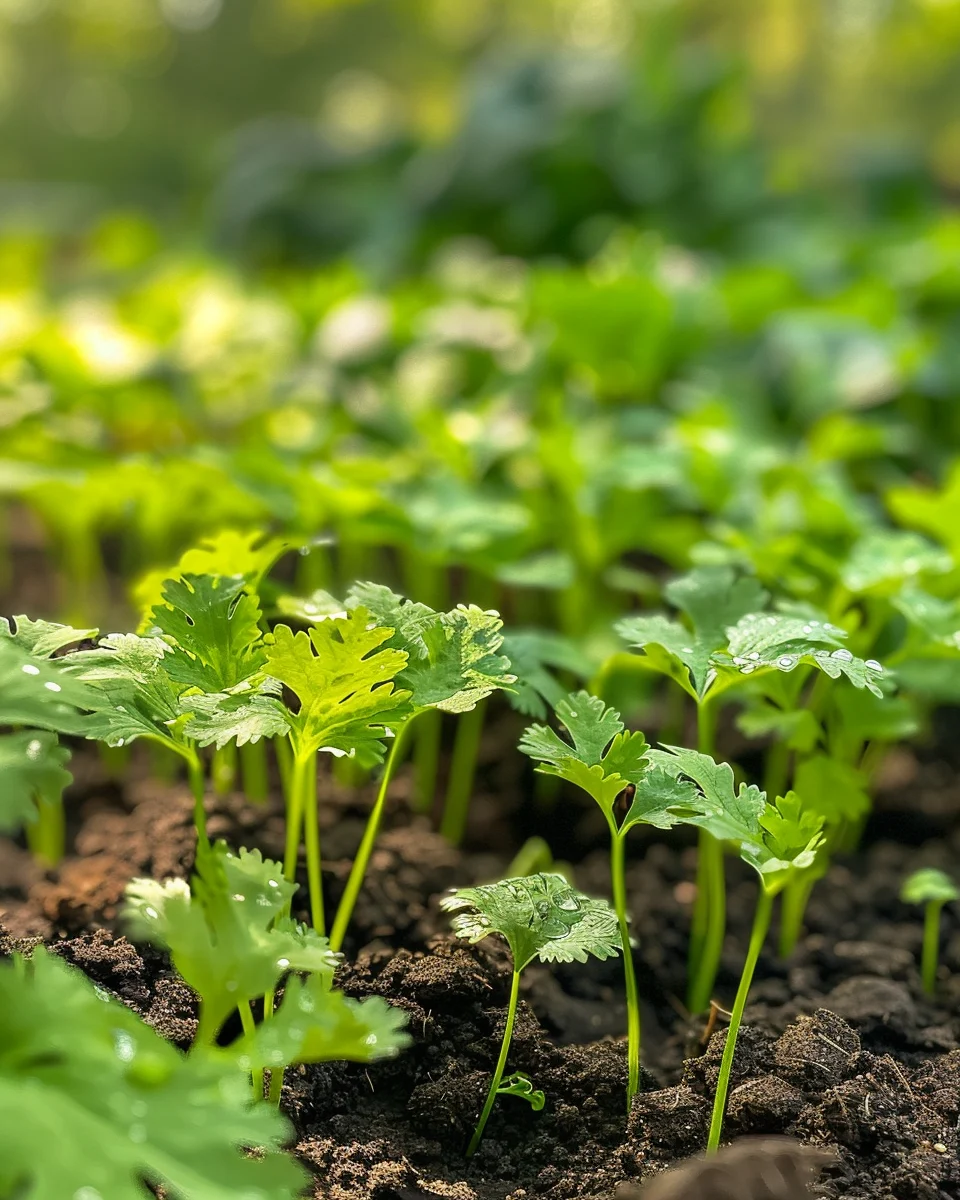
For indoor growing under lights, timing is flexible but strategic planting can maximize your success. In winter months (October through February in the Northern Hemisphere), when natural light is limited, your grow lights will be the primary light source, requiring longer operation times (14-16 hours daily). During summer months, ambient indoor temperatures may be warmer, potentially triggering bolting, so consider setting up your growing area in a cooler part of your home. For succession planting, start new seeds every 2-3 weeks regardless of season. Direct sowing is the preferred method for cilantro under grow lights as the herb doesn’t transplant well due to its sensitive taproot.
Best cilantro varieties to grow under lights
- Slow Bolt – Specially bred to resist flowering in warm conditions, making it ideal for indoor growing where temperature control can be challenging.
- Leisure – Produces broad, flavorful leaves and demonstrates good bolt resistance with a compact growth habit perfect for limited indoor spaces.
- Santo – Fast-growing variety with excellent leaf production and moderate bolt resistance, ideal for frequent harvesting.
- Calypso – Exceptionally slow to bolt and quick to regrow after cutting, perfect for continuous indoor harvesting.
- Marino – Compact variety with fine, feathery leaves that performs well in containers under artificial lighting.
- Long Standing – As the name suggests, this variety remains in the vegetative stage longer before bolting, extending your harvest period.
- Cruiser – Disease-resistant variety with uniform growth pattern that responds well to controlled indoor conditions.
How to plant cilantro under grow lights
Materials needed:
- Cilantro seeds
- Shallow containers (at least 15 cm/6 inches deep) with drainage holes
- Quality potting mix or seed-starting medium
- Grow lights (LED, fluorescent, or full-spectrum)
- Timer for lights
- Spray bottle for watering
- Small fan for air circulation
- Optional: heat mat for germination
Step-by-step planting process:
- Fill containers with moistened potting mix to about 1 cm (½ inch) below the rim.
- Scatter seeds thinly across the surface, spacing approximately 2.5 cm (1 inch) apart.
- Cover seeds with a thin layer of soil, about 0.6 cm (¼ inch) deep.
- Mist the soil surface gently to avoid displacing seeds.
- Position containers under grow lights, keeping lights 10-15 cm (4-6 inches) above the soil surface initially.
- Set timer for 14-16 hours of light daily.
- Maintain soil temperature between 18-21°C (65-70°F) for optimal germination.
- Once seedlings emerge (typically 7-10 days), adjust lights to remain 10-15 cm (4-6 inches) above the growing plants.
- Set up a small fan for gentle air circulation to strengthen stems and prevent fungal issues.
How to grow cilantro under grow lights
For successful cilantro growth under artificial lighting, position your grow lights 10-15 cm (4-6 inches) above plants, raising them as plants grow taller. Provide 14-16 hours of light daily using a timer for consistency. LED or full-spectrum fluorescent lights work best, providing the blue and red light wavelengths cilantro needs for vegetative growth. Water when the top 1 cm (½ inch) of soil feels dry, typically every 3-4 days, ensuring even moisture without saturation. Feed with a half-strength liquid organic fertilizer once monthly—cilantro doesn’t require heavy feeding. Maintain temperatures between 18-24°C (65-75°F); cooler temperatures (below 21°C/70°F) help prevent bolting. For container growing, use pots at least 15 cm (6 inches) deep to accommodate cilantro’s taproot, and ensure good drainage. Thin seedlings to stand 5-7.5 cm (2-3 inches) apart once they reach 5 cm (2 inches) tall to prevent overcrowding and promote air circulation.
Caring for cilantro under grow lights
Monitor your cilantro regularly, checking moisture levels every 1-2 days as indoor environments can dry out quickly. Rotate containers weekly to ensure even light exposure. Harvest outer leaves first when plants reach 15 cm (6 inches) tall, cutting stems near the base to encourage bushier growth. For pest management, watch for aphids and spider mites, which can appear even indoors—treat with insecticidal soap or neem oil spray if needed. Powdery mildew may develop if air circulation is poor; improve ventilation with a small fan and avoid overhead watering. Yellowing leaves typically indicate overwatering or nutrient deficiency—adjust watering frequency and consider a light application of balanced fertilizer. For storage, cilantro keeps best when stems are placed in water like a bouquet in the refrigerator, or wrap unwashed leaves in slightly damp paper towels in a plastic bag and refrigerate for up to one week.
Understanding bolting in cilantro under grow lights
Bolting is the process where cilantro shifts from leaf production to flowering and seed formation, making the leaves bitter and less desirable. Under grow lights, bolting is typically triggered by three main factors: excessive heat (temperatures consistently above 24°C/75°F), light duration that mimics long summer days (over 16 hours), and environmental stress like inconsistent watering. To prevent premature bolting, maintain cooler temperatures by positioning your growing setup away from heat sources, limit light exposure to 14-16 hours daily, and ensure consistent moisture. Choose bolt-resistant varieties like ‘Slow Bolt’ or ‘Calypso’ for indoor growing. If bolting begins despite preventive measures, you can harvest all remaining usable leaves immediately, allow the plant to produce coriander seeds for spice use, or remove the flowering plant and start fresh seedlings. Remember that cilantro is naturally a short-lived annual, so succession planting every 2-3 weeks ensures continuous harvest before bolting becomes an issue.
Why does cilantro turn bitter?
- Beginning to bolt – When cilantro starts producing its flower stalk, even before visible flowers appear, the leaves begin developing bitter compounds; maintain cooler temperatures and harvest regularly.
- Excessive heat – Temperatures consistently above 24°C (75°F) trigger biochemical changes that produce bitter flavors; move grow lights and plants to a cooler location.
- Improper light cycles – Too much light (over 16 hours daily) can simulate long summer days, triggering bolting and bitterness; use a timer to maintain appropriate light duration.
- Aging plants – Older cilantro naturally becomes more bitter as it completes its life cycle; implement succession planting for continuous young growth.
- Water stress – Inconsistent watering (too dry or waterlogged) stresses plants, potentially increasing bitter compounds; maintain even soil moisture.
Companion planting for cilantro under grow lights
Even in indoor growing environments, companion planting principles can enhance cilantro growth. Consider growing these companions under the same light system:
- Basil – Thrives under similar light conditions and helps repel aphids and other pests that might affect cilantro.
- Chives – Their natural pest-repelling properties benefit cilantro while requiring similar growing conditions.
- Lettuce – Makes excellent use of space under grow lights and has similar water and light requirements without competing aggressively.
- Spinach – Grows well alongside cilantro with compatible light and water needs, maximizing your growing space.
- Mint – Should be avoided as a companion as it grows aggressively and can quickly overtake cilantro’s growing space.
- Fennel – Produces compounds that can inhibit cilantro growth and should be grown separately under different lights.
Seasonal calendar
- January-February: Ideal time to start indoor cilantro when outdoor growing isn’t possible; maintain 14-16 hours of artificial light.
- March-April: Continue succession planting every 2-3 weeks; if using grow lights to supplement natural light, adjust artificial lighting duration as daylight increases.
- May-June: Monitor temperature as indoor environments may warm; move setup to cooler locations if needed; continue harvesting and succession planting.
- July-August: Peak heat months require vigilance; ensure growing area stays below 24°C (75°F); increase air circulation with fans.
- September-October: Ideal conditions return for indoor growing; continue regular succession planting and harvesting.
- November-December: Increase artificial light duration to compensate for shorter days; continue regular care and succession planting.
Problems & solutions
| Problem | Quick Fix |
|---|---|
| Leggy, stretched seedlings | Move lights closer (10-15 cm/4-6 inches above plants) and ensure 14-16 hours of light daily |
| Yellowing leaves | Check for overwatering; allow soil to dry slightly between waterings and ensure good drainage |
| Slow growth | Verify light intensity is adequate; consider upgrading lights or reducing distance to plants |
| Leaf spots or powdery coating | Improve air circulation with a small fan; avoid overhead watering; treat with neem oil if fungal disease persists |
| Early bolting | Lower ambient temperature if possible; ensure lights aren’t on for more than 16 hours; harvest regularly |
| Aphids or spider mites | Spray with insecticidal soap or diluted neem oil; isolate affected plants to prevent spread |
| Seeds germinate poorly | Check seed freshness; maintain soil temperature at 18-21°C (65-70°F); consider using a heat mat |
Common questions about growing cilantro under grow lights
How often should I water cilantro grown under lights?
Water when the top 1 cm (½ inch) of soil feels dry to the touch, typically every 3-4 days depending on your indoor environment. Indoor growing environments often have lower humidity, so check moisture levels regularly but avoid overwatering, which can lead to root rot.
What type of grow light is best for cilantro?
Full-spectrum LED grow lights are ideal as they provide the blue and red wavelengths cilantro needs while remaining energy-efficient. T5 or T8 fluorescent lights also work well and are more budget-friendly. Position lights 10-15 cm (4-6 inches) above plants and provide 14-16 hours of light daily.
How large should containers be for growing cilantro indoors?
Use containers at least 15 cm (6 inches) deep to accommodate cilantro’s taproot, with a width that allows plants to be spaced 5-7.5 cm (2-3 inches) apart. Ensure containers have drainage holes to prevent waterlogging.
How can I prevent my indoor cilantro from bolting?
Maintain temperatures below 24°C (75°F), limit light exposure to 14-16 hours daily, ensure consistent watering, and choose bolt-resistant varieties. Regular harvesting also helps delay bolting by encouraging continued leaf production.
How often can I harvest cilantro grown under lights?
Begin harvesting when plants reach 15 cm (6 inches) tall, cutting outer stems first. You can harvest up to one-third of the plant at once, allowing it to regrow. With proper care and succession planting, you can harvest continuously, with each plant providing leaves for 4-6 weeks before needing replacement.
Can I use regular household LED bulbs instead of grow lights?
Standard household LEDs typically don’t provide the specific light spectrum plants need. While cilantro might survive under regular LEDs, growth will be slower and less robust. For best results, invest in proper grow lights that provide the full spectrum needed for photosynthesis.
How do I know if my cilantro is getting enough light?
Healthy cilantro under adequate lighting will have vibrant green leaves, compact growth, and sturdy stems. Signs of insufficient light include leggy, stretched growth, pale leaves, and slow development. If you notice these symptoms, move lights closer or upgrade to higher intensity lighting.