
A practical, flexible system for keeping your home running smoothly—without living by a rigid schedule.
If your home feels like it’s always in “catch-up mode,” it’s rarely because you’re not trying. It’s usually because the work is happening in random bursts—reactive cleaning, last-minute meals, overdue admin, and surprise appointments that derail the week.
A monthly household rhythm solves that problem by turning scattered tasks into predictable cycles. It’s not a strict timetable. It’s a repeatable pattern that reduces decision fatigue, prevents pile-ups, and gives your family a clear sense of what happens when.
Below is a step-by-step guide to building a monthly rhythm that’s practical, sustainable, and easy to adjust as life changes.
Why a Monthly Rhythm Matters (and What It’s Not)
A monthly household rhythm is the “big picture” layer of home management. Daily routines handle the basics (dishes, quick tidy). Weekly routines keep things from sliding (laundry, floors). The monthly rhythm is where you place the tasks that matter—but don’t need constant attention—so they stop turning into stressful, all-day projects.
What it is: a consistent cycle for planning, cleaning focus areas, seasonal tasks, meals, finances, admin, and connection.
What it isn’t: a rigid schedule that ignores sick days, busy seasons, travel, or changing work shifts.
When your household has a monthly rhythm, you’re less likely to ask, “When did we last do this?” and more likely to feel like the home is being managed on purpose.
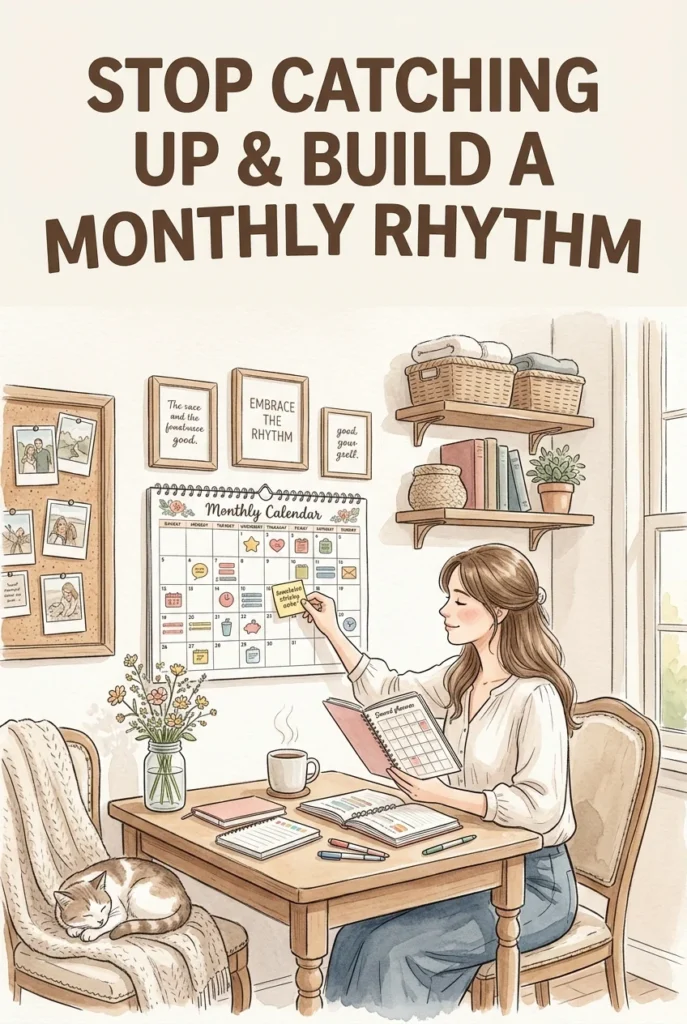
1) Anchor the Month with a Family Calendar
Every working household rhythm starts with visibility. If the calendar is unclear, everything downstream becomes harder: meals, cleaning, errands, and even rest.
Create one central calendar everyone can access
Choose a format you’ll actually use: a wall calendar in the kitchen, a paper planner, or a shared digital calendar. The tool matters less than consistency. One calendar beats multiple half-updated calendars every time.
Mark the non-negotiables first
Add the items that shape the month:
- Appointments
- Work shifts
- School schedules and activities
- Birthdays and family events
- Bill due dates
Use simple color coding
Assign a color to each family member, or use category colors (work, kids, home, finances). The goal is quick clarity at a glance.
Hold a brief weekly check-in
Pick a predictable time—often Sunday works well—and look at the month view together. Identify busy days, adjust expectations, and decide where to place heavier tasks. This one habit reduces surprises and helps the household move in the same direction.
2) Use Weekly Household Themes to Spread the Load
Trying to clean and organize everything every week is a recipe for burnout. Weekly themes keep the home maintained without turning weekends into marathon resets.
Example monthly theme rotation
You can adapt the order to fit your home, but a simple four-week rhythm looks like this:
- Week 1: Kitchen deep clean and pantry attention
- Week 2: Bedrooms and closet reset
- Week 3: Bathrooms and laundry systems
- Week 4: Living spaces and entryway refresh
Why themes work
When you know what the focus is, you stop mentally carrying every project at once. The tasks become more achievable, and you’re less likely to abandon the system after a busy week because you can simply return to the next theme.
Keep the theme small enough to finish
A theme is a focus area, not an all-or-nothing renovation. “Kitchen week” might include a fridge check, wiping cabinet fronts, and clearing expired pantry items—not reorganizing every drawer unless you want to.
3) Rotate Seasonal and Monthly Tasks So They Don’t Stack Up
Some home tasks don’t need daily or weekly attention, but they matter for comfort, safety, and smooth operations. If you don’t schedule them, they tend to build up into a stressful backlog.
Examples of monthly or seasonal tasks
- Changing air filters
- Rotating bedding
- Checking smoke detectors
- Organizing the freezer
- Swapping décor as seasons change
Create a monthly reminder list
Use a checklist in a binder, planner, or notes app. The format doesn’t matter; seeing the list does. When you can cross items off, the work feels finite instead of endless.
Pair tasks with your weekly themes
Link tasks to a related week so you don’t have to “find time” later. For example, check pantry expiry dates during kitchen week, or rotate bedding during bedroom week. Pairing reduces friction and makes the rhythm easier to maintain.
4) Build a Monthly Meal Rhythm to Reduce Daily Stress
For many households, meals are the most frequent decision point—and the fastest way to feel behind. A meal rhythm doesn’t eliminate choice; it limits the number of choices you have to make every day.
Use themed nights as light structure
Simple themes can remove a surprising amount of mental load:
- Meatless Mondays
- Taco Tuesdays
- Slow-Cooker Thursdays
You’re not locking yourself into a single recipe. You’re choosing a category that narrows the options.
Repeat a short list of reliable dinners
Pick 8–10 go-to meals and repeat them across the month. This reduces decision fatigue and makes shopping more predictable. You still have room for variety, new recipes, or special treats—just without needing to reinvent dinner every night.
Choose one prep day each month
Set aside a day to batch-cook basics like soups, sauces, or snacks. Even a small amount of prep can make busy nights easier because you’re not starting from zero.
5) Sync Finances into the Monthly Rhythm
Money management often feels heavier when it’s sporadic. When it becomes routine, it takes less energy and creates fewer end-of-month surprises.
Early-month bill check-in
At the start of the month, review which bills are due. As you pay them, tick them off. This is simple, but it prevents the “Did we already pay that?” uncertainty.
Mid-month budget reset
Set aside 20–30 minutes mid-month to review spending and adjust if needed. This small check-in helps you course-correct before the month ends.
Make savings a small ritual
Link savings or goals to payday—such as transferring money into savings. Turning it into a repeatable step builds consistency and keeps goals visible without requiring constant willpower.
6) Create a Laundry Cycle That Matches Real Life
Laundry is one of the quickest household tasks to multiply. Without a plan, it expands to fill every available corner of time and space.
Set a weekly laundry rhythm
Designate days by category so you’re not guessing what to wash next. For example:
- Monday: bedding
- Wednesday: clothes
- Saturday: towels
Adjust the days to fit your schedule, not the other way around. The point is predictability.
Add a monthly deep-care laundry task
Once a month, wash bulkier items like blankets, duvets, or curtains. These often get forgotten until they feel urgent, so a monthly place for them keeps the home fresher with less effort.
Post the plan where the work happens
A simple chart near the laundry area reduces mental load. When you’re busy, you don’t want to remember the system—you want to see it.
7) Schedule a Monthly Household Admin Reset
Paperwork and digital clutter rarely feel urgent—until they suddenly do. A short monthly session keeps the backlog from snowballing.
Plan one focused session (30–60 minutes)
Choose a consistent time, such as the first week of the month or the last weekend. Put it on the calendar so it doesn’t disappear.
What to include in your admin reset
- File important documents
- Shred old papers
- Update calendars with new dates and invitations
- Clean up an email inbox
Keep a central binder for key information
A single place for medical records, emergency contacts, and budgets reduces stress when you need information quickly. The goal is not perfect filing. It’s reliable access.
8) Add a Family Connection Ritual (Because the Home Serves People)
A household rhythm isn’t only a cleaning strategy. It’s also a way to protect relationships and reduce friction. When people feel informed and included, cooperation improves—and resentment tends to decrease.
Hold a monthly family meeting
Sit down together to review schedules, talk through upcoming events, and name any goals for the month. Keep it brief and consistent so it doesn’t feel like a major production.
Include a simple gratitude round
Invite each person to share a highlight from the past month. This keeps the meeting from becoming only logistics and helps everyone feel seen.
Schedule one family-only event
Add one fun plan to the calendar: a movie night, picnic, or game day. When connection is planned, it’s more likely to happen—especially in busy seasons.
9) Declutter Small Areas in Rotation
Decluttering works best when it’s routine, not heroic. Instead of waiting for a full-house overhaul, choose one small area each month and keep it moving.
Example monthly declutter rotation
- January: junk drawer
- February: bathroom cabinet
- March: entryway closet
- April: kids’ toys
Why small-area decluttering is sustainable
Small wins prevent overwhelm. They also stop clutter from spreading into higher-traffic areas. Over time, this approach keeps the home feeling “maintained” rather than periodically rescued.
Set a realistic time limit
Even 15–30 minutes can be enough for a single drawer or shelf. A time boundary keeps the task from expanding and makes it easier to start.
10) Close the Month with an End-of-Month Reset Ritual
One of the most overlooked parts of home management is closure. A short end-of-month reset helps you finish the current cycle and begin the next one with less mental clutter.
Do a quick household sweep
Keep it simple: tidy each room, return items to their homes, take out trash, and vacuum. This isn’t deep cleaning. It’s a baseline reset.
Review what’s coming next month
Look ahead for birthdays, bills, and key tasks. This is where your calendar becomes a stress-reduction tool instead of a record of surprises.
Add a personal reset
Take a few minutes to reflect: what worked this month, what didn’t, and what you want to adjust. You might journal briefly, plan self-care for the next few weeks, and acknowledge what went well. This reinforces progress and helps you refine the rhythm over time.
Tips to Make Your Monthly Rhythm Stick
- Start small: If this is new, begin with the calendar, one weekly theme, and an end-of-month reset. Add the rest gradually.
- Write it down: A visible plan (posted or saved) reduces mental load and