

Best Soil For Rubber Tree Plants: Creating the Perfect Growing Medium
Understanding Rubber Tree Plant Soil Requirements
Rubber tree plants (Ficus elastica) thrive in well-draining, slightly acidic soil with a pH between 5.5 and 7.0. While these resilient houseplants can tolerate various soil conditions, providing the optimal growing medium ensures vibrant growth and overall plant health.
As tropical plants native to the humid rainforests of South and Southeast Asia, rubber trees naturally grow in environments with consistent moisture and rich, well-draining soil. Replicating these conditions in your potting mix is key to success with these popular houseplants.
The Ideal Rubber Tree Soil Composition
The perfect soil mix for rubber tree plants balances moisture retention with excellent drainage. A basic formula that works well is one part nutrient-rich component (like peat or potting soil), one part pine bark, and one part drainage material (coarse sand or perlite).
This 1:1:1 ratio provides the essential elements rubber trees need: nutrients, aeration, and proper drainage. You can adjust this ratio slightly based on your specific growing conditions, but maintaining good drainage is critical for preventing root problems.
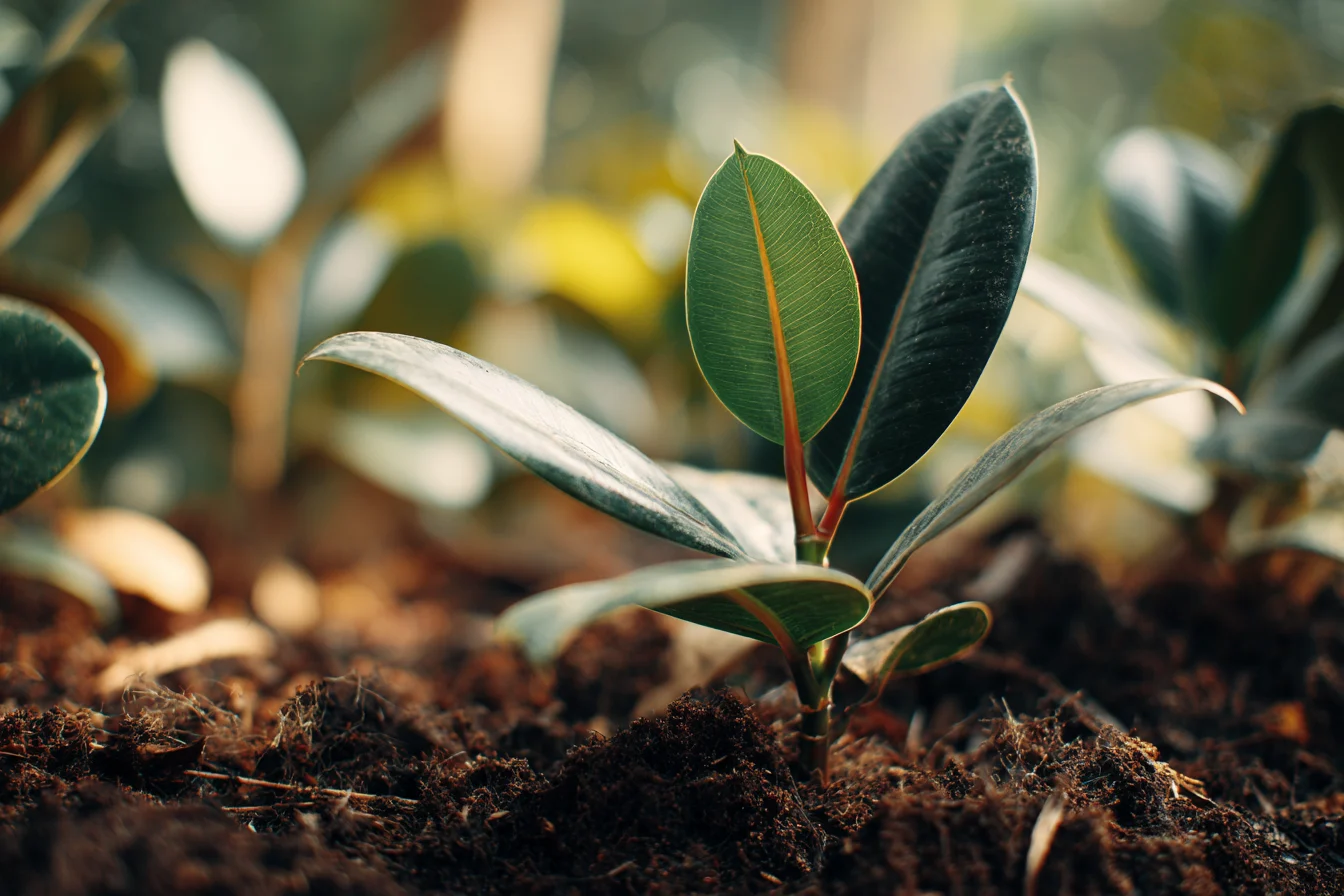
DIY Rubber Tree Potting Mix Recipe
Creating your own rubber tree soil mix is both economical and effective. For a basic homemade mix, combine:
- 1 part peat moss or quality potting soil (for nutrients and slight acidity)
- 1 part pine bark or orchid bark (for drainage and aeration)
- 1 part perlite, pumice, or coarse sand (to prevent soil compaction)
This combination creates a light, airy medium that holds enough moisture while allowing excess water to drain freely. For larger, more mature rubber trees, consider using sand rather than perlite for added weight and stability.
Store-Bought Soil Options for Rubber Trees
If you prefer convenience, several commercial potting mixes work well for rubber trees with minimal modifications. Look for high-quality indoor plant potting mixes that emphasize good drainage.
Standard houseplant potting soil can work, but it’s often beneficial to enhance drainage by adding extra perlite or bark. Avoid heavy garden soils or mixes designed to retain excessive moisture, as these can lead to root problems.
Adapting Specialty Soils for Rubber Trees
While not ideal on their own, specialty soils like cactus or orchid mixes can be adapted for rubber trees. Cactus soil drains extremely well but lacks sufficient nutrients, while orchid mix contains too much bark to properly support a tall rubber tree.
A balanced approach is to combine these specialty soils with standard potting mix. For example, mixing one part cactus soil, one part orchid mix, and one part peat-based potting soil creates a well-balanced medium that provides both drainage and nutrients.
Signs Your Rubber Tree Has Soil Problems
Too Much Moisture
When rubber tree soil retains excessive moisture, you may notice:
- Yellowing or browning leaves
- Brown or yellow spots developing on foliage
- Drooping leaves that eventually fall off
- Soft, mushy stems near the soil line
- Foul odor from the soil (indicating root rot)
Too Little Moisture
Conversely, soil that dries out too quickly can cause:
- Crisp leaves instead of waxy, flexible ones
- Inward curling of foliage
- Slow or stunted growth
- Leaf drop, particularly of lower leaves
The Importance of Proper Drainage
Well-draining soil is crucial for rubber trees to prevent root rot and other moisture-related diseases. These plants are susceptible to overwatering, making proper drainage essential for long-term health.
Always ensure your pot has adequate drainage holes, and consider adding a layer of small stones or broken pottery at the bottom of the container to improve water flow. This drainage layer, combined with well-draining soil, creates the ideal environment for rubber tree roots.
pH Considerations for Rubber Tree Soil
Rubber trees prefer slightly acidic soil with a pH between 5.5 and 7.0, though they can tolerate a wider range (5.0 to 8.3) if necessary. This slight acidity helps the plant access nutrients more efficiently.
Peat moss naturally adds acidity to your soil mix. If using a more neutral medium, you can adjust pH by adding small amounts of agricultural sulfur to increase acidity or lime to decrease it. However, most quality potting mixes fall within the appropriate pH range without modification.
Soil Considerations Based on Pot Size and Type
The size and type of your rubber tree’s container can influence your soil choice. Larger plants in bigger pots benefit from slightly heavier soil mixes that provide better stability and support.
For tall rubber trees, consider using coarse sand rather than perlite in your mix to add weight. In plastic pots, which retain moisture longer than terracotta, you might want to increase the drainage components slightly to prevent waterlogging.
Repotting and Soil Refreshment
Rubber trees typically need repotting every 1-2 years, depending on growth rate. When repotting, always use fresh soil mix to provide new nutrients and proper structure.
For consistency, try to maintain a similar soil composition when repotting, though you may need to adjust the mix as your plant grows larger. Gently remove as much old soil as possible without damaging the roots before placing the plant in fresh medium.
Fertilizing Rubber Tree Soil
Rubber trees are relatively heavy feeders during the growing season (spring and summer). A balanced, water-soluble fertilizer applied monthly provides the nutrients these plants need for robust growth.
Reduce or eliminate fertilization during fall and winter when growth naturally slows. Over-fertilization can lead to salt buildup in the soil, potentially damaging roots, so always follow package directions and consider using half-strength applications.
Common Soil-Related Problems and Solutions
Root rot is the most common soil-related issue for rubber trees, typically caused by poor drainage and overwatering. If you notice symptoms, immediately check the roots and repot in fresh, well-draining soil after removing any damaged roots.
Soil compaction can occur over time, reducing aeration and drainage. Address this by gently aerating the soil surface with a fork or by repotting with fresh medium that includes plenty of drainage materials.
Conclusion
Creating the ideal soil environment for your rubber tree plant doesn’t need to be complicated. By focusing on good drainage while maintaining adequate moisture and nutrients, you’ll provide the foundation for a healthy, thriving plant that can grow for many years.
Remember that rubber trees are adaptable plants that can tolerate less-than-perfect conditions, but giving them the right soil from the start will minimize problems and maximize growth. With proper soil, consistent care, and occasional repotting, your rubber tree will reward you with lush, glossy foliage and impressive vertical growth.