

Tradescantia Nanouk Care Guide: Growing This Stunning Houseplant
Introduction to Tradescantia Nanouk
Tradescantia Nanouk is a relatively new and increasingly popular houseplant known for its stunning pink, green, and purple variegated foliage. Created in 2012 by Dutch plant breeders who cross-pollinated two varieties of Tradescantia albiflora, this patented variety has quickly become a favorite among houseplant enthusiasts.
What makes Nanouk special is its compact growth habit, vibrant colors, and relatively easy care requirements. Unlike some of its Tradescantia relatives, Nanouk has thicker, more robust leaves that can withstand typical indoor conditions with less fuss.
This plant grows to about 6 inches tall but can trail up to 2 feet long, making it perfect for hanging baskets or elevated planters. Under optimal conditions, Nanouk may even produce small pink or white flowers, adding to its ornamental value.
Light Requirements
Tradescantia Nanouk thrives in bright, indirect light. Aim for 6-10 hours of light daily for optimal growth and coloration. An east or south-facing window with some distance from direct rays works perfectly.
If your plant receives too much direct sunlight, the leaves may burn and become discolored. Consider using sheer curtains to filter intense light. You’ll know the light is too strong if your plant casts a sharp shadow.
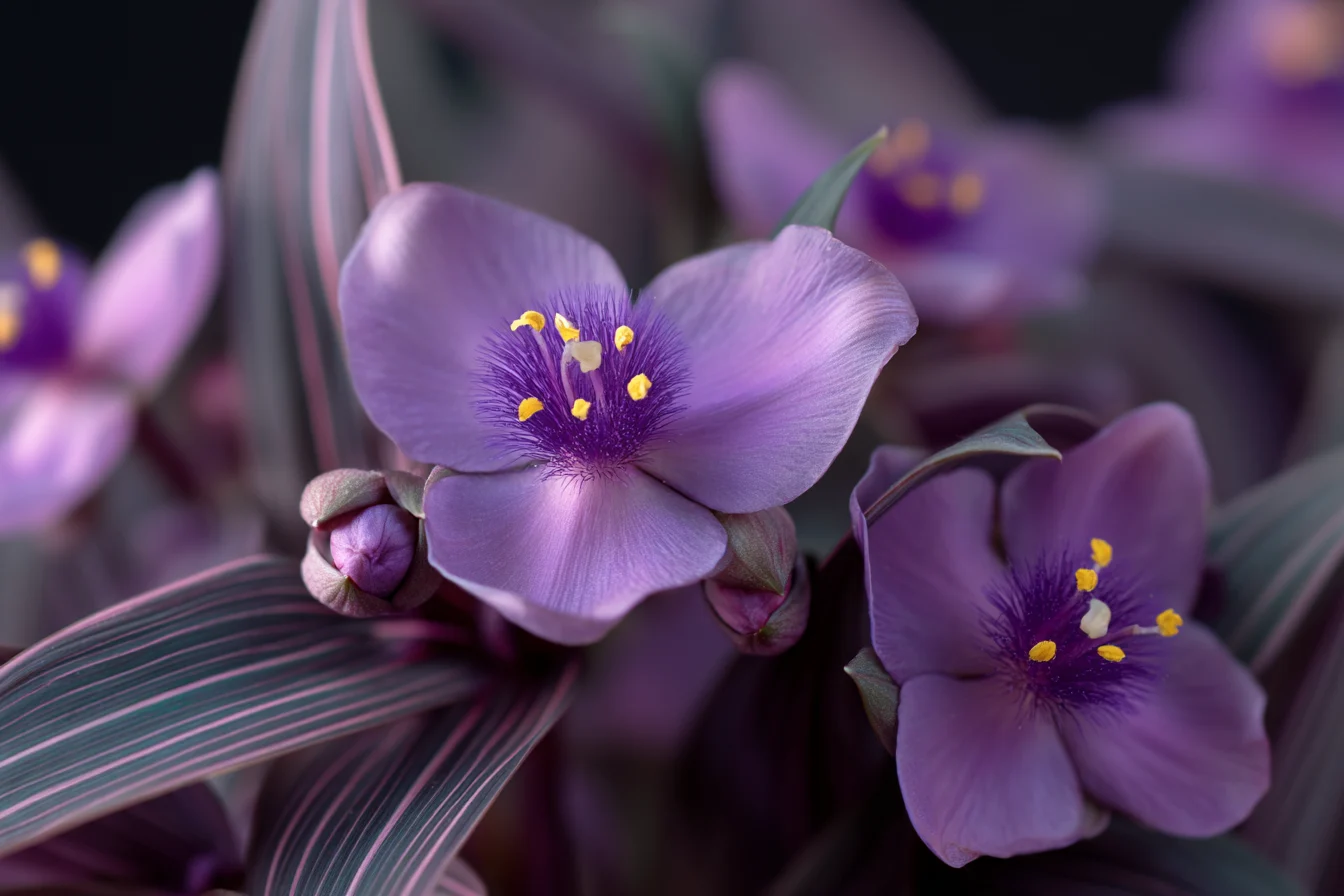
Insufficient light will cause the plant to lose its vibrant pink and purple coloration, resulting in primarily green leaves. You might also notice elongated, leggy stems as the plant stretches toward light sources. If this happens, gradually move your Nanouk to a brighter location.
Watering Needs
Tradescantia Nanouk prefers soil that’s moist but never soggy. A good rule of thumb is to water when the top 1-2 inches of soil feel dry to the touch. This typically translates to watering once a week during spring and summer, and once every two weeks during fall and winter.
When watering, thoroughly saturate the soil until water flows from the drainage holes, then empty any excess water from the saucer. This prevents root rot and other moisture-related problems.
Your watering schedule should adjust based on environmental conditions. Plants in warmer, drier environments will need more frequent watering than those in cooler, more humid settings. Nanouk isn’t particularly fussy about water type, so tap water works fine.
Temperature and Humidity Preferences
Tradescantia Nanouk thrives in temperatures between 60°F and 85°F (15°C to 29°C). It can tolerate slightly cooler nighttime temperatures but should be protected from cold drafts and sudden temperature fluctuations.
Keep your Nanouk away from heating vents, air conditioners, and cold windows during winter to prevent stress on the plant. If temperatures drop below 50°F (10°C), the plant may show signs of distress.
Unlike other Tradescantia varieties with thinner leaves, Nanouk is less demanding when it comes to humidity. Average household humidity is typically sufficient. However, during dry winter months, you might want to mist the air around the plant occasionally or use a small humidifier to boost moisture levels.
Soil and Potting Requirements
Tradescantia Nanouk requires well-draining, well-aerated soil with a pH between 5.5 and 6.5. A good homemade mix consists of two parts peat moss, one part perlite, and one part compost. This combination provides adequate drainage while retaining enough moisture and nutrients.
Always choose containers with drainage holes to prevent water from pooling at the bottom. Terracotta pots work particularly well as they allow excess moisture to evaporate through their porous walls.
When planting, fill the pot halfway with soil, position your Nanouk so that it sits at the same depth as in its previous container, then fill in around the roots with more soil. Water thoroughly after planting to help the soil settle around the roots.
Fertilizing Schedule
During the active growing season (spring and summer), fertilize your Tradescantia Nanouk once a month with a balanced houseplant fertilizer diluted to half the recommended strength. This provides the nutrients needed for vibrant foliage and healthy growth.
Reduce or eliminate fertilization during fall and winter when the plant’s growth naturally slows. Over-fertilizing can lead to salt buildup in the soil, which may damage the roots and cause leaf burn.
If you notice pale leaves despite adequate light, your plant might benefit from a light feeding. Always water your plant before applying fertilizer to prevent root burn.
Pruning and Maintenance
Regular pruning helps maintain Tradescantia Nanouk’s compact, bushy appearance. Using clean, sharp scissors or pruning shears, trim leggy stems back to your desired length. This encourages branching and fuller growth.
Don’t remove more than one-third of the plant at once to avoid shocking it. The best time to prune is during the growing season (spring and summer) when the plant can quickly recover and produce new growth.
Remove any yellowing or damaged leaves promptly to maintain the plant’s appearance and prevent potential disease spread. Wipe the leaves occasionally with a damp cloth to remove dust and keep the foliage looking vibrant.
Propagation Methods
Tradescantia Nanouk is incredibly easy to propagate through stem cuttings. Select healthy stems 4-10 inches long, making clean cuts just below a leaf node. Remove leaves from the bottom portion of each cutting.
You can root the cuttings in water by placing them in a small container with the bottom nodes submerged. Keep the container in bright, indirect light and change the water every few days. Roots typically develop within 1-2 weeks.
Once roots reach about an inch long, transfer the cuttings to soil. Keep the soil consistently moist for the first few weeks as the new plants establish. This method allows you to create new plants to expand your collection or share with friends.
Repotting Guidelines
Young Tradescantia Nanouk plants grow quickly and may need repotting once or twice a year. As they mature, this frequency decreases to once every 2-3 years. Signs that repotting is needed include roots growing through drainage holes, slowed growth, or water running straight through the pot without being absorbed.
Choose a new container that’s 1-2 inches larger in diameter than the current pot. Gently remove the plant from its existing container, loosen the root ball slightly, and place it in the new pot at the same depth. Fill in with fresh potting mix and water thoroughly.
Spring is the ideal time for repotting, as the plant is entering its active growth phase and can quickly recover from any stress. Avoid repotting during winter when growth is naturally slower.
Common Problems and Solutions
Yellowing or Browning Leaves
The most common cause of yellowing leaves is overwatering or poor drainage. Ensure you’re using well-draining soil and only water when the top few inches are dry. If root rot has developed (indicated by mushy, dark roots), trim away affected roots and repot in fresh soil.
Browning leaf tips often indicate low humidity or inconsistent watering. Try to maintain a more regular watering schedule and consider increasing humidity around the plant.
Loss of Variegation
If your Nanouk’s leaves are turning mostly green with little pink or purple coloration, it’s likely not receiving enough light. Gradually move the plant to a brighter location, being careful not to expose it to direct sunlight too suddenly.
Seasonal changes in light intensity can also affect variegation. You might notice more vibrant colors during spring and summer when light levels are naturally higher.
Pest Management
Tradescantia Nanouk can occasionally attract common houseplant pests like spider mites, mealybugs, and aphids. Regularly inspect the undersides of leaves and stem joints for signs of infestation.
Treat minor infestations by wiping leaves with a solution of mild soap and water. For more severe cases, insecticidal soap or neem oil can be effective. Always isolate affected plants to prevent pests from spreading to your other houseplants.
Toxicity Concerns
Tradescantia Nanouk, like other Tradescantia species, is considered toxic to both humans and pets. The plant produces a sap that can cause skin irritation upon contact and digestive upset if ingested.
Keep this plant out of reach of children and pets. Wear gloves when pruning or handling the plant extensively to avoid potential skin reactions. If you notice your pet has ingested part of the plant, contact your veterinarian for guidance.
Despite these precautions, Tradescantia Nanouk remains a popular choice for indoor gardeners due to its striking appearance and relatively easy care requirements.
Seasonal Care Adjustments
During spring and summer, Tradescantia Nanouk enters its active growth phase. Increase watering frequency, resume regular fertilization, and provide bright, indirect light to support this growth.
As fall approaches, gradually reduce watering and stop fertilizing. In winter, water only when the soil is quite dry (approximately every 2-3 weeks) and ensure the plant is protected from cold drafts and temperature fluctuations.
If you notice growth slowing during winter, this is normal and not cause for concern. The plant will resume its vigorous growth once spring returns and light levels increase.
Conclusion
Tradescantia Nanouk is a rewarding houseplant that offers stunning color and relatively easy care. With proper light, consistent watering, and occasional maintenance, this beautiful trailing plant can thrive in your home for many years, bringing a splash of pink and purple to your indoor garden.
Remember that even if problems arise, Nanouk’s easy propagation means you can always start fresh with healthy cuttings. This resilience, combined with its eye-catching appearance, makes Tradescantia Nanouk a wonderful addition to any houseplant collection.