
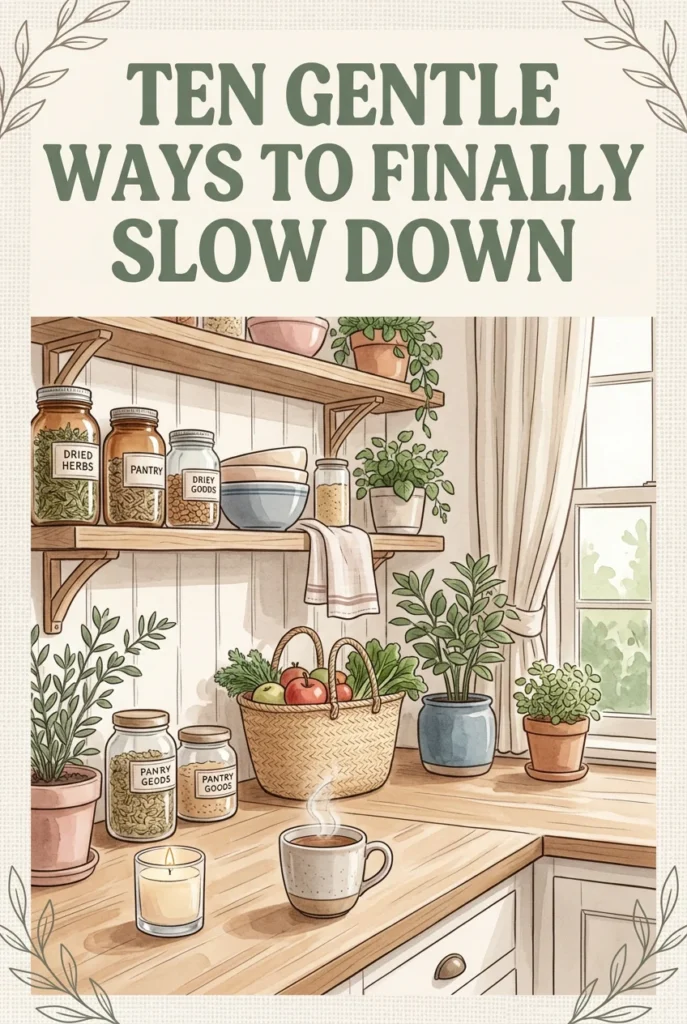
A calmer pace isn’t a personality trait—it’s a set of choices you can practice, one ordinary day at a time.
Life did not always feel this fast.
For many people, days now move to the rhythm of notifications, packed calendars, and “just one more thing.” Errands become sprints. Weekends start to resemble workdays. Even rest can feel scheduled.
And yet, a quieter instinct keeps returning: the desire for a life that feels gentle, intentional, and unhurried.
Living slowly does not mean doing nothing. It means doing what matters with presence. It’s choosing quality over quantity, depth over speed, and connection over consumption. It’s the difference between rushing through a shop and actually noticing the colors of produce, pausing to talk with a vendor, carrying groceries in a reusable basket, and letting the day unfold rather than chasing it.
Below are ten grounded ways to begin—designed for real schedules, modern responsibilities, and everyday life.
Why a Slower Life Matters (Even If You’re Busy)
A fast pace can become a default setting. Constant input and constant urgency make everything feel equally important, even when it isn’t. Over time, that “always on” mode can make it harder to focus, harder to rest, and harder to enjoy what is already here.
Slowing down is a practical skill. It helps you protect your attention, create room for better decisions, and experience daily life with more clarity. In many cases, the biggest shift is not what you do—it’s how you do it.
1) Start Your Mornings Without Rushing
The first hour sets the tone for the rest of the day. When you begin in a sprint, your body often carries that urgency forward—into your conversations, your errands, and your choices.
Try this simple slower-morning sequence
- Don’t reach for your phone first. Start with your senses instead.
- Open a window or step outside for a minute of fresh air.
- Let natural light into the room.
- Stretch slowly—no performance, no timer.
- Brew tea or coffee deliberately and sit down to drink it.
Even ten quiet minutes can change your internal rhythm. Slower mornings remind your nervous system that life is not an emergency.
2) Shop With Intention (and Let It Be an Experience)
When possible, choose local markets and seasonal produce. Shopping can become less about speed and more about connection—both to your food and to the people around you.
What to notice when you shop
- Colors, textures, and scents—let yourself actually look.
- What’s in season right now.
- Opportunities to ask questions and learn (even one is enough).
Buying fewer, fresher ingredients often leads to simpler, more thoughtful meals. And when you cook straightforward plant-based meals from scratch, the process naturally slows down. Preparing food becomes an experience rather than a task. Shopping becomes connection rather than consumption.
3) Create Small Rituals That Anchor Your Day
Rituals are not about perfection. They are about steadiness. A small repeated action—done with attention—can make daily life feel less chaotic and more composed.
Examples of gentle, repeatable rituals
- Lighting a candle before you journal or read.
- Putting on soft music while folding laundry.
- Watering plants at the same time each afternoon.
- Taking a short reset walk after work—even around the block.
Slowness thrives in rhythm. When you ritualize ordinary moments, your day gains structure without feeling cramped.
4) Walk More Often (When You Can)
Walking changes how you experience time. It invites observation. It turns “getting there” into part of the day instead of a hurdle to clear.
Whenever it’s reasonable, choose walking over driving. Notice architecture. Trees. Conversations drifting from open windows. Sunlight on pavement. Walking reminds you that the world exists beyond screens and deadlines.
A small shift that helps
If “walk everywhere” isn’t realistic, pick one regular walk: a quick errand, a school drop-off, a coffee run, an evening loop. Repetition is what makes it a lifestyle.
5) Limit Digital Noise (and Recover Your Attention)
Constant input creates internal urgency. When your attention is pulled in ten directions, your mind learns to expect interruption—and calm becomes harder to access.
Boundaries that reduce the pressure to respond instantly
- Set specific times to check email or social media.
- Turn off non-essential notifications.
- Keep your phone out of reach during meals and conversations.
- Create a “quiet hour” in the evening where you don’t scroll.
Protect your attention the way you would protect something valuable. A quieter digital environment supports a calmer inner world.
6) Eat Without Multitasking
Meals are built-in pauses. When you eat while scrolling, answering messages, or standing at the counter, your body gets fuel—but you miss the grounding effect of nourishment.
Make one meal a day a slower meal
- Sit at a table if possible.
- Put your phone away.
- Taste your food fully—textures, flavors, warmth, crunch.
Whether it’s fresh fruit, a warm vegetable dish, or a simple bowl of grains and greens, eating slowly turns nourishment into gratitude. Meals become steady moments instead of interruptions.
7) Schedule Empty Space (Margin Is the Point)
A slower life requires margin. If every hour is booked, you’re forced to move quickly—because there is no buffer for life.
Leave gaps between commitments. Avoid stacking errands back-to-back. Build “breathing room” into your week the way you would schedule any important appointment.
Reframe what empty space means
Spaciousness is not laziness. It’s wisdom. When something unexpected happens, you won’t feel immediately overwhelmed—because you planned for life to be life.
8) Curate Your Environment to Support Calm
Your surroundings influence your pace. When your home feels crowded or chaotic, it can quietly push you into a faster, more reactive mode.
Small environmental choices that encourage slowness
- Use softer lighting where you can.
- Open windows regularly for fresh air.
- Keep surfaces relatively clear so your eyes can rest.
- Add a simple touch of beauty: fresh flowers, a bowl of fruit, a tidy corner.
- Choose natural textures when possible—cotton, linen, wood, woven baskets.
Remove excess clutter and keep what is meaningful. A home that feels airy and intentional invites you to move through it gently.
9) Deepen Conversations (Go Beyond the Surface)
Speed shows up in how we speak and how we listen. When conversations become quick check-ins, connection can start to feel thin—even with people you love.
Ways to slow down connection
- Ask one thoughtful question and wait for the real answer.
- Listen without composing your response while the other person is talking.
- Maintain eye contact.
- Let pauses exist without rushing to fill them.
Whether you’re at a market stall, across a dinner table, or on an evening walk, slow conversations build rich relationships. Often, slowness begins in the simplest place: how we pay attention to another person.
10) Honor the Seasons (and Stop Forcing the Same Pace Year-Round)
Nature doesn’t rush, and neither should you. Aligning your routines with natural cycles can make life feel more cooperative and less forced.
Seasonal alignment you can practice in everyday ways
- Wake earlier when days are brighter, and allow more rest when evenings darken.
- Eat produce that grows locally in each season when possible.
- Decorate simply with seasonal flowers or natural elements.
- Adjust your expectations for energy instead of insisting on perfect consistency.
This isn’t about rigid rules. It’s about letting your life breathe with the year rather than pushing against it.
Tips: How to Start Without Overhauling Your Whole Life
Slower living works best when it’s practical. The goal is not a dramatic transformation—it’s a collection of gentle choices repeated until they become normal.
- Pick one change. Start with the easiest: a slower morning, one notification boundary, or one phone-free meal.
- Make it visible. Put the book on the table. Put the walking shoes by the door. Place a candle near your journal.
- Reduce decisions. Create a default plan for busy days (simple meals, a short walk, an early wind-down).
- Choose “less, but better.” Fewer errands, fewer tabs open, fewer rushed yeses.
- Let it settle. Practice the same change for a week before adding another.
A Simple “Slower Week” Starter Plan
If you want a clear way to begin, use this as a gentle structure. Adjust it to your life—this is meant to support you, not pressure you.
| Day | One Small Slow-Living Focus | What It Looks Like |
|---|---|---|
| Day 1 | Slow morning | Open a window, stretch, and sit for your first drink—no phone for 10 minutes. |
| Day 2 | Digital quiet | Turn off |