
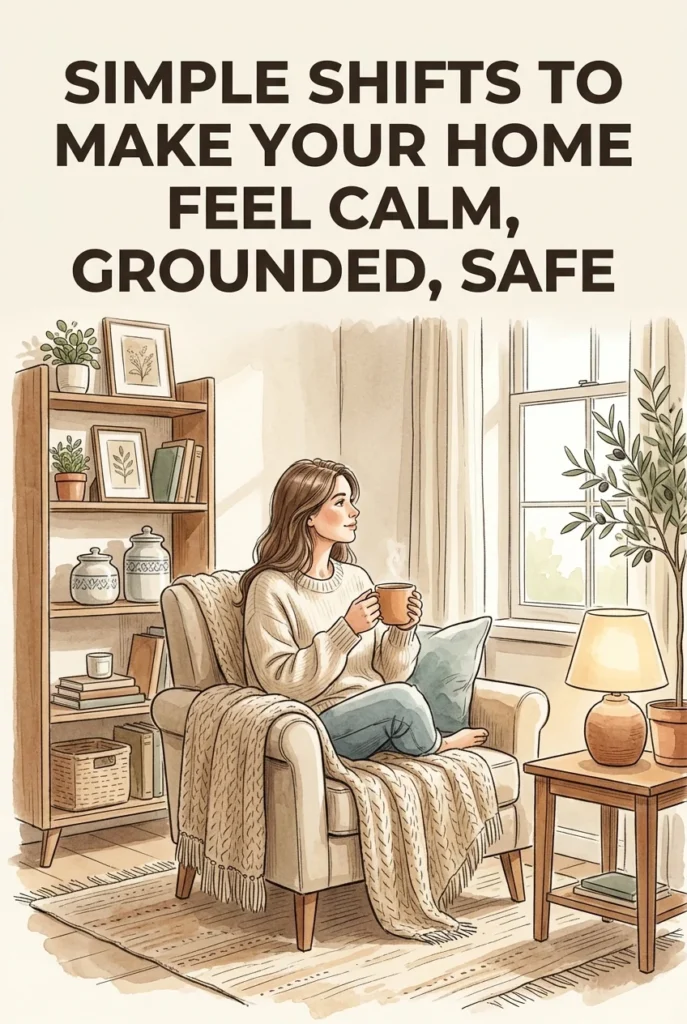
A calm, steady home isn’t about perfect styling—it’s about shaping an environment that supports your nervous system, your routines, and your values.
You know the feeling: you walk into a space and your shoulders drop. Your breath slows. Your mind stops racing for a moment.
In a world that runs loud and fast, your home should not become another source of noise. It can be a place that feels steady, safe, and rooted—one that helps you return to yourself.
A grounded home isn’t created by expensive décor or strict minimalism. It’s created through intention: the choices you make about what you see, touch, hear, and maintain each day. When your surroundings feel calm and anchored, it becomes easier to think clearly, rest deeply, and move through life with more emotional stability.
Why a “Grounded Home” Matters
Your home influences your attention, mood, and sense of safety. Visual clutter can create low-level tension. Harsh lighting can keep you wired. A lack of routines can make even a beautiful space feel unpredictable.
Grounding your home is not about control for its own sake. It’s about creating a quiet foundation beneath daily life—especially when everything outside your front door feels demanding.
The 20 Ways: Build a Home That Feels Steady and Emotionally Safe
1) Choose a calm, earthy colour palette
Colours pulled from nature tend to feel stabilising: warm beige, soft olive, terracotta, muted clay, creamy whites, deep charcoal, and gentle sage. These tones reduce visual “speed” and help a room feel settled rather than stimulating.
Make it workable
If repainting isn’t realistic, bring earthy colour in through cushions, throws, rugs, and artwork to shift the mood without a full overhaul.
2) Declutter with purpose (not punishment)
Clutter can create subtle mental pressure: more to look at, more to manage, more to decide. A grounded home doesn’t need empty shelves—it needs thoughtful editing.
Keep what is useful, beautiful, or meaningful. Let the rest go. Clearer surfaces often translate into a clearer mind.
3) Incorporate natural materials
Wood, stone, linen, cotton, rattan, clay, and ceramic add texture and depth. Natural materials also make a space feel substantial and lived-in, rather than overly synthetic or temporary.
Even small changes help: a wooden tray, a linen tablecloth, a ceramic mug you reach for daily.
4) Create a dedicated rest corner
Choose one chair, one sofa corner, or one outdoor seat and treat it as your grounding spot. Add layered cushions, a soft throw, a small side table, and warm lighting. This becomes the place you go to breathe, journal, read, or simply sit without “doing.”
5) Let in natural light during the day
Open curtains and allow sunlight to move through your home. Natural light supports mood and helps the day feel more regulated.
When evening comes, shift intentionally to softer, warmer lighting to signal that it’s time to slow down.
6) Establish daily rituals that anchor your home
A grounded home supports rhythm. Simple repetitions build emotional safety: morning tea by the window, an evening reading habit, a predictable reset before bed, or a weekly tidy that prevents buildup.
Structure doesn’t have to be rigid. It just needs to be reliable.
7) Keep books within reach
Books add visual warmth and quiet depth. A small shelf, a neat stack on a side table, or a basket beside the sofa signals reflection and thoughtful living—without requiring a “perfect” library.
8) Bring in living greenery
Plants soften hard edges and bring vitality to a room. Olive trees, trailing vines, potted herbs, or simple leafy plants can all work.
Caring for something living also adds a gentle sense of responsibility and rootedness.
9) Use texture intentionally
Grounding is physical as well as visual. Woven rugs, linen cushions, cotton drapery, and textured upholstery add comfort without clutter.
Think in layers: one or two textures per area can be enough to make a room feel calm and complete.
10) Create visual symmetry where you can
Balanced arrangements can calm the mind at a subconscious level. Even spacing between chairs, centred artwork, and tidy pairings (like two lamps or two frames) can bring quiet order.
This isn’t about strict design rules. It’s about reducing the feeling of visual “noise.”
11) Keep technology contained
Decide where devices live. When screens and chargers spread across every surface, the home can start to feel like an office or a control centre.
Contain technology with simple boundaries: one charging station, one drawer for cords, and screen-free zones where possible.
12) Add personal meaning (not just decoration)
Grounding comes from identity. Display items that reflect your story: framed art you genuinely love, travel memories, handmade crafts, or family photographs.
Personal touches make a home feel rooted in real life, not staged for an image.
13) Switch to warm lighting in the evening
Harsh, bright bulbs can keep a space feeling “on.” In the evening, choose warm-toned bulbs and layer light with table lamps or soft lantern-style lighting.
Evening lighting should feel like a gentle exhale.
14) Build a consistent cleaning rhythm
Cleaning routines create stability because the home becomes predictable. A weekly rhythm—however simple—prevents chaos from accumulating.
Clean surfaces and fresh air create a physical sense of clarity, which often supports emotional clarity too.
15) Design an entryway that resets you
Your entrance sets the emotional tone. Keep it tidy and welcoming, even if it’s small.
A simple mirror, a small console, a hook for keys, and a plant can make “coming home” feel like a transition rather than a scramble.
16) Simplify decorative choices
Overcrowded décor can become visual static. Instead of many small distractions, choose a few intentional pieces that you’re happy to live with daily.
A composed space often feels calmer than a busy one, even when both are “styled.”
17) Embrace quiet evenings
Not every night has to be filled. Grounded homes make room for stillness: lower lights, soft instrumental music, journaling, stretching, or a few minutes outside to reflect.
These cues teach your home (and your body) what rest looks like.
18) Open windows when possible
Fresh air changes the feel of a space quickly. Even a brief window-open moment can move the room from stale to clear.
If weather allows, make it part of your routine: a morning air-out or an afternoon refresh.
19) Keep the living room tidy and ready to settle
The living room often acts as the emotional centre of a home. When it’s consistently messy, it can feel like a task list.
Fold blankets, stack books neatly, and clear surfaces so the room feels like a place to land—not a place to manage.
20) Align your home with your values
Ultimately, grounding comes from alignment.
- If you value simplicity, remove excess and keep only what supports daily life.
- If you value creativity, create a small corner that invites it—pens, paper, a basket of supplies.
- If you value family connection, arrange seating to encourage conversation and togetherness.
A grounded home is not just a look. It is a reflection of what matters most to you.
Tips: A Quick “Grounding Reset” You Can Do Today
If you want the feeling of a calmer home without a full weekend project, start here. These are small actions with an outsized emotional payoff.
- Clear one surface: a coffee table, kitchen counter, or bedside table.
- Set one light cue: switch on a warm lamp in the evening instead of overhead lighting.
- Create one boundary for tech: put chargers in one spot, or set a screen-free corner.
- Add one natural element: a plant, a wooden tray, a linen cloth, or a ceramic bowl.
- Open a window for 5 minutes: let the room change quickly and naturally.
What to Remember as You Make Changes
Creating a home that makes you feel grounded is not about copying a trend or achieving a flawless aesthetic. It’s about building a steady base for your day-to-day life.
When your home feels rooted, you often feel rooted too. Decisions come from a calmer place. Rest becomes easier. Thoughts become clearer. And over time, the space you live in supports a life that feels more intentional, balanced, and recognisably your own.
Related Reading and Helpful Printables
If you’re building routines and home systems, you may also like:
- Family Daily Chore Chart – Free Printable Download
- Adult Weekly Chore Chart – Free Printable Download
- Family Weekly Chore Chart
- Grocery List – Free Printable Download
- Monthly Amazon Shopping List – Free Printable Download
- Weekly Meal Planner – Free Printable Download
- Monthly Errands List – Free Printable Download
- 21 Ways To Create An Analog Home (in a Digital World)
- 10 Ways To Create A Home That Feels Like A Warm Hug
- 21 Simple Ways To Create A Home That Heals