
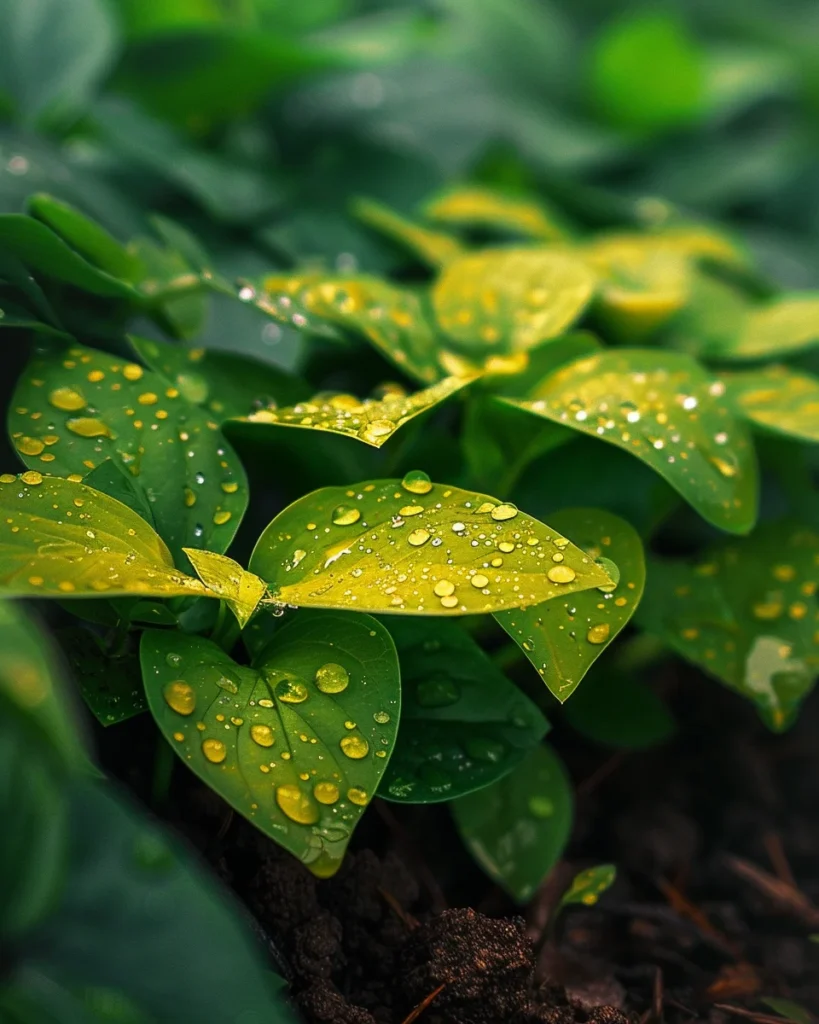
What Happens When You Stop Watering Daily: The Surprising Benefits for Your Garden
Intro for What Happens When You Stop Watering Daily
Contrary to popular belief, daily watering isn’t always beneficial for your garden. In fact, reducing your watering frequency can lead to stronger, more resilient plants with deeper root systems. This counter-intuitive approach encourages plants to extend their roots deeper into the soil in search of moisture, ultimately creating healthier specimens better equipped to handle drought conditions. While this method isn’t suitable for all plants or climates, understanding when and how to reduce watering frequency can transform your garden’s health, save water, and reduce your maintenance time. This approach works best in temperate regions with moderate rainfall and for established plants rather than seedlings or newly transplanted specimens.
When to reduce watering frequency
The best time to transition away from daily watering is when plants are established and showing signs of healthy growth. In temperate regions, late spring through early fall (when soil temperatures range from 15-25°C/60-77°F) is ideal for implementing this approach. Avoid making this transition during extreme heat waves or drought conditions, as plants will need additional support during these stress periods. In frost-prone areas, ensure plants receive adequate moisture before the ground freezes to prevent winter desiccation.
Best time to implement reduced watering
For cool climate gardens (Zones 3-6), begin reducing watering frequency in late spring (May-June) when plants have established strong growth. In warmer regions (Zones 7-10), the transition works best in early spring (March-April) before summer heat intensifies, or in early fall (September-October) as temperatures moderate. For container gardens, this approach should be implemented more gradually than for in-ground plantings, regardless of climate zone.
Best plant types for reduced watering regimens
• Drought-tolerant natives – Naturally adapted to local rainfall patterns and require minimal supplemental watering once established
• Mediterranean herbs – Rosemary, lavender, and thyme actually develop better flavor profiles with less frequent watering
• Deep-rooted perennials – Plants like echinacea and rudbeckia develop extensive root systems when “trained” through strategic watering
• Prairie grasses – Ornamental grasses like switchgrass and little bluestem thrive with minimal watering once established
• Succulents and cacti – These plants store water in their tissues and can suffer from root rot with excessive watering
• Established trees and shrubs – After their first 1-2 years, most woody plants benefit from deep, infrequent watering
• Certain vegetables – Tomatoes, peppers, and squash often produce better flavor with reduced watering as they mature
How to transition to reduced watering
Materials list:
– Moisture meter or soil probe
– Organic mulch (wood chips, straw, or compost)
– Watering can or hose with adjustable nozzle
– Rain gauge
– Calendar for tracking watering schedule
– Drip irrigation system (optional)
Step-by-step:
1. Begin by assessing your current garden conditions – note which plants show signs of stress during hot periods.
2. Group plants with similar water needs together to facilitate efficient watering zones.
3. Apply a 2-3 inch (5-7.5 cm) layer of organic mulch around plants, keeping it away from stems and trunks.
4. Gradually extend the time between waterings – if you water daily, move to every other day for a week.
5. Continue extending intervals to every 3-4 days, monitoring plant response closely.
6. When watering, apply water deeply to encourage downward root growth – aim for moisture 6-8 inches (15-20 cm) deep.
7. Check soil moisture before watering by inserting your finger or a moisture meter into the soil.
8. Water only when the top 1-2 inches (2.5-5 cm) of soil feels dry for most plants.
9. For container plants, wait until the top 1-2 inches are dry, then water thoroughly until water drains from the bottom.
10. Adjust your schedule based on rainfall, temperature, and humidity levels.
How to grow stronger plants with less water
Plants receiving less frequent but deeper watering develop more extensive root systems. Aim for morning watering to reduce evaporation and fungal issues. Apply fertilizer at half the recommended strength but more consistently to support plants during the transition. Maintain a thick mulch layer to conserve soil moisture and suppress weeds that compete for water. Prune plants appropriately to reduce water demands – remove excess foliage that increases transpiration. For container gardens, consider using water-retaining polymers or self-watering containers to maintain more consistent moisture levels. In hot climates, provide afternoon shade for sensitive plants to reduce water stress.
Caring for plants on a reduced watering schedule
Monitor plants closely for signs of water stress, including wilting, leaf curling, or discoloration. Remember that some wilting during the hottest part of the day is normal and plants often recover by evening. Common pests like spider mites and aphids can increase during water stress periods – treat with insecticidal soap or neem oil at the first sign of infestation. Fungal diseases often decrease with reduced watering, but bacterial issues may increase in stressed plants. Harvest vegetables and fruits promptly to reduce the plant’s water requirements. For storage, most produce from less-watered gardens has improved shelf life and concentrated flavors, though size may be smaller.
Understanding drought stress vs. beneficial stress
Beneficial stress occurs when plants experience mild, temporary water limitations that trigger positive adaptations like deeper rooting. True drought stress damages plants and appears as leaf scorching, premature leaf drop, and stunted growth. Prevent harmful stress by monitoring soil moisture at root level, not just surface appearance. If drought stress occurs, rehydrate plants gradually rather than flooding them, which can shock roots. Plants experiencing repeated cycles of extreme drought followed by overwatering develop shallow, inefficient root systems.
Why do some plants thrive with less water?
• Evolutionary adaptations – Many plants naturally evolved in regions with periodic dry spells
• Hormonal responses – Mild water stress triggers production of abscisic acid, which strengthens plants
• Root architecture changes – Less frequent watering encourages deeper, more extensive root development
• Reduced disease pressure – Many fungal pathogens require consistent moisture to thrive
• Improved nutrient uptake – Deeper roots access nutrients unavailable in surface soil layers
Companion planting for water efficiency
Good companions for water-wise gardens include:
• Deep-rooted plants with shallow-rooted ones – Pairing carrots with lettuce maximizes water use at different soil depths
• Tall plants providing shade – Corn can shade moisture-loving squash during hot afternoons
• Nitrogen-fixers – Beans and peas improve soil structure and water retention for neighboring plants
• Living mulches – Low-growing thyme or oregano reduce evaporation for taller companions
Avoid planting moisture-lovers like impatiens or astilbe in water-wise beds, as their frequent wilting will tempt you to overwater the entire area.
Seasonal calendar
• Early Spring – Maintain regular watering for new growth and seedlings
• Late Spring – Begin transition to deeper, less frequent watering as plants establish
• Summer – Implement full reduced-watering regimen; monitor closely during heat waves
• Early Fall – Continue reduced schedule but adjust for cooler temperatures and reduced evaporation
• Late Fall – Provide deep watering before ground freezes in cold climates
• Winter – Water only during extended dry periods in mild climates; suspend in freezing regions
Problems & solutions
| Problem | Quick Fix |
|---|---|
| Persistent wilting that doesn’t recover overnight | Water immediately and temporarily increase frequency until recovery |
| Yellowing lower leaves | Check soil moisture at root level; may need deeper watering |
| Leaf edges browning | Indicates salt buildup; flush soil with deep watering once |
| Stunted new growth | Gradually increase watering frequency while maintaining depth |
| Dropping flower buds | Provide temporary water relief during flowering periods |
| Cracked fruits (tomatoes, etc.) | Maintain more consistent moisture during fruiting stage |
Common questions about reducing watering frequency
How can I tell if my soil needs water below the surface?
Use a soil probe or moisture meter to check moisture at root level (4-8 inches deep). Alternatively, dig a small hole to visually inspect soil moisture.
Will my container plants survive with less frequent watering?
Container plants generally need more frequent watering than in-ground plants. Use larger containers (minimum 12 inches/30 cm diameter), water-retaining soil mixes, and mulch to extend watering intervals.
How do I water deeply without creating runoff?
Water slowly at a low flow rate, or use the pulse method – apply water until it begins to run off, stop and allow it to soak in, then repeat 2-3 times.
Can seedlings and young plants handle reduced watering?
No, seedlings and newly transplanted plants require consistent moisture until established, typically for 3-4 weeks after planting.
Will my plants produce smaller harvests with less water?
Possibly smaller but often higher quality – vegetables and fruits may be smaller but typically have more concentrated flavors and nutrients.
How do I adjust during extreme heat waves?
During heat waves, temporarily increase watering frequency while maintaining depth. Return to your reduced schedule when temperatures normalize.
Can I use this approach with raised beds?
Yes, but raised beds dry out faster than in-ground gardens. Use deeper beds (minimum 12 inches/30 cm), add organic matter to improve water retention, and monitor moisture levels more frequently.