

Why Tomatoes Love Marigolds: The Surprising Benefits for Your Garden
Intro for Tomatoes Love Marigolds and here’s the Surprising Reason Why
Companion planting tomatoes with marigolds is one of gardening’s most effective partnerships. This classic pairing isn’t just visually appealing—marigolds provide remarkable protection for your tomato plants through multiple mechanisms. Their strong scent repels harmful insects, their roots release compounds that deter nematodes, and they attract beneficial pollinators. Whether you’re growing tomatoes in raised beds, containers, or traditional garden plots, adding marigolds can significantly improve your harvest while reducing pest problems naturally. This companion planting technique works in nearly all growing zones and requires minimal extra effort for maximum garden benefits.
When to plant Tomatoes Love Marigolds and here’s the Surprising Reason Why
For the most effective companion planting, both tomatoes and marigolds should be planted after all danger of frost has passed and soil temperatures have warmed to at least 15°C (60°F). In most temperate regions, this falls between mid-spring and early summer. Marigolds can withstand slightly cooler conditions than tomatoes, so you can plant them 1-2 weeks earlier to give them a head start. This timing ensures your marigolds are established and already providing pest protection when your tomato plants are at their most vulnerable early growth stage.
Best time to plant Tomatoes Love Marigolds and here’s the Surprising Reason Why
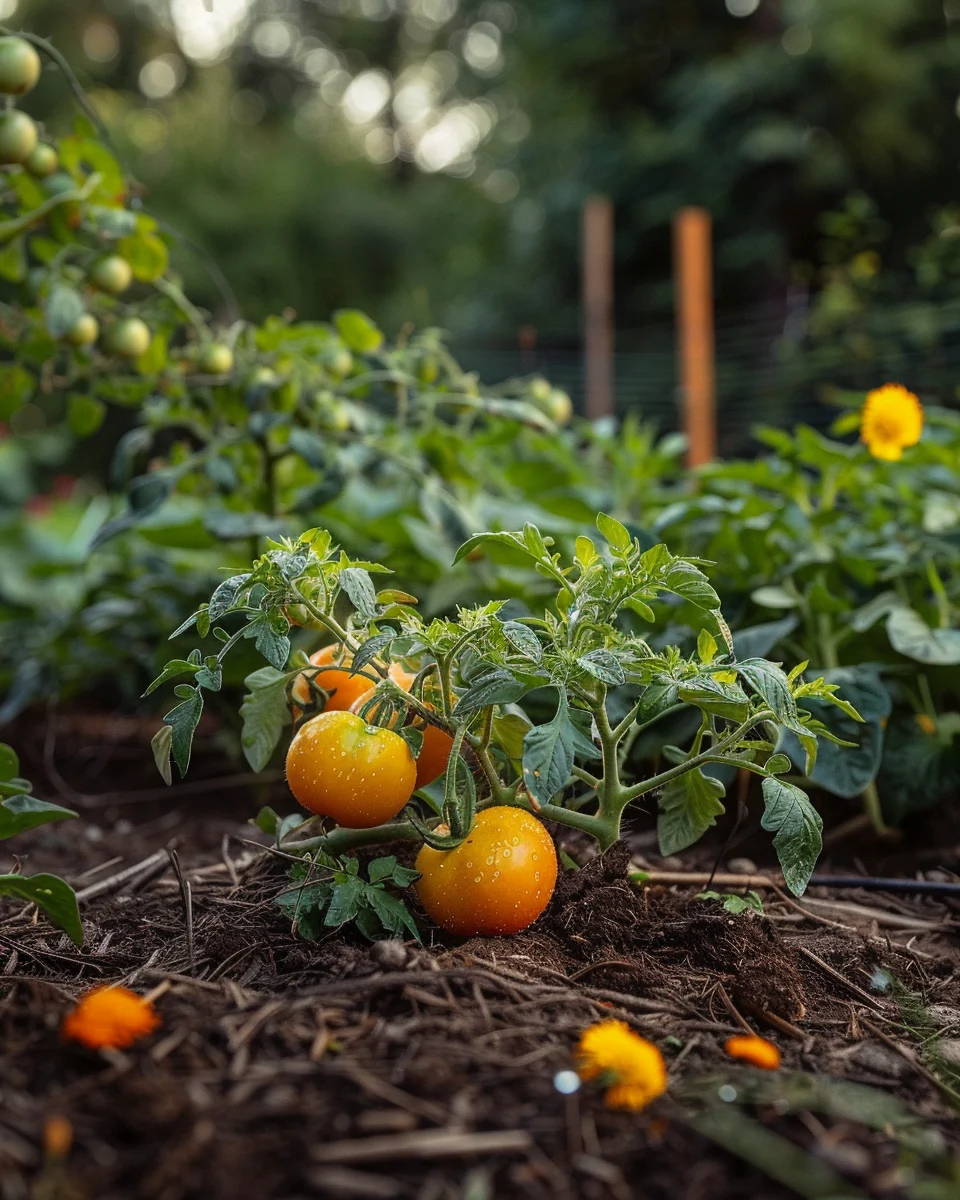
In cool temperate regions (UK, Northern US, Canada), plant marigolds in late April to early May, followed by tomatoes in mid-May to early June. In warmer regions (US Zones 7-10, Mediterranean), plant marigolds in March to early April, with tomatoes following in mid-April to May. For both plants, direct sowing works well in warmer climates, but starting seeds indoors 6-8 weeks before the last frost date gives you a significant head start in cooler regions. Transplant marigold seedlings when they’re 3-4 inches tall, and tomato seedlings when they’re 6-8 inches tall with strong stems.
Best Tomatoes Love Marigolds and here’s the Surprising Reason Why varieties to grow
- French Marigolds (Tagetes patula) – Most effective for nematode control with compact growth that fits well between tomato plants.
- Gem Marigolds (Tagetes tenuifolia) – Delicate, citrusy-scented foliage that’s particularly effective at repelling whiteflies and aphids.
- African Marigolds (Tagetes erecta) – Larger varieties that provide excellent visual barriers and strong scent for pest deterrence.
- ‘Tangerine Gem’ – Compact variety (8-10 inches) with bright orange blooms that’s perfect for container gardens with tomatoes.
- ‘Nema-Gone’ – Specifically bred for its strong nematode-suppressing properties in the root zone.
- ‘Lemon Gem’ – Citrus-scented variety that excels at repelling mosquitoes and other flying pests while attracting beneficial insects.
- ‘Crackerjack’ – Large, showy blooms that attract pollinators while the roots effectively combat soil nematodes.
How to plant Tomatoes Love Marigolds and here’s the Surprising Reason Why
Materials needed:
- Tomato seedlings or seeds
- Marigold seedlings or seeds
- Compost or well-rotted manure
- Garden trowel
- Watering can or hose with gentle spray attachment
- Mulch (straw, compost, or leaf mold)
- Tomato cages or stakes (optional)
Step-by-step planting:
- Select a sunny location where both plants will receive at least 6-8 hours of direct sunlight daily.
- Prepare the soil by incorporating 2-3 inches of compost to improve drainage and fertility.
- Plant tomato seedlings at their recommended spacing (usually 18-24 inches/45-60 cm apart).
- Plant marigolds in a protective border around tomatoes, spacing them 8-12 inches (20-30 cm) apart.
- Alternatively, intersperse marigolds between tomato plants, keeping them at least 10 inches (25 cm) from tomato stems.
- Plant marigolds slightly shallower than they were in their containers, just covering the root ball.
- Water both plants thoroughly after planting, ensuring the soil is moist but not waterlogged.
- Apply a 2-inch (5 cm) layer of mulch around all plants, keeping it away from stems to prevent rot.
- Install tomato cages or stakes at planting time to avoid disturbing roots later.
How to grow Tomatoes Love Marigolds and here’s the Surprising Reason Why
Both plants thrive in full sun, requiring at least 6-8 hours of direct sunlight daily. Water deeply once or twice weekly rather than frequent shallow watering, allowing the top inch of soil to dry between waterings. Feed tomatoes with a balanced organic fertilizer every 3-4 weeks, but avoid over-fertilizing marigolds as this can reduce their pest-repelling compounds and result in fewer flowers. Marigolds rarely need pruning, but deadheading spent blooms encourages continuous flowering and maximizes their pest-repelling benefits. For container growing, use a minimum 5-gallon (19-liter) pot for each tomato plant with 2-3 marigolds planted around the edges. The marigolds’ shallow root systems won’t compete significantly with the deeper-rooted tomatoes for nutrients or water.
Caring for Tomatoes Love Marigolds and here’s the Surprising Reason Why
Monitor both plants weekly for signs of pests or disease. If aphids appear on tomatoes despite the marigolds’ presence, a strong spray of water or insecticidal soap can supplement the natural protection. Watch for signs of early blight on tomatoes (yellow spots on lower leaves) and remove affected foliage promptly. Marigolds are remarkably disease-resistant but can occasionally develop powdery mildew in humid conditions—improve air circulation if this occurs. Harvest marigold flowers regularly to encourage continued blooming, which maintains their pest-repelling properties. The most effective pest protection occurs when marigolds are in full bloom, so ensure continuous flowering throughout the tomato growing season by succession planting or regular deadheading.
Understanding bolting in Tomatoes Love Marigolds and here’s the Surprising Reason Why
Bolting isn’t a concern with marigolds as it is with leafy vegetables, but they can become leggy and produce fewer flowers under certain conditions. This reduced flowering diminishes their pest-repelling benefits for tomatoes. Triggers include excessive heat, inadequate sunlight, overcrowding, or too much nitrogen fertilizer. To prevent leggy growth, plant marigolds in full sun, provide adequate spacing, and avoid high-nitrogen fertilizers. If marigolds become stretched and produce fewer flowers, pinch back the stems by one-third to encourage bushier growth and more blooms. Unlike bolting vegetables that become inedible, leggy marigolds can be rejuvenated with proper pruning and care.
Why does Tomatoes Love Marigolds and here’s the Surprising Reason Why turn bitter?
- Excessive heat – During prolonged heat waves, marigold flowers may develop a more bitter scent, though this actually enhances their pest-repelling properties.
- Overfertilization – Too much nitrogen can alter the chemical composition of marigolds, making them less effective as companion plants; use balanced or low-nitrogen fertilizers.
- Aging flowers – Older marigold blooms naturally develop a more pungent scent; regular deadheading keeps the aroma pleasant while maintaining pest control.
- Drought stress – Inadequate water can concentrate the compounds in marigolds, making their scent more intense; maintain consistent soil moisture.
- Variety selection – Some marigold varieties naturally have a stronger scent than others; French marigolds typically have a milder fragrance than African varieties.
Companion planting for Tomatoes Love Marigolds and here’s the Surprising Reason Why
Beyond the tomato-marigold partnership, several other plants enhance this companion planting arrangement. Basil grows well with both plants and further repels tomato hornworms and flies. Nasturtiums attract aphids away from tomatoes while complementing marigolds’ pest control. Borage attracts pollinators that benefit both tomatoes and marigolds while deterring tomato hornworms. Chives repel aphids and Japanese beetles, working synergistically with marigolds’ pest control. Avoid planting fennel near this combination, as it inhibits tomato growth. Also keep cabbage family plants (broccoli, cauliflower) separate, as they compete for similar nutrients and don’t benefit from marigolds’ nematode control.
Seasonal calendar
- February-March: Start marigold and tomato seeds indoors in cooler regions.
- April: Plant marigolds outdoors in warm regions; continue indoor growing in cooler areas.
- May: Transplant both tomatoes and marigolds outdoors in most temperate regions after last frost.
- June: Begin regular deadheading of marigolds to encourage continuous blooming.
- July-August: Maintain consistent watering; harvest tomatoes as they ripen; continue deadheading marigolds.
- September: Harvest final tomatoes; collect marigold seeds for next season if desired.
- October: Remove spent plants after harvest or first frost; add to compost if disease-free.
Problems & solutions
| Problem | Quick Fix |
|---|---|
| Marigolds not flowering well | Ensure full sun exposure; deadhead regularly; avoid high-nitrogen fertilizers |
| Tomatoes still getting pests despite marigolds | Increase marigold density; ensure they’re blooming; consider adding other companion plants |
| Leggy marigold growth | Pinch back stems by one-third; ensure adequate sunlight; avoid overcrowding |
| Marigolds developing powdery mildew | Improve air circulation; avoid overhead watering; remove affected leaves |
| Tomatoes showing signs of nematode damage | Plant more French marigolds specifically; allow them to grow for a full season before planting tomatoes in the same spot next year |
| Marigolds attracting slugs | Apply diatomaceous earth around plants; set up beer traps; water in the morning only |
Common questions about growing Tomatoes Love Marigolds and here’s the Surprising Reason Why
How many marigolds should I plant per tomato plant?
Plant 2-3 marigold plants around each tomato for effective pest control. For a row of tomatoes, plant marigolds every 12 inches (30 cm) along both sides of the row.
Do marigolds affect the flavor of tomatoes?
No, marigolds don’t affect tomato flavor. They only influence the growing environment by deterring pests and potentially improving soil health.
Can I use marigold flowers as mulch around tomatoes?
Yes, spent marigold blooms can be used as mulch around tomatoes. Their decomposition releases beneficial compounds that continue to deter nematodes.
Will tall marigold varieties shade tomato plants?
Tall African marigolds (over 3 feet/90 cm) should be planted on the north side of tomatoes to avoid shading. French and gem varieties rarely cause shading issues.
How long does it take for marigolds to start repelling pests?
Marigolds begin repelling above-ground pests once they start flowering, typically 4-6 weeks after planting. Nematode suppression takes longer, often 2-3 months of root growth.
Can I plant marigolds in the same soil where I’ll grow tomatoes next year?
Yes, this is highly beneficial. Marigolds planted one season will leave nematode-suppressing compounds in the soil that benefit tomatoes planted the following season.
Do I need to replant marigolds every year with my tomatoes?
Yes, both tomatoes and marigolds are annuals in most climates and need replanting each season. In very mild climates (Zones 9-11), marigolds may self-seed or even overwinter.