
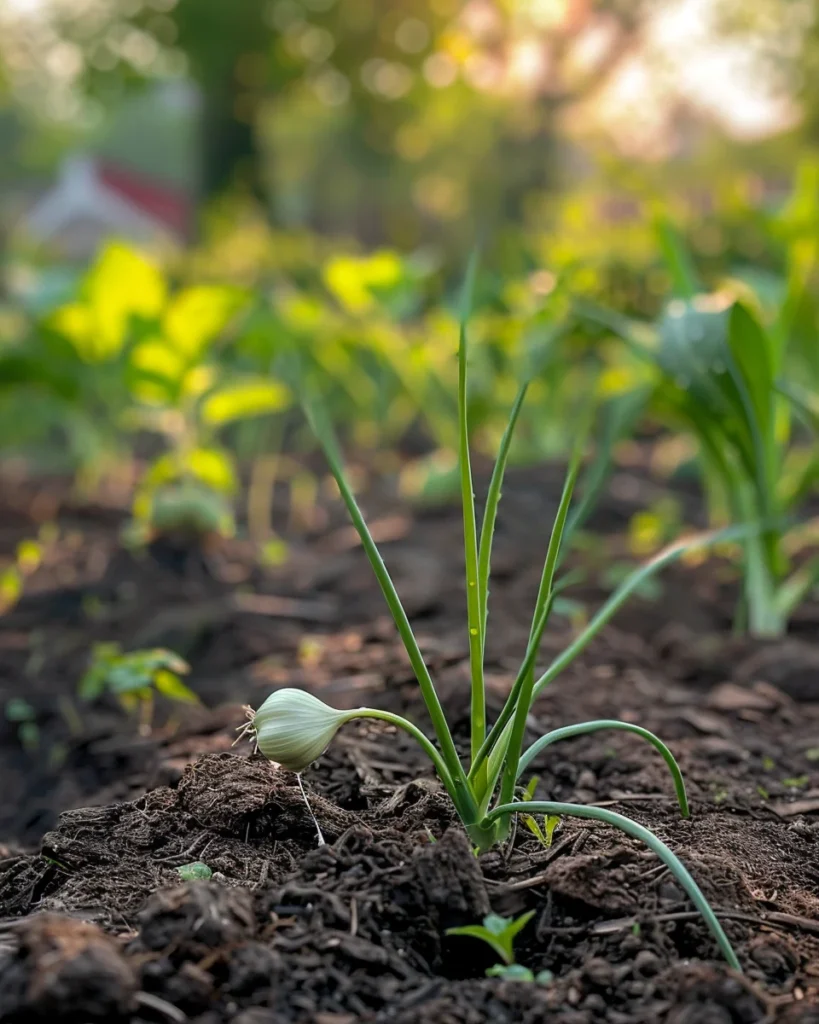
How to Grow Garlic Fast with a Special Rooting Trick: Never Run Out of Homegrown Garlic Again
Intro for The Special Trick to Root Garlic Fast and Never Run Out Again
Garlic is one of the most rewarding crops for home gardeners, offering incredible flavor and numerous health benefits. While traditional garlic growing takes months, there’s a special water propagation technique that can give you a continuous supply of garlic greens in just days and eventually full bulbs. This method allows you to grow garlic from store-bought cloves year-round, regardless of season. By understanding this simple rooting trick, you can maintain a perpetual garlic garden that provides fresh flavor for your kitchen while saving money. This approach works in virtually any climate, requires minimal space, and can be done indoors or outdoors depending on your situation.
When to plant The Special Trick to Root Garlic Fast and Never Run Out Again
The beauty of this special garlic rooting technique is that traditional planting windows don’t apply. While conventional garlic is typically planted in fall (for summer harvest) or early spring (for fall harvest), this water propagation method can be initiated any time of year. If you plan to transfer your water-rooted garlic to soil eventually, aim for soil temperatures between 10-20°C (50-68°F). For outdoor transplanting in temperate regions, early spring and early fall work best. The water rooting phase, however, can be done indoors year-round regardless of outdoor conditions or frost dates, making this technique especially valuable for continuous harvests.
Best time to plant The Special Trick to Root Garlic Fast and Never Run Out Again
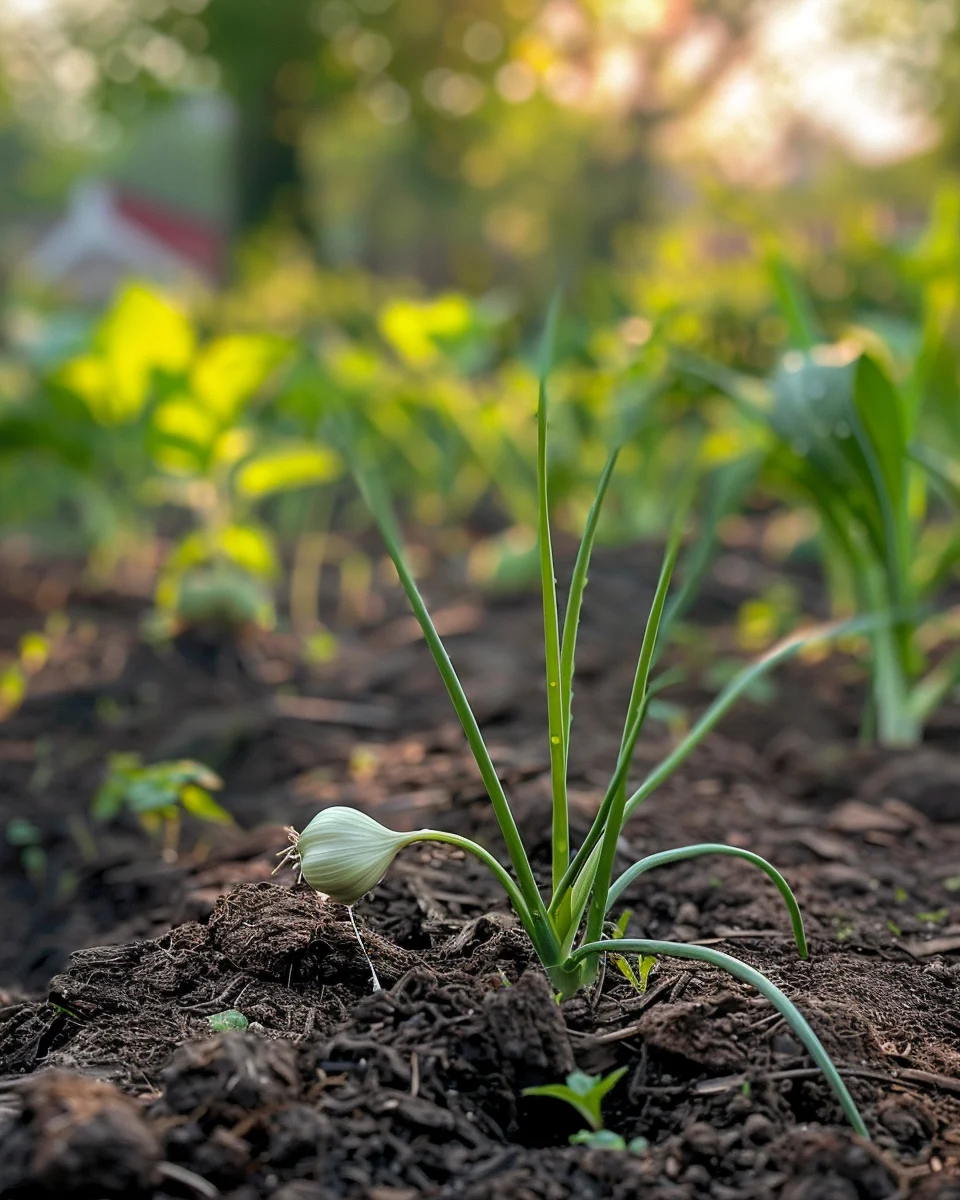
For the initial water rooting phase, any time is suitable since it’s typically done indoors. For cool climate regions, start new batches every 2-3 weeks year-round for continuous harvests. In warm climate regions, you can transition water-rooted garlic to outdoor soil in September through February when temperatures are milder. For indoor-to-outdoor transitions in temperate zones, March-May and September-October provide ideal transplanting windows. If keeping your garlic entirely in the water propagation system, maintain a rotation where new cloves are started every 2-3 weeks as older ones are harvested or transferred to soil.
Best The Special Trick to Root Garlic Fast and Never Run Out Again varieties to grow
• Softneck varieties – Generally root faster in water and are more adaptable to this propagation method.
• California White – Excellent for water propagation with quick root development and tender shoots.
• Silverskin – Stores exceptionally well and produces abundant greens when water-propagated.
• Inchelium Red – Award-winning flavor that performs well in water before soil transplanting.
• Elephant Garlic – Not true garlic but produces dramatic roots and milder-flavored greens in water.
• Music – A hardneck variety that adapts well to water propagation with excellent flavor.
• Russian Red – Develops strong roots in water and transitions well to containers.
• Chesnok Red – Renowned for maintaining flavor quality even when grown through this alternative method.
How to plant The Special Trick to Root Garlic Fast and Never Run Out Again
Materials needed:
• Fresh garlic bulbs (organic preferred)
• Shallow containers or jars
• Clean water
• Toothpicks
• Optional: small stones or marbles
• Optional: small amount of liquid fertilizer
• Containers with potting soil (for eventual transplanting)
Step-by-step process:
1. Select firm, healthy garlic cloves from bulbs that haven’t been treated with growth inhibitors (organic is best).
2. Carefully separate the cloves without damaging the base where roots will form.
3. Leave the papery skin on the cloves to reduce the risk of rot.
4. Insert 3-4 toothpicks around the middle of each clove to create a support structure.
5. Fill a small jar or container with water so it reaches just below where the toothpicks will rest.
6. Position the clove so the flat (root) end is submerged in water by about 1/4 inch (0.6 cm), with the pointed end facing up.
7. Place the container in a location that receives bright, indirect light.
8. Change the water every 2-3 days to prevent bacterial growth and maintain oxygen levels.
9. Within 3-7 days, roots will begin forming, and green shoots will emerge from the top.
10. Once roots are 1-2 inches (2.5-5 cm) long, you can either continue growing in water or transplant to soil.
How to grow The Special Trick to Root Garlic Fast and Never Run Out Again
For water-propagated garlic, provide bright, indirect sunlight for 4-6 hours daily—direct afternoon sun can overheat the water. Change the water every 2-3 days to prevent algae and bacterial growth. After 2-3 weeks, you can add a drop of liquid fertilizer to the water if continuing the hydroponic approach. For soil transplants, use well-draining potting mix in containers at least 6 inches (15 cm) deep. Space multiple cloves 4-6 inches (10-15 cm) apart. Water soil-planted garlic when the top inch feels dry, typically every 5-7 days depending on climate. Apply a balanced organic fertilizer monthly for soil-grown garlic. For container growing, choose pots at least 8 inches (20 cm) deep with drainage holes, and use a mix of potting soil, compost, and sand for optimal drainage.
Caring for The Special Trick to Root Garlic Fast and Never Run Out Again
For water-propagated garlic, monitor water levels daily and maintain cleanliness to prevent rot. If growing for greens only, harvest when shoots reach 6-8 inches (15-20 cm), cutting the top third while leaving the rest to regrow. For soil-transplanted garlic, water consistently but avoid waterlogging. Watch for aphids on young shoots—spray with a mild soap solution if they appear. Yellow or browning leaves often indicate overwatering; reduce frequency immediately. Fungal issues may develop in humid conditions—improve air circulation and avoid overhead watering. For full bulb development after transplanting, stop watering when the lower leaves begin to yellow (typically 2-3 weeks before harvest). Store harvested garlic in a cool, dry place with good air circulation, or continue the water propagation cycle with new cloves from your harvest.
Understanding bolting in The Special Trick to Root Garlic Fast and Never Run Out Again
Bolting in garlic occurs when the plant produces a flowering stalk (scape), typically triggered by temperature fluctuations, especially when cool periods are followed by warm weather. In water-propagated garlic, bolting is less common but can happen if the cloves experience temperature stress. If growing for greens only, bolting isn’t a major concern. For soil-transplanted garlic intended for bulb production, remove scapes as soon as they appear to redirect energy to bulb development. Water-rooted garlic that’s been transplanted to soil may bolt more readily if moved outdoors during late spring when day length increases. If bolting occurs, you can still harvest and use the garlic, though bulbs may be smaller; the scapes themselves are also edible and delicious.
Why does The Special Trick to Root Garlic Fast and Never Run Out Again turn bitter?
• Water quality issues – Chlorinated or stagnant water can cause bitterness; use filtered water and change it regularly.
• Light exposure – Too much direct sunlight on the water container can cause algae growth and affect flavor; move to indirect light.
• Age of shoots – Older garlic shoots naturally develop stronger, sometimes bitter flavors; harvest when young for milder taste.
• Nutrient deficiency – Lack of nutrients in long-term water growing can cause stress and bitterness; add diluted liquid fertilizer occasionally.
• Temperature stress – Extreme heat or cold can trigger defense compounds that create bitter flavors; maintain moderate temperatures.
Companion planting for The Special Trick to Root Garlic Fast and Never Run Out Again
When transplanting water-rooted garlic to garden beds, pair with strawberries to deter pests and improve berry flavor. Plant near roses to help prevent black spot and aphid infestations. Tomatoes benefit from garlic’s ability to repel spider mites and certain soil nematodes. Carrots grow well with garlic as their different root structures don’t compete for space. Chamomile enhances garlic’s flavor and oil production when planted nearby. Avoid planting water-rooted garlic near legumes like beans and peas, as garlic can inhibit their growth. Also keep distance from asparagus, as both crops can negatively affect each other’s development.
Seasonal calendar
• January-February: Start indoor water propagation; maintain existing water cultures.
• March-April: Begin transplanting well-rooted garlic to outdoor soil in most temperate regions; continue water propagation indoors.
• May-June: Harvest garlic greens from water cultures; fertilize soil-transplanted garlic.
• July-August: Harvest mature bulbs from early transplants; prepare for fall water propagation cycle.
• September-October: Ideal time to transplant water-rooted garlic to soil for overwintering in mild climates.
• November-December: Focus on indoor water propagation for winter harvests of garlic greens.
Adjustments:
In hot regions, avoid outdoor transplanting during summer months. In cold regions, extend indoor water propagation through winter and delay spring transplanting until soil temperatures reach 10°C (50°F).
Problems & solutions
| Problem | Quick Fix |
|---|---|
| Rotting cloves in water | Change water more frequently; ensure only the root end is submerged |
| Slow or no root development | Check water quality; try different garlic source (preferably organic) |
| Yellowing shoots | Add diluted liquid fertilizer to water; ensure adequate light |
| Mold on clove surface | Remove affected clove, rinse remaining ones with diluted hydrogen peroxide solution |
| Stunted growth after transplanting | Check soil drainage; add compost or balanced organic fertilizer |
| Algae in water container | Use opaque containers or cover with aluminum foil; change water more often |
Common questions about growing The Special Trick to Root Garlic Fast and Never Run Out Again
How often should I change the water for my rooting garlic?
Change the water every 2-3 days to prevent bacterial growth and provide fresh oxygen to the developing roots.
Can I harvest garlic greens multiple times from the same clove?
Yes, you can harvest the top third of garlic greens 2-3 times from the same water-propagated clove before quality diminishes.
What size container works best for water propagation?
Small jars or containers 3-4 inches (7-10 cm) in diameter and at least 3 inches (7.5 cm) deep work best for individual cloves.
How long does it take to get usable garlic greens with this method?
Harvestable garlic greens typically develop within 10-14 days of starting the water propagation process.
Can water-propagated garlic be transplanted to produce full bulbs?
Yes, once roots are well-developed (1-2 inches/2.5-5 cm long), cloves can be transplanted to soil where they can develop into full bulbs over 4-6 months.
Will any type of garlic work for water propagation?
Most garlic varieties work, but organic, untreated garlic typically performs best as it hasn’t been treated with growth inhibitors.
How many harvests can I get from one water-propagated garlic setup?
A single clove can provide 2-3 harvests of greens if kept in water, or you can transplant to soil for a one-time bulb harvest after 4-6 months.