

How to Grow Asparagus Once and Enjoy Harvests for 20 Years: When to Plant, Best Varieties & Care
Intro for Asparagus
Asparagus (Asparagus officinalis) is a perennial vegetable that offers an incredible return on investment—plant it once and harvest for up to 20 years. This long-lived crop produces tender, nutritious spears each spring that are prized for their delicate flavor and versatility in the kitchen. Unlike most vegetables that require replanting each season, asparagus establishes a permanent bed that improves with age. It grows best in temperate regions with distinct seasons and requires patience, as the first two years are spent building strong root systems before full harvests begin. For gardeners willing to invest the initial time, asparagus rewards with decades of early spring harvests and attractive ferny foliage that adds ornamental value to the garden.
When to plant Asparagus
Asparagus should be planted in early spring as soon as the soil can be worked, typically when soil temperatures reach 10-15°C (50-60°F). In most temperate regions, this falls between late March and early May. Asparagus crowns (dormant roots) can tolerate light frosts but should be planted after the danger of hard freezes has passed. For gardeners in warmer climates (USDA zones 8-10), fall planting is also possible, giving roots time to establish during cooler winter months before spring growth begins. The key timing factor is soil workability—asparagus needs well-drained soil that isn’t waterlogged from winter precipitation.
Best time to plant Asparagus
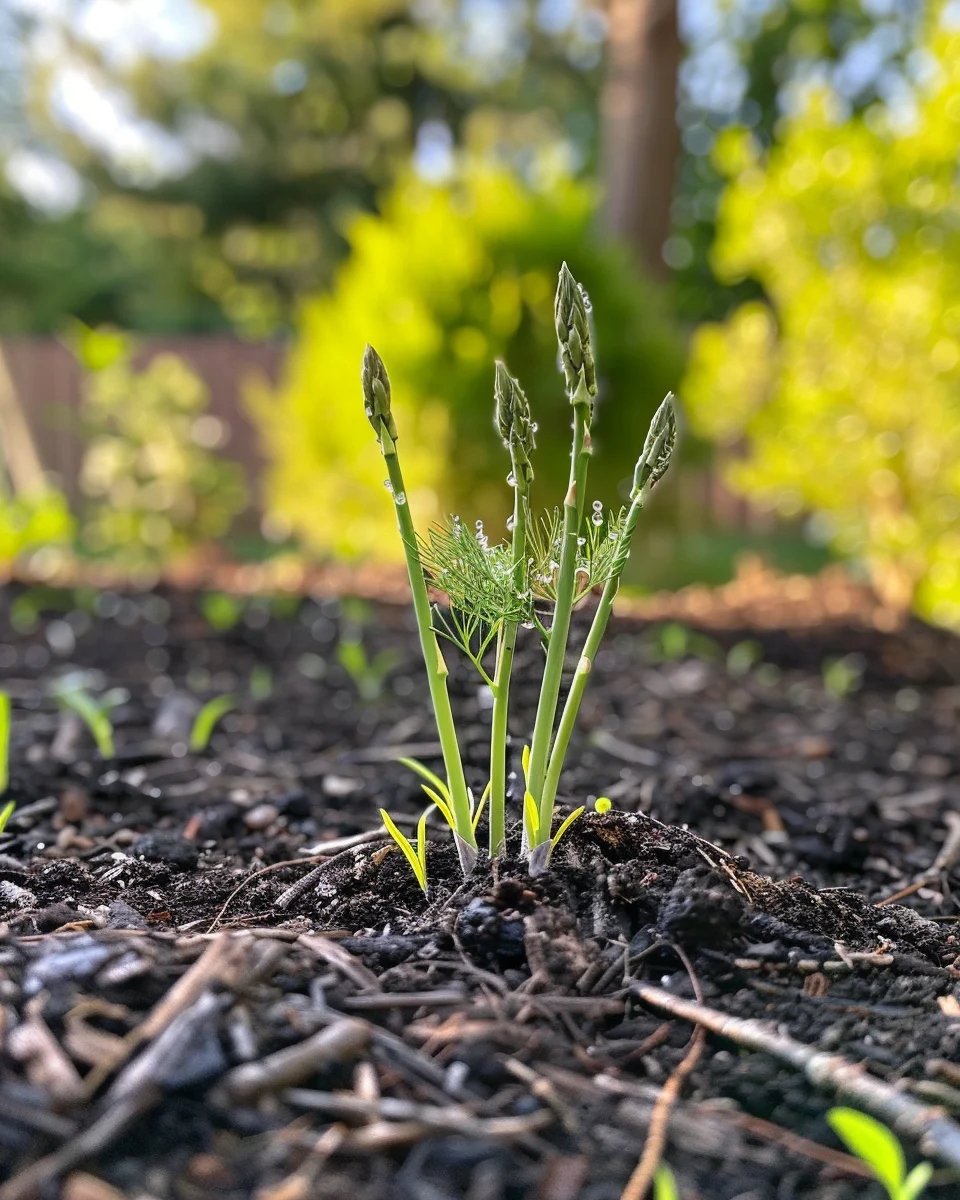
In cool-climate regions (USDA zones 3-6), plant asparagus crowns in April to early May when soil temperatures consistently stay above 10°C (50°F). Gardeners in moderate climates (zones 6-8) should aim for March to April planting. In warmer southern regions (zones 8-10), February to March is ideal for spring planting, or October to November for fall planting. Asparagus is almost exclusively grown from crowns (year-old root systems) rather than seeds, as this gives a 1-2 year head start on production. If starting from seed (less common), sow indoors 12-14 weeks before your last frost date, then transplant seedlings when they’re 12 weeks old.
Best Asparagus varieties to grow
• ‘Jersey Knight’ – All-male hybrid with excellent disease resistance and high productivity in a wide range of climates.
• ‘Purple Passion’ – Distinctive purple spears with sweeter flavor and less fiber than green varieties, turning green when cooked.
• ‘Mary Washington’ – Heritage variety with excellent flavor and good disease resistance, particularly suitable for colder regions.
• ‘Millennium’ – Canadian variety bred for cold hardiness, producing high yields even in northern climates.
• ‘UC 157’ – Heat-tolerant variety developed for warmer regions, performs well in zones 8-10.
• ‘Guelph Millennium’ – Late-producing variety that extends the harvest season with excellent cold tolerance.
• ‘Jersey Supreme’ – Early producer with uniform spears, good for shorter growing seasons.
• ‘Pacific Purple’ – Tender, sweet purple spears with high anthocyanin content and less stringiness than green varieties.
How to plant Asparagus
Materials needed:
– Asparagus crowns
– Compost or well-rotted manure
– Balanced organic fertilizer
– Garden fork or tiller
– Garden spade
– Measuring tape
– String or garden hose (for marking rows)
Step-by-step planting:
1. Select a permanent location with full sun and excellent drainage, as asparagus beds will remain productive for 15-20 years.
2. Prepare the bed in advance by removing all perennial weeds and working in 4-6 inches (10-15 cm) of compost or aged manure.
3. Dig trenches 12-18 inches (30-45 cm) wide and 6-8 inches (15-20 cm) deep, spacing trenches 4 feet (1.2 m) apart.
4. Create a 2-inch (5 cm) mound of mixed compost and soil along the bottom of the trench.
5. Soak asparagus crowns in water for 20 minutes before planting to hydrate them.
6. Place crowns on the mound 12-18 inches (30-45 cm) apart, spreading the roots outward like octopus tentacles.
7. Cover crowns with 2 inches (5 cm) of soil mixed with compost, and water thoroughly.
8. As spears grow, gradually fill in the trench over the next few weeks until it’s level with the surrounding soil.
9. Apply a 2-inch (5 cm) layer of mulch around (but not touching) the emerging spears to suppress weeds.
10. Water deeply to establish, ensuring the soil remains moist but not waterlogged.
How to grow Asparagus
Asparagus requires full sun (6-8 hours daily) for optimal production. Water newly planted beds deeply once a week, providing about 1-2 inches (2.5-5 cm) of water. Once established, asparagus is relatively drought-tolerant but produces best with consistent moisture, especially during the fern stage. Apply a balanced organic fertilizer (10-10-10) in early spring before spears emerge and again after the final harvest when plants are allowed to fern out. Mulch beds with 2-3 inches (5-7.5 cm) of straw, shredded leaves, or compost to suppress weeds and retain moisture. Avoid disturbing the shallow root system when weeding. In the first two years, allow all spears to develop into ferns without harvesting to build strong root systems. For the third year onward, harvest for 2-4 weeks, extending to 6-8 weeks in subsequent years. In fall, cut back yellowed ferns to ground level after they’ve died back naturally. Asparagus can be grown in deep containers (at least 18 inches/45 cm deep) but with fewer plants and shorter productive lifespans.
Caring for Asparagus
Maintain a weed-free bed using mulch and careful hand-weeding, as asparagus competes poorly with weeds. Watch for asparagus beetles (orange-red insects with black spots), which can be handpicked or controlled with neem oil or insecticidal soap. Asparagus rust appears as orange-brown pustules on ferns; remove affected fronds and ensure good air circulation. Fusarium root rot causes yellowing ferns and reduced yields; prevent by selecting resistant varieties and avoiding waterlogged soil. Harvest spears when they reach 6-8 inches (15-20 cm) tall and before the tips begin to open, cutting or snapping them at soil level. Early spring spears are the most tender. After harvest season, allow remaining spears to develop into ferns to photosynthesize and strengthen the crowns for next year’s crop. Store harvested spears upright in a container with an inch of water in the refrigerator for up to a week, or blanch and freeze for longer storage.
Understanding bolting in Asparagus
Unlike many vegetables where bolting is problematic, asparagus naturally “bolts” as part of its growth cycle. What we harvest are actually the young shoots (spears) before they develop into mature ferns. If left unharvested, spears naturally elongate, branch out, and develop into feathery fern-like foliage. This is not true bolting but the plant’s normal development. After the harvest period, asparagus should be allowed to complete this cycle, as the fern stage is when the plant photosynthesizes and stores energy in the crown for next year’s production. Female plants will eventually produce small red berries containing seeds. While this seed production does take some energy from the plant, it’s not detrimental to next year’s harvest in established beds. The key is balancing harvest length with allowing sufficient fern growth time—typically 12-16 weeks of fern growth is needed before fall frost.
Why does Asparagus turn bitter?
• Harvesting too late: Spears become woody and bitter once the tips begin to open; harvest when tips are tight and spears are 6-8 inches tall.
• Stress from heat: Extreme heat can cause bitterness, especially in older spears; harvest more frequently during hot weather.
• Improper storage: Asparagus sugars convert to starch after harvest; store upright in water in the refrigerator and consume within 3-4 days.
• Aging plants: Very old asparagus plants (15+ years) may produce less sweet spears; consider rejuvenating or replacing sections of the bed.
• Variety selection: Some varieties naturally have more bitter compounds; try different varieties if bitterness is persistent.
Companion planting for Asparagus
Tomatoes make excellent companions for asparagus, as they repel asparagus beetles while asparagus may repel nematodes that affect tomatoes. Parsley planted nearby can attract beneficial insects that prey on asparagus beetles. Basil helps repel asparagus beetles through its strong aroma. Comfrey’s deep roots mine nutrients that benefit asparagus when leaves are used as mulch. Nasturtiums attract predatory insects and add color to the asparagus bed. Avoid planting garlic, onions, and other alliums near asparagus, as they can stunt each other’s growth. Potatoes should also be kept away as they compete for nutrients and can introduce diseases that affect asparagus.
Seasonal calendar
• February-March: Apply compost and balanced fertilizer to beds before spears emerge.
• March-April: Begin harvesting spears when they reach 6-8 inches (15-20 cm) tall (year 3+ only).
• April-May: Continue harvesting for appropriate duration based on bed age (2-8 weeks).
• May-June: Stop harvesting and allow remaining spears to develop into ferns.
• June-August: Monitor for pests and diseases; water during dry periods.
• September: Apply light compost top-dressing around plants.
• October-November: After first hard frost, cut back yellowed ferns to 2 inches (5 cm) above ground.
• November-December: Apply winter mulch in colder regions (zones 3-6).
Adjust timing earlier by 2-4 weeks in warm regions (zones 8-10) and later by 2-4 weeks in cold regions (zones 3-4).
Problems & solutions
| Problem | Quick Fix |
|---|---|
| Asparagus beetles | Handpick in morning when sluggish; spray with neem oil; release ladybugs as predators |
| Thin, spindly spears | Improve soil fertility with compost; ensure adequate sunlight; reduce harvest duration |
| Rust (orange spots on ferns) | Remove affected fronds; improve air circulation; apply sulfur-based fungicide if severe |
| Weeds overtaking bed | Apply 3-4 inches of mulch; hand weed carefully; avoid disturbing asparagus roots |
| Declining yields | Divide and replant sections of older beds (10+ years); add compost; check soil pH (6.0-7.0 ideal) |
| Frost damage to early spears | Cover emerging spears with floating row cover when frost threatens; damaged spears can be cut and discarded |
Common questions about growing Asparagus
How often should I water my asparagus bed?
Water deeply once a week during the growing season, providing about 1-2 inches (2.5-5 cm) of water. Established beds are somewhat drought-tolerant but produce best with consistent moisture, especially during fern development.
Can asparagus grow in partial shade?
Asparagus produces best in full sun (6-8 hours daily), but can tolerate partial shade with reduced yields. Morning sun with afternoon shade is preferable to morning shade if full sun isn’t possible.
How deep should containers be for growing asparagus?
Containers should be at least 18-24 inches (45-60 cm) deep with excellent drainage. A container 24 inches (60 cm) in diameter can support 3-4 asparagus plants, though container-grown asparagus typically has a shorter productive lifespan (8-10 years).
How long should I wait before harvesting from a new asparagus bed?
Don’t harvest any spears the first year after planting. In the second year, harvest lightly for 1-2 weeks. By the third year, you can harvest for 3-4 weeks, and from the fourth year onward, harvest for 6-8 weeks.
Can I grow asparagus in hot climates?
Yes, but choose heat-tolerant varieties like ‘UC 157’ or ‘Apollo’ and provide afternoon shade in regions with temperatures regularly above 85°F (29°C). In hot climates, asparagus may go dormant during summer heat and produce a second, smaller crop in fall.
Why are some of my asparagus plants producing thin, seedy stalks?
These are female plants, which produce seeds and generally yield less than male plants. Modern all-male hybrids like ‘Jersey Knight’ produce no seeds and more consistent spears. In older beds, you can identify and remove female plants to improve overall production.
Can I plant other vegetables in my asparagus bed?
It’s best to keep asparagus in a dedicated bed due to its perennial nature and shallow roots. However, shallow-rooted companions like lettuce, spinach, or annual flowers can be planted between rows during the first few years while plants establish.