
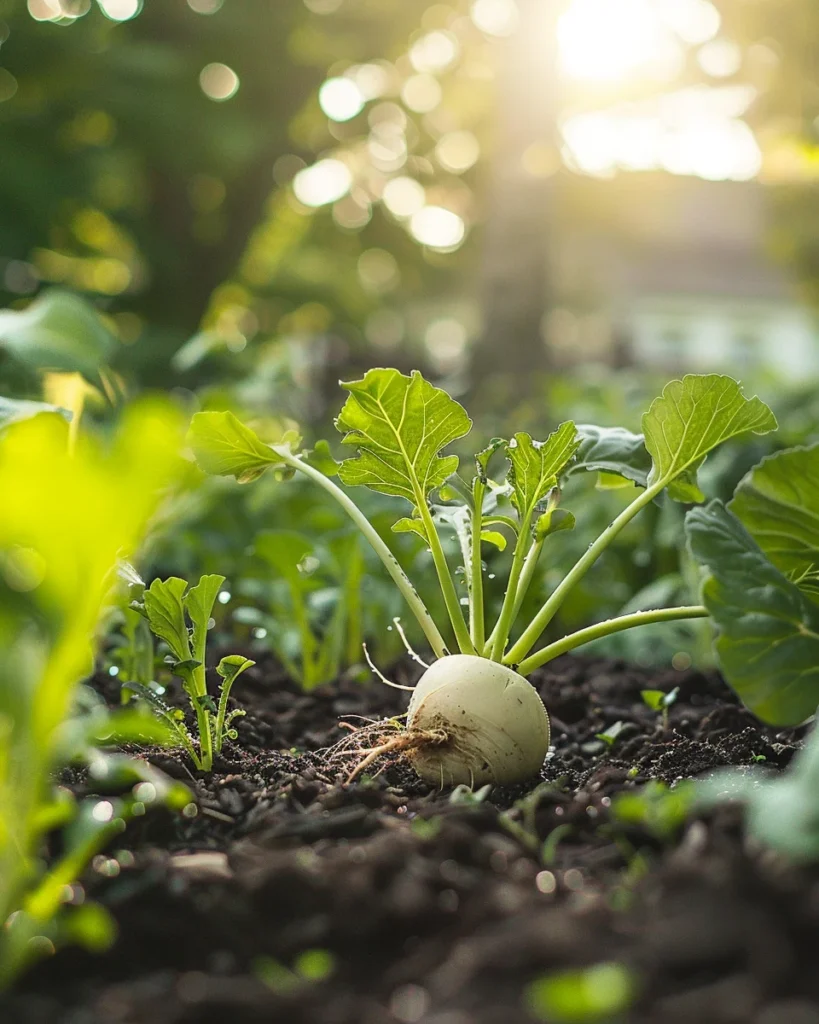
How to Grow Turnips for Tender Roots: When to Plant, Best Varieties & Care
Intro for growing turnips for tender roots
Turnips (Brassica rapa) are versatile root vegetables that offer both nutritious roots and edible greens. These cool-season crops are perfect for beginning gardeners as they grow quickly, typically maturing in just 40-60 days. For the tenderest, sweetest roots, proper timing and care are essential. Turnips thrive in full sun and well-drained, fertile soil with a pH between 6.0 and 6.8. They perform best in temperate climates but can be grown in most regions with proper seasonal timing. With minimal space requirements and the ability to grow in containers, turnips are an excellent addition to any vegetable garden, providing a rewarding harvest of crisp, mild-flavored roots.
When to plant turnips for tender roots
Turnips are cool-season crops that perform best when soil temperatures range between 10-21°C (50-70°F). They can withstand light frosts, making them ideal for spring and fall cultivation in most temperate regions. For spring planting, sow seeds as soon as the soil can be worked, typically 2-3 weeks before the last expected frost. For fall crops, which often produce the sweetest roots, plant 8-10 weeks before the first expected frost of autumn.
In warmer regions (US Zones 8-10), focus on fall through winter growing seasons to avoid the summer heat that causes turnips to become woody and bitter. In cooler areas (Zones 3-5), spring plantings should be prioritized, though early summer sowings can work if varieties are bolt-resistant.
Best time to plant turnips for tender roots

In cool temperate regions (UK, northern US, Canada), plant turnips from mid-March to early May for spring crops, and from late July to early September for fall harvests. Direct sowing is preferred as turnips don’t transplant well due to their sensitive taproots.
In moderate climates (US Zones 6-7), plant from late February to early April for spring crops and August to early September for fall harvests.
For warmer regions (US Zones 8-10, Mediterranean), focus on fall planting from September through November, and winter planting from December through February, avoiding the summer months entirely.
For succession planting and continuous harvests, sow small batches every 2-3 weeks during appropriate seasonal windows.
Best turnip varieties to grow for tender roots
- Tokyo Cross F1 – Award-winning hybrid with smooth white roots ready in just 35 days, excellent for tender baby turnips.
- Hakurei – Japanese salad turnip with exceptionally sweet, mild flavor; can be eaten raw and matures in 38 days.
- Purple Top White Globe – Classic heirloom variety with purple shoulders and white bottoms, reliable and adaptable to various growing conditions.
- Golden Ball – Yellow-fleshed variety with a buttery, sweet flavor that holds well in storage.
- White Lady – Pure white roots with resistance to bolting, ideal for spring planting in warmer regions.
- Scarlet Queen – Striking red-skinned turnip with crisp white flesh, more heat-tolerant than many varieties.
- Just Right – Hybrid with excellent bolt resistance and uniform roots, perfect for container growing.
- Market Express – Early maturing (30-35 days) with tender, mild roots ideal for baby turnip production.
How to plant turnips for tender roots
Materials needed:
- Turnip seeds
- Garden fork or tiller
- Rake
- Compost or well-rotted manure
- Balanced organic fertilizer (optional)
- Watering can or hose with spray nozzle
- Row markers or plant labels
- Measuring tape or ruler
Step-by-step planting:
- Select a site that receives at least 6 hours of direct sunlight daily with well-draining soil.
- Prepare the soil by removing rocks, weeds, and breaking up clumps to create a fine tilth to a depth of 20-25 cm (8-10 inches).
- Incorporate 2-5 cm (1-2 inches) of compost or aged manure to improve soil structure and fertility.
- Rake the area smooth, creating a level seed bed.
- Create shallow furrows about 1 cm (½ inch) deep, spaced 30-45 cm (12-18 inches) apart.
- Sow seeds thinly along the furrows, placing them approximately 2.5 cm (1 inch) apart.
- Cover seeds lightly with soil, firming gently to ensure good seed-to-soil contact.
- Water thoroughly but gently using a fine spray to avoid displacing seeds.
- Label rows with variety names and planting dates.
- Keep soil consistently moist until seedlings emerge, typically within 4-7 days.
How to grow turnips for tender roots
Sunlight: Turnips require full sun (6+ hours daily) for optimal root development. In very hot regions, light afternoon shade can prevent stress that leads to woody, bitter roots.
Watering: Maintain consistent soil moisture with 2.5-4 cm (1-1.5 inches) of water weekly. Irregular watering causes woody, split roots. Water at the base of plants to keep foliage dry and reduce disease risk.
Fertilizing: Turnips are light feeders. If soil was amended before planting, additional fertilization is often unnecessary. For poorer soils, apply a balanced organic fertilizer (10-10-10) at half-strength when plants are about 10 cm (4 inches) tall.
Mulching: Apply a thin layer of organic mulch like straw or shredded leaves (2.5 cm/1 inch) around plants to retain moisture, suppress weeds, and keep soil cool.
Thinning: When seedlings reach 5-7.5 cm (2-3 inches) tall, thin to 7.5-10 cm (3-4 inches) apart for full-sized roots or 5 cm (2 inches) for baby turnips. The thinned seedlings make excellent additions to salads.
Container growing: Choose containers at least 30 cm (12 inches) deep with drainage holes. Use high-quality potting mix, not garden soil. Space plants 5-7.5 cm (2-3 inches) apart in containers, and ensure consistent moisture as container soil dries more quickly than garden beds.
Caring for turnips for tender roots
Ongoing tasks: Weed regularly but carefully to avoid disturbing turnip roots. Check soil moisture frequently, especially during dry spells. Remove any yellowing or diseased leaves promptly.
Pests and diseases:
- Flea beetles: Tiny insects that create small holes in leaves. Control with row covers or insecticidal soap.
- Cabbage root maggots: White larvae that tunnel into roots. Prevent with floating row covers and crop rotation.
- Aphids: Sap-sucking insects that cluster on leaves. Spray with strong water jets or neem oil solution.
- Club root: Fungal disease causing swollen, distorted roots. Prevent with crop rotation and maintaining proper pH (above 6.8).
- Downy mildew: Yellow patches on upper leaf surfaces with gray fuzz underneath. Improve air circulation and avoid overhead watering.
Harvesting: For tender baby turnips, harvest when roots are 2.5-5 cm (1-2 inches) in diameter, typically 30-40 days after sowing. For mature turnips, harvest when 5-10 cm (2-4 inches) across, usually 45-60 days after planting. Gently loosen soil with a garden fork before pulling to avoid damage.
Storage: Remove tops, leaving 1.2 cm (½ inch) of stem to prevent moisture loss. Brush off soil (don’t wash until ready to use) and store in a cool, humid place like a refrigerator crisper drawer or root cellar at 0-4°C (32-40°F) for up to 4 months.
Understanding bolting in turnips for tender roots
Bolting is when turnips prematurely produce flowering stems, making the roots tough and bitter. This natural process is triggered when the plant shifts from vegetative growth to seed production.
Common triggers:
- Extended periods of temperatures above 24°C (75°F)
- Long daylight hours (photoperiod sensitivity)
- Drought stress or inconsistent watering
- Transplant shock (another reason to direct sow)
- Crowded growing conditions
Prevention tactics:
- Plant during appropriate cool seasons for your region
- Choose bolt-resistant varieties for spring planting
- Provide consistent moisture and avoid drought stress
- Ensure proper spacing through thinning
- Apply mulch to keep soil temperatures cooler
- Provide afternoon shade in warmer climates
If bolting begins, harvest immediately regardless of root size. While the roots will be less tender than ideal, younger bolting plants may still be usable. The flower stalks and unopened flower buds can be harvested and used like broccoli raab.
Why does turnips turn bitter?
- Heat stress: Temperatures consistently above 24°C (75°F) trigger defensive compounds that create bitterness. Solution: Plant during cooler seasons and harvest promptly when hot weather approaches.
- Age: Older, larger turnips develop stronger flavors and fibrous texture. Solution: Harvest when young and tender, ideally 5-7.5 cm (2-3 inches) in diameter.
- Inconsistent watering: Drought stress followed by heavy watering causes growth spurts that develop bitter compounds. Solution: Maintain even soil moisture with regular watering and mulching.
- Poor soil: Nutrient imbalances or deficiencies can cause stress leading to bitterness. Solution: Amend soil with compost before planting and maintain proper pH (6.0-6.8).
- Slow growth: Any factor that slows growth (cold, shade, compacted soil) can increase bitterness. Solution: Ensure optimal growing conditions and harvest promptly if growth slows.
Companion planting for turnips for tender roots
Good companions:
- Peas and beans: Fix nitrogen in the soil, benefiting turnips which are moderate nitrogen feeders.
- Aromatic herbs (mint, thyme, sage): Repel many brassica pests with their strong scents.
- Nasturtiums: Act as trap crops for aphids, drawing them away from turnips.
- Lettuce and spinach: Provide ground cover that suppresses weeds without competing for nutrients.
- Onions and garlic: Deter pests with their strong odor and don’t compete for the same nutrients.
- Chamomile: Improves the flavor of turnips and attracts beneficial insects.
Avoid planting near:
- Other brassicas (cabbage, broccoli, radishes): Share the same pests and diseases, increasing vulnerability.
- Potatoes: Compete for nutrients and space, and can inhibit turnip growth.
- Sunflowers: Release compounds that can inhibit root vegetable growth.
Seasonal calendar
Cool temperate regions (UK, Northern US):
- February-March: Prepare soil for spring planting.
- April: Direct sow spring crop as soil becomes workable.
- May-June: Thin seedlings; harvest baby turnips.
- July: Harvest spring-sown mature turnips; prepare for fall crop.
- August: Direct sow fall crop.
- September-October: Thin fall seedlings; harvest baby turnips.
- November-December: Harvest fall-sown mature turnips; store for winter.
Warm regions (US Zones 8-10, Mediterranean):
- September: Prepare beds for fall/winter planting.
- October-November: Direct sow main crop.
- December-January: Thin seedlings; harvest baby turnips.
- February-March: Harvest mature turnips.
- April: Last chance for spring sowing (bolt-resistant varieties).
- May-August: Avoid planting turnips (too hot).
Problems & solutions
| Problem | Quick Fix |
|---|---|
| Small, underdeveloped roots | Ensure proper spacing (thin to 7.5-10 cm/3-4 inches apart); check for adequate sunlight and nutrients. |
| Cracked or split roots | Maintain consistent soil moisture; avoid drought followed by heavy watering. |
| Woody, fibrous texture | Harvest earlier; ensure cool growing conditions; check variety suitability for your season. |
| Holes in leaves | Apply row covers to prevent flea beetle damage; use neem oil or insecticidal soap for existing infestations. |
| Yellowing, wilting leaves | Check for aphids on undersides of leaves; ensure proper watering (not too much or too little). |
| Stunted plants with swollen roots | Likely clubroot; remove affected plants, avoid planting brassicas in that location for 7 years, raise soil pH with lime. |
| Seedlings cut at soil level | Cutworms are the likely culprit; place cardboard collars around seedlings and hunt for cutworms at night with a flashlight. |
Common questions about growing turnips for tender roots
Q: How often should I water my turnips?
A: Provide 2.5-4 cm (1-1.5 inches) of water weekly, either from rainfall or irrigation. Consistent moisture is crucial for tender roots—dry periods followed by heavy watering cause splitting and bitterness.
Q: Can turnips grow in partial shade?
A: While turnips prefer full sun (6+ hours daily), they can tolerate partial shade (4-6 hours of sun), though root development may be slower and yields smaller. In very hot regions, afternoon shade can actually be beneficial.
Q: What size container do I need for growing turnips?
A: Use containers at least 30 cm (12 inches) deep and 30 cm (12 inches) in diameter. A container this size can support 4-6 plants for baby turnips or 2-3 plants for full-sized roots.
Q: How far apart should I space my turnips?
A: For baby turnips (2.5-5 cm/1-2 inches diameter), space plants 5 cm (2 inches) apart. For full-sized roots, thin to 7.5-10 cm (3-4 inches) apart, with rows spaced 30-45 cm (12-18 inches) apart.
Q: What temperatures can turnips tolerate?
A: Turnips grow best when temperatures range between 10-21°C (50-70°F). They can survive light frosts down to -4°C (25°F) and actually become sweeter after light frost. However, they struggle when temperatures exceed 24°C (75°F), becoming bitter and prone to bolting.
Q: When is the best time to harvest turnips for the tenderest roots?
A: For the most tender turnips, harvest as “baby turnips” when they’re 2.5-5 cm (1-2 inches) in diameter, typically 30-40 days after sowing. For standard turnips with good flavor balance, harvest when 5-7.5 cm (2-3 inches) across, before they become woody.
Q: Can I regrow turnips from kitchen scraps?
A: While turnip tops with a small portion of the root attached can be regrown for greens in water or soil, they won’t develop new edible roots. For root production, always start with fresh seeds.