
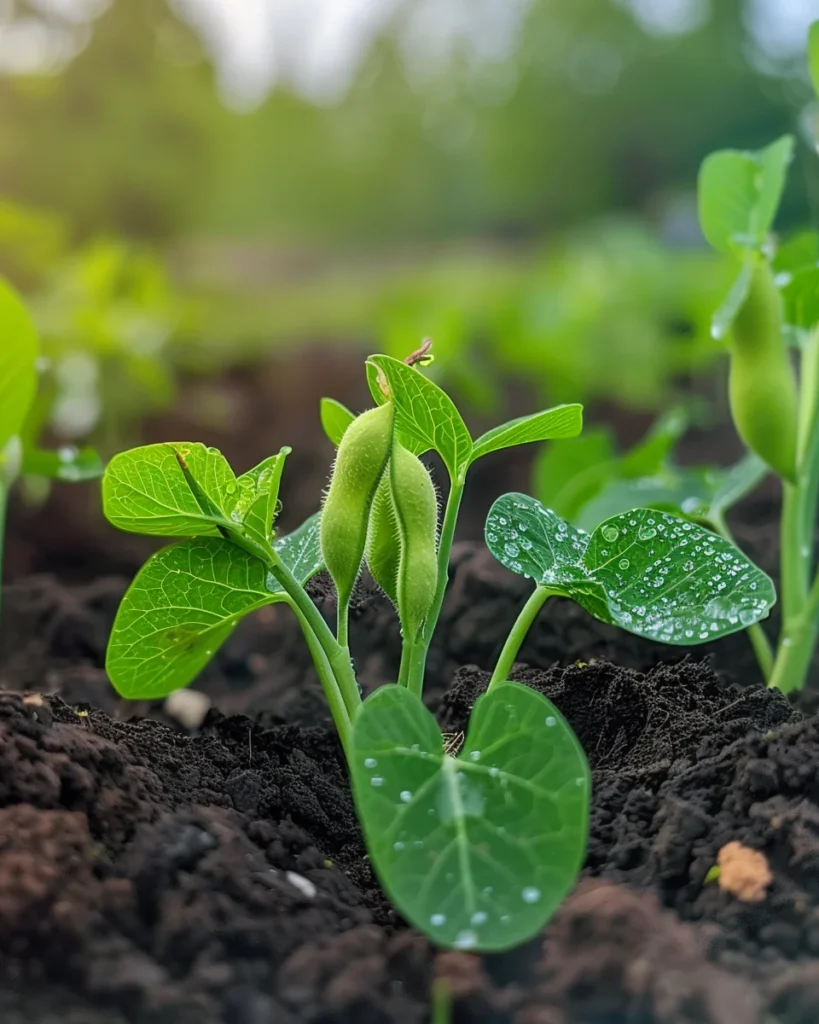
How to Grow Edamame Soybeans at Home: When to Plant, Best Varieties & Care Guide
Intro for growing edamame soybeans at home
Edamame soybeans are immature soybeans harvested while still green and tender, offering a delicious, protein-rich addition to your home garden. These nutritional powerhouses are surprisingly easy to grow, providing a harvest of pods that can be steamed, boiled, or roasted for a healthy snack or side dish. Edamame thrives in warm, sunny conditions with well-draining soil and performs best in temperate regions with long, warm summers. With their nitrogen-fixing abilities, edamame plants also improve soil health, making them an excellent addition to your garden rotation. Whether you have a spacious garden plot or just a few containers on a sunny balcony, growing your own edamame can be a rewarding experience.
When to plant edamame soybeans
Edamame soybeans are warm-season crops that require soil temperatures of at least 15-18°C (60-65°F) for successful germination. They are extremely frost-sensitive, so timing is crucial for success. In temperate regions, wait until all danger of frost has passed and soil has warmed sufficiently in late spring. Edamame requires a growing season of 75-100 days of warm weather, so northern gardeners should select shorter-season varieties. Southern gardeners in warmer climates can often plant a second crop in midsummer for fall harvest. As a general rule, wait until nighttime temperatures consistently stay above 10°C (50°F) before planting edamame outdoors.
Best time to plant edamame soybeans

For cool-temperate regions (UK, Northern US, Canada), plant edamame from mid-May to early June when soil has reliably warmed. In warm-temperate areas (Southern US, Mediterranean), you can plant as early as April and potentially do a second planting in July for a fall harvest. Direct sowing is generally preferred for edamame as they don’t transplant easily due to their delicate root systems. However, in shorter-season areas, you can start seeds indoors 2-3 weeks before the last frost date in biodegradable pots to minimize root disturbance during transplanting. For container growing, you can start slightly earlier if you can bring containers indoors during unexpected cold snaps.
Best edamame soybean varieties to grow
- Butterbeans – Early-maturing (75 days) with excellent flavor and productivity, ideal for northern gardens.
- Envy – Popular 75-day variety that produces well in containers and has reliable germination.
- Midori Giant – Large-podded variety (80-90 days) with exceptional flavor and heat tolerance.
- Sayamusume – Japanese variety with large pods containing 2-3 beans each, known for sweet flavor.
- Beer Friend – Compact plants (60-70cm) perfect for containers with early maturity (70-80 days).
- Chiba Green – Heat-tolerant Japanese variety producing abundant three-bean pods with excellent flavor.
- Shirofumi – Reliable producer with excellent disease resistance and adaptability to various growing conditions.
How to plant edamame soybeans
Materials needed:
- Edamame seeds (preferably inoculated with nitrogen-fixing bacteria)
- Compost or well-rotted manure
- Garden fork or tiller
- Garden trowel
- Watering can or hose with gentle spray attachment
- Mulch material (straw, compost, or leaf mold)
Step-by-step planting instructions:
- Select a site that receives full sun (at least 6-8 hours daily) with well-draining soil.
- Prepare the soil by incorporating 2-3 inches of compost, working it to a depth of 8-10 inches (20-25 cm).
- Test soil pH – edamame prefers slightly acidic to neutral soil (pH 6.0-7.0).
- Create planting rows spaced 45-60 cm (18-24 inches) apart.
- Sow seeds 2.5-5 cm (1-2 inches) deep, spacing them 7-10 cm (3-4 inches) apart.
- Cover seeds firmly with soil, ensuring good seed-to-soil contact.
- Water thoroughly but gently to avoid washing away seeds.
- For container growing, select pots at least 30 cm (12 inches) deep with drainage holes.
- Fill containers with high-quality potting mix amended with compost.
- Thin seedlings to final spacing of 15 cm (6 inches) apart once they develop their first true leaves.
How to grow edamame soybeans
Edamame requires full sunlight for optimal growth – aim for at least 6-8 hours of direct sun daily. Water consistently, providing 2.5-5 cm (1-2 inches) of water weekly, especially during pod formation. Avoid overhead watering to prevent fungal diseases; instead, water at the base of plants. Edamame, being legumes, can fix their own nitrogen, so heavy fertilization isn’t necessary. Apply a balanced organic fertilizer low in nitrogen (such as 5-10-10) at planting time, then switch to a phosphorus and potassium-rich fertilizer when flowering begins.
Mulch around plants with straw or compost to retain moisture, suppress weeds, and regulate soil temperature. Edamame generally doesn’t require staking or trellising as plants are naturally bushy and self-supporting. For container growing, use pots at least 30 cm (12 inches) deep and 30 cm wide, with 3-4 plants per container. Container-grown edamame may need more frequent watering and occasional feeding with liquid seaweed fertilizer to compensate for the limited soil volume.
Caring for edamame soybeans
Regular weeding is essential, especially during the first few weeks after planting. Be gentle when weeding to avoid disturbing the shallow root systems. Monitor for common pests including aphids, bean beetles, and slugs. For aphids and beetles, introduce beneficial insects like ladybugs or apply insecticidal soap; for slugs, use beer traps or diatomaceous earth barriers. Watch for diseases such as powdery mildew and bacterial blight – maintain good air circulation and avoid wetting foliage to prevent these issues.
Harvest edamame when pods are bright green, plump, and beans have filled the pods (typically 2-3 months after planting). The narrow harvest window lasts only 7-10 days, so check plants daily once pods begin to swell. Harvest entire plants or pick individual pods by hand. For storage, refrigerate unwashed pods in perforated plastic bags for up to one week, or blanch and freeze pods for longer storage (up to 12 months).
Understanding bolting in edamame soybeans
Unlike many leafy vegetables, edamame soybeans don’t typically “bolt” in the traditional sense of premature flowering. However, they are sensitive to environmental conditions that can affect their growth cycle. Extreme heat (consistently above 35°C/95°F) can cause plants to accelerate through their growth stages too quickly, resulting in smaller plants with fewer pods. Similarly, drought stress can trigger premature pod development and reduced yields.
To prevent stress-related issues, maintain consistent soil moisture, especially during flowering and pod development. Apply mulch to moderate soil temperature fluctuations. If extremely hot weather is forecast, consider providing temporary shade during the hottest part of the day. Should your plants show signs of heat stress (wilting despite adequate moisture, yellowing leaves), increase watering frequency and apply a foliar seaweed spray to help strengthen plants.
Why does edamame soybean turn bitter?
- Harvested too late – Beans become starchy and develop bitter compounds as they mature; harvest when pods are bright green and plump.
- Improper cooking – Undercooking can leave natural bitter compounds intact; properly blanch or steam for 3-5 minutes.
- Variety selection – Some varieties naturally have stronger flavors; choose varieties known for sweetness like ‘Butterbeans’ or ‘Midori Giant’.
- Heat stress – Extreme heat during pod development can increase bitter compounds; provide afternoon shade in very hot climates.
- Soil mineral imbalances – Excessive nitrogen fertilization can affect flavor; rely on edamame’s natural nitrogen-fixing abilities instead.
Companion planting for edamame soybeans
Good companions:
- Corn – Provides natural support and partial shade for edamame while edamame fixes nitrogen that corn needs.
- Cucumbers – Benefit from the nitrogen edamame adds to soil without competing for space or nutrients.
- Nasturtiums – Attract pollinators and repel bean beetles and aphids.
- Marigolds – Deter nematodes and other soil pests that might damage edamame roots.
- Summer savory – Improves growth and flavor while deterring bean beetles.
Avoid planting near:
- Garlic and onions – Can inhibit growth of edamame and may reduce yields.
- Sunflowers – Compete for nutrients and can shade edamame excessively.
- Other bean varieties – May share diseases and attract the same pests, increasing vulnerability.
Seasonal calendar
- February-March – Purchase seeds and inoculant; prepare growing containers for indoor starts in cold regions.
- April – Start seeds indoors in biodegradable pots in cold regions; prepare garden beds.
- May – Direct sow in warm regions; transplant indoor starts after last frost in cold regions.
- June – Continue direct sowing in cooler regions; thin seedlings; apply mulch.
- July – Monitor for pests and diseases; ensure consistent watering during flowering; plant second crop in warm regions.
- August-September – Main harvest period; watch for pods reaching full size but still bright green.
- October – Final harvests; collect mature seeds for next year; remove and compost plants.
- November – Clean up garden; add plant residue to compost; amend soil for next season.
Problems & solutions
| Problem | Quick Fix |
|---|---|
| Yellow leaves | Check for overwatering; ensure good drainage; may indicate nitrogen deficiency despite being nitrogen-fixers (add compost tea). |
| Few or small pods | Ensure full sun exposure; improve pollination by planting flowering companions; check for adequate phosphorus and potassium. |
| Holes in leaves | Look for bean beetles or caterpillars; hand-pick or apply neem oil; introduce beneficial insects. |
| Stunted growth | Check soil temperature (may be too cold); ensure proper spacing; test soil pH and adjust if necessary. |
| White powdery coating on leaves | Powdery mildew – improve air circulation; avoid wetting foliage; apply diluted milk spray (1:10 with water). |
| Plants wilting despite watering | Check for root rot (improve drainage) or root-knot nematodes (rotate crops next season; plant marigolds). |
| Pods not filling out | Likely heat stress or inconsistent watering; maintain even moisture and consider afternoon shade during heat waves. |
Common questions about growing edamame soybeans
Q: How much water do edamame plants need?
A: Provide 2.5-5 cm (1-2 inches) of water weekly, increasing during pod formation. Container plants may need daily watering during hot weather. Consistent moisture is crucial for pod development.
Q: Can I grow edamame in partial shade?
A: Edamame performs best with 6-8 hours of full sun daily. While they can tolerate partial shade, yields will be significantly reduced. In very hot climates, light afternoon shade can actually be beneficial.
Q: What size container works for growing edamame?
A: Use containers at least 30 cm (12 inches) deep and 30 cm wide. Each container can support 3-4 plants. Ensure containers have good drainage and use high-quality potting mix.
Q: How far apart should I space edamame plants?
A: Space plants 15 cm (6 inches) apart in rows 45-60 cm (18-24 inches) apart. In containers, allow 15-20 cm (6-8 inches) between plants.
Q: Can edamame tolerate frost?
A: No, edamame is extremely frost-sensitive. Even light frost can damage or kill plants. Wait until soil temperatures reach at least 15-18°C (60-65°F) before planting outdoors.
Q: How do I know when edamame is ready to harvest?
A: Harvest when pods are bright green, plump, and filled out but before they begin to yellow. The narrow harvest window typically occurs 75-100 days after planting, depending on variety. Pods should feel firm and beans should be touching each other inside the pod.
Q: Do I need to inoculate edamame seeds before planting?
A: While not absolutely necessary, inoculating seeds with nitrogen-fixing bacteria (Rhizobium japonicum) significantly improves growth and yield, especially in soils where soybeans haven’t been grown before. Most garden centers sell inoculant specifically for soybeans.