

How to Grow Rhododendrons That Burst With Blooms: When to Plant, Best Varieties & Care
Intro for How to Grow Rhododendrons that Burst with Blooms
Rhododendrons are magnificent flowering shrubs that can transform any garden into a spectacular display of color when in full bloom. These woody ornamentals, with their lush foliage and showy flower clusters, thrive in acidic, well-drained soils and partial shade. Native to mountainous regions across Asia, North America, and Europe, rhododendrons perform best in temperate climates with moderate humidity. With proper care, these long-lived shrubs reward gardeners with decades of stunning spring displays. Whether planted as specimen plants, in mixed borders, or as foundation plantings, rhododendrons offer unmatched visual impact when their vibrant blooms unfurl against their glossy, evergreen foliage.
When to plant How to Grow Rhododendrons that Burst with Blooms
Rhododendrons establish best when planted during cooler seasons when soil moisture is consistent. Early spring and early fall are ideal planting windows in most temperate regions. Avoid planting during summer heat, which stresses new transplants. In colder regions (USDA zones 4-6), spring planting is preferable to give plants time to establish before winter. In warmer areas (zones 7-9), fall planting allows roots to develop during mild winter conditions. Soil temperature should ideally be between 13-18°C (55-65°F) for optimal root development. Always plant after danger of hard frost has passed in spring, or at least 6 weeks before first expected frost in fall.
Best time to plant How to Grow Rhododendrons that Burst with Blooms
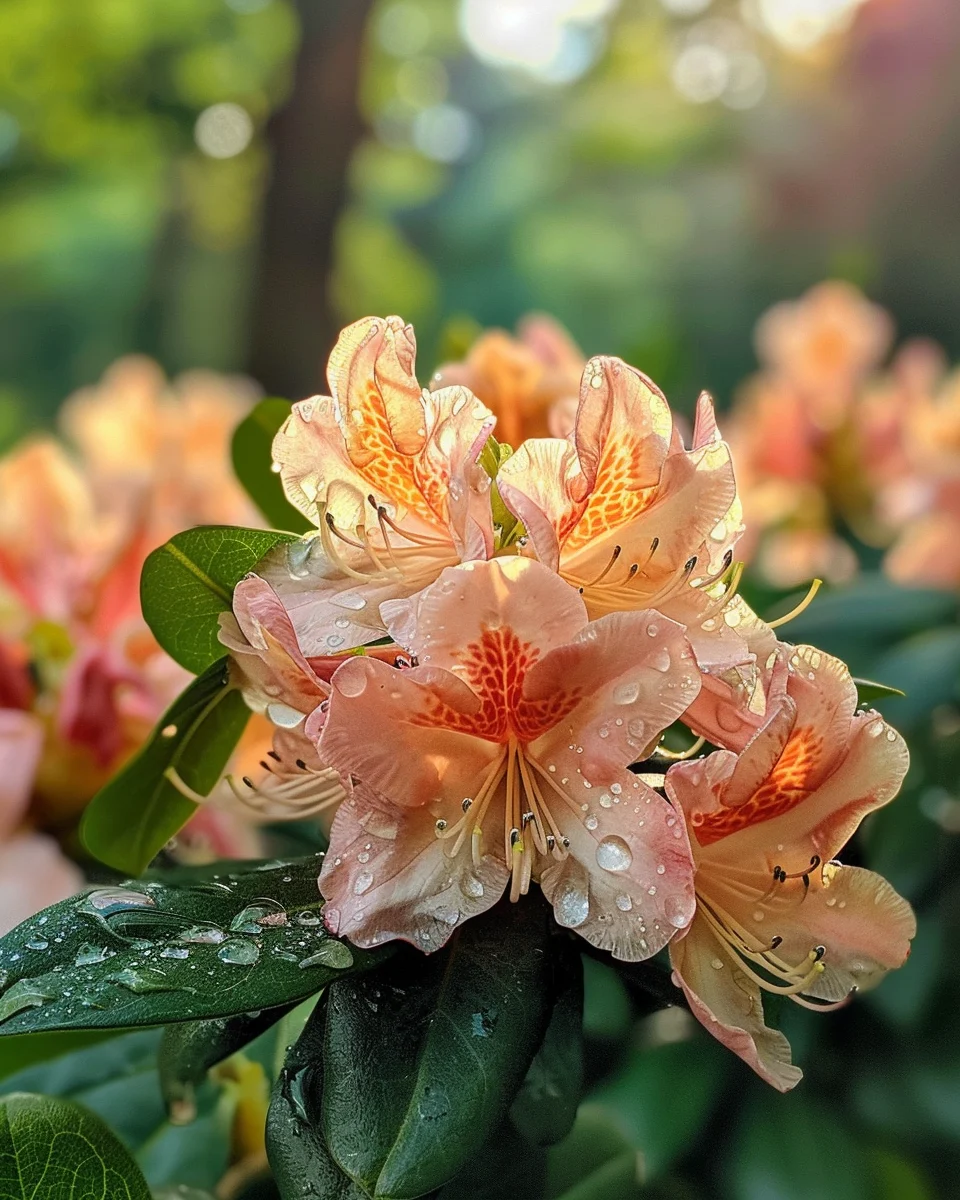
In cool temperate regions, plant rhododendrons from mid-March through May once soil can be worked. In warmer climates, September through November offers ideal conditions for establishment. Container-grown rhododendrons can technically be planted year-round but will require extra attention to watering if planted during summer months. For northern gardeners, aim for early to mid-spring planting to allow sufficient establishment before winter. Southern gardeners should target mid-autumn planting to take advantage of winter rainfall and cooler temperatures that reduce transplant shock.
Best How to Grow Rhododendrons that Burst with Blooms varieties to grow
- Nova Zembla – Stunning red blooms with excellent cold hardiness (to -25°F/-32°C) and reliable flowering even in challenging conditions.
- PJM – Compact variety with lavender-pink flowers, exceptional cold tolerance, and unusual purple winter foliage.
- Roseum Elegans – Lilac-rose blooms on a vigorous, heat-tolerant shrub that thrives in challenging conditions.
- Cunningham’s White – Versatile variety with white flowers that tolerates less acidic soils better than most rhododendrons.
- Yaku Princess – Dwarf variety with soft pink blooms, perfect for containers or small gardens.
- Blue Peter – Lavender-blue flowers with distinctive dark blotch, offering unusual coloration and good disease resistance.
- Catawbiense Album – Pure white flowers on a robust plant with excellent winter hardiness and shade tolerance.
- Anah Kruschke – Vibrant purple-blue flowers that perform exceptionally well in warmer regions (zones 7-9).
How to plant How to Grow Rhododendrons that Burst with Blooms
Materials needed:
- Healthy rhododendron plant
- Acidic planting mix or soil amendments (peat moss, composted pine bark)
- Soil pH test kit
- Garden spade and fork
- Organic mulch (pine needles, shredded oak leaves, or pine bark)
- Watering can or hose with gentle spray attachment
- Mycorrhizal fungi inoculant (optional but beneficial)
Step-by-step planting:
- Test soil pH – ensure it’s between 4.5-6.0 for optimal rhododendron growth; amend if necessary with sulfur or peat moss.
- Select a planting location with dappled shade or morning sun and afternoon shade, protected from harsh winds.
- Dig a hole twice as wide as the root ball but no deeper than the height of the container.
- Gently remove the plant from its container and carefully loosen bound roots without breaking the root ball.
- Position the plant so the top of the root ball sits slightly above soil level (about 1-2 inches/2.5-5 cm higher) as rhododendrons prefer shallow planting.
- Backfill with a mixture of native soil and acidic organic matter (50/50 blend), firming gently but not compacting.
- Create a water-retaining basin around the plant’s drip line.
- Water thoroughly until the soil is evenly moist but not soggy.
- Apply a 2-3 inch (5-7.5 cm) layer of organic mulch, keeping it several inches away from the trunk to prevent rot.
- Water again lightly to settle the mulch.
How to grow How to Grow Rhododendrons that Burst with Blooms
Sunlight: Rhododendrons prefer dappled shade or locations with morning sun and afternoon shade. In cooler northern regions, they can tolerate more sun if soil stays consistently moist. In warmer southern regions, protection from hot afternoon sun is essential.
Watering: Keep soil consistently moist but never soggy. Newly planted rhododendrons need regular watering during their first two growing seasons. Once established, provide 1 inch (2.5 cm) of water weekly during dry periods. Always water at the base rather than overhead to prevent fungal issues.
Fertilizing: Apply a specialized rhododendron/azalea fertilizer (high in nitrogen, low in phosphorus) in early spring just before new growth begins. A second light application after flowering helps support next year’s bloom development. Avoid fertilizing after mid-summer to prevent tender new growth that won’t harden off before winter.
Mulching: Maintain a 2-3 inch (5-7.5 cm) layer of acidic organic mulch like pine needles, shredded oak leaves, or pine bark. Refresh annually in spring, keeping mulch away from the trunk.
Pruning: Minimal pruning is required. Remove dead or damaged branches after flowering. If shaping is desired, prune immediately after flowering to avoid removing next year’s flower buds. Deadhead spent flowers by snapping them off at the base to improve appearance and direct energy to new growth.
Container growing: Choose dwarf varieties for containers. Use a large pot (at least 18 inches/45 cm diameter) with excellent drainage. Fill with acidic potting mix specifically formulated for rhododendrons. Container-grown plants require more frequent watering and winter protection in colder regions.
Caring for How to Grow Rhododendrons that Burst with Blooms
Regular care includes monitoring soil moisture, especially during dry periods, and maintaining proper mulch levels. Remove any weeds promptly as rhododendrons have shallow roots that compete poorly. In late winter, apply a layer of compost around the drip line to provide slow-release nutrients.
Common pests and diseases:
- Lace bugs – Cause stippled, bleached foliage; control with insecticidal soap or neem oil applications to leaf undersides.
- Root rot – Caused by poor drainage; symptoms include wilting despite moist soil and blackened roots; improve drainage and avoid overwatering.
- Powdery mildew – White powdery coating on leaves; improve air circulation and apply fungicide if severe.
- Chlorosis – Yellowing leaves with green veins indicating iron deficiency in alkaline soils; apply iron sulfate and acidify soil.
For organic control, maintain proper spacing for air circulation, clean up fallen leaves promptly, and encourage beneficial insects by planting diverse flowering plants nearby. Harvest rhododendron blooms for indoor arrangements by cutting stems just above a set of leaves when flowers are fully open but before they begin to fade.
Understanding bolting in How to Grow Rhododendrons that Burst with Blooms
Unlike vegetables, rhododendrons don’t bolt in the traditional sense. However, they can experience stress responses that affect blooming. Environmental stressors like drought, extreme heat, or improper pH can cause flower buds to abort before opening. Prevention includes maintaining consistent soil moisture, providing afternoon shade in hot climates, and ensuring proper soil acidity.
If your rhododendron fails to bloom despite forming buds, check for late spring frosts which can damage buds, improper pruning timing that removed flower buds, or excessive nitrogen fertilization that promotes foliage at the expense of flowers. Adjust care practices accordingly to encourage better blooming in subsequent seasons.
Why does How to Grow Rhododendrons that Burst with Blooms turn bitter?
While rhododendrons aren’t grown for consumption (in fact, they’re toxic), they can experience issues that make them appear “bitter” or unhealthy:
- Leaf curl and browning – Usually indicates drought stress; increase watering frequency and apply mulch to retain moisture.
- Yellowing leaves – Often signals improper soil pH; test soil and amend with sulfur or acidic organic matter to lower pH.
- Sparse flowering – May result from insufficient light; consider selective pruning of overhead trees to increase dappled sunlight.
- Leggy growth – Indicates insufficient light; relocate plant if possible or prune surrounding vegetation to increase light exposure.
- Bud blast (buds drop before opening) – Often caused by fluctuating temperatures or moisture; provide more consistent conditions and wind protection.
Companion planting for How to Grow Rhododendrons that Burst with Blooms
Good companions:
- Japanese Maples – Provide complementary foliage color and filtered shade while thriving in similar acidic soil conditions.
- Hostas – Offer contrasting leaf textures and fill the space beneath taller rhododendrons while tolerating similar light conditions.
- Ferns – Thrive in the same woodland conditions and add delicate texture to rhododendron plantings.
- Bleeding Hearts – Provide spring color that complements rhododendron blooms and goes dormant as rhododendrons reach peak foliage.
- Heucheras – Add year-round foliage interest at the base of rhododendrons and tolerate similar soil conditions.
- Azaleas – Close relatives that share cultural requirements and can extend the bloom season.
Avoid planting near:
- Shallow-rooted trees (especially maples) – Compete aggressively for water and nutrients.
- Plants requiring alkaline soil (lilacs, delphiniums) – Cultural requirements conflict with rhododendrons’ need for acidity.
- Aggressive ground covers (ivy, pachysandra) – Can overwhelm rhododendrons’ shallow root systems.
Seasonal calendar
- January-February: Check for winter damage; protect from harsh winds in cold regions.
- March: Apply rhododendron fertilizer as buds begin to swell; plant new specimens in warmer regions.
- April-May: Main flowering period; water during dry spells; plant new specimens in cooler regions.
- June: Deadhead spent blooms; prune if needed immediately after flowering.
- July-August: Monitor water needs carefully during hot weather; avoid fertilizing.
- September-October: Ideal planting time in warmer regions; reduce watering as temperatures cool.
- November: Apply fresh mulch before winter; ensure plants are well-watered before ground freezes.
- December: Protect plants from winter winds and harsh sun with burlap screens if needed in cold regions.
For warmer regions (zones 8-9), extend the fall planting window through December. For cooler regions (zones 4-5), provide additional winter protection and focus on spring planting.
Problems & solutions
| Problem | Quick Fix |
|---|---|
| Yellowing leaves with green veins | Apply chelated iron and acidify soil with sulfur or acidic organic matter |
| Flower buds form but don’t open | Protect from late frosts; ensure consistent moisture during bud development |
| Leggy, sparse growth | Increase light exposure; prune after flowering to encourage branching |
| Brown leaf edges | Improve watering consistency; protect from drying winds |
| Few or no flower buds forming | Reduce nitrogen fertilizer; ensure plant receives adequate light |
| White or yellow stippling on leaves | Treat for lace bugs with insecticidal soap, focusing on leaf undersides |
| Sudden wilting despite moist soil | Check for root rot; improve drainage and reduce watering frequency |
Common questions about growing How to Grow Rhododendrons that Burst with Blooms
Q: How often should I water my newly planted rhododendron?
A: Water thoroughly twice weekly during the first growing season, adjusting for rainfall. Established plants need about 1 inch (2.5 cm) of water weekly during dry periods.
Q: Can rhododendrons grow in full sun?
A: In cool, humid climates with consistent moisture, some varieties tolerate full morning sun. However, most prefer dappled shade or protection from hot afternoon sun, especially in warmer regions.
Q: What size container is needed for growing rhododendrons?
A: Use containers at least 18-24 inches (45-60 cm) in diameter with excellent drainage. Dwarf varieties are best suited for container culture.
Q: How far apart should I space rhododendrons?
A: Space according to mature width, typically 4-6 feet (1.2-1.8 m) for standard varieties and 2-3 feet (60-90 cm) for dwarf types. Check specific variety recommendations as sizes vary considerably.
Q: How cold-hardy are rhododendrons?
A: Hardiness varies by variety. Most garden hybrids are hardy to USDA zones 5-8, while some specialized varieties can tolerate zone 4 or even zone 3 with protection.
Q: Why didn’t my rhododendron bloom this year?
A: Common causes include improper pruning timing (removing flower buds), insufficient light, late frosts damaging buds, or excessive nitrogen fertilizer promoting foliage at the expense of flowers.
Q: How do I acidify soil for rhododendrons?
A: Incorporate sphagnum peat moss, pine bark, or composted oak leaves into soil before planting. For established plants, apply elemental sulfur according to package directions based on soil test results, or use acidifying fertilizers formulated for rhododendrons.