
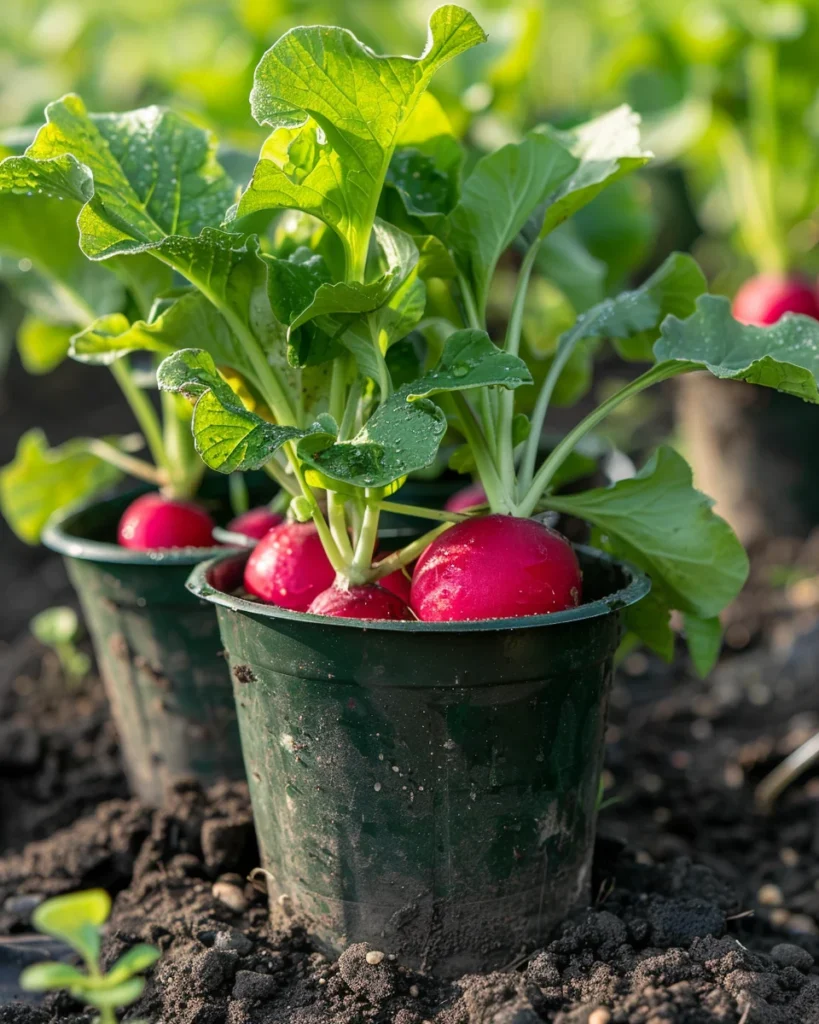
How to Grow Radishes in Five Gallon Buckets: Fast Results in Small Spaces
Intro for growing radishes in five gallon buckets
Radishes are one of the most rewarding vegetables for container gardening, especially in five gallon buckets. These crisp, peppery root vegetables mature in just 3-4 weeks, making them perfect for impatient gardeners. Growing radishes in buckets offers several advantages: controlled soil conditions, fewer pest problems, mobility to follow the sun, and efficient use of limited space. Even apartment dwellers with only a balcony or patio can enjoy fresh, homegrown radishes year-round in most temperate climates. Five gallon buckets provide the perfect depth for radish roots to develop properly without becoming woody or splitting.
When to plant radishes in five gallon buckets
Radishes are cool-season crops that perform best when soil temperatures range between 10-18°C (50-65°F). In most temperate regions, you can plant radishes in early spring as soon as the soil can be worked, typically 2-3 weeks before the last frost date. Fall planting is also excellent, starting about 4-6 weeks before the first expected frost. In mild winter areas (US Zones 8-10, UK mild temperate), you can grow radishes throughout winter. Avoid planting during summer heat, as temperatures above 24°C (75°F) cause radishes to bolt quickly and develop a bitter taste.
Best time to plant radishes in five gallon buckets
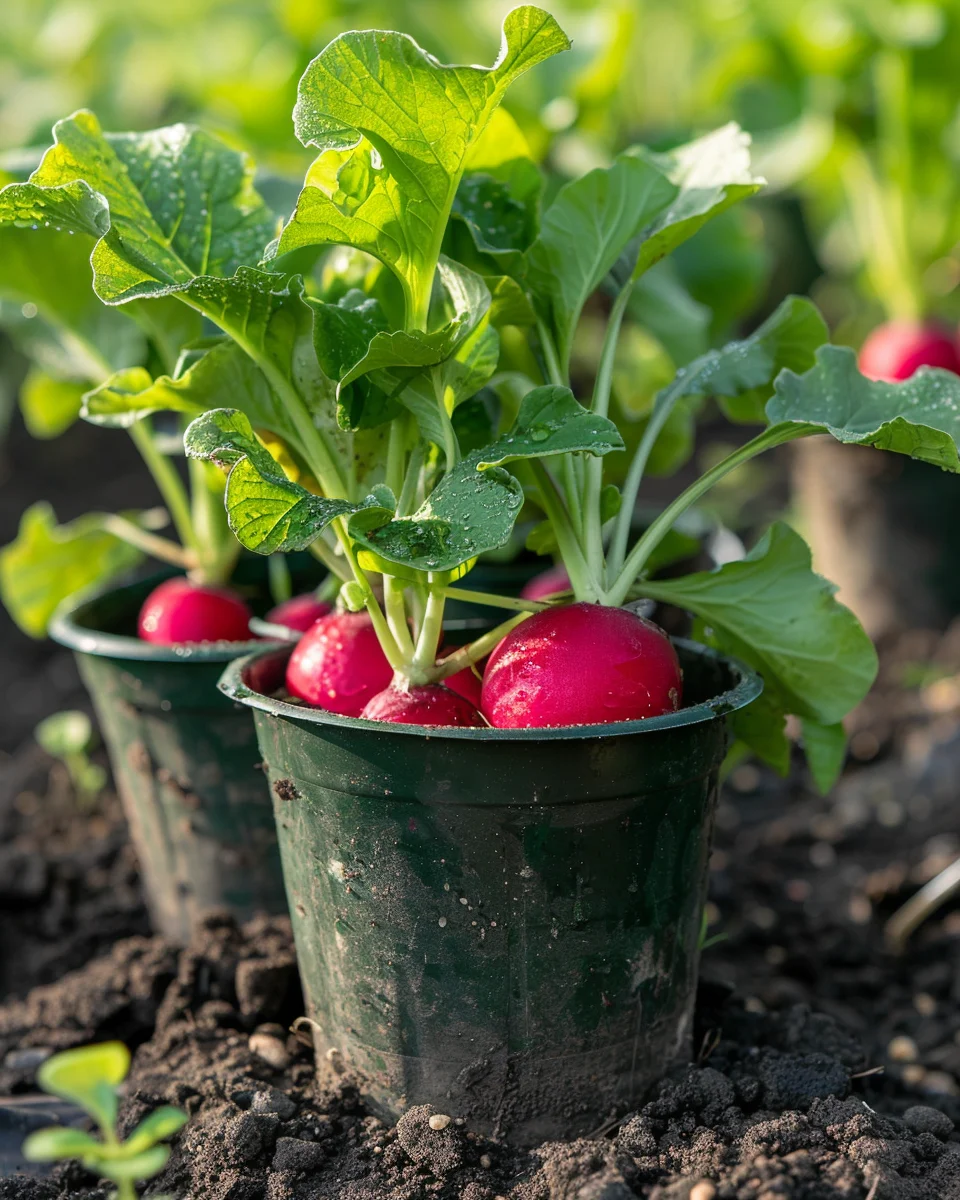
For cool temperate regions (US Zones 3-6, UK northern regions), plant spring radishes from March to May and fall crops from August to September. For warm temperate regions (US Zones 7-10, Mediterranean, southern UK), plant from February to April for spring crops and September to November for fall/winter harvests. One advantage of bucket growing is the ability to start earlier in spring and extend later into fall by moving containers to protected areas during unexpected frosts. Since radishes are direct-sown rather than transplanted, succession planting every 7-10 days ensures continuous harvests throughout the growing season.
Best radish varieties to grow in containers
- Cherry Belle – Round, bright red radishes that mature in just 22 days and resist pithiness, perfect for bucket growing.
- French Breakfast – Elongated radishes with red tops and white tips, mild flavor, and excellent for container cultivation.
- Easter Egg – Multi-colored mix (purple, pink, red, white) that matures uniformly despite different colors, adding visual interest to bucket gardens.
- White Icicle – Long, slender white radishes with mild flavor that grow well in deeper containers like five gallon buckets.
- Sparkler – Round bicolor radishes with white bottoms and red tops, compact growth habit ideal for containers.
- Watermelon – Slower-growing (55-60 days) specialty radish with green skin and pink interior, thrives in the controlled environment of bucket growing.
How to plant radishes in five gallon buckets
Materials needed:
- Five gallon buckets (food-grade preferred)
- Drill with 1/4-inch bit for drainage holes
- Quality potting mix (not garden soil)
- Compost or aged manure
- Radish seeds
- Watering can with gentle spray
- Plant markers
Step-by-step planting:
- Prepare the bucket by drilling 8-10 drainage holes in the bottom and several small holes around the sides near the bottom.
- Place a layer of small stones or broken pottery pieces at the bottom (1-2 inches/2.5-5 cm) to improve drainage.
- Mix potting soil with compost at a ratio of 3:1 and fill the bucket to about 2 inches (5 cm) below the rim.
- Water the soil thoroughly and allow it to drain completely.
- Make shallow furrows about 1/2 inch (1.25 cm) deep, spaced 2-3 inches (5-7.5 cm) apart across the bucket surface.
- Sow seeds thinly along the furrows, approximately 1 inch (2.5 cm) apart.
- Cover seeds lightly with soil and gently firm the surface.
- Water again using a gentle spray to avoid displacing seeds.
- Label the bucket with variety name and planting date.
How to grow radishes in five gallon buckets
Position your bucket where it will receive 6-8 hours of sunlight daily. In hot regions, provide afternoon shade to prevent bolting. Water consistently to maintain even soil moisture—about 1 inch (2.5 cm) per week, more during hot weather. Five gallon buckets dry out faster than garden soil, so check moisture levels daily by inserting your finger 1 inch into the soil; water when it feels dry at that depth.
Fertilize lightly at planting time with a balanced organic fertilizer low in nitrogen (too much nitrogen produces lush tops but poor roots). Thin seedlings to 2 inches (5 cm) apart when they reach 1 inch (2.5 cm) tall, which is crucial for proper root development in containers. No staking or trellising is needed for radishes. For continuous harvests, consider dedicating multiple buckets to succession planting, starting new buckets every 10-14 days.
Caring for radishes in five gallon buckets
Monitor soil moisture carefully, as consistent watering prevents splitting and pithiness. Watch for flea beetles (tiny holes in leaves), which can be controlled with floating row covers or insecticidal soap. Root maggots sometimes affect radishes; prevent them by covering buckets with fine mesh until harvest. Aphids may appear on foliage; blast them off with a strong water spray.
Harvest radishes when they reach marble to golf ball size (depending on variety), typically 21-30 days after planting. Pull a test radish first—if it’s ready, the top of the root should be visible at soil level. To harvest, gently pull from the base of the leaves or loosen soil around the radish first. For storage, remove tops, wash, dry, and refrigerate in perforated plastic bags for up to 2 weeks.
Understanding bolting in radishes
Bolting occurs when radishes prematurely produce flowering stems instead of developing roots. This natural survival mechanism is triggered primarily by high temperatures (above 24°C/75°F), increasing day length (photoperiod), or stress from drought or poor growing conditions. Once bolting begins, radishes quickly become woody and bitter.
Prevent bolting by planting during cool seasons, providing afternoon shade in warm weather, ensuring consistent moisture, and harvesting promptly when radishes reach maturity. The controlled environment of bucket growing helps manage temperature fluctuations. If bolting begins, harvest immediately for the best possible flavor, even if roots are underdeveloped. The young flower stems and leaves are edible in salads or stir-fries if you catch them early.
Why does radish turn bitter?
- Heat stress – Temperatures above 24°C (75°F) cause bitterness; move buckets to cooler locations or provide shade.
- Overmaturity – Radishes left too long in soil become pithy and bitter; harvest on time according to variety specifications.
- Inconsistent watering – Drought stress followed by heavy watering causes splitting and bitterness; maintain even soil moisture.
- Crowding – Inadequate thinning leads to competition and stress; ensure proper spacing of 2 inches (5 cm) between plants.
- Poor soil – Heavy or nutrient-imbalanced soil causes stress; use quality potting mix specifically for containers.
Companion planting for radishes in five gallon buckets
Even in bucket gardening, companion planting principles apply. Good companions for radishes include:
- Lettuce – Grows at a similar pace and provides shade for radish roots while utilizing the bucket edge space.
- Spinach – Compatible shallow root system that doesn’t compete with radishes.
- Mint – Helps repel flea beetles when planted in a separate container nearby.
- Nasturtiums – Attract aphids away from radishes and add edible flowers to your garden.
- Chervil – Improves radish flavor and growth when planted around the edges of the bucket.
Avoid planting radishes with:
- Hyssop – Contains compounds that inhibit radish growth.
- Other root vegetables – Potatoes, turnips, or carrots compete for root space and nutrients.
Seasonal calendar
- January-February: Prepare buckets; sow early crops in mild climates or indoors in cold regions.
- March-April: Main spring planting season; succession sow every 10 days; thin seedlings.
- May: Last spring sowings in cool regions; move buckets to partial shade in warm areas.
- June-July: Avoid planting in hot summer weather in most regions; focus on bucket maintenance.
- August: Begin fall plantings in cooler regions.
- September-October: Prime fall planting season; succession sow for extended harvests.
- November-December: Continue growing in mild winter areas; protect buckets from hard freezes.
Problems & solutions
| Problem | Quick Fix |
|---|---|
| Leggy seedlings | Increase light exposure; thin plants to proper spacing |
| Cracked or split roots | Maintain consistent moisture; harvest promptly when mature |
| Small, underdeveloped roots | Check for overcrowding; ensure proper nutrition and sunlight |
| Flea beetle damage | Cover with floating row cover; spray with neem oil solution |
| Woody, pithy texture | Harvest earlier; plant heat-resistant varieties in warm weather |
| Yellowing leaves | Check drainage; reduce watering frequency; ensure proper nutrition |
Common questions about growing radishes in five gallon buckets
How many radishes can I grow in one five gallon bucket?
A standard five gallon bucket (approximately 12 inches/30 cm in diameter) can accommodate about 15-20 radishes when properly spaced at 2 inches (5 cm) apart.
How often should I water radishes in buckets?
Check moisture daily by inserting your finger 1 inch into the soil. Generally, water every 1-2 days during warm weather and every 2-3 days in cooler conditions, ensuring consistent moisture without waterlogging.
Can I reuse the soil in my radish buckets?
Yes, but refresh it between plantings by removing about 1/3 of the old soil and adding fresh potting mix with compost. Complete soil replacement annually prevents disease buildup.
Do radishes need full sun when grown in buckets?
Radishes need 6-8 hours of sunlight daily, but in hot regions, afternoon shade prevents bolting. The mobility of bucket growing allows you to adjust sun exposure as needed.
Can I grow radishes in buckets indoors?
Yes, with a sunny south-facing window or grow lights providing 10-12 hours of light daily. Indoor temperatures between 15-21°C (60-70°F) are ideal for radish development.
How do I know when my bucket-grown radishes are ready to harvest?
Check seed packets for days to maturity (typically 21-30 days), and harvest when the top of the radish is visible at soil level and reaches the expected size for the variety (usually 1-1.5 inches/2.5-4 cm in diameter).