
How to Grow Parsnips in Deep Beds: A Complete Guide to Planting, Varieties, and Care
Intro for growing parsnips in deep beds
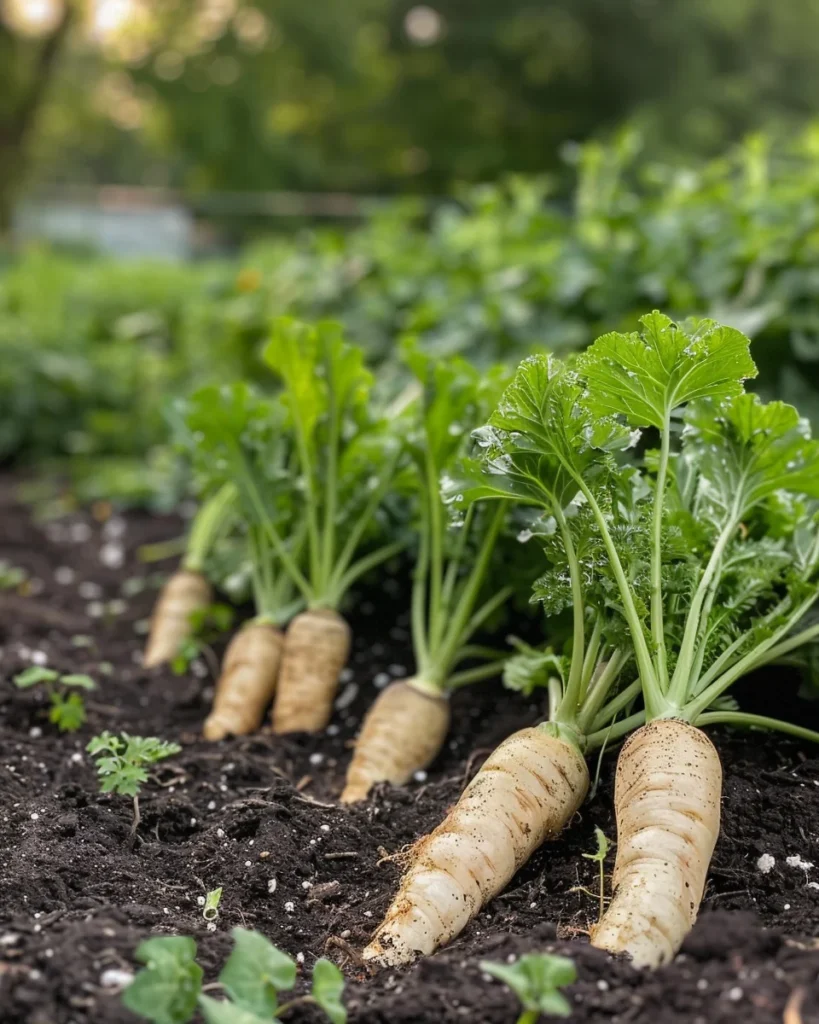
Parsnips (Pastinaca sativa) are sweet, nutty root vegetables that thrive when grown in deep beds, which provide the loose, stone-free soil they need to develop long, straight roots. These cold-hardy biennial plants are related to carrots but offer a more complex flavor that actually improves after exposure to frost. Deep bed cultivation allows parsnips to reach their full potential—often growing up to 30cm (12in) long with proper care. Perfect for UK and temperate climate gardens, parsnips are relatively low-maintenance once established and reward gardeners with a nutritious harvest throughout winter when few other vegetables are available from the garden.
When to plant parsnips in deep beds
Parsnips require a long growing season of 120-180 days, making timing crucial. In most temperate regions, parsnips are best sown in early spring once soil temperatures reach 7-10°C (45-50°F). They can be planted as early as February in milder UK areas, but March to early May is generally optimal for most regions. Unlike many vegetables, parsnips actually benefit from light frosts, which convert their starches to sugars and enhance their flavor. Avoid planting in late spring or summer in warmer regions, as high temperatures can reduce germination and cause poor root development.
Best time to plant parsnips in deep beds
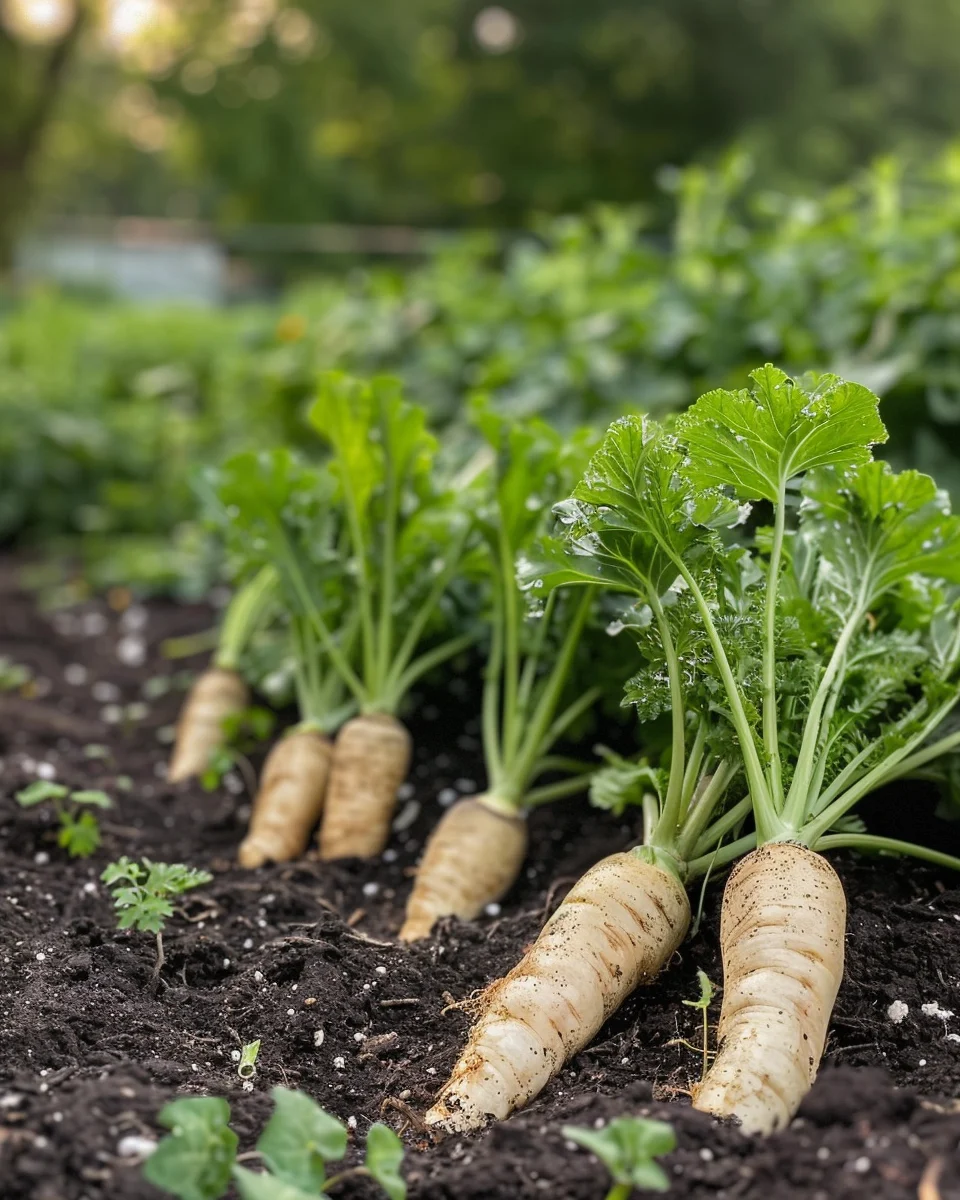
For cool temperate climates (UK, Northern Europe, US Zones 3-6): Sow directly from mid-March to early May when soil has warmed but before hot weather arrives.
For warmer temperate regions (US Zones 7-9): Plant from February to early April to ensure roots develop before summer heat intensifies.
For Mediterranean climates: Sow in autumn (September-October) for a spring harvest, avoiding summer heat entirely.
Parsnips should always be direct-sown as they dislike transplanting due to their delicate taproot. Fresh seed is essential—parsnip seeds lose viability quickly, so always use current season’s seed for best germination rates.
Best parsnip varieties to grow in deep beds
- Hollow Crown – A heritage variety with excellent flavor and good disease resistance, producing long, tapered roots ideal for deep beds.
- Gladiator F1 – Highly uniform, canker-resistant variety that produces smooth white roots with exceptional sweetness.
- Tender and True – Award-winning variety with particularly sweet flavor and resistance to canker, perfect for exhibition growing.
- Albion – Early-maturing variety with excellent resistance to disease and good performance in heavier soils.
- White Gem – Compact variety reaching 25cm (10in), suitable for slightly shallower beds or container growing.
- Javelin F1 – Quick-maturing variety with excellent uniformity and canker resistance, ready in about 110 days.
- Archer – Produces wedge-shaped roots with good disease resistance and particularly sweet flavor after frost.
How to plant parsnips in deep beds
Materials needed:
- Fresh parsnip seeds (no more than 1 year old)
- Deep garden bed (minimum 30-45cm/12-18in depth)
- Garden fork or broadfork
- Compost or well-rotted manure
- Fine sand (optional, for heavy soils)
- Radish seeds (optional, as marker crop)
- Row markers or string line
- Watering can with fine rose attachment
Step-by-step planting:
- Prepare your deep bed by removing all stones, breaking up compacted soil, and digging to at least 30cm (12in) depth—ideally 45cm (18in) for optimal root development.
- Incorporate well-rotted compost or manure into the bed several weeks before planting, avoiding fresh manure which can cause forking.
- For heavy clay soils, mix in some fine sand to improve drainage and prevent misshapen roots.
- Create shallow drills about 1cm (½in) deep and space rows 30cm (12in) apart.
- Sow seeds thinly along the drills—parsnip germination can be erratic, so sow more densely than needed (optionally mix with quick-germinating radish seeds as row markers).
- Cover seeds lightly with fine soil, tamp gently, and water with a fine spray.
- Keep soil consistently moist until germination, which can take 14-28 days (be patient!).
- Once seedlings reach 2.5cm (1in) high, thin to 7-10cm (3-4in) apart, and later to final spacing of 15cm (6in) apart.
How to grow parsnips in deep beds
Parsnips prefer full sun but will tolerate partial shade, especially in warmer regions where afternoon shade can be beneficial. Water regularly during dry periods, providing about 2.5cm (1in) of water weekly, particularly critical during the first 8-12 weeks when roots are developing. Avoid overhead watering which can encourage leaf diseases.
Fertilizing needs are minimal if you’ve prepared your deep bed properly. Too much nitrogen encourages lush foliage at the expense of root development. A light application of balanced organic fertilizer in midsummer may be beneficial for poorer soils.
Mulch around plants with compost or straw to suppress weeds and maintain soil moisture. Weed carefully by hand to avoid disturbing developing roots. No staking is required, but keep the bed weed-free as parsnips don’t compete well with aggressive weeds.
For container growing, choose varieties like ‘White Gem’ or ‘Javelin’ and use deep containers at least 45-60cm (18-24in) deep. Half barrels or purpose-made root vegetable planters work well. Use a soil-based compost mixed with some sand for drainage.
Caring for parsnips in deep beds
Regular weeding is essential, especially when plants are young. As the foliage develops, it will help shade out many weeds. Check soil moisture regularly during dry spells—inconsistent watering can cause splitting or forking of roots.
Common pests include carrot fly, which can be deterred by growing under insect mesh or by companion planting with alliums. Aphids may occasionally attack the foliage—a strong spray of water or insecticidal soap usually controls them. Watch for canker (dark patches on roots) and crown rot, both encouraged by wet conditions. Ensure good air circulation and avoid overhead watering to prevent fungal issues.
Harvest parsnips after the first frost for the sweetest flavor, typically from October through winter. Lift carefully using a garden fork, loosening the soil around the roots first to avoid breakage. In mild areas, parsnips can be left in the ground and harvested as needed throughout winter, acting as natural storage. For storage elsewhere, remove foliage and store unwashed roots in boxes of slightly damp sand in a cool, dark place (0-5°C/32-41°F), where they’ll keep for 2-4 months.
Understanding bolting in parsnips
Bolting is when parsnips prematurely produce flowering stems, making the roots woody and bitter. As biennials, parsnips naturally flower in their second year, but stress can trigger early bolting. The main triggers include late planting (exposing young plants to long summer days), temperature fluctuations, drought stress, and root disturbance.
To prevent bolting, plant at the optimal time (early spring), ensure consistent watering, avoid root disturbance when weeding, and harvest before the second spring when plants naturally prepare to flower. If bolting begins, immediately harvest the roots as they’ll quickly become inedible. The flowering stems can be removed to redirect energy to the roots, but this is usually a temporary fix. Once a parsnip has committed to flowering, the root quality declines rapidly.
Why does parsnips turn bitter?
- Age – Parsnips left in the ground too long into their second year will become woody and bitter as they prepare to flower.
- Heat stress – High temperatures during growth can cause bitterness; plant early enough to avoid summer heat.
- Bolting – Once flowering begins, roots quickly become bitter and tough.
- Poor soil conditions – Compacted or nutrient-imbalanced soil can stress plants, affecting flavor.
- Inconsistent watering – Drought stress followed by heavy watering can contribute to bitter flavor development.
Companion planting for parsnips in deep beds
Good companions:
- Onions, garlic, and leeks – Repel carrot fly and other pests that affect parsnips.
- Radishes – Act as marker crops for slow-germinating parsnips and help break up soil.
- Lettuce and other leafy greens – Utilize space while parsnips develop and provide ground cover.
- Marigolds – Repel nematodes and other soil pests that can damage roots.
- Rosemary – The strong scent confuses pests that might attack parsnips.
Avoid planting near:
- Carrots – Share pests and diseases and compete for similar nutrients and space.
- Dill – Can cross-pollinate with parsnips, affecting seed production if saving seeds.
- Potatoes – Heavy feeders that compete for nutrients and can shade young parsnip plants.
Seasonal calendar
- February-March: Prepare deep beds, incorporating compost but no fresh manure.
- March-April: Sow seeds directly in prepared beds (earlier in mild regions, later in cold areas).
- May-June: Thin seedlings progressively to final spacing; keep well-watered.
- July-August: Continue regular watering; apply light mulch to retain moisture.
- September: Reduce watering as roots mature; begin harvest of early varieties.
- October-November: Main harvest period begins after first frosts improve flavor.
- December-February: Continue harvesting as needed; in mild areas, leave in ground for natural storage.
- Year 2 February-March: Harvest any remaining parsnips before they begin to regrow and become woody.
Problems & solutions
| Problem | Quick Fix |
|---|---|
| Poor germination | Use fresh seed (less than 1 year old); keep soil consistently moist; consider pre-soaking seeds for 24 hours. |
| Forked or misshapen roots | Prepare deeper beds; remove stones and obstacles; avoid fresh manure; don’t disturb roots when weeding. |
| Carrot fly damage | Cover with insect mesh; companion plant with onions or garlic; avoid crushing foliage which releases attractive scent. |
| Canker (dark patches on roots) | Improve drainage; practice crop rotation; choose resistant varieties like ‘Gladiator’ or ‘Archer’. |
| Splitting roots | Water consistently; avoid periods of drought followed by heavy watering. |
| Woody, fibrous texture | Harvest at appropriate time; don’t leave in ground too long into second year; ensure adequate spacing. |
Common questions about growing parsnips in deep beds
How often should I water parsnips?
Water deeply once a week, providing about 2.5cm (1in) of water, more during hot, dry periods. Consistent moisture is crucial during the first 8-12 weeks when roots are developing. Reduce watering as harvest approaches for better flavor concentration.
How much sunlight do parsnips need?
Parsnips grow best with 6-8 hours of sunlight daily. They will tolerate partial shade, especially in warmer regions where afternoon shade can be beneficial, but too little sun results in poor root development.
How deep should containers be for growing parsnips?
Containers should be at least 45-60cm (18-24in) deep to accommodate the long taproots. Half barrels, deep grow bags, or purpose-made root vegetable planters work well. Ensure good drainage and use a soil-based compost.
What’s the ideal spacing for parsnips?
Space parsnips 15cm (6in) apart in rows 30cm (12in) apart. Initially, sow more densely and thin progressively as seedlings develop. Proper spacing prevents misshapen roots and allows adequate air circulation.
Can parsnips survive frost?
Yes, parsnips are very cold-hardy and actually benefit from exposure to frost, which converts starches to sugars and improves flavor. They can typically withstand temperatures down to -7°C (20°F) in the ground, making them excellent winter vegetables.
When are parsnips ready to harvest?
Parsnips are usually ready to harvest 120-180 days after sowing, typically from October onwards. For the best flavor, wait until after the first frost. Roots should be firm and pale cream-colored, approximately 15-30cm (6-12in) long depending on variety.
Can I grow parsnips in clay soil?
Clay soil is challenging for parsnips as it can restrict root development and cause forking. If using clay soil, create raised deep beds amended with plenty of compost and some sand to improve drainage and texture. Choose shorter varieties like ‘White Gem’ or ‘Javelin’ for heavier soils.