

How to Grow Papaya in Containers: Complete Guide for Tropical Fruit Success
Intro for how to grow papaya in containers
Papaya (Carica papaya) is a tropical fruit tree that can be successfully grown in containers, making it accessible to gardeners in temperate regions. This fast-growing plant produces sweet, nutritious fruits rich in vitamins A and C, enzymes, and antioxidants. Container-grown papayas are perfect for patios, balconies, or indoor spaces with adequate light. While naturally thriving in tropical and subtropical climates, container cultivation allows you to protect plants from cold temperatures by moving them indoors during winter. With proper care, container papayas can reach 1.5-2 meters (5-6 feet) tall and begin fruiting within 8-10 months of planting.
When to plant how to grow papaya in containers
Papaya seeds should be planted when temperatures consistently remain above 21°C (70°F). In temperate regions, this typically means spring to early summer planting. Soil temperature should be at least 20°C (68°F) for optimal germination. Papayas are extremely frost-sensitive and will suffer damage or die at temperatures below 0°C (32°F). In cooler climates (US Zones 8 and below, or UK), start seeds indoors 2-3 months before the last frost date to give plants a head start before moving containers outdoors after all frost danger has passed.
Best time to plant how to grow papaya in containers
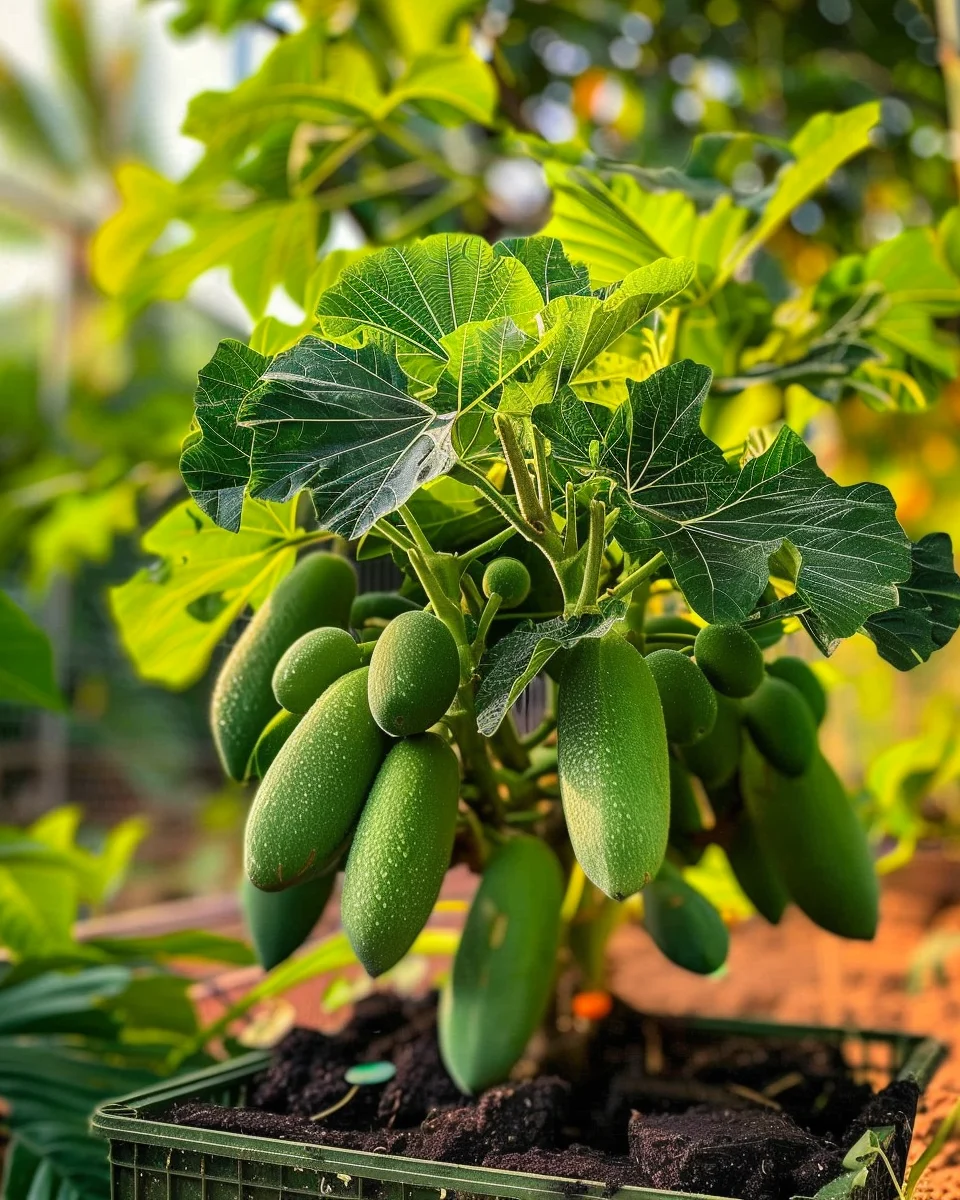
In warm regions (US Zones 9-11, Mediterranean climates), plant papaya seeds directly in containers from March to June. For cooler temperate regions, start seeds indoors in February to March, then move containers outdoors in May to June after temperatures stabilize. Year-round planting is possible if growing indoors with supplemental lighting and heating. For the best results, time your planting so young papaya plants experience their strongest growth during warm summer months, allowing them to establish before cooler weather arrives.
Best how to grow papaya in containers varieties to grow
- Thai Dwarf – Compact variety reaching only 1.5-2m (5-6ft), perfect for containers with sweet fruits and early production.
- Waimanalo – Self-pollinating dwarf variety that produces fruit at lower heights, ideal for indoor growing.
- Sunrise Solo – Self-pollinating with sweet, pear-shaped fruits; compact growth habit suitable for containers.
- Maradol – Large, sweet fruits with red flesh; relatively compact for its fruit size.
- Strawberry Papaya – Smaller fruits with exceptionally sweet flavor; plants remain manageable in containers.
- Bettina – Cold-hardy variety that can tolerate brief exposure to cooler temperatures; good for temperate regions.
- Red Lady – Disease-resistant hybrid that’s more forgiving of growing conditions; produces within 9 months.
How to plant how to grow papaya in containers
Materials needed:
- Large container (minimum 50cm/20in diameter, 45cm/18in depth)
- High-quality potting mix with added perlite for drainage
- Papaya seeds or small seedlings
- Organic compost
- Slow-release fertilizer
- Watering can
- Spray bottle for misting
Step-by-step planting:
- Select a container with multiple drainage holes; plastic or ceramic works well to retain moisture and warmth.
- Prepare a well-draining potting mix by combining 60% quality potting soil, 20% perlite, and 20% compost.
- Fill the container to about 5cm (2in) below the rim with the prepared soil mix.
- Plant 3-4 papaya seeds per container, 1cm (½in) deep and spaced 5cm (2in) apart.
- Cover lightly with soil and water gently until moist but not soggy.
- Place the container in a warm location (25-30°C/77-86°F) to encourage germination.
- Mist the soil surface daily to maintain humidity until seedlings emerge (typically 2-3 weeks).
- Once seedlings reach 10cm (4in) tall, thin to the strongest plant per container.
- Apply a layer of mulch around the plant, keeping it away from the stem.
How to grow how to grow papaya in containers
Papayas need full sun exposure—at least 6-8 hours of direct sunlight daily. Place containers in the sunniest spot available, preferably south-facing. Water thoroughly when the top 2.5cm (1in) of soil feels dry, typically every 2-3 days in summer and less frequently in winter. Never allow the soil to completely dry out or become waterlogged. Feed with a balanced liquid fertilizer (NPK 10-10-10) every 2-3 weeks during the growing season, switching to a higher potassium fertilizer (like 5-10-15) when flowering begins.
For container growth, use a minimum 50-60cm (20-24in) diameter pot with excellent drainage. As plants grow, you may need to repot into a 75-90cm (30-36in) container. Support the main stem with a stake as the plant grows taller. Prune side shoots to maintain a single stem for dwarf varieties. In cooler regions, move containers indoors before temperatures drop below 10°C (50°F), placing near a south-facing window or under grow lights.
Caring for how to grow papaya in containers
Inspect plants weekly for pests like spider mites, aphids, and whiteflies, which can be controlled with insecticidal soap or neem oil. Watch for signs of root rot (yellowing leaves, wilting despite moist soil), which indicates overwatering—adjust your watering schedule and ensure proper drainage. Papaya ring spot virus can be problematic; remove and destroy affected plants showing distorted leaves with yellow mottling.
Harvest papayas when the skin begins changing from green to yellow. A ripe papaya will yield slightly to gentle pressure. Cut fruits from the plant with a sharp knife, leaving a small stem attached. Papayas will continue ripening after harvest and can be stored at room temperature until fully ripe, then refrigerated for up to a week.
Understanding bolting in how to grow papaya in containers
Unlike leafy vegetables, papayas don’t bolt in the traditional sense. However, they can experience stress-induced flowering, where plants flower prematurely before reaching adequate size. This typically happens when plants experience temperature extremes, drought, or nutrient deficiencies. To prevent premature flowering, maintain consistent temperatures between 21-32°C (70-90°F), water regularly, and ensure adequate nutrition. If a young plant begins flowering too early (before reaching 1m/3ft tall), remove the flowers to encourage vegetative growth before allowing fruiting.
Why does how to grow papaya in containers turn bitter?
- Unripe harvest – Papayas picked too early contain high levels of latex, causing bitterness; allow fruits to begin yellowing before harvesting.
- Temperature stress – Exposure to temperatures below 10°C (50°F) can affect fruit development and flavor; protect plants from cold.
- Inconsistent watering – Drought stress followed by overwatering can cause bitter compounds to develop; maintain even soil moisture.
- Nutrient imbalance – Excessive nitrogen fertilizer promotes vegetative growth at the expense of fruit quality; switch to higher potassium fertilizer during fruiting.
- Genetic factors – Some varieties naturally contain more papain enzyme, creating a bitter taste; try different varieties if bitterness persists.
Companion planting for how to grow papaya in containers
Good companions:
- Sweet basil – Repels pests and improves papaya flavor when planted in adjacent containers.
- Marigolds – Deter nematodes and other soil pests that can damage papaya roots.
- Nasturtiums – Attract pollinators and act as trap crops for aphids that might otherwise attack papayas.
- Lemongrass – Repels mosquitoes and other insects while thriving in similar conditions.
- Comfrey – Accumulates nutrients that benefit papayas when used as mulch or compost tea.
Avoid planting near:
- Climbing vines (like cucumbers or beans) – Can compete for light and potentially damage the papaya’s shallow root system.
- Root vegetables – Compete for container space and have different watering requirements.
- Other papayas – Keeping plants too close increases disease transmission risk and competition for resources.
Seasonal calendar
- January-February: Start seeds indoors in warm regions; maintain indoor plants in cooler areas.
- March-April: Start seeds indoors in cooler regions; direct sow in containers in warm regions; fertilize established plants.
- May-June: Move container plants outdoors in all regions after frost danger; repot if necessary; begin regular fertilization.
- July-August: Maintain consistent watering; watch for pests in hot weather; provide afternoon shade in extremely hot regions.
- September-October: Reduce fertilizer; prepare to move plants indoors in cooler regions; harvest mature fruits.
- November-December: Move plants indoors before temperatures drop below 10°C (50°F); reduce watering; provide supplemental lighting if needed.
Problems & solutions
| Problem | Quick Fix |
|---|---|
| Yellowing leaves | Check for overwatering; ensure proper drainage; apply balanced fertilizer if nutrient deficient. |
| Flower drop without fruiting | Ensure proper pollination by hand-pollinating flowers with a small brush in the morning. |
| Stunted growth | Increase pot size; check for root binding; apply balanced fertilizer. |
| Spider mites (tiny webs, stippled leaves) | Increase humidity; spray with insecticidal soap or neem oil solution every 5-7 days. |
| Fruit rot | Improve air circulation; avoid wetting fruits when watering; harvest promptly when ripe. |
| Leaf spots/fungal disease | Remove affected leaves; apply organic fungicide; improve air circulation. |
| Cold damage | Move container to warmer location; protect with horticultural fleece; prune damaged areas. |
Common questions about growing how to grow papaya in containers
Q: How large should my container be for growing papaya?
A: Start with a container at least 50cm (20in) in diameter and 45cm (18in) deep. As the plant grows, you may need to repot into a 75-90cm (30-36in) container for optimal root development and stability.
Q: How often should I water my container papaya?
A: Water when the top 2.5cm (1in) of soil feels dry, typically every 2-3 days in summer and less frequently in winter. Ensure the container has excellent drainage to prevent root rot.
Q: Do I need multiple papaya plants for pollination?
A: It depends on the variety. Many modern container-suitable varieties like ‘Sunrise Solo’ and ‘Waimanalo’ are self-pollinating. For dioecious varieties (separate male and female plants), you’ll need both types or can hand-pollinate female flowers using purchased pollen.
Q: What’s the minimum temperature papaya can tolerate?
A: Papayas suffer damage below 10°C (50°F) and will die if exposed to freezing temperatures. Move containers indoors when temperatures approach this threshold.
Q: How long until my container papaya produces fruit?
A: Container-grown dwarf varieties typically begin flowering 4-5 months after planting, with fruits ready to harvest 3-5 months after pollination. Expect your first harvest 8-10 months after planting seeds.
Q: Can I grow papaya indoors year-round?
A: Yes, with sufficient light (a south-facing window or grow lights providing 12-14 hours of light daily), consistent temperatures (21-32°C/70-90°F), and good air circulation. Dwarf varieties work best for indoor cultivation.
Q: How do I know when papaya fruits are ready to harvest?
A: Harvest when the skin begins changing from green to yellow (about 30-50% yellow). The fruit should yield slightly to gentle pressure. Fully green papayas can be harvested for cooking, while fully yellow fruits are best for fresh eating.