
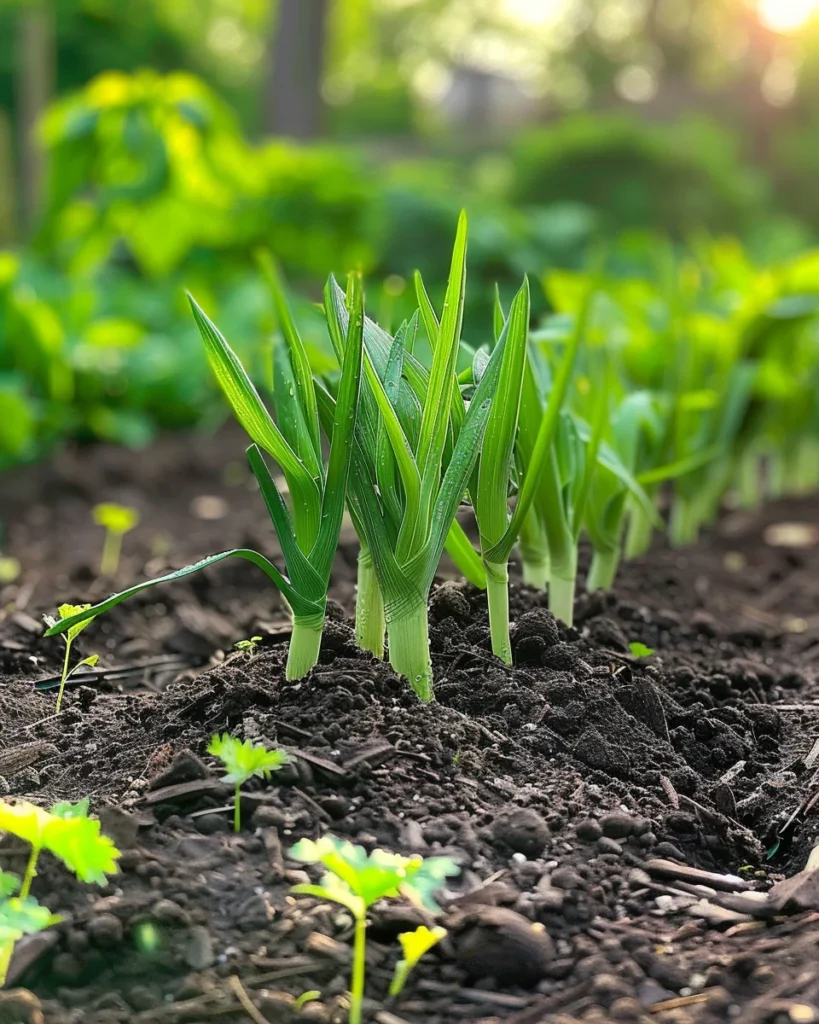
How to Grow Leeks in Small Gardens: When to Plant, Best Varieties & Space-Saving Care
Intro for growing leeks in small gardens
Leeks (Allium porrum) are versatile, elegant alliums that bring a milder, sweeter flavor than onions to your kitchen. These tall, slender vegetables with their blue-green leaves are perfect for small gardens, as they can be grown in tight rows, containers, or even as attractive border plants. With their long growing season and cold tolerance, leeks provide fresh harvests when other vegetables have finished. They’re rich in vitamins A, C, and K, contain beneficial antioxidants, and add depth to soups, stews, and sautés. Even in the smallest growing spaces, leeks can thrive with the right care and attention to their specific needs.
When to plant leeks in small gardens
Leeks are cool-season crops that perform best when they mature in cool weather. In most temperate regions, they can be planted in early spring as soon as the soil can be worked, typically when soil temperatures reach 7-10°C (45-50°F). They’re quite frost-tolerant, with established plants able to withstand temperatures down to -10°C (14°F), making them excellent for extended seasons.
For a fall or winter harvest, start seeds indoors 10-12 weeks before your region’s first fall frost date. In milder climates (UK, US Zones 7-9), leeks can be overwintered in the garden for an early spring harvest, providing a valuable bridge during the “hungry gap” when few other vegetables are available.
Best time to plant leeks in small gardens

In cool temperate regions (UK, Northern US, Canada), plant leeks outdoors from March to early May for summer/fall harvests, or June to July for overwintering varieties.
In warmer regions (US Zones 7-9, Mediterranean), plant from September through February for spring harvests, avoiding the hottest summer months when leeks may struggle.
For transplants (recommended for small gardens to maximize space), start seeds indoors 8-10 weeks before your intended planting date. Direct sowing works best in early spring in cooler climates or fall in warmer zones.
Best leek varieties to grow in small gardens
- King Richard – Early maturing (75 days) with long, slender stems perfect for containers and tight spaces.
- Bandit – Dark blue-green leaves with excellent winter hardiness, ideal for overwintering in small gardens.
- Carentan – Heritage variety with short, thick stems that’s well-suited to shallow containers.
- Lincoln – Compact variety (30-35cm/12-14in tall) bred specifically for small gardens and containers.
- Autumn Giant – Despite the name, can be planted closely for baby leeks, maximizing yield in small spaces.
- Lancelot – Disease-resistant variety that grows quickly, reducing time in your garden beds.
- Tadorna – Bolt-resistant variety that performs well in variable weather conditions.
How to plant leeks in small gardens
Materials needed:
- Leek seedlings or seeds
- Compost or well-rotted manure
- Garden fork or trowel
- Dibber or wooden dowel (1.5-2cm/0.5-0.75in diameter)
- Watering can with rose attachment
- Organic fertilizer (optional)
Step-by-step planting:
- Prepare your soil by removing weeds and incorporating compost; leeks prefer fertile, well-draining soil with a pH of 6.0-7.0.
- For transplants, trim the roots to 2.5cm (1in) and cut the tops to about 15cm (6in) to encourage strong growth.
- Make holes 15-20cm (6-8in) deep and 15cm (6in) apart using your dibber. In containers, you can space them closer at 10cm (4in).
- For intensive small garden planting, create staggered rows 15cm (6in) apart.
- Drop one seedling into each hole, ensuring the roots reach the bottom.
- Instead of filling the holes with soil, simply water the seedlings in – the soil will gradually fill in as you water and the leeks grow.
- For direct sowing, plant seeds 1cm (½in) deep and 2.5cm (1in) apart, then thin to final spacing when seedlings reach 15cm (6in) tall.
- Water thoroughly after planting to settle the soil around the roots.
How to grow leeks in small gardens
Leeks thrive in full sun but will tolerate partial shade in hotter regions. Aim for at least 6 hours of direct sunlight daily for optimal growth. In small gardens, consider east-facing positions where they’ll get morning sun but some afternoon shade in summer.
Water consistently to maintain even soil moisture, providing about 2.5cm (1in) of water weekly. Container-grown leeks need more frequent watering, sometimes daily during hot weather. Apply a balanced organic fertilizer about 4-6 weeks after planting.
For blanching (creating the desirable white stems), gradually mound soil or mulch around the stems as they grow, being careful not to cover the point where the leaves fan out. In containers, plant leeks deeply and add compost as they grow.
For container growing, choose pots at least 20cm (8in) deep with good drainage. A 30cm (12in) container can accommodate 8-10 leeks planted in a circular pattern. Use a rich potting mix with added compost and ensure consistent moisture.
Caring for leeks in small gardens
Keep the area around leeks weed-free, as they don’t compete well with weeds. Continue blanching by adding soil or mulch around stems every few weeks. In dry periods, consistent watering is crucial to prevent tough, woody stems.
Common pests include leek moth (look for white streaking and tunneling in leaves) and onion fly (wilting plants with damaged roots). Cover with fine mesh or horticultural fleece to prevent these pests. Leek rust appears as orange pustules on leaves – remove affected foliage and avoid overhead watering.
Harvest leeks when they reach usable size, typically when stems are 2.5cm (1in) or more in diameter. For small gardens, you can harvest some plants early as “baby leeks” to allow others more space to develop. To harvest, loosen the soil with a fork and gently pull or dig the leek.
Store harvested leeks in the refrigerator for 1-2 weeks, or heel them into a trench of soil or sand in a sheltered spot for longer storage in mild winter areas.
Understanding bolting in leeks
Bolting is when leeks prematurely produce a flowering stalk, making the stems tough and bitter. This is triggered primarily by fluctuating temperatures, particularly cold followed by warm weather. Other triggers include drought stress, root disturbance, and day length changes.
Prevent bolting by choosing bolt-resistant varieties like ‘Tadorna’ or ‘Bandit’, maintaining consistent soil moisture, and planting at the appropriate time for your region. In small gardens, providing afternoon shade during hot periods can help reduce heat stress.
If your leeks do bolt, harvest them immediately – while the stems won’t be as tender, they’re still usable in soups and stocks. The flower stalks can be removed to potentially extend usability, but the quality will be compromised.
Why does leeks turn bitter?
- Bolting – Once a leek begins to form a seed stalk, bitterness develops quickly; harvest promptly if you see a central stalk forming.
- Age – Overmaturity leads to toughness and bitterness; harvest leeks when they reach appropriate size rather than leaving them too long.
- Heat stress – Extended periods above 26°C (80°F) can cause bitterness; provide afternoon shade in hot weather.
- Inconsistent watering – Drought followed by heavy watering creates stress that can affect flavor; maintain even soil moisture.
- Nutrient imbalance – Excessive nitrogen can cause rapid, bitter growth; use balanced fertilizers and avoid over-fertilizing.
Companion planting for leeks in small gardens
Good companions:
- Carrots – The strong scent of leeks deters carrot fly, while carrots repel leek moth.
- Strawberries – Leeks help deter pests that attack strawberries.
- Tomatoes – Leeks help repel tomato hornworm and can be tucked between tomato plants in small spaces.
- Celery – Both have similar growing requirements and can share space effectively.
- Chamomile – Improves the flavor of leeks and can be grown as a border plant.
Avoid planting near:
- Beans and peas – Leeks may stunt their growth.
- Other alliums – Planting with onions or garlic increases disease risk and competition for similar nutrients.
Seasonal calendar
- January-February: Start seeds indoors in cool regions; direct sow in mild winter areas.
- March-April: Transplant seedlings outdoors in most temperate regions; continue indoor sowings for succession planting.
- May-June: Direct sow in cooler regions; blanch developing leeks; provide extra water during dry spells.
- July-August: Start seeds for fall/winter crop; continue blanching; harvest early varieties.
- September-October: Harvest summer-planted leeks; transplant fall crop in warm regions; apply mulch for winter protection.
- November-December: Continue harvesting as needed; protect overwintering leeks with mulch in cold regions; plant in very mild winter areas.
Problems & solutions
| Problem | Quick Fix |
|---|---|
| Thin, weak growth | Improve soil fertility with compost and balanced organic fertilizer; ensure adequate sunlight. |
| Leek rust (orange spots) | Remove affected leaves; improve air circulation; rotate crops; use resistant varieties. |
| Leek moth damage | Cover with insect mesh; remove and destroy affected leaves; encourage beneficial insects. |
| Short white portions | Improve blanching by mounding more soil around stems as they grow. |
| Splitting stems | Maintain consistent watering; harvest promptly when mature. |
| Stunted growth | Check for root competition; ensure adequate spacing; improve soil fertility. |
Common questions about growing leeks in small gardens
How often should I water leeks in containers?
Container-grown leeks need watering when the top 2.5cm (1in) of soil feels dry, typically every 1-2 days in summer and less frequently in cooler weather. Never allow containers to dry out completely.
How much sun do leeks need?
Leeks need at least 6 hours of direct sunlight daily. In very hot regions, afternoon shade is beneficial to prevent heat stress and reduce watering needs.
What size container works for leeks?
Use containers at least 20cm (8in) deep with drainage holes. A 30cm (12in) diameter pot can grow 8-10 leeks, while window boxes can support a row of leeks spaced 10cm (4in) apart.
How close can I plant leeks in a small garden?
In intensive small garden beds, plant leeks 10-15cm (4-6in) apart in staggered rows. For baby leeks, you can plant as close as 7.5cm (3in) apart and harvest alternate plants early.
Can I grow leeks in partial shade?
Yes, leeks will grow in partial shade, though they may develop more slowly and produce thinner stems. Aim for at least 4-5 hours of direct sun in shadier locations.
When are leeks ready to harvest?
Harvest leeks when the stems reach at least 2.5cm (1in) in diameter, typically 80-120 days after transplanting depending on variety. Baby leeks can be harvested earlier when stems are pencil-sized.
Can I regrow leeks from kitchen scraps?
Yes, place the root end (bottom 2.5cm/1in with roots attached) in water or directly in soil. While they will regrow greens, the quality won’t match that of properly grown leeks.