
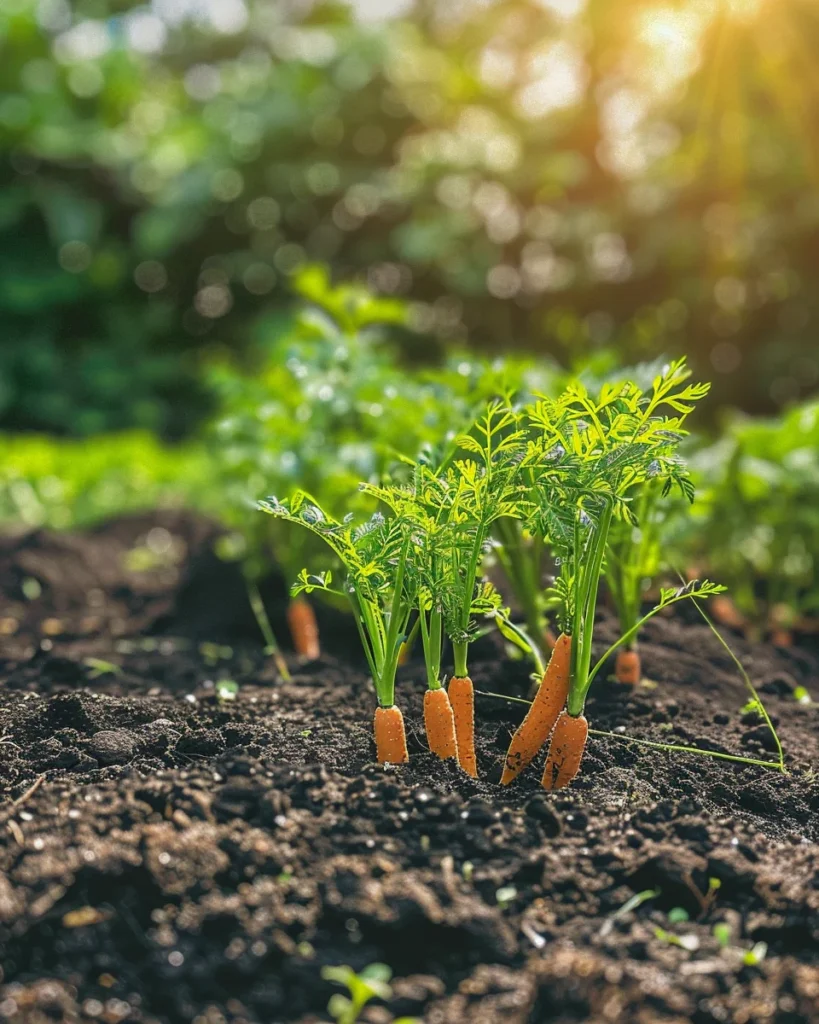
How to Grow Carrots in Sandy Soil: Best Varieties, Planting Times & Care Tips
Intro for growing carrots in sandy soil
Carrots (Daucus carota) are versatile root vegetables that actually thrive in sandy soil, making them perfect for gardeners dealing with lighter soil types. Sandy soil provides the loose, well-draining environment that carrot roots need to develop straight, uniform shapes without obstruction. While many vegetables struggle in sandy conditions, carrots can excel with the right approach. They offer excellent nutritional value, including beta-carotene, fiber, and vitamins, while their varying colors and sizes add visual interest to your garden. With proper preparation and care, sandy soil can be transformed from a gardening challenge into the perfect medium for growing crisp, sweet carrots.
When to plant carrots in sandy soil
Carrots are cool-season vegetables that perform best when soil temperatures range between 10-24°C (50-75°F). In most temperate regions, you can plant carrots as soon as the soil can be worked in early spring, typically 2-3 weeks before the last frost date. Sandy soil warms up faster than clay or loam, giving you a slight head start on the growing season. For a continuous harvest, you can also plant in late summer for a fall crop, stopping about 10-12 weeks before your first expected frost. Carrots can tolerate light frosts, and cooler temperatures actually enhance their sweetness.
Best time to plant carrots in sandy soil
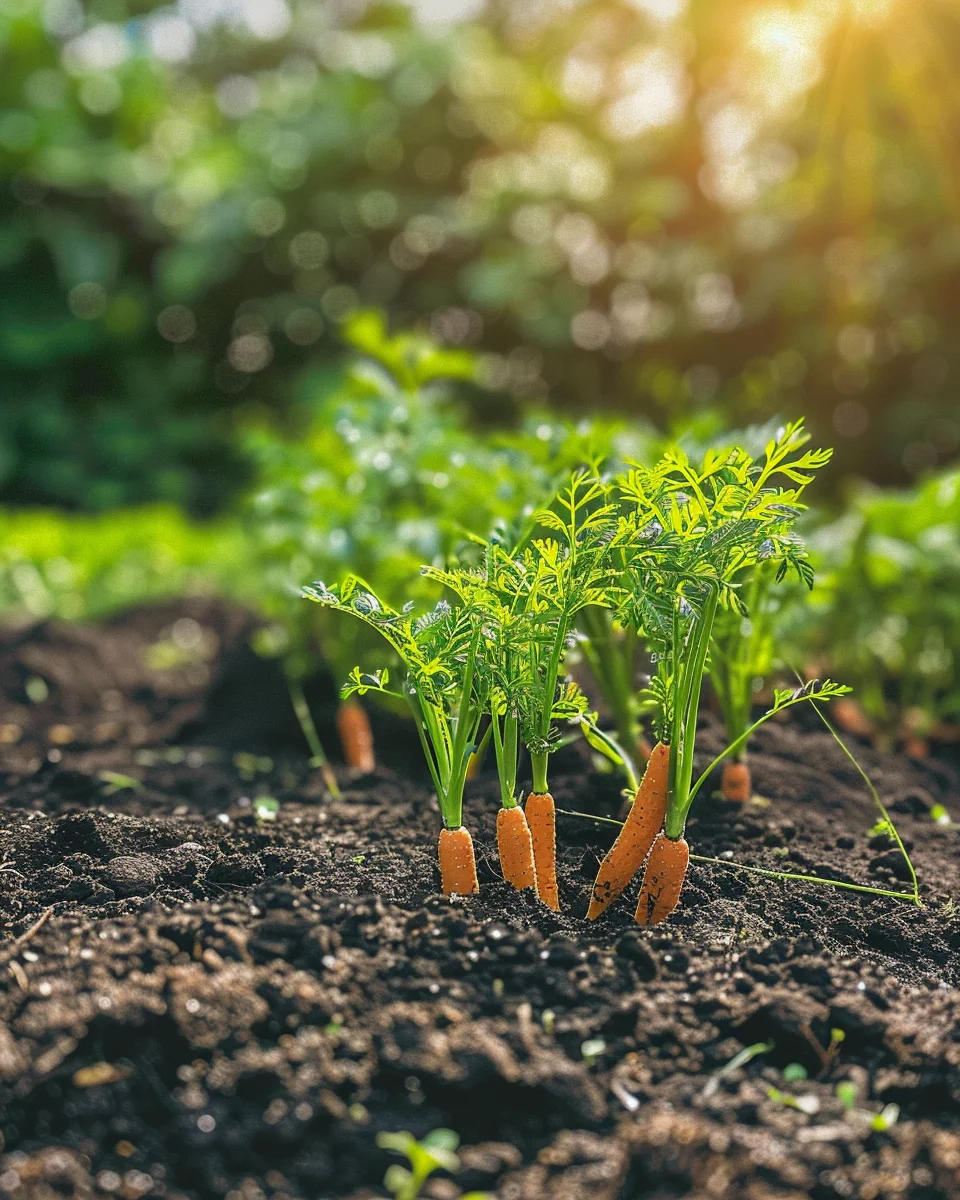
In cool temperate regions (UK, Northern US, Canada), plant your first carrot seeds from mid-March to April, and for fall crops, sow from July to early August. In warmer climates (US Zones 7-9, Mediterranean regions), plant from February to March for spring crops and August to September for fall harvests. Since sandy soil drains quickly and warms earlier in spring, you can often plant 1-2 weeks earlier than gardeners with heavier soils. Always direct sow carrot seeds rather than transplanting, as carrots develop a taproot that doesn’t recover well from disturbance.
Best carrot varieties to grow in sandy soil
- Nantes – Cylindrical, sweet carrots with blunt tips that perform exceptionally well in sandy soils with minimal resistance.
- Danvers – Conical shape with strong tops, making them easier to pull from sandy soil and excellent for storage.
- Chantenay – Shorter, stockier carrots ideal for shallow sandy soils or containers, with excellent flavor.
- Little Finger – Small, finger-sized carrots perfect for container growing in sandy soil mixes.
- Imperator – Long, slender carrots that can reach their full potential in deep, loose sandy soil without obstruction.
- Scarlet Nantes – Heat-tolerant variety that resists bolting, making it ideal for sandy soil in warmer regions.
- Mokum – Early maturing variety with exceptional sweetness, perfect for quick crops in sandy soil.
How to plant carrots in sandy soil
Materials needed:
- Carrot seeds
- Compost or well-rotted manure
- Balanced organic fertilizer
- Fine vermiculite or peat moss
- Garden rake
- Watering can with fine rose attachment
- Row markers
Step-by-step planting:
- Prepare your sandy soil by removing rocks and breaking up any compacted areas to a depth of 30 cm (12 inches).
- Incorporate 5-7 cm (2-3 inches) of compost or well-rotted manure to improve water retention and add nutrients.
- Level the area with a rake, creating a smooth, fine seedbed free of clumps.
- Create shallow furrows about 1 cm (¼ inch) deep and 30 cm (12 inches) apart.
- Sow seeds thinly along the furrows, aiming for 2-3 seeds per cm (about 5-8 seeds per inch).
- Cover seeds with a thin layer of fine soil, vermiculite, or peat moss to prevent crusting.
- Water gently using a fine spray to avoid washing away the tiny seeds.
- Keep the soil consistently moist until germination, which typically takes 7-14 days.
- Once seedlings emerge, thin to 5 cm (2 inches) apart for standard varieties, or 2.5 cm (1 inch) for baby carrots.
How to grow carrots in sandy soil
Carrots need full sunlight (at least 6 hours daily) to develop properly, though they can tolerate partial shade in very hot climates. The biggest challenge with sandy soil is maintaining consistent moisture, as it drains quickly. Water deeply 1-2 times per week, providing about 2.5 cm (1 inch) of water each time, and more during hot, dry periods. Apply a balanced organic fertilizer (like 5-5-5) at planting time, but avoid high-nitrogen fertilizers which promote lush tops at the expense of root development.
Apply a light mulch of grass clippings, straw, or compost around plants once they’re established to help retain moisture and suppress weeds. Thin seedlings in stages, allowing the strongest plants to remain at the final spacing. For container growing, choose deep pots at least 30 cm (12 inches) deep filled with a sandy potting mix, and ensure consistent watering as containers dry out even faster than garden beds.
Caring for carrots in sandy soil
Regular weeding is essential as carrots don’t compete well with weeds. Hand weed carefully to avoid disturbing the developing roots. The main pests affecting carrots include carrot rust fly, aphids, and nematodes. Protect against carrot rust fly by covering rows with floating row covers. For aphids, spray with insecticidal soap or a strong stream of water. Crop rotation helps prevent nematode problems.
Common diseases include Alternaria leaf blight and powdery mildew. Maintain good air circulation and avoid overhead watering to reduce disease pressure. Harvest carrots when they reach the desired size, typically 60-80 days after planting, depending on the variety. To harvest, loosen the soil gently with a garden fork and pull carrots by their tops. For storage, remove tops, brush off excess soil (don’t wash until ready to use), and store in the refrigerator for 2-4 weeks or in damp sand in a cool cellar for several months.
Understanding bolting in carrots
Bolting is when carrot plants suddenly produce a flowering stalk, causing the roots to become tough and bitter. This is triggered primarily by temperature fluctuations, especially prolonged heat above 24°C (75°F). Stress factors like inconsistent watering in sandy soil can accelerate bolting. To prevent bolting, choose bolt-resistant varieties, provide consistent moisture, plant at the appropriate time (avoiding late spring plantings that will mature in summer heat), and use shade cloth during hot periods.
If your carrots do bolt, harvest them immediately as the roots will quickly become woody and inedible. The flowers can be left for beneficial insects if desired, and to collect seeds for future planting, though most modern varieties are hybrids that won’t grow true from saved seed.
Why does carrot turn bitter?
- Heat stress – Temperatures consistently above 24°C (75°F) trigger biochemical changes that create bitter compounds; provide afternoon shade in hot weather.
- Inconsistent watering – Sandy soil’s quick drainage can lead to moisture stress; maintain even soil moisture with regular deep watering.
- Maturity issues – Overmaturity causes carrots to develop strong flavors; harvest at appropriate size for the variety.
- Excess nitrogen – Too much nitrogen fertilizer creates bitter roots; use balanced or low-nitrogen fertilizers for carrots.
- Pest damage – Insect feeding can trigger defensive bitter compounds; control pests early with organic methods.
Companion planting for carrots in sandy soil
Good companions:
- Onions and leeks – Repel carrot rust fly with their strong scent while utilizing different soil depths.
- Rosemary and sage – Aromatic herbs that deter carrot pests while thriving in the same well-draining conditions.
- Lettuce – Provides ground cover that helps retain moisture in sandy soil while utilizing space efficiently.
- Tomatoes – Release solanine, which can repel carrot pests, while carrots break up soil for tomato roots.
- Radishes – Quick-growing radishes mark carrot rows and break up sandy soil when harvested.
Avoid planting near:
- Dill – Releases compounds that can inhibit carrot growth and may attract pests that damage carrots.
- Other umbellifers (parsley, cilantro) – Share pests and diseases with carrots, increasing vulnerability.
- Potatoes – Compete for nutrients and space, potentially stunting carrot development.
Seasonal calendar
- February-March – Prepare sandy soil with compost; sow first crop in warmer regions.
- March-April – Main spring sowing period in most temperate regions; protect early sowings with cloches if needed.
- May-June – Thin seedlings; maintain consistent watering as temperatures rise; harvest early varieties.
- July – Harvest spring-sown crops; prepare for fall planting in cooler regions.
- August – Sow fall crops; provide shade for seedlings during hot periods.
- September-October – Continue harvesting summer carrots; thin fall seedlings.
- November-December – Harvest fall crops; in mild areas, protect late carrots with mulch for extended harvests.
- January – Plan next season’s carrot beds; order seeds for early spring planting.
Problems & solutions
| Problem | Quick Fix |
|---|---|
| Forked or deformed roots | Remove stones and break up compacted areas before planting; avoid fresh manure. |
| Poor germination | Keep soil consistently moist; cover seeds with vermiculite to prevent crusting in sandy soil. |
| Carrot rust fly damage | Cover rows with floating row covers; plant aromatic herbs nearby; time plantings to avoid peak fly activity. |
| Stunted growth | Improve sandy soil with compost; ensure adequate phosphorus and potassium; thin properly. |
| Cracked roots | Maintain consistent moisture, especially critical in fast-draining sandy soil. |
| Green shoulders | Cover exposed shoulders with soil or mulch to prevent sunlight from reaching the tops. |
| Rapid soil drying | Apply mulch between rows; water deeply less frequently rather than shallow watering often. |
Common questions about growing carrots in sandy soil
Q: How often should I water carrots in sandy soil?
A: Water deeply 1-2 times per week, providing about 2.5 cm (1 inch) of water each time. Sandy soil drains quickly, so check moisture levels regularly, especially during hot weather when you may need to water every 2-3 days.
Q: What size container do I need for growing carrots?
A: Use containers at least 30 cm (12 inches) deep for standard varieties, or 20 cm (8 inches) for shorter varieties like Chantenay or Paris Market. Ensure containers have drainage holes and use a sandy potting mix.
Q: How far apart should I space carrot seeds in sandy soil?
A: Sow seeds thinly (about 2-3 seeds per cm) in rows 30 cm (12 inches) apart, then thin to 5 cm (2 inches) between plants for full-sized carrots or 2.5 cm (1 inch) for baby carrots.
Q: Can I grow carrots in full sun in sandy soil?
A: Yes, carrots need full sun (6+ hours daily) for optimal development. In very hot climates, light afternoon shade can be beneficial to prevent soil from overheating and drying out too quickly.
Q: How can I tell when carrots are ready to harvest?
A: Check the root diameter at soil level – most varieties are ready when they’re 1.5-2.5 cm (½-1 inch) in diameter. You can also gently brush away soil to see the top of the root. Baby carrots can be harvested earlier, while storage varieties should reach full size.
Q: How do I improve sandy soil for growing carrots?
A: Add 5-7 cm (2-3 inches) of compost or well-rotted manure to improve water retention and nutrient levels. Avoid adding clay, which can create barriers to root development. Consider adding coconut coir to help retain moisture.
Q: Can I succession plant carrots in sandy soil?
A: Yes, sow new batches every 2-3 weeks for continuous harvests. Sandy soil’s quick warming in spring and good drainage makes it excellent for succession planting, though summer plantings may need extra attention to moisture levels.