

How to Grow Bucketfuls of Okra on a Tiny Terrace Garden: When to Plant, Best Varieties & Space-Saving Care
Intro for Growing Bucketfuls of Okra on a Tiny Terrace Garden
Okra (Abelmoschus esculentus) is a warm-season vegetable that thrives in hot conditions, making it perfect for sunny terraces and balconies. Despite its reputation for needing space, okra can be incredibly productive in containers with the right care. My journey growing okra on a 2×3 meter terrace resulted in harvests that exceeded expectations—proving you don’t need acres of land to enjoy fresh, homegrown pods. Okra offers numerous benefits: it’s rich in vitamins A and C, high in fiber, and produces beautiful hibiscus-like flowers before developing its distinctive ridged pods. With proper planning, even the smallest outdoor spaces can yield impressive okra harvests from summer through fall.
When to plant Okra in a Terrace Garden
Okra requires warm soil and air temperatures to thrive. Wait until soil temperatures reach at least 18-21°C (65-70°F) before planting. In most temperate regions, this means waiting until all danger of frost has passed and nighttime temperatures consistently stay above 10°C (50°F). Okra is extremely frost-sensitive and cold soil will stunt growth or prevent germination altogether. For terrace gardens, the microclimate may be slightly warmer than ground level, but still follow local frost dates as a guideline for planting time.
Best time to plant Okra in Containers
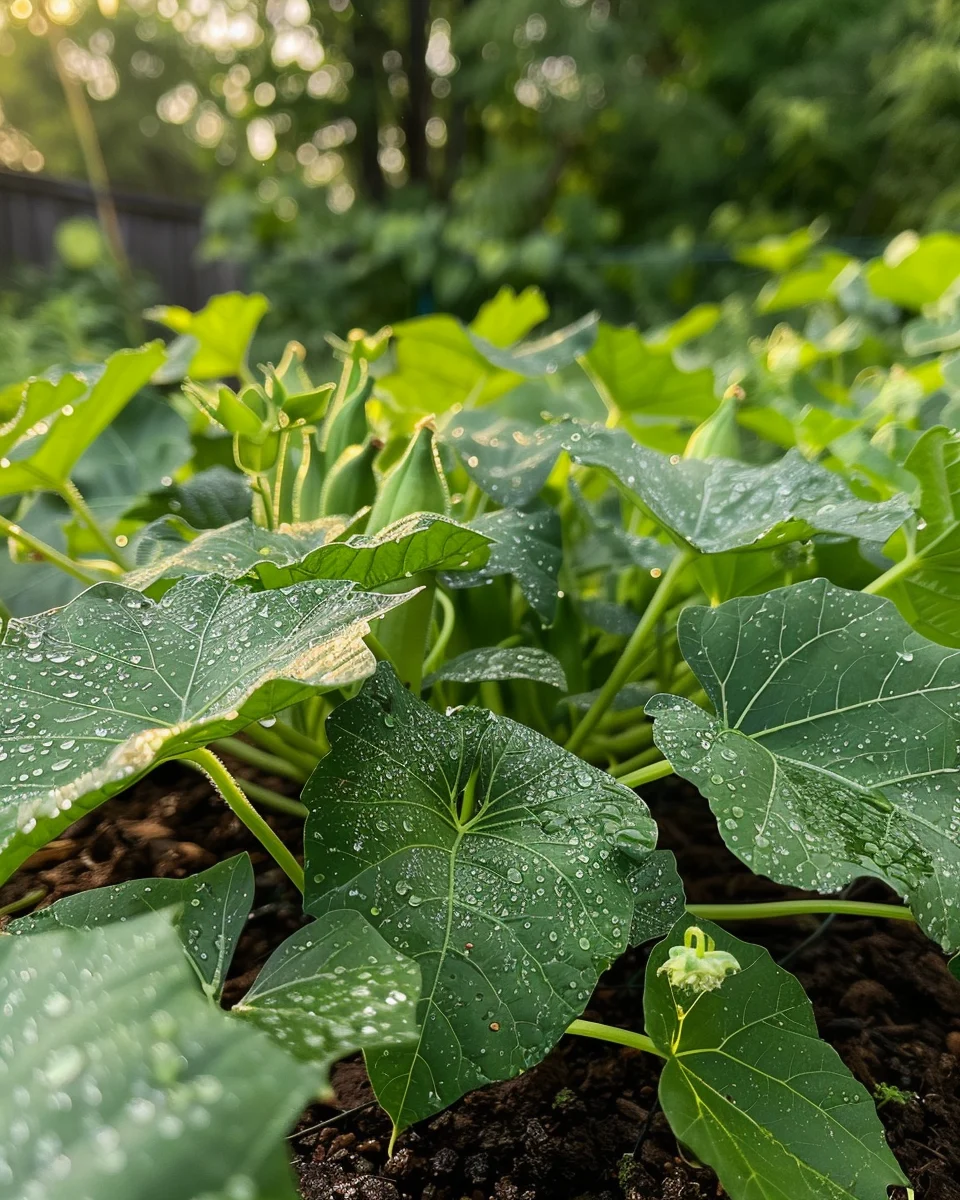
In warm temperate regions (US Zones 7-10, Mediterranean climates), plant okra outdoors in containers from mid-April to early June. For cooler regions (US Zones 5-6, UK), wait until late May or early June when temperatures are reliably warm. For a head start, sow seeds indoors 4-6 weeks before your last frost date in biodegradable pots to minimize transplant shock. Direct sowing in containers works well in warmer climates, while starting indoors is recommended for shorter growing seasons. Succession planting every 2-3 weeks until midsummer can extend your harvest period.
Best Okra varieties to grow in Container Gardens
- Clemson Spineless – A compact, productive heirloom variety (3-4 feet tall) that adapts well to containers and produces tender 3-5 inch pods.
- Jambalaya – Early-maturing hybrid with a compact growth habit (24-30 inches), perfect for small spaces and containers.
- Baby Bubba – Ultra-dwarf variety (under 3 feet) bred specifically for container growing with full-sized pods on compact plants.
- Emerald – Produces slender, dark green pods that remain tender even when larger, with plants that can be pruned to manage height.
- Red Burgundy – Offers ornamental red pods and stems with burgundy-tinged leaves, making it both productive and decorative for terrace gardens.
- Cajun Delight – Early-maturing variety with compact growth habit and high yields, ideal for shorter growing seasons.
How to plant Okra in a Terrace Garden
Materials needed:
- Containers (minimum 5-gallon/19-liter size per plant)
- High-quality potting mix with compost
- Okra seeds or seedlings
- Slow-release organic fertilizer
- Watering can or irrigation system
- Support stakes (optional)
- Mulch material
Step-by-step planting process:
- Select containers at least 30 cm (12 inches) deep with drainage holes; larger is better for okra’s taproot.
- Fill containers with high-quality potting mix enriched with 25% compost, leaving 2.5 cm (1 inch) of space at the top.
- Mix in a small amount of slow-release organic fertilizer according to package directions.
- For direct sowing, plant 3-4 seeds per container, 1.5-2 cm (½-¾ inch) deep.
- Space multiple containers at least 45-60 cm (18-24 inches) apart to ensure adequate airflow.
- Water thoroughly until moisture comes out of drainage holes.
- Place containers in the sunniest spot on your terrace (minimum 6-8 hours direct sun).
- Once seedlings emerge, thin to the strongest 1-2 plants per container.
- Apply a thin layer of mulch around plants (avoiding the stems) to retain moisture.
How to grow Okra in a Terrace Garden
Okra requires full sun, so position containers where they’ll receive at least 6-8 hours of direct sunlight daily. Water consistently to maintain even soil moisture—containers dry out faster than ground soil, so check daily during hot weather. When plants reach 10-15 cm (4-6 inches) tall, feed with a balanced organic fertilizer (like 5-5-5) monthly. For taller varieties, install stakes when plants are young to provide support as they grow. Prune side branches on compact varieties to encourage upward growth in limited spaces. For container growing, use a potting mix that drains well but retains moisture, and consider self-watering containers for consistent hydration. During extreme heat, move containers to provide afternoon shade if plants show signs of stress.
Caring for Okra in a Terrace Garden
Harvest pods when they’re young and tender, typically 3-4 days after flowering and when they reach 7-10 cm (3-4 inches) long. Regular harvesting encourages continued production. Watch for aphids and spider mites, which can be controlled with a strong spray of water or insecticidal soap. Powdery mildew may appear in humid conditions—improve air circulation and avoid overhead watering to prevent it. Yellowing leaves often indicate nutrient deficiencies; supplement with a liquid fertilizer high in nitrogen. Store harvested okra in the refrigerator for up to a week, or blanch and freeze for longer storage. In hot weather, containers may need watering twice daily to prevent stress that reduces pod production.
Understanding bolting in Okra
Unlike leafy greens, okra doesn’t bolt in the traditional sense. However, extreme heat (above 35°C/95°F) can cause plants to focus on rapid flowering rather than vegetative growth, resulting in smaller plants with fewer pods. Stress factors like irregular watering, root constriction, or nutrient deficiencies can trigger premature flowering. To prevent stress-induced early flowering, maintain consistent watering schedules, use adequately sized containers, and provide balanced nutrition. If plants flower too early, pinch off the first few flower buds to encourage more vegetative growth before allowing pod production to begin.
Why does Okra turn bitter?
- Overmature pods – Harvest pods when young (3-4 inches); older pods develop woody texture and bitter flavor.
- Heat stress – Extreme temperatures can cause biochemical changes resulting in bitterness; provide afternoon shade during heatwaves.
- Irregular watering – Drought stress followed by heavy watering can trigger bitter compounds; maintain consistent moisture.
- Variety selection – Some varieties naturally have more pronounced flavors; choose “spineless” varieties for milder taste.
- Soil nutrient imbalance – Excessive nitrogen can contribute to bitter flavors; use balanced fertilizers in containers.
Companion planting for Okra in Containers
Good companions:
- Basil – Repels pests and enhances flavor of nearby plants while utilizing vertical space in containers.
- Marigolds – Deter nematodes and other pests with their strong scent while adding color to your terrace.
- Nasturtiums – Act as trap crops for aphids that might otherwise attack okra.
- Sweet potatoes – Can be grown in the same large container, with vines trailing over the edges while okra grows upward.
- Peppers – Share similar growing requirements and can thrive in adjacent containers.
Avoid planting near:
- Fennel – Releases compounds that inhibit growth of many plants, including okra.
- Brassicas – Compete for nutrients and don’t share the same growing conditions as heat-loving okra.
Seasonal calendar
- February-March – Start seeds indoors in warm regions; prepare containers and potting mix.
- April-May – Transplant seedlings or direct sow in containers when temperatures are consistently warm.
- June – Apply first round of fertilizer; install supports if needed; thin plants.
- July-September – Peak harvest season; fertilize monthly; monitor closely for pests and water needs.
- October – Final harvests in most regions; prepare to remove plants after first frost.
- November – Clean containers and store for next season in cold climates.
Note: In hot regions (US Zones 9-10), planting can begin earlier (March) and extend later (second planting in August).
Problems & solutions
| Problem | Quick Fix |
|---|---|
| Slow growth/few pods | Ensure 6+ hours of sun; supplement with balanced liquid fertilizer |
| Yellowing leaves | Check for overwatering; apply nitrogen-rich fertilizer if drainage is good |
| Aphids/spider mites | Spray with strong water jet; apply insecticidal soap if infestation persists |
| Powdery white spots on leaves | Improve air circulation; spray with diluted neem oil solution |
| Flower drop without pod formation | Ensure temperatures aren’t too high (above 95°F/35°C); hand-pollinate flowers in early morning |
| Stunted plants | Check container size; transplant to larger pot if roots are circling |
Common questions about growing Okra in a Terrace Garden
Q: How large should containers be for growing okra?
A: Use containers at least 5 gallons (19 liters) in volume and 12 inches (30 cm) deep. Larger containers (7-10 gallons) will produce more robust plants and higher yields.
Q: How often should I water container-grown okra?
A: Check moisture daily—containers may need watering once or twice daily during hot weather. Water when the top inch of soil feels dry, providing enough that water runs from drainage holes.
Q: Can I grow okra in partial shade on my terrace?
A: Okra needs at least 6 hours of direct sunlight daily. Less sun will result in lanky plants with fewer pods. Choose the sunniest spot on your terrace for best results.
Q: How many okra plants can I grow in a 5-gallon container?
A: Limit to one plant per 5-gallon container for best production. Two dwarf varieties might share a 10-gallon container, but single plants produce better yields.
Q: How often should I harvest okra pods?
A: Check plants every 1-2 days during peak season. Harvest pods when they’re 3-4 inches (7-10 cm) long for best flavor and texture. Regular harvesting stimulates more production.
Q: Can I overwinter okra plants on my terrace?
A: Okra is an annual in most regions. In zones 10-11, plants might survive winter but production declines. It’s usually best to start fresh each season with new plants.
Q: My okra plants are tall and falling over. What should I do?
A: Install bamboo stakes or tomato cages when plants are young. For established plants, carefully tie stems to supports using soft garden twine in a figure-eight pattern.