

Why Beautyberry Deserves a Spot in Your Yard: Stunning Fall Color, Wildlife Benefits & Easy Care
Intro for Beautyberry
Beautyberry (Callicarpa species) is an eye-catching deciduous shrub that earns its place in any landscape with its spectacular display of vibrant purple berries in fall. Native to parts of Asia and North America, this versatile plant offers multi-season interest with spring flowers, summer foliage, and those unmistakable clusters of jewel-like berries that persist well into winter. Beyond its ornamental value, beautyberry attracts birds and wildlife while requiring minimal maintenance. Thriving in USDA zones 5-9 (with some varieties hardy to zone 4), beautyberry adapts to various soil conditions and can serve as a specimen plant, border accent, or naturalized woodland edge. Its combination of beauty, wildlife benefits, and easy care makes it an excellent choice for both novice and experienced gardeners.
When to plant Beautyberry
Beautyberry is best planted during the dormant season, either in late fall after leaf drop or in early spring before new growth emerges. In temperate regions, aim for soil temperatures between 45-65°F (7-18°C). Fall planting allows roots to establish before winter in milder climates (zones 7-9), while spring planting is preferable in colder regions (zones 5-6) where harsh winters might stress newly planted shrubs. Avoid planting during summer heat or winter freezes. Beautyberry is frost-tolerant once established but may need protection during its first winter in colder zones.
Best time to plant Beautyberry
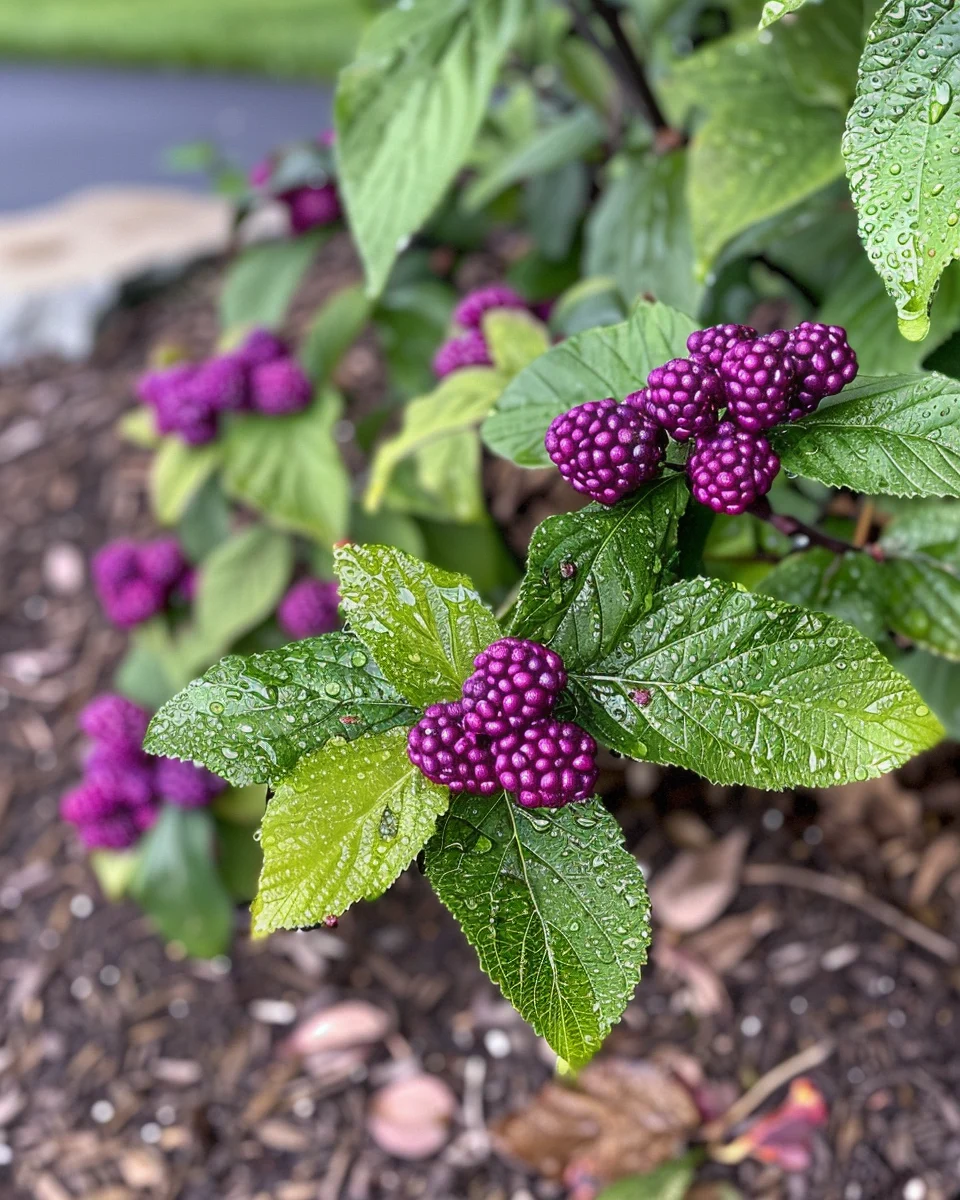
For cool climate regions (zones 5-6), plant beautyberry in mid to late spring after the last frost date, typically April to early May. In moderate climates (zones 7-8), both October-November and March-April offer ideal planting windows. For warm regions (zones 8-9), fall planting from late September through November provides the best establishment period. Container-grown plants can be installed throughout the growing season if provided with adequate water, though spring and fall remain optimal. When purchasing nursery plants, select specimens with healthy foliage and avoid those with circling roots or signs of stress.
Best Beautyberry varieties to grow
- American Beautyberry (Callicarpa americana) – Native to southeastern US with vibrant purple berries and excellent wildlife value.
- ‘Early Amethyst’ – Produces berries earlier than other varieties with a more compact growth habit (3-4 feet tall).
- ‘Profusion’ – Exceptionally heavy berry producer with reliable fruiting even without cross-pollination.
- ‘Pearl Glam’ – Features dramatic purple-black foliage that contrasts beautifully with its bright purple berries.
- ‘Duet’ – Compact variety (3 feet tall) with variegated foliage and white berries, perfect for smaller gardens.
- Japanese Beautyberry (Callicarpa japonica) – More cold-hardy than American varieties with slightly smaller berries in a lighter purple shade.
- ‘Issai’ – Compact Japanese variety with graceful arching branches and excellent cold tolerance to zone 5.
- ‘Leucocarpa’ – Rare white-berried form that provides unique visual interest in the fall landscape.
How to plant Beautyberry
Materials needed:
- Beautyberry shrub (container-grown or bare root)
- Shovel or spade
- Garden fork or tiller (optional)
- Compost or well-rotted manure
- Mulch (wood chips, pine straw, or bark)
- Watering can or hose
- Pruning shears
Planting steps:
- Select a planting location that receives full sun to partial shade, with morning sun and afternoon shade ideal in hotter regions.
- Test soil drainage by digging a 12-inch hole and filling with water; if water remains after 24 hours, choose another location or create a raised bed.
- Dig a hole twice as wide as the root ball but no deeper than the container depth.
- Mix the removed soil with 25% compost to improve fertility and drainage.
- Remove the plant from its container, gently teasing out circling roots if present.
- Place the plant in the hole so the top of the root ball sits level with or slightly above the surrounding soil.
- Backfill with the amended soil, firming gently but not compacting.
- Create a watering basin around the plant by forming a soil ring a few inches high.
- Water thoroughly, applying at least 1-2 gallons to settle the soil around roots.
- Apply 2-3 inches of mulch around the plant, keeping it several inches away from the stems.
How to grow Beautyberry
Beautyberry thrives in full sun to partial shade, with 4-6 hours of direct sunlight producing the best berry display. In hotter regions (zones 8-9), afternoon shade is beneficial. Water newly planted shrubs weekly during the first growing season, providing about 1 inch of water. Once established, beautyberry is moderately drought-tolerant but benefits from supplemental watering during extended dry periods. Fertilize in early spring with a balanced, slow-release fertilizer (10-10-10) or by applying a 2-inch layer of compost around the root zone. Mulch annually with 2-3 inches of organic material to conserve moisture and suppress weeds.
Beautyberry naturally forms a graceful, arching habit and rarely requires staking. For container growing, select a pot at least 18-24 inches in diameter with drainage holes, using a high-quality potting mix. Container specimens will need more frequent watering and fertilization than ground-planted shrubs. Consider a dwarf variety like ‘Duet’ or ‘Pearl Glam’ for container culture, and protect container plants during winter in colder zones by moving to a sheltered location or insulating the pot.
Caring for Beautyberry
Prune beautyberry in late winter or early spring before new growth appears. These shrubs bloom on new wood, so hard pruning (cutting stems back by one-third to one-half) promotes vigorous growth and abundant berries. For a more natural look, remove only dead or crossing branches. Monitor for common pests like aphids and whiteflies, which can be controlled with insecticidal soap or a strong spray of water. Leaf spot diseases may occur in humid conditions; improve air circulation and avoid overhead watering to prevent fungal issues.
Beautyberry is generally deer-resistant but may be browsed in times of food scarcity. The berries are not considered edible for humans (though not toxic) but provide valuable food for birds from late fall through winter. Allow berries to remain on the plant for wildlife benefit and winter interest. If desired, berry-laden branches can be cut for indoor arrangements in fall. Beautyberry requires minimal division or transplanting, typically growing well in the same location for many years.
Understanding bolting in Beautyberry
Unlike vegetable crops, beautyberry does not bolt in the traditional sense. However, beautyberry does undergo seasonal growth phases that gardeners should understand. In spring, the plant produces new vegetative growth, followed by small, inconspicuous flowers in summer. These flowers develop into the characteristic berries by fall. Stress factors like drought or extreme heat can reduce flowering and subsequent berry production. To maximize berry display, ensure consistent moisture during the flowering period (typically June-July) and avoid heavy pruning during the growing season. If your beautyberry produces fewer berries than expected, evaluate light conditions (insufficient sun reduces flowering) and consider soil testing to address any nutrient deficiencies.
Why does Beautyberry turn bitter?
While beautyberry fruits aren’t typically consumed by humans, their taste can be affected by various factors:
- Immature harvest – Berries become less astringent as they fully ripen; wait until they develop their full purple color.
- Species variation – Different Callicarpa species have varying levels of natural bitterness; American beautyberry is generally less bitter than Asian species.
- Soil conditions – Extremely acidic soil can increase bitter compounds in the berries.
- Weather stress – Drought or excessive heat during fruit development can concentrate bitter compounds.
- Natural defense – The bitterness is partly a natural defense mechanism that protects berries until they’re fully ripe and ready for bird dispersal.
Companion planting for Beautyberry
Good companions:
- Native ferns – Provide textural contrast and thrive in the same partial shade conditions.
- Oakleaf hydrangea – Offers complementary multi-season interest with similar cultural requirements.
- Virginia sweetspire – Creates a beautiful fall color combination with similar growing needs.
- Black-eyed Susan – The yellow flowers contrast beautifully with purple berries in fall.
- Serviceberry – Provides early season interest while sharing beautyberry’s wildlife benefits.
- Switchgrass – Offers winter structure and movement alongside beautyberry’s persistent fruits.
Avoid planting near:
- Aggressive spreaders like bamboo or mint that might compete with beautyberry’s root system.
- Plants requiring frequent irrigation if you’re growing beautyberry in its drought-tolerant capacity.
- Very tall trees that would completely shade out the shrub, reducing berry production.
Seasonal calendar
Spring (March-May):
- March: Prune established plants before new growth emerges.
- April: Apply compost or balanced fertilizer around the base.
- May: Plant new specimens; monitor for emerging pests.
Summer (June-August):
- June: Ensure consistent moisture during flowering period.
- July: Watch for small flowers forming; maintain mulch layer.
- August: Begin to see green berries forming; water during dry spells.
Fall (September-November):
- September: Berries begin changing to vibrant purple color.
- October: Peak berry display; ideal time for fall planting in warmer zones.
- November: Continue fall planting until ground freezes; birds begin feeding on berries.
Winter (December-February):
- December: Berries persist, providing winter interest and bird food.
- January: Plan for late winter pruning; protect container plants in cold regions.
- February: Begin pruning in warmer zones as winter ends.
Problems & solutions
| Problem | Quick Fix |
|---|---|
| Few or no berries | Ensure adequate sunlight (4+ hours daily); prune in late winter to encourage new growth. |
| Leggy growth | Prune back by one-third to one-half in late winter; ensure adequate light. |
| Leaf spots or fungal issues | Improve air circulation; avoid overhead watering; remove and destroy affected leaves. |
| Aphids or whiteflies | Spray with strong water jet or apply insecticidal soap; encourage beneficial insects. |
| Winter dieback in cold zones | Plant in sheltered location; apply mulch around base; select cold-hardy varieties. |
| Yellowing leaves | Check soil moisture (both over and under-watering can cause this); test soil pH. |
| Deer damage | Apply deer repellent; install temporary fencing during establishment. |
Common questions about growing Beautyberry
How much water does beautyberry need?
Newly planted beautyberry requires weekly watering during the first growing season. Once established, water during dry spells lasting more than 2 weeks. Beautyberry is moderately drought-tolerant but produces more berries with consistent moisture.
Can beautyberry grow in full shade?
Beautyberry can survive in shade but produces fewer flowers and berries. For optimal berry display, provide at least 4 hours of direct sunlight daily, preferably morning sun in hot climates.
How large will beautyberry grow?
Most beautyberry species grow 3-6 feet tall and 4-8 feet wide at maturity. Compact cultivars like ‘Duet’ stay smaller at 3-4 feet. Allow adequate space for their naturally arching habit.
Are beautyberry berries poisonous?
Beautyberry fruits are not considered toxic to humans or pets, though they’re not particularly palatable due to their bitter, astringent quality. They’re safe to have in gardens with children and animals.
When should I prune my beautyberry?
Prune in late winter or early spring before new growth appears. Since beautyberry blooms on new wood, hard pruning (cutting back by one-third to one-half) encourages more vigorous growth and better berry production.
Can beautyberry survive winter in zone 5?
Select cold-hardy varieties like Callicarpa japonica or ‘Pearl Glam’ for zone 5. Provide winter protection for the first 1-2 years by mulching heavily around the base. Some dieback may occur in harsh winters, but plants typically regrow from the roots.
How can I propagate beautyberry?
Beautyberry propagates easily from softwood cuttings taken in early summer. Take 4-6 inch cuttings, remove lower leaves, dip in rooting hormone, and place in a well-draining rooting medium. Keep consistently moist until roots develop in 4-6 weeks.