
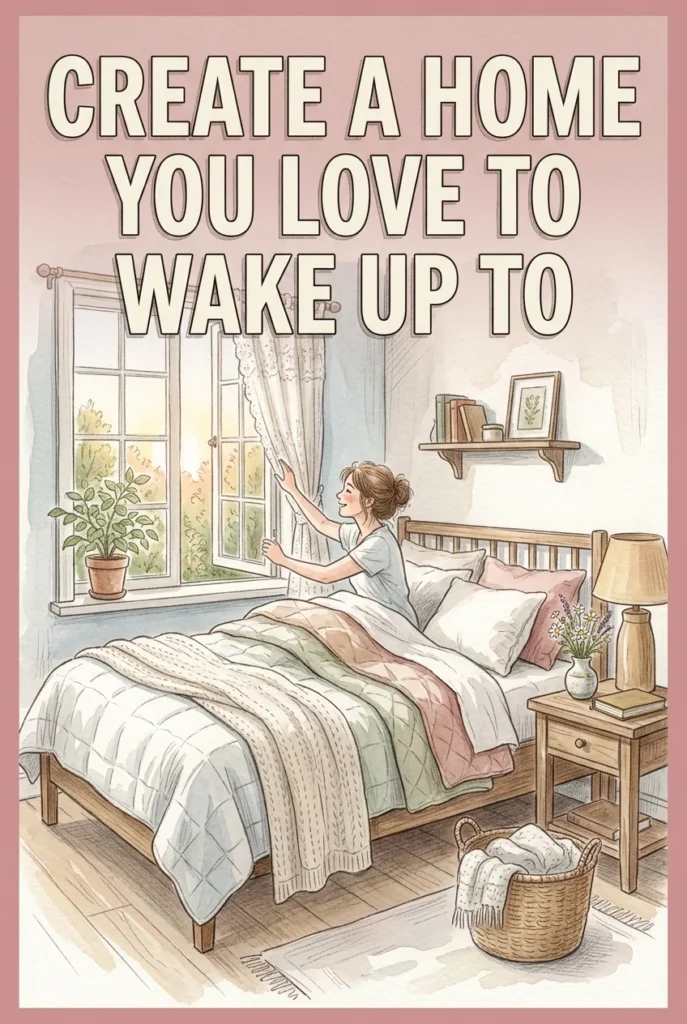
You don’t need a perfect house to love your mornings—you need a space that supports how you want to feel.
There’s a real difference between a home you simply sleep in and a home you feel glad to wake up to. One gets the job done. The other feels steady, welcoming, and quietly energizing.
When your environment comforts you and reflects the person you’re becoming, mornings change. You’re less likely to wake up already tense, grab your phone, and rush. Instead, you notice the light, the temperature, the calm, and the small details that make you feel grounded.
Creating a home you’re excited to wake up to isn’t about expensive upgrades or chasing a picture-perfect style. It’s built through intentional choices, emotional awareness, and a few simple routines that help your space work with you rather than against you.
Why Your Home’s “Morning Experience” Matters
Your home doesn’t just hold your belongings—it shapes your mood. The first minutes of the day are especially influential because you’re moving from rest into motion. If what you see and feel is cluttered, harsh, or noisy, it can create low-grade stress before you’ve even stood up.
On the other hand, when your home supports calm, ease, and clarity, your day often starts with less friction. This isn’t about forcing yourself to be cheerful. It’s about reducing unnecessary strain and making it easier to begin the day from a stable place.
Start Where You Wake Up: Build a Bedroom That Feels Like a Retreat
Your bedroom sets the emotional tone for the entire day. If it feels like a storage zone—piles of laundry, crowded surfaces, random items with no home—it’s harder to wake up feeling clear.
Prioritize softness and comfort first
Focus on textures and touch. Layer breathable bedding in calming tones. Choose materials that feel good against your skin. Comfort is not a luxury here—it’s the foundation for a bedroom that feels restorative.
Keep the nightstand simple and intentional
A nightstand is often the first surface you see and the last one you touch each day. A small, curated setup can shift how the entire room feels.
Consider keeping only a few items visible: a book you’re reading, a soft-glow lamp, and perhaps a small vase of fresh flowers. The goal is not minimalism for its own sake. It’s clarity.
Create lighting that supports your body’s rhythm
Pay attention to light in the evening and in the morning. Warm, gentle light at night and natural light in the morning create a rhythm your body can trust.
One simple habit that makes a surprising difference: open your curtains as soon as you wake up and let the daylight in. That one action can make the room feel more alive and can shift your mood quickly.
Design a Morning View You Actually Want to See
When your eyes open to beauty instead of chaos, you start the day more grounded. If possible, position your bed (or a small chair) so you have something pleasant to look at—trees, rooftops, sky, or even a styled corner of your room.
If the outside view isn’t ideal, create an “inside view”
Not everyone has a picture-perfect window scene. You can still build a view that feels peaceful or inspiring:
- Hang artwork that helps you breathe a little deeper.
- Place a mirror where it bounces natural light rather than reflecting clutter.
- Add a plant to soften sharp lines and bring gentle life into the space.
- Style one small surface (a dresser top or shelf) with a few meaningful pieces.
Declutter Your Line of Sight (Not Your Whole Life)
Visual clutter drains energy early. You don’t need to own fewer things to feel better—you need fewer things shouting for your attention first thing in the morning.
Clear the surfaces you see first
Look at what your eyes land on when you sit up: the chair in the corner, the top of the dresser, the floor near the bed. Those “hot spots” matter.
Small resets that pay off
Put away laundry before bed. Return everyday items to their homes. Tidy one surface fully rather than half-cleaning five.
You’re not aiming for perfection. You’re making breathing room—space for your mind to feel less crowded.
Create One or Two Intentional Corners That Feel Like a Reward
A home you’re excited to wake up to has personality. It doesn’t feel like a showroom; it feels like it belongs to you. One of the easiest ways to create that feeling is to build a few intentional corners—small areas that invite you to pause.
Choose a purpose: rest, reflection, or focus
Your corner doesn’t have to be big. It has to be inviting.
- A cozy chair with a throw and a reading light.
- A window spot where you sip something warm and watch the morning move.
- A small desk that feels clear enough to use, not intimidating to approach.
Make it easy to use
If you want to journal there, keep a notebook and pen nearby. If you want to read, keep the current book within reach. If you want quiet, remove the items that pull you into “to-do mode.”
Use Color to Influence Mood (Without Chasing Trends)
Color carries emotional weight. Soft neutrals, warm blush tones, muted greens, gentle terracotta, and creamy whites can create a nurturing atmosphere. Even small changes—pillow covers, an accent wall, or a piece of art—can shift how a room feels.
Choose emotional alignment over what’s “in”
Ask yourself a few direct questions:
- Does this color make me feel calm?
- Does it help me feel creative?
- Does it make the room feel steady and welcoming?
The goal isn’t to follow a trend. It’s to choose a palette that energizes without overwhelming you.
A simple guide: design for the feeling you want
| How you want to feel | Design choices that can help |
|---|---|
| Calm | Soft tones, fewer items in view, gentle textures, warm lamps |
| Energized | More natural light, subtle contrast, a tidy “launch pad” for mornings |
| Creative | Inspiring art, books within reach, a clear surface for ideas or projects |
| Grounded | Natural materials, plants, woven textures, simple routines |
Layer Lighting so Your Home Feels Warm, Not Flat
Overhead lighting alone can make a space feel sterile. To make your home feel comforting—especially early in the day—use layered light.
Build “pools of glow”
Use table lamps, floor lamps, wall sconces, and candles (when appropriate) to create depth and warmth. In the morning, rely on natural light as much as possible. In the evening, dim lights and let smaller sources create softness.
Think in transitions
A home that transitions gently from night to morning helps you wake up supported rather than startled. It’s a subtle change, but it affects how your body experiences the space.
Bring Nature Indoors for Quiet Vitality
Natural elements can shift the energy of a room in a simple, grounded way. Houseplants, fresh branches in a vase, woven textures, natural wood finishes, and stone accents all bring life to an interior.
Small, easy options that still make a difference
- A single plant near a window.
- A bowl of citrus on the counter.
- A vase with seasonal branches or greenery.
- Natural textures like baskets, linen, or wood.
Nature indoors is a reminder that growth is constant. It adds gentle movement and softens hard edges, which can make a home feel more alive.
Make the Bed Beautiful and Inviting (It’s a Daily Reset)
Making your bed each morning sounds simple, but it changes how your home feels. Smooth the sheets. Fluff the pillows. Fold a throw at the end.
Later, when you return at night, you’re greeted by a small act of care you gave yourself earlier. Your bed becomes less of a rushed exit point and more of a steady anchor in your home.
Establish Gentle Morning Rituals That Connect You to Your Space
Decor matters, but what happens inside your home matters just as much. A space becomes emotionally meaningful when it holds supportive routines.
Keep rituals small so they’re easy to repeat
Think of rituals as tiny anchors—not ambitious routines that collapse under pressure. A few options:
- Open a window and let fresh air change the room.
- Play soft music while you make the bed.
- Stretch near a window for a minute or two.
- Sit quietly with a notebook and write a few lines.
Over time, these moments create emotional connection. Your home becomes associated with calm beginnings rather than rushed departures.
Display What Inspires You (So Your Home Reflects Who You’re Becoming)
Surround yourself with reminders of your values and direction. This doesn’t require filling every surface. It’s about choosing a few meaningful items and placing them intentionally.
Inspiration can be practical, not just decorative
- Books that challenge you or steady you.
- Art that makes you pause.
- Objects connected to meaningful memories.
- Simple quotes or notes that help you refocus.
When your home reflects who you are becoming, you’re less likely to wake up feeling disconnected from your life.
Let Your Home Evolve With You (Because You’re Not Static)
A home you’re excited to wake up to isn’t fixed. It shifts as you shift. Give yourself permission to update what no longer feels right.
Simple ways to keep your space responsive
- Rearrange furniture if the layout feels awkward or heavy.
- Refresh textiles seasonally for a subtle change in mood.
- Edit decor as your preferences change.
Permission to change your space is often permission to change your life. When your home feels responsive rather than rigid, it stays inspiring.
Design for Emotional Function First (Beauty Follows)
Before you buy anything new, ask one key question: How do I want to feel when I wake up? Energized? Calm? Creative? Hopeful?
Then design for that feeling:
- If you want calm