
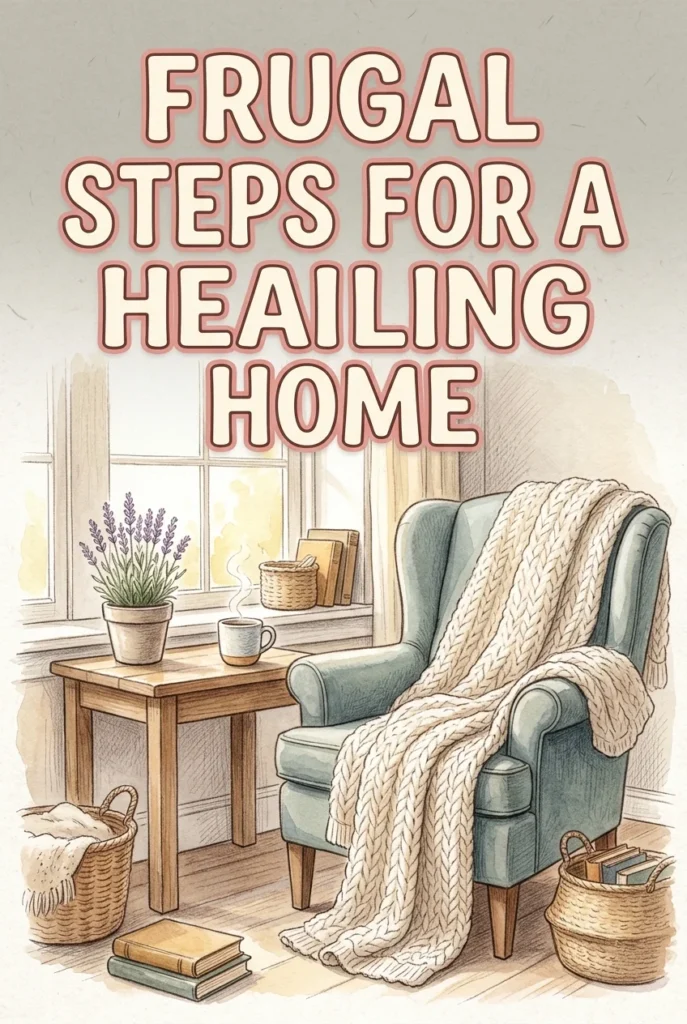
You don’t need luxury finishes to feel calmer at home—you need intention.
A healing home isn’t defined by marble countertops, designer furniture, or a full remodel. It’s defined by how your body feels when you step inside after a long day. The lighting softens. The corners feel calm. The routines feel supportive. And there’s a quiet sense of safety that helps you exhale.
Healing is not perfection. It’s restoration. It’s creating an environment that lowers stress, supports your nervous system, and gently nurtures your mind and body. The best part: you can build that atmosphere frugally, one small decision at a time.
Why a “Healing Home” Matters (Even When Life Is Busy)
Your home is the place you return to most. When it feels chaotic—visually, emotionally, or logistically—your brain stays on alert. Even subtle clutter, harsh lighting, or constant background noise can make it harder to rest.
A healing home does the opposite. It gives your senses fewer reasons to stay on guard. It creates predictable rhythms. It offers small comforts that help you recover—physically and mentally—so you can show up better everywhere else.
This isn’t about chasing a picture-perfect aesthetic. It’s about building a home that supports you in real life, with real constraints, and a real budget.
The 14 Frugal Ways to Create a Home That Heals
1) Declutter One Surface at a Time
Clutter overstimulates the brain. Even when you think you’re “used to it,” visual noise adds a low-level hum of stress in the background.
Start small and specific. Pick one surface:
- Kitchen counter
- Bedside table
- Coffee table
- Bathroom sink area
Clear it. Wipe it down. Put back only what belongs there. A calm surface gives your eyes somewhere to rest—and when your eyes rest, your mind often follows.
2) Change Your Light Bulbs
Lighting can make the same room feel either harsh and clinical or warm and safe. If your home feels “off” and you can’t name why, check the bulbs first.
Swap bright, cool-toned bulbs for warm-toned ones. Add a small lamp in a corner that feels cold or unfinished. Use layered lighting (lamps and soft pools of light) rather than relying only on overhead fixtures.
Soft light signals comfort. It can shift the mood of a room instantly—without changing anything else.
3) Create a Gentle Entry Ritual
The threshold of your home matters. It’s where you transition from the outside world to your personal space. A chaotic entry can keep your nervous system in “still rushing” mode.
Keep your entry simple and welcoming:
- Hooks for bags and coats
- A small basket or dish for keys
- A tidy doormat
- A touch of greenery near the door
Then add one small habit: when you come in, pause before doing anything else. Take one deep breath. This trains your body to associate home with calm.
4) Rearrange Before You Replace
Before you spend money, use what you already own in a new way. Rearranging can make a space feel renewed—without buying a single thing.
Try one change:
- Move a chair closer to a window
- Shift your bed to a more grounding position
- Rotate artwork to a different wall
- Swap decor between rooms
Sometimes a better layout creates the comfort you were trying to purchase.
5) Use Nature as Decor
Nature has a steadying effect. Natural elements bring softness and life to a room, and they quietly remind you that renewal is normal.
Frugal ways to bring nature in:
- Small potted herbs on the kitchen windowsill
- A bowl of seasonal fruit on the counter
- Branches gathered outside in a tall jar
- Woven baskets or wooden trays for warmth and texture
You’re not “decorating” so much as grounding the space in something living and simple.
6) Keep Your Bed Sacred
Your bedroom should feel like a sanctuary, not a storage unit. The bed, especially, can become a daily signal of safety and care.
Keep it simple and supportive:
- Wash bedding regularly
- Layer breathable fabrics
- Keep the bedside area uncluttered
- Use a soft lamp at night instead of harsh overhead lighting
Make your bed each morning. It’s a small act of order that often makes the entire room feel more stable. Coming back to a made bed at night feels like being welcomed into rest.
7) Designate a Comfort Corner
You don’t need a large home to create a healing space. You need one reliable spot that gently invites you to slow down.
Choose a simple “comfort corner”:
- A chair by a window
- A floor cushion in a quiet corner
- A small side table or shelf
Keep one or two calming items within reach—like a book, a journal, or a cup of herbal tea. Sit there intentionally, even for five minutes. Over time, that corner begins to hold the habit of calm.
8) Cook Simply and Intentionally
The kitchen is often called the heart of the home because it sets the tone for daily life. Cooking can be either grounding or stressful depending on the pace and the clutter.
Keep it simple:
- Prepare nourishing plant-based meals
- Chop vegetables slowly instead of rushing
- Let herbs and spices simmer for comforting aroma
- Tidy as you go to keep the counter clear
When cooking becomes intentional, the kitchen becomes a place that regulates you, not one that drains you.
9) Create a Weekly Reset Routine
Healing homes are maintained—they’re not “fixed once” and magically sustained. A weekly reset prevents the slow build-up of mess and mental load.
Choose one day a week to reset your space. Keep it light and repeatable so it doesn’t become overwhelming.
Simple Weekly Reset Checklist
| Area | Reset Task |
|---|---|
| Air | Open windows when possible for fresh air |
| Surfaces | Tidy and wipe down the most-used counters and tables |
| Plants | Water and remove any dead leaves |
| Linens | Wash towels or bedding (rotate weekly) |
| Floors | Quick sweep or vacuum high-traffic zones |
This rhythm keeps your home from tipping into chaos—and supports long-term calm.
10) Use Scent Thoughtfully
Scent influences mood deeply. A familiar, comforting scent can signal “you’re safe” faster than logic can.
Keep it simple and consistent:
- Diffuse essential oils such as lavender, citrus, or eucalyptus
- Simmer cinnamon sticks and orange peels in water
- Circulate fresh air when possible
Choose one or two scents you genuinely find calming and let them become part of your home’s identity.
11) Keep Meaningful Objects Visible
Healing spaces feel personal. Not crowded—personal. The goal is to surround yourself with reminders of love, identity, and belonging.
Consider displaying:
- Framed photographs that make you smile
- Handmade items
- A handwritten note or a simple quote that steadies you
Edit as you go. A few meaningful objects create warmth without adding visual noise.
12) Simplify Your Colour Palette
Too many competing colors can feel chaotic, even when everything is “nice.” A calmer palette helps your home feel cohesive and restful.
Choose two or three tones and repeat them throughout your space. Soft neutrals, warm creams, gentle blush, muted sage, and earthy tones tend to create continuity. You don’t have to repaint. You can repeat colors through towels, pillows, throws, or small accessories you already own.
Consistency reduces visual effort—which quietly reduces stress.
13) Protect Quiet Moments
Healing requires stillness. If your home is always filled with background noise, your mind rarely gets a true break.
Build small pockets of quiet:
- Turn off background noise occasionally
- Sit in silence for a few minutes
- Journal, stretch gently, or read a few pages
- Drink herbal tea without scrolling
A home becomes more healing when it gives you space to breathe without constant stimulation.
14) Practice Gratitude for Your Space
This may be the most frugal—and most powerful—step. Gratitude shifts your focus from what your home lacks to what it provides: shelter, safety, rest, a place to gather, a place to dream.
When you practice noticing what is working, your home begins to feel more abundant, even in simplicity. That emotional shift is part of what makes a space feel healing.
Tips: Start Small (So It Actually Sticks)
You don’t need to do all 14 ideas at once. In fact, trying to overhaul everything in one weekend often creates more stress—the opposite of what you want.
- Pick one “high-impact” change: warm lighting, one cleared surface, or a comfort corner.
- Make it easy to maintain: fewer items on surfaces means faster resets.
- Link one habit to an existing routine: make the bed after brushing your teeth, or open a window while the kettle boils.
- Reduce decision fatigue: a simple color palette and a weekly reset remove constant micro-decisions.
- Repeat what works: healing is often the result of small comforts done consistently.
A Simple 7-Day “Healing Home” Jumpstart (Frugal and Realistic)
If you want a plan, here’s a gentle way to begin—one small action per day. Adjust as needed. The goal is momentum, not perfection.
- Day 1: Clear and wipe one surface (choose the one you see most).
- Day 2: Swap one harsh bulb for a warm-toned bulb, or add a lamp.
- Day 3: Create a key-and-bag landing spot at the entry.
- Day 4: Rearrange one small area (chair