
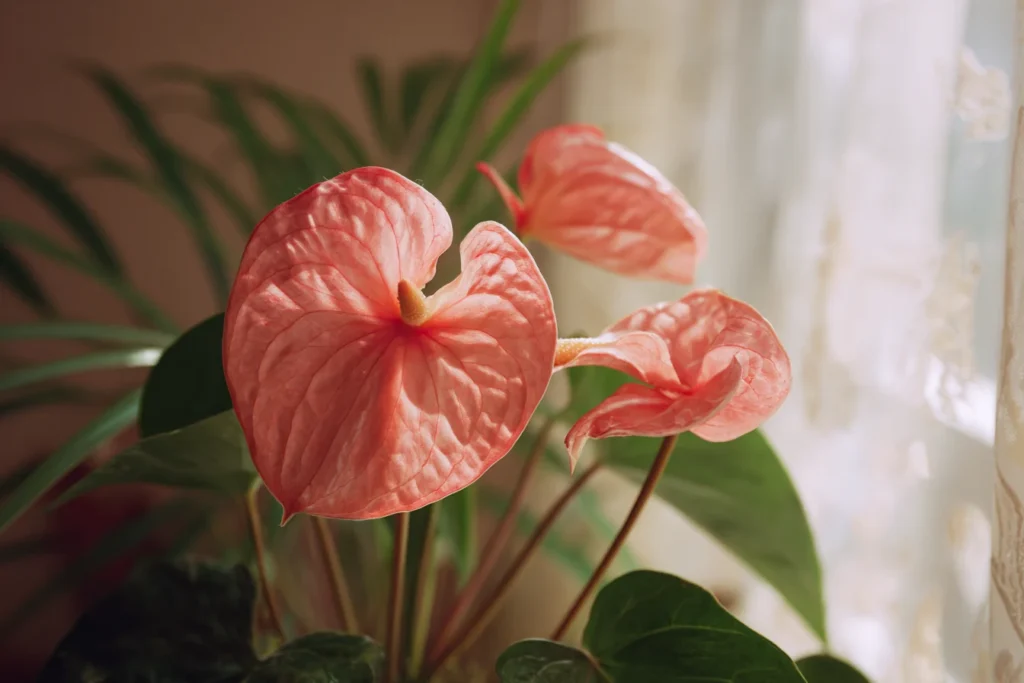
Anthurium Crystallinum Care: A Complete Guide to Growing Crystal Anthuriums
Introduction to Anthurium Crystallinum
Anthurium crystallinum, commonly known as the Crystal Anthurium, is a stunning tropical houseplant prized for its velvety, heart-shaped leaves with prominent white veins. Unlike other Anthurium species that are grown for their colorful flowers, the Crystal Anthurium is cultivated primarily for its spectacular foliage.
Native to tropical forests from Panama to Peru, these plants have become increasingly popular among houseplant enthusiasts seeking unique specimens with dramatic visual appeal. Despite their exotic appearance, they’re surprisingly manageable for most plant owners with moderate experience.
Light Requirements
Crystal Anthuriums thrive in bright, indirect light that showcases their striking leaf patterns while protecting them from damage. Direct sunlight can scorch their delicate foliage, while insufficient light will cause slow growth and diminished leaf coloration.
An east-facing window often provides ideal morning light conditions. If placing your plant near south or west-facing windows, filter the light with a sheer curtain to prevent leaf burn. These plants can adapt to moderate light conditions but won’t perform well in low-light areas.
Temperature and Humidity Needs
As tropical natives, Crystal Anthuriums require consistent warmth and high humidity to thrive. Aim to maintain temperatures between 65-80°F (18-27°C), with 75°F (24°C) being optimal. Never expose these plants to temperatures below 50°F (10°C), as cold damage can be permanent.

Humidity is crucial for these large-leaved beauties. While most homes hover around 40-50% humidity, Crystal Anthuriums prefer levels closer to 70%. Use a humidifier, pebble trays filled with water, or group plants together to create a more humid microclimate.
Soil and Potting Requirements
Crystal Anthuriums need well-draining, airy soil that provides adequate oxygen to the roots while retaining some moisture. Standard potting soil is typically too dense and can lead to root rot.
Create an ideal mix by combining regular potting soil with perlite, orchid bark, and coconut coir or peat moss. This combination provides the perfect balance of drainage and moisture retention. Alternatively, you can purchase specialized aroid or houseplant potting mixes designed for tropical plants.
Watering Practices
Finding the right watering balance is essential for Crystal Anthuriums. These plants prefer consistently moist but never soggy soil. Water when the top 5 cm (2 inches) of soil feels dry to the touch.
Overwatering is a common issue that leads to yellowing leaves and root rot. Underwatering causes leaf curling and browning. Always empty drainage trays after watering to prevent the plant from sitting in water, and adjust your watering schedule seasonally—less in winter, more during active growth periods.
Fertilizing Schedule
Crystal Anthuriums are moderate feeders that benefit from regular but gentle fertilization during their growing season. Apply a balanced houseplant fertilizer (with equal NPK values) at half-strength every 6-8 weeks during spring and summer.
Reduce or eliminate fertilization during fall and winter when growth naturally slows. Over-fertilizing can cause salt buildup and damage roots, so when in doubt, it’s better to under-fertilize than over-fertilize these sensitive plants.
Propagation Methods
Division
Division is ideal for mature, established plants and provides immediate results. When repotting, gently separate the plant into sections, ensuring each division has adequate roots and at least one healthy leaf. Plant each division in appropriate soil and water thoroughly.
Stem Cuttings
For younger plants, stem cuttings offer an effective propagation method. Select a healthy stem with at least one node, cut just below the node, and place in a propagation medium of perlite and peat moss or coconut coir. Maintain high humidity until roots develop, typically within 3-4 weeks.
Repotting Guidelines
Crystal Anthuriums grow relatively slowly and don’t require frequent repotting. Generally, repot every 2-3 years or when you notice roots emerging from drainage holes. Choose a container just one size larger than the current pot to avoid excess soil that can retain too much moisture.
Spring is the ideal time for repotting, as the plant is entering its active growth phase. Use fresh soil mix and water thoroughly after repotting to help the plant establish in its new container.
Common Problems and Solutions
Yellowing Leaves
Yellow leaves typically indicate overwatering or poor drainage. Adjust your watering schedule and check that your pot has adequate drainage holes. In severe cases, you may need to repot in fresh, well-draining soil.
Brown Leaf Edges
Crispy brown edges usually signal low humidity or underwatering. Increase humidity around your plant and ensure you’re watering consistently when the top portion of soil dries out.
Pests
Crystal Anthuriums can attract spider mites, mealybugs, and scale insects. Regularly inspect both sides of leaves for signs of infestation. Treat affected plants with insecticidal soap or neem oil, applying weekly until the problem resolves.
Growth Expectations
Under optimal conditions, Crystal Anthuriums grow at a moderate pace, adding a few new leaves each year. Mature plants can reach 60-90 cm (2-3 feet) in height and spread, with individual leaves growing up to 30 cm (12 inches) long.
Be patient with these plants—their slow growth is compensated by their long-lasting, dramatic foliage that remains attractive year-round. With proper care, a Crystal Anthurium can be a stunning focal point in your plant collection for many years.
Toxicity Concerns
Like all members of the Araceae family, Crystal Anthuriums contain calcium oxalate crystals that are toxic if ingested. These crystals can cause irritation to the mouth, throat, and digestive system in both humans and pets.
Keep these plants out of reach of children and pets, and wear gloves when handling if you have sensitive skin. If ingestion occurs, contact a medical professional or veterinarian immediately.
Conclusion
Anthurium crystallinum offers the perfect combination of exotic beauty and manageable care requirements for plant enthusiasts. With their velvety, veined foliage, these plants bring a touch of tropical elegance to any indoor space while requiring only moderate attention to thrive.
By providing the right balance of bright indirect light, proper humidity, and appropriate watering, you’ll be rewarded with a spectacular specimen that continues to produce stunning foliage year after year. Whether you’re expanding your collection or seeking a statement plant, the Crystal Anthurium is a worthwhile addition that delivers impressive visual impact with reasonable care demands.