
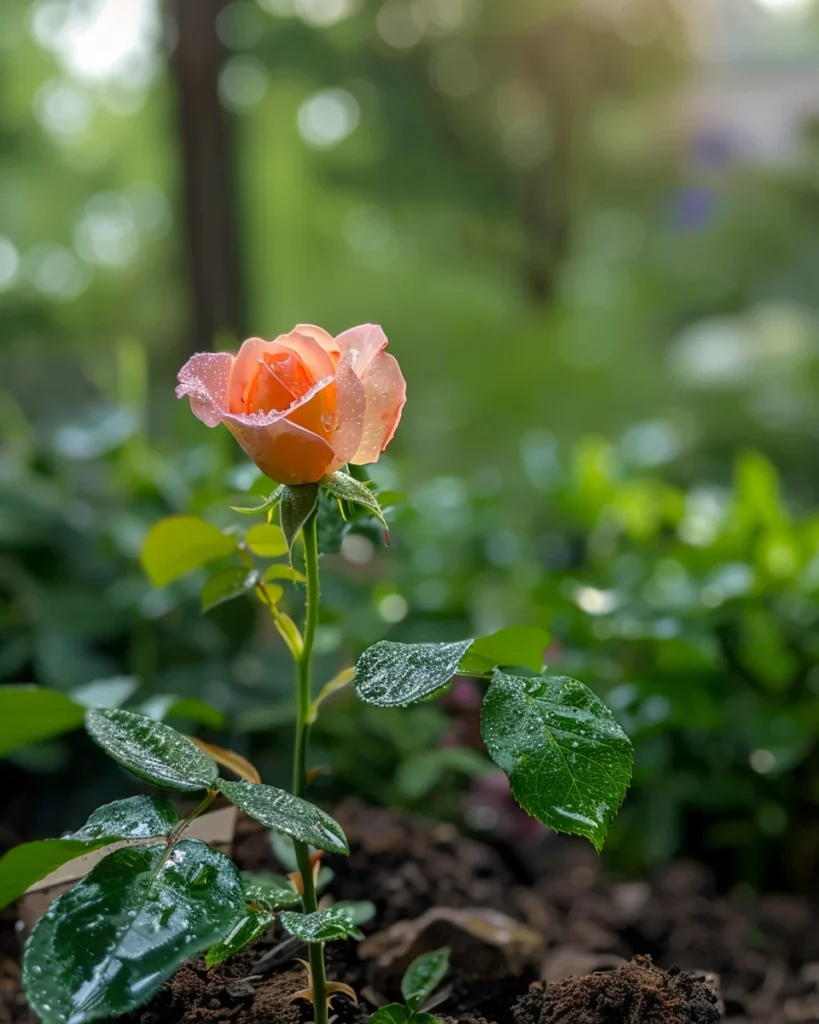
How to Grow Rose Trees from Cuttings in Water: Simple Propagation for Beautiful Blooms
Intro for Growing Rose Trees in Water
Rose trees, also known as standard roses or tree roses, are elegant additions to any garden with their distinctive form featuring a long stem topped with a rounded crown of blooms. While typically expensive to purchase, you can propagate your own rose trees at home using nothing more than a healthy cutting and a glass of water. This simple propagation method allows gardeners to create new plants from existing roses without specialized equipment or materials. Water propagation is particularly beginner-friendly, as it allows you to monitor root development visually and provides a gentle environment for cuttings to establish. With patience and proper technique, you can grow beautiful rose trees that match the quality of store-bought specimens at a fraction of the cost.
When to plant Rose Tree Cuttings
The ideal time to take rose cuttings for water propagation is during the growing season when the plant is actively producing new growth. In most temperate regions, late spring to early summer (May to June) offers the perfect balance of warmth and humidity for successful rooting. Alternatively, early fall (September to October) can also work well before temperatures drop significantly. Avoid taking cuttings during extreme heat or when the plant is dormant in winter. For best results, soil temperatures should range between 18-24°C (65-75°F). Always take cuttings after any danger of frost has passed in spring or at least 6-8 weeks before the first expected frost in fall to give roots time to develop.
Best time to plant Rose Tree Cuttings
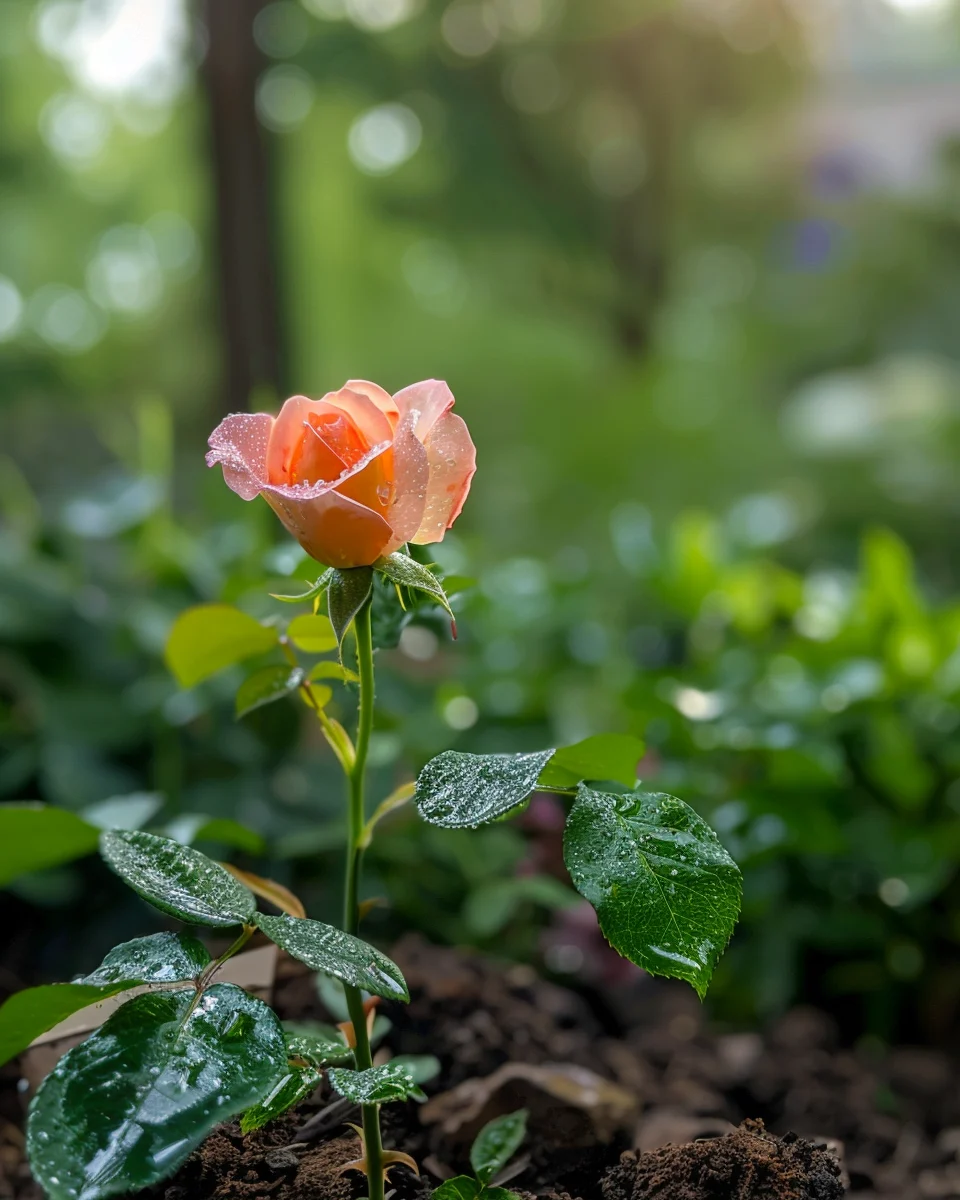
In cool temperate regions (UK, Northern US, Canada), the optimal window for taking rose cuttings is mid-May through July when roses are in active growth. In warmer regions (US Zones 7-10, Mediterranean climates), extend this period from April through September, avoiding only the hottest weeks of summer. Once your water-propagated cuttings have developed a healthy root system (typically 3-4 weeks after placing in water), they should be transplanted to soil. For cool regions, ensure transplanting occurs at least 6 weeks before first frost to allow establishment. In warm regions, avoid transplanting during heat waves, opting instead for mild periods with moderate temperatures.
Best Rose varieties to grow from Water Cuttings
• ‘Knock Out’ roses – Exceptionally easy to root with high success rates and disease resistance.
• ‘Iceberg’ – A classic floribunda that roots readily in water and produces abundant white blooms.
• ‘Don Juan’ – A climbing rose that adapts well to standard form with rich red fragrant flowers.
• ‘Peace’ – This hybrid tea rose propagates successfully in water and features stunning yellow-pink blooms.
• ‘The Fairy’ – A polyantha rose that roots quickly and creates a beautiful rounded crown when trained as a tree.
• ‘Zéphirine Drouhin’ – A thornless bourbon rose that establishes well from water cuttings with fragrant pink flowers.
• ‘Lady of Shalott’ – David Austin English rose with apricot blooms that responds well to water propagation.
• ‘Bonica’ – Disease-resistant shrub rose that roots readily and can be trained into an attractive standard form.
How to plant Rose Tree Cuttings
Materials list:
– Healthy rose plant for cuttings
– Clean, sharp pruning shears
– Clear glass or jar
– Clean water (room temperature)
– Rooting hormone powder (optional)
– Small pebbles (optional)
– Small pot with drainage
– Quality potting mix
– Plastic bag or clear plastic bottle (cut in half)
Step-by-step:
1. Select a healthy semi-hardwood stem from this year’s growth that has recently flowered, ideally 20-25 cm (8-10 inches) long and the thickness of a pencil.
2. Cut just below a leaf node at a 45-degree angle using clean, sharp pruning shears.
3. Remove all flowers, buds, and lower leaves, leaving only 2-3 sets of leaves at the top.
4. If using rooting hormone, dip the cut end into the powder (though many roses root successfully without it).
5. Fill a clear glass or jar with room temperature water, about 7-10 cm (3-4 inches) deep.
6. Place the cutting in the water, ensuring the bottom 2-3 nodes are submerged while keeping all leaves above water.
7. Position the glass in a bright spot with indirect sunlight, avoiding direct sun which can overheat the water.
8. Change the water every 3-4 days to prevent bacterial growth and maintain oxygen levels.
9. Once roots reach 5-7 cm (2-3 inches) long, transplant to a small pot with well-draining potting mix.
10. Cover the newly potted cutting with a plastic bag or bottle half to create a humid environment for 1-2 weeks, gradually removing for increasing periods to harden off.
How to grow Rose Trees from Water Cuttings
After successfully rooting your rose cutting in water and transplanting to soil, place it in a location that receives 6-8 hours of sunlight daily, with some afternoon shade in hotter regions. Water thoroughly when the top 2.5 cm (1 inch) of soil feels dry, typically every 3-5 days depending on climate, being careful not to overwater. Apply a balanced, slow-release rose fertilizer once roots are established, following package directions, usually starting about 4 weeks after transplanting. Add a 5 cm (2 inch) layer of organic mulch around the base, keeping it away from the stem to prevent rot. To develop the tree form, select a strong central stem and remove all side shoots from the bottom 60-90 cm (24-36 inches), allowing only the top portion to branch out. Support the developing tree with a sturdy stake until the trunk strengthens. For container growing, select a pot at least 30 cm (12 inches) in diameter with excellent drainage, and consider moving potted specimens to sheltered locations during extreme weather.
Caring for Water-Propagated Rose Trees
Monitor your developing rose tree weekly for signs of pests like aphids, spider mites, or rose sawflies. Treat aphid infestations with a strong spray of water or insecticidal soap. Watch for black spot, powdery mildew, or rust, treating promptly with organic fungicides containing neem oil or potassium bicarbonate. Prune your rose tree in late winter or early spring before new growth appears, removing dead or crossing branches and shaping the crown. During the first year, remove any flower buds that form to direct energy to root and stem development. In subsequent years, deadhead spent blooms regularly to encourage continued flowering. Water-propagated roses typically take 2-3 years to develop into full tree form, requiring patience as the trunk strengthens. In winter, protect young specimens from frost with burlap wrapping or by moving potted trees to sheltered locations when temperatures drop below -5°C (23°F).
Understanding bolting in Rose Trees
Unlike vegetable plants, roses don’t technically “bolt” in the traditional sense of producing seed stalks. However, rose trees can experience rapid, leggy growth that compromises their form and flowering. This is typically triggered by insufficient light causing the plant to stretch, excessive nitrogen fertilizer promoting vegetative growth over flowering, or improper pruning techniques that fail to maintain the tree’s shape. Extreme heat stress can also cause roses to produce fewer flowers and focus on survival rather than blooming. To prevent these issues, ensure your rose tree receives adequate sunlight, use balanced fertilizers rather than high-nitrogen formulations, and maintain regular pruning to preserve the tree form. If your rose tree develops leggy growth, prune back the affected stems to encourage branching and a fuller crown.
Why does my Rose Tree have few blooms?
• Insufficient sunlight – Move to a location with at least 6 hours of direct sun daily
• Improper fertilization – Switch to a phosphorus-rich fertilizer (middle number higher in NPK ratio)
• Inadequate pruning – Deadhead regularly and perform proper seasonal pruning
• Water stress – Maintain consistent moisture without waterlogging
• Young plant age – Water-propagated roses may take 2-3 years to bloom abundantly
Companion planting for Rose Trees
Lavender makes an excellent companion for rose trees, repelling aphids while its silver foliage complements rose blooms. Garlic and chives help deter aphids and black spot while growing compactly around the base. Catmint (Nepeta) attracts beneficial pollinators while deterring Japanese beetles with its aromatic foliage. Marigolds suppress harmful nematodes in the soil and add bright color beneath the rose canopy. Geraniums (Pelargoniums) help repel Japanese beetles and complement roses with continuous blooms. Avoid planting roses near plants in the Brassica family (cabbage, broccoli) as they can inhibit rose growth. Also keep distance from tomatoes and potatoes, which can transmit diseases that affect roses.
Seasonal calendar
• January-February: Plan which roses to propagate; prune established rose trees
• March-April: Prepare propagation materials; fertilize established trees
• May-June: Take cuttings for water propagation; monitor for pests on established trees
• July-August: Continue monitoring water cuttings; change water regularly; transplant rooted cuttings to soil
• September-October: Take fall cuttings in warm regions; prepare young trees for winter
• November-December: Protect young specimens from frost; move container trees to sheltered locations
Problems & solutions
Problem | Quick Fix
— | —
Cutting rotting in water | Change water more frequently; remove any submerged leaves; try fresh cutting
No roots forming after 4 weeks | Try a different section of stem; ensure water temperature isn’t too cold; apply rooting hormone
Leaves yellowing after transplant | Reduce watering; check for drainage issues; gradually acclimate to outdoor conditions
Leggy, weak growth | Increase light exposure; prune to encourage branching; provide support stake
Black spot on leaves | Remove affected leaves; improve air circulation; apply organic fungicide
Aphid infestation | Spray with strong water jet; apply insecticidal soap; introduce ladybugs
Transplant shock | Create humidity tent; keep out of direct sun initially; maintain consistent moisture
Common questions about growing Rose Trees from Water
How often should I change the water during propagation?
Every 3-4 days to prevent bacterial growth and maintain oxygen levels. If the water becomes cloudy, change it immediately.
Can any rose cutting be propagated in water?
Most roses can be propagated in water, but success rates vary by variety. Floribundas, polyanthas, and many shrub roses typically root more readily than hybrid teas or climbers.
How long does it take for rose cuttings to root in water?
Typically 2-4 weeks, though some varieties may take up to 6 weeks. Patience is key, as premature transplanting will result in failure.
When should I transplant my rooted cutting to soil?
When roots are 5-7 cm (2-3 inches) long and showing multiple branching roots, usually 3-4 weeks after placing in water.
Can I grow a rose tree in a container permanently?
Yes, but choose a container at least 40-50 cm (16-20 inches) in diameter with excellent drainage, and be prepared to repot every 2-3 years as the plant matures.
How tall will my water-propagated rose tree grow?
Most standard roses reach 90-120 cm (3-4 feet) in height, though this depends on variety and growing conditions. The final height can be controlled through pruning.
Is it necessary to use rooting hormone for water propagation?
While not strictly necessary, rooting hormone can increase success rates and speed up root development, especially for varieties that are more difficult to propagate.