

How to Grow Parsley Under Grow Lights: Fresh Herbs Year-Round Regardless of Season
Intro for growing parsley under grow lights
Parsley (Petroselinum crispum) is a versatile, nutrient-rich herb that can be grown indoors under grow lights regardless of season or outdoor conditions. This biennial herb, often cultivated as an annual, offers bright flavor to countless dishes while providing impressive amounts of vitamins A, C, and K. Growing parsley under grow lights allows you to maintain a consistent supply of fresh herbs year-round without worrying about seasonal changes, limited garden space, or insufficient natural light. With proper setup and care, indoor parsley can be just as flavorful and productive as garden-grown plants, offering the convenience of fresh herbs just steps from your kitchen.
When to plant parsley under grow lights
One of the greatest advantages of growing parsley under grow lights is that traditional growing seasons become irrelevant. You can start parsley seeds indoors at any time of year. However, if you’re planning to eventually transplant outdoors, start seeds 10-12 weeks before your region’s last spring frost. Parsley seeds germinate best when soil temperatures are between 10-24°C (50-75°F). When growing exclusively under lights, maintain room temperatures between 18-24°C (65-75°F) for optimal growth. Unlike outdoor growing where frost is a concern, indoor cultivation under grow lights provides a controlled environment free from seasonal constraints.
Best time to plant parsley under grow lights
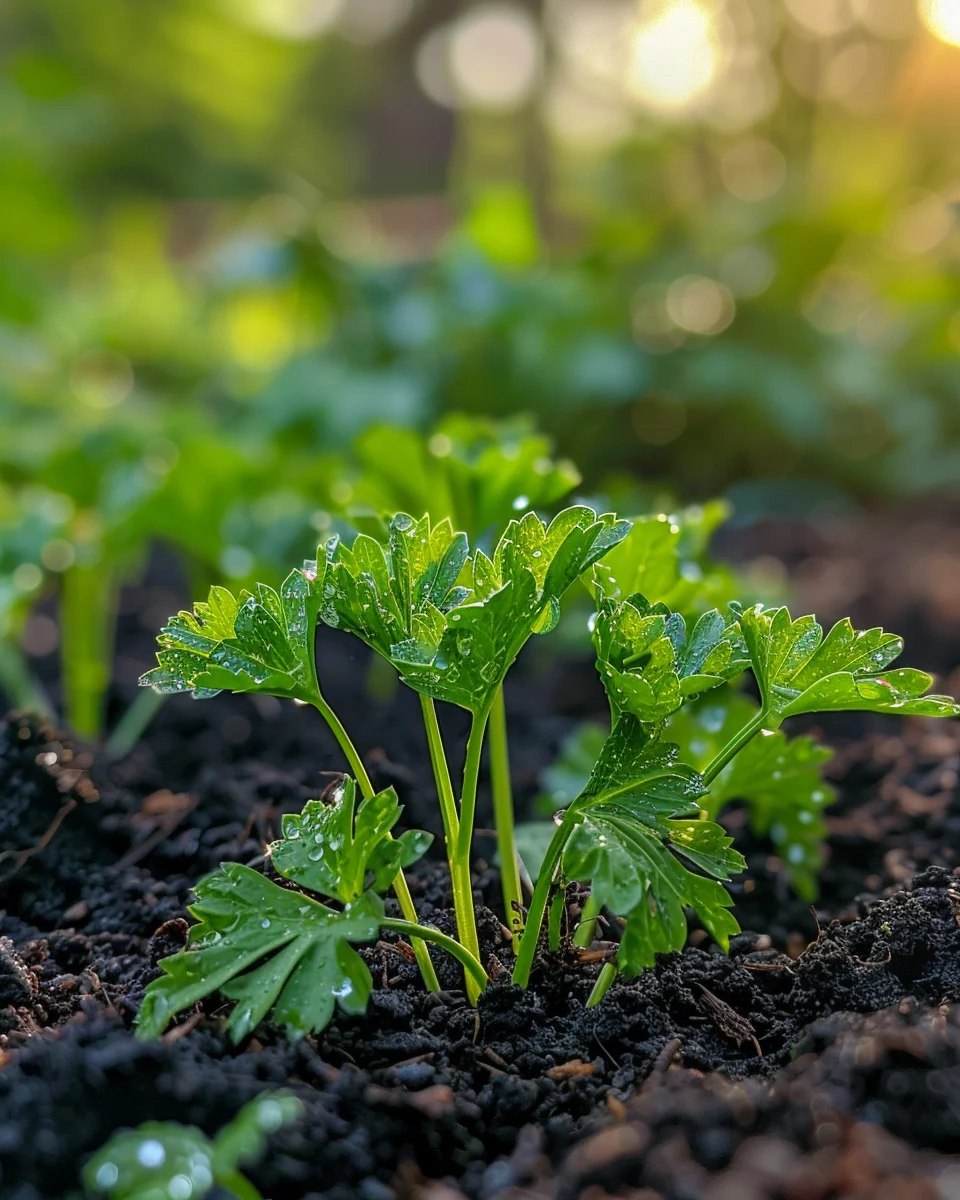
For year-round indoor growing under lights, any month is suitable for starting parsley. If you’re maintaining a continuous herb supply, consider staggering your plantings every 6-8 weeks to ensure a steady harvest. For those in cool-climate regions who want to supplement outdoor growing, September through February are excellent months to maintain indoor parsley under lights when garden production slows. In warm climate regions, indoor cultivation during summer months (June-August) can be advantageous when outdoor temperatures might cause parsley to bolt prematurely. Direct sowing under grow lights is the preferred method, as parsley has a taproot that doesn’t transplant easily once established.
Best parsley varieties to grow under lights
- Italian Flat Leaf (Petroselinum crispum var. neapolitanum) – Robust flavor that holds up well under artificial lighting and offers excellent leaf production.
- Curly Parsley (Petroselinum crispum var. crispum) – Decorative, compact growth habit that’s ideal for smaller indoor growing spaces.
- Giant of Italy – Large, flat leaves with exceptional flavor and good production under artificial lighting.
- Forest Green – Dark green curly variety with excellent disease resistance and compact growth perfect for indoor cultivation.
- Hamburg (Root Parsley) – Dual-purpose variety providing both edible leaves and a parsnip-like root that performs well in deeper containers under lights.
- Titan – Bolt-resistant variety that maintains quality longer under consistent indoor conditions.
- Wega – Compact variety bred specifically for container growing with good tolerance to artificial lighting conditions.
How to plant parsley under grow lights
Materials needed:
- Parsley seeds
- Seed-starting containers (at least 10 cm/4 inches deep)
- Quality potting mix or seed-starting medium
- Grow lights (LED or fluorescent work well)
- Timer for lights
- Spray bottle for watering
- Plant labels
- Small fan for air circulation (optional)
Step-by-step planting:
- Fill containers with moistened potting mix to about 1 cm (½ inch) below the rim.
- Soak parsley seeds in warm water for 24 hours before planting to improve germination rates.
- Scatter seeds thinly across the surface of the soil, aiming for seeds about 0.5 cm (¼ inch) apart.
- Cover seeds with a very thin layer of soil, approximately 0.3 cm (⅛ inch) deep.
- Mist the soil surface gently to avoid displacing seeds.
- Position grow lights 10-15 cm (4-6 inches) above the soil surface.
- Set timer to provide 14-16 hours of light daily.
- Maintain soil moisture by misting regularly until germination occurs (typically 14-21 days).
- Once seedlings emerge, thin to 7-10 cm (3-4 inches) apart to prevent overcrowding.
- Adjust grow lights to maintain 10-15 cm (4-6 inches) above the tops of plants as they grow.
How to grow parsley under grow lights
For successful parsley growth under artificial lighting, position your grow lights 10-15 cm (4-6 inches) above plants, adjusting height as plants grow. Provide 14-16 hours of light daily using a timer for consistency. LED grow lights with full-spectrum capabilities or fluorescent lights with a mix of cool and warm bulbs work best. Water when the top 1 cm (½ inch) of soil feels dry, typically every 3-4 days, ensuring good drainage to prevent root rot. Feed monthly with a half-strength, balanced liquid fertilizer (like 10-10-10) or use an organic option like diluted fish emulsion. Maintain good air circulation with a small fan to prevent fungal issues. For container growing, choose pots at least 15 cm (6 inches) deep to accommodate parsley’s taproot, and use a well-draining potting mix. Humidity levels of 40-60% are ideal; if your indoor environment is dry, place containers on a tray with pebbles and water to increase humidity without waterlogging roots.
Caring for parsley under grow lights
Monitor your parsley regularly for signs of nutrient deficiencies, which often manifest as yellowing leaves (nitrogen deficiency) or stunted growth. Rotate plants weekly to ensure even light exposure on all sides. Common pests in indoor environments include aphids and spider mites – treat infestations early with insecticidal soap or neem oil spray. Watch for powdery mildew, which appears as white powder on leaves in humid conditions with poor air circulation; improve ventilation and avoid overhead watering to prevent this. Harvest parsley when plants reach 15 cm (6 inches) tall by cutting outer stems at the base, which encourages bushier growth. Never remove more than one-third of the plant at once. Store freshly harvested parsley in the refrigerator wrapped in a damp paper towel inside a perforated plastic bag for up to one week, or freeze chopped parsley in ice cube trays with water or olive oil for longer storage.
Understanding bolting in parsley under grow lights
Bolting is when parsley shifts from leaf production to flowering and seed production, resulting in bitter-tasting leaves and a tall flowering stem. While less common indoors than outdoors, bolting can still occur under grow lights, typically triggered by temperature fluctuations, insufficient light hours, or plant age (parsley is biennial and naturally flowers in its second year). Under artificial lights, bolting might happen if temperatures consistently exceed 26°C (80°F) or if light duration is inconsistent. Prevent bolting by maintaining stable temperatures between 18-24°C (65-75°F), providing consistent light periods, and harvesting regularly to encourage leaf production. If your parsley does bolt, you can either remove the flowering stems to extend leaf production briefly or allow it to flower to attract beneficial insects if growing near other plants, then collect seeds for future plantings.
Why does parsley under grow lights turn bitter?
- Light intensity too low: Increase light intensity or move lights closer (but not closer than 10 cm/4 inches).
- Heat stress: Ensure temperatures remain below 26°C (80°F); move grow lights further away if they’re generating excessive heat.
- Beginning to bolt: Harvest more frequently and maintain consistent light and temperature conditions.
- Nutrient imbalance: Reduce fertilizer if over-fertilizing or switch to a balanced, diluted formula.
- Age of plant: Parsley naturally becomes more bitter as it ages; start new plants every 6-8 months for best flavor.
Companion planting for parsley under grow lights
Even in indoor growing environments, companion planting principles can apply when multiple plants share the same grow light system:
- Basil – Grows well under similar light conditions and can enhance parsley’s growth through beneficial root interactions.
- Chives – Help deter aphids that might attack parsley and thrive under the same lighting conditions.
- Mint – Can repel certain pests, though should be kept in its own container to prevent spreading.
- Spinach – Has similar light requirements and grows well alongside parsley without competing for resources.
- Lettuce – Makes good use of grow light space with parsley and has compatible water and light needs.
Avoid growing parsley under lights with:
- Dill – Can cross-pollinate with parsley if allowed to flower, potentially affecting flavor.
- Plants requiring significantly different light intensities – Plants needing high-intensity light might cause parsley to receive too much light if placed together.
Seasonal calendar
- January-December: Under grow lights, parsley can be started any time of year.
- Sowing: Sow new batches every 6-8 weeks for continuous harvest.
- Growth phase: Expect 70-90 days from sowing to first substantial harvest.
- Feeding: Apply diluted liquid fertilizer monthly.
- Harvesting: Begin harvesting when plants reach 15 cm (6 inches) tall, continuing for 6-8 months per plant.
- Replacement: Start new plants when existing ones begin to lose vigor or develop woody stems (typically after 8-10 months).
Problems & solutions
| Problem | Quick Fix |
|---|---|
| Leggy, stretched growth | Move lights closer to plants (10-15 cm/4-6 inches above) and ensure 14-16 hours of light daily |
| Yellow leaves | Check for overwatering; allow soil to dry slightly between waterings or apply diluted nitrogen fertilizer if nutrient deficient |
| Brown leaf tips | Increase humidity or reduce fertilizer strength; check for salt buildup in soil |
| Slow growth | Increase light intensity, check temperature (should be 18-24°C/65-75°F), and apply diluted fertilizer |
| Aphids or spider mites | Spray with insecticidal soap or neem oil; increase air circulation with a small fan |
| Powdery white spots on leaves | Improve air circulation, reduce humidity, and apply fungicidal spray if necessary |
| Seeds not germinating | Ensure soil temperature is 10-24°C (50-75°F); pre-soak seeds for 24 hours before planting |
Common questions about growing parsley under grow lights
How many hours of artificial light does parsley need daily?
Parsley requires 14-16 hours of light daily under grow lights for optimal growth. Use a timer to maintain consistency, as irregular lighting can stress plants.
What type of grow light is best for parsley?
Full-spectrum LED grow lights are ideal for parsley, but fluorescent T5 or T8 lights also work well. Choose lights with a color temperature between 5000-6500K (cool white) to promote leafy growth.
How large should containers be for growing parsley under lights?
Use containers at least 15 cm (6 inches) deep and 10 cm (4 inches) in diameter per plant to accommodate parsley’s taproot. Ensure containers have drainage holes.
How often should I water parsley grown under lights?
Water when the top 1 cm (½ inch) of soil feels dry, typically every 3-4 days depending on humidity and container size. Indoor parsley generally requires less water than outdoor plants.
Can I grow parsley under regular household LED bulbs?
Regular household LEDs aren’t ideal as they lack the full spectrum needed for optimal growth. However, if using them, choose daylight bulbs (5000-6500K) and position them closer to plants (7-10 cm/3-4 inches) to compensate for lower intensity.
How long will parsley plants produce under grow lights?
With proper care, parsley plants can produce for 8-10 months under grow lights before becoming woody and less productive. Start new plants every 6-8 months for continuous harvest.
How do I know if my parsley is getting enough light?
Healthy parsley under sufficient light will be compact with rich green leaves. Leggy growth with long stems and pale leaves indicates insufficient light intensity or duration.