
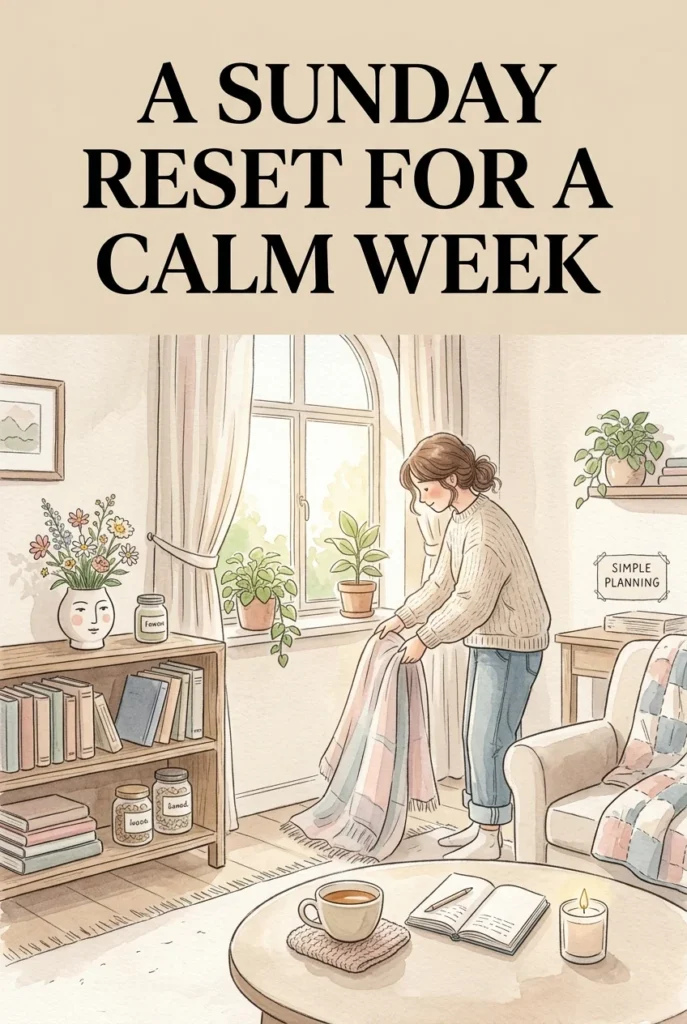
A gentle Sunday reset helps you clear clutter, reduce Monday stress, and make space for rest—without spending the entire day doing chores.
Sundays have a distinct feel: quieter, slower, and full of room to choose how you want the week to begin. A Sunday reset is less about “getting everything done” and more about creating breathing space—physically in your home and mentally in your plans.
Why it matters: when your environment is calmer and your week is lightly mapped out, you spend less time scrambling. You start Monday with fewer decisions, fewer loose ends, and more steady energy. Think of this as a ritual of renewal—small actions that turn a noisy week’s leftovers into a clear starting point.
Below is a Sunday reset routine designed to feel restorative and intentional. Use it exactly as written, or treat it like a menu and choose the pieces that fit your season of life.
How to Use This Routine (So It Stays Gentle)
A reset works best when it’s realistic. You’re not trying to run your entire life in one day. You’re setting conditions for a smoother week.
Choose your pace
If you have a full afternoon, move through each section slowly. If your Sunday is busy, pick three anchors: a quick tidy, clean sheets, and a simple plan for the week. That alone can change how Monday feels.
Keep the goal in mind
The goal is not perfection. It’s a home that supports you, a plan that guides you, and a body that feels cared for.
1. Start the Day Slowly
Let Sunday begin without urgency. Create a softer entry into the day so the rest of the routine feels steady rather than rushed.
Open the house to fresh air and light
Open windows, pull back curtains, and let natural light shift the mood of the space. If the weather doesn’t allow open windows, even a few minutes of bright light and a quick air-out can help.
Move gently before you “do” anything
Take a moment in bed to stretch, breathe, or simply notice how you feel. Pour a warm drink and sit near a window or step outside for a few quiet minutes. Listen for the small sounds of morning. Notice the texture of the day before you fill it.
Mini reset (5 minutes)
If the day is already busy, keep it simple: make your drink, open one window, and take three slow breaths before you look at a screen or a to-do list.
2. Restore Your Living Spaces
A calmer week is easier to build when your home feels supportive. Restoring your space doesn’t require an all-day deep clean. It’s about returning rooms to “ready” so the week flows.
Start with the visible basics
Begin small and obvious: make the bed, clear the main surfaces, and put away what has drifted out of place. These quick wins change the feel of a room immediately.
Move room to room with a light touch
Put on calming music and do a simple sweep. Focus on order and airiness, not detail work. If you’re short on time, choose the areas you’ll feel the most during the week: the kitchen, the entryway, and the living room.
Simple “reset cues” that make a difference
- Open curtains and straighten pillows or throws.
- Collect cups, dishes, and stray items into one tray or basket, then put them away.
- Wipe a main counter or table so it’s clear for the next day.
- Add a small touch of care—fresh flowers, a clean linen throw, or a tidy stack of books.
When your surroundings reflect calm and care, it becomes easier to think clearly and move through the week with less background stress.
3. Refresh Your Laundry & Linens
Fresh laundry is one of the simplest forms of comfort you can give your future self. Sunday is a natural day to wash, fold, and reset the items you touch the most.
Prioritize bedding and towels
Washing sheets and towels gives your home a renewed feeling, like pressing a reset button. Clean linens support better rest, and better rest supports everything else.
Fold with intention, not urgency
As you fold, treat it as a quiet act of care rather than a race. If you enjoy fragrance, lightly mist sheets with a natural linen spray. Keep it subtle—just enough to make the room feel fresh.
A realistic laundry approach
If you can’t finish everything, focus on what will matter most by bedtime: a made bed with clean sheets and a clear path through the main living areas. You can always return to the rest later.
4. Organize the Week Ahead
Once your home feels lighter, shift to mental clarity. A short planning session on Sunday can prevent a full week of low-grade stress.
Review what’s coming up
Use a planner or digital calendar and look at the week in one view. Note appointments, commitments, deadlines, and any travel time between them. This isn’t about filling every hour—it’s about reducing surprises.
Set priorities that match real life
Make a simple list of what truly matters. Not everything you could do—only what needs your attention. Then add one or two small items that support your wellbeing, like a walk, a phone call with a friend, or a quiet evening at home.
Protect rest on purpose
Include moments of rest as scheduled choices, not leftover scraps of time. When rest is planned, it’s more likely to happen—and you start the week feeling clear-minded instead of already behind.
Sample Sunday planning flow
| Step | What to do | Result |
|---|---|---|
| Scan | Review calendar for the next 7 days | Fewer surprises |
| Select | Choose 3–5 priorities that matter most | Clear focus |
| Support | Note meals, errands, and a rest moment | Less friction |
| Prepare | List any items to pack, buy, or charge | Smoother mornings |
5. Prepare Nourishment for the Week
Food prep doesn’t need to be elaborate to be helpful. The purpose is to reduce weekday decisions and keep nourishing options within easy reach.
Start with small comforts
Wash and chop fruits and vegetables. Portion a few ready-to-grab snacks. Fill a couple of containers with simple ingredients you can mix and match during the week.
Keep it practical, not perfect
This isn’t a plan for an ideal week; it’s support for a real one. Even one prepared option—cut fruit, a simple grain bowl, or a container of washed greens—can make a busy day easier.
Quick prep ideas that fit most routines
- Washed berries or sliced fruit for breakfasts and snacks
- Chopped vegetables for quick salads or simple dinners
- One cooked grain or base that can be used in multiple meals
- Ready-to-grab portions stored in clear containers so you see them
When your fridge is organized and stocked with easy choices, your weekdays tend to feel calmer and more manageable.
6. Tend to Yourself as Tenderly as You Tend to Your Home
A reset that only cleans the house but ignores the person living in it is incomplete. Save time for self-tending so your mind and body feel refreshed too.
Create a slower personal rhythm
Take a long shower or bath. Move slowly through skincare or any small routine that helps you feel like yourself. Change into soft clothes—comfortable loungewear, a cotton robe, or anything that signals rest.
Give your mind a place to land
Light a candle if you like, stretch gently, or sit quietly with a notebook. Reflect on what went well in the past week and what you want to feel more of in the next one. Keep it simple and honest; a few lines is enough.
Self-tending options (choose one)
- A screen-free cup of tea and a short stretch
- Journaling: “What worked?” and “What do I need this week?”
- Preparing clothes or a bag for Monday so your morning feels easier
- A short walk to signal closure to the week
These quiet moments help your home reset translate into an internal reset—less mental noise, more steadiness.
7. End the Day With Intention
How you close Sunday matters. A calm evening helps you carry the reset into the week rather than undoing it with late-night scrolling or last-minute rush.
Shift the home into evening mode
Lower the lights. Put away lingering clutter from the day. Do a gentle final tidy so the main spaces feel peaceful.
Unwind without screens (even briefly)
Brew tea or warm water with herbs and sit for a few minutes without your phone. Read something uplifting, listen to a slow playlist, or simply enjoy the quiet. The goal is to let your nervous system downshift.
Close with gratitude and rest
Reflect on what you’re grateful for, no matter how small. Then remind yourself that rest is part of the reset. It’s where energy and clarity are built for the week ahead.
Tips: Make Your Sunday Reset Easier (and More Consistent)
- Use a timer. Set 10–20 minutes per task so it stays light and contained.
- Reset the “hot spots” first. Focus on the areas that affect daily life most: kitchen counters, sink, entryway, and the space where you relax.
- Pair chores with comfort. Calming music, an open window, or a warm drink can make routine tasks feel less draining.
- Lower the bar on busy weeks. Clean sheets + a quick plan + one prepared meal component is a complete reset.
- Make Monday morning easier. Lay out clothes, pack a bag, and put keys in the same place.
- Stop before you’re depleted. The point is to feel restored, not worn out.
A Sunday Reset Is a Routine—and a Practice
A Sunday reset is more than a checklist. It’s a way of creating peace intentionally, moment by moment, through small acts