
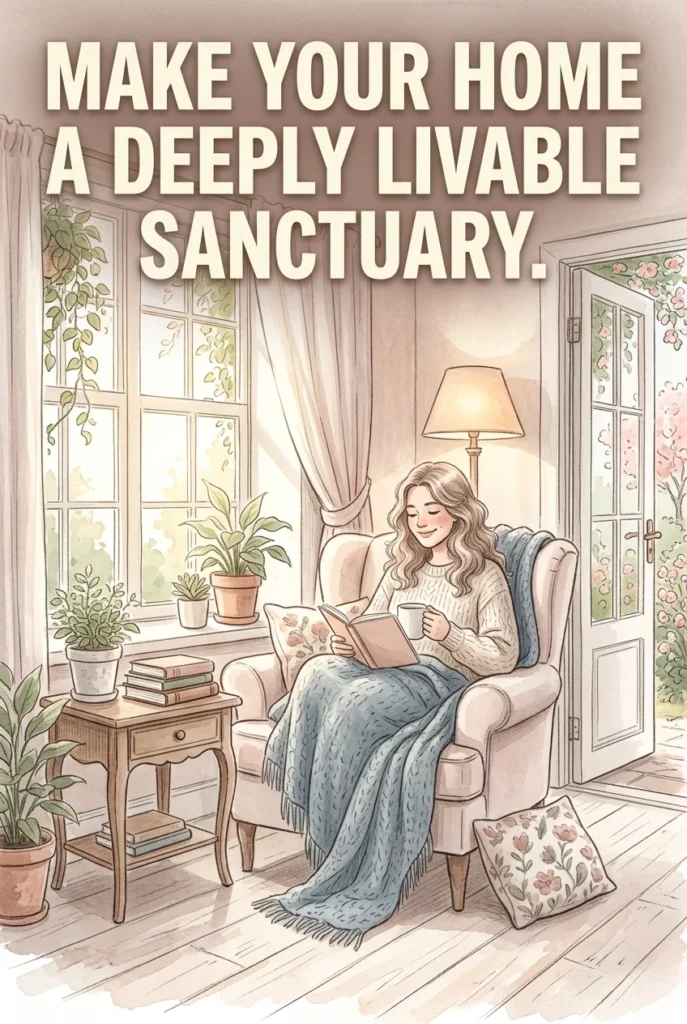
A practical guide to shifting your space from “display-ready” to deeply livable—without needing more money, more rooms, or more décor.
There’s a quiet but important difference between a home that looks beautiful and a home that feels safe to exist in.
One is arranged for presentation. The other is arranged for real life.
If your space sometimes feels like something you manage, protect, and keep “ready,” rather than a place you truly inhabit, you’re not alone. Many people unintentionally set up their homes like showrooms—carefully curated, carefully controlled, and a little untouchable.
But the most meaningful homes aren’t the ones you tiptoe through. They’re the ones that hold your routines, your rest, your thoughts, your growth, and your ordinary Tuesday afternoons. A home you live in is not a performance. It’s a support system.
Why This Matters More Than Style
When a home is designed primarily to look “put together,” it can quietly train you to stay small in your own space. You avoid the couch because you don’t want to wrinkle the cushions. You hesitate to start a hobby because it will create mess. You rush to reset every room before you’ve even enjoyed it.
A livable home does the opposite. It invites you to exhale. It makes it easy to journal on the patio, leave a book open on the sofa, sit in warm evening light, and feel comfortable being yourself. The point isn’t to lower standards. The point is to align your home with your actual life.
You don’t need more square footage or a bigger budget to start. You need a mindset shift: design for living, not for inspection.
Redefine What “Put Together” Means
Many of us grew up with an idea that a well-kept home is spotless, symmetrical, and always ready for someone to drop by. But a lived-in home tells a softer, more honest story.
Let “evidence of life” be normal
Think of the details that signal presence rather than neglect: slightly rumpled cushions, a blanket draped over a chair, a mug near an open notebook, a stack of books within reach. These aren’t signs your home is failing—they’re signs you’re using it.
Stop resetting your rooms to “untouched”
If you write outside every evening, let the patio table support that habit. Leave the journal where you’ll reach for it again. If you read in one chair more than anywhere else, make that corner functional—good light, a small surface nearby, and a basket for throws you actually use.
The goal is not to let clutter accumulate. The goal is to stop treating daily living as something you must erase.
Design Corners That Invite You to Stay
If you want to stop hiding from life, you need spaces that gently pull you into it. Not every part of your home has to be a statement. It does need to be welcoming.
Create small, intentional sanctuaries
These “corners” can be simple:
- A window seat with natural light and comfortable pillows for quiet reflection.
- A back patio with layered cushions, a few potted herbs, and warm string lights for a low-effort outdoor retreat.
- A small desk near an open door that becomes a creative nook instead of a storage zone.
Use the light you already have
Pay attention to where the afternoon light falls. Notice where you naturally go when you’re tired, thoughtful, or in need of calm. Then set those spots up to make staying easy.
Mini-point: emotional resonance beats aesthetic perfection
Texture, warmth, and comfort matter. A corner that makes you feel grounded will be used more than a corner that looks perfect but feels stiff.
Let the Outdoors In (Even If You Don’t Have Much Space)
A home that feels alive often has a relationship with the world outside its walls. That doesn’t require a large yard. A tiny patio, a modest balcony, or a small backyard can still become a genuine extension of your living space.
Simple ways to soften boundaries
- Add potted plants, climbing vines, or small planters with herbs to bring in greenery.
- Open doors and windows when weather allows so fresh air can move through the house.
- Let sunlight fall across the floor; resist the urge to block it for the sake of a “clean” look.
When the inside and outside feel connected, your home can feel more expansive and less like a place you retreat to. You’re not hiding from the day—you’re participating in it.
Choose Comfort Over Impressiveness
It’s easy to choose furniture and décor based on what photographs well. A better filter is simpler and more useful: Does this support the way I actually live?
Ask your space practical questions
- Do my chairs encourage lounging, or do they make me perch?
- Are the fabrics comfortable against my skin, or are they mainly for show?
- Is there a place to set down a mug, a book, or a notebook where I naturally sit?
- Does my lighting help me unwind at night, or does it keep the room feeling harsh?
A home you live in prioritizes how a room feels at 7 p.m. when you’re tired, not how it looks in a quick snapshot. Comfort doesn’t have to mean sloppy. It means supportive.
Create Visual Warmth With Better Lighting
Lighting can change the emotional tone of a home faster than almost anything else. Warm light signals calm and safety. Harsh overhead lighting often makes a room feel exposed or sterile.
Build layered light instead of relying on one switch
- Replace bright white bulbs with warmer tones where appropriate.
- Add lamps at different heights to create depth and softness.
- Use gentle, ambient lighting in the evening rather than a single strong overhead source.
- String soft lights on a patio or along a wall to create a welcoming glow.
A glowing corner lamp, a softly lit entryway, and subtle kitchen lighting can make your home feel inhabited, not merely occupied.
Make Space for Your Rituals (So You’re Not Fighting Your House)
A livable home supports the routines that make you feel like yourself. If your house constantly works against your habits, you’ll feel like a visitor in your own life.
Design around what you already do
Your rituals don’t need to be dramatic to matter. They can be simple, repeated actions that bring you back to yourself.
- If you journal regularly, keep your notebook and pen easy to reach—perhaps on a patio tray with your favorite mug.
- If you love slow mornings, make the breakfast area feel intentional and unrushed (even if it’s just a small table you clear the night before).
- If you do creative projects, dedicate a shelf or corner so you’re not rebuilding the same setup every time.
Mini-point: reduce friction
The more steps it takes to begin a routine, the less likely you are to do it. A home that’s easy to live in is one where the tools for your daily life are already waiting for you.
Release the Fear of Imperfection
One of the biggest reasons people hide in their own homes is fear—fear someone will notice the clutter, the mismatched pieces, or the signs of real life.
But perfection isn’t what creates warmth. Authenticity does.
Let your home evolve instead of “finishing” it
- Mix old and new without apologizing for it.
- Keep what matters to you even if it isn’t trending.
- Let patio pillows fade in the sun.
- Let plants grow a little wild and find their own shape.
These small imperfections add character. They make a home feel human, specific, and lived.
Open the Door Emotionally
A home you truly live in isn’t only about furniture and lighting. It’s also about what you allow yourself to feel within your walls.
Notice where you rush and why
Do you struggle to rest without guilt? Do you tidy away evidence of living as if it’s something to hide? Do you avoid sitting outside and watching the sky change because it feels “unproductive”?
Consider creating an environment where slowness is welcome—where you can linger at the table, stay in conversation, and leave the door open to fresh air without immediately turning it into another task.
Mini-point: a sanctuary isn’t silent—it’s safe
Safety can mean room to breathe, permission to rest, and the ability to be present without constantly correcting your surroundings.
Reflect Your Current Season of Life
Your home should reflect who you are now—not who you used to be, and not who you think you should become.
Edit with honesty
Walk through your space and pay attention to what feels heavy, outdated, or disconnected from your current life. Then make small, respectful changes:
- Remove items that no longer resonate.
- Add colors and textures that fit what you need in this season.
- If you crave softness, lean into muted tones and layered fabrics.
- If you crave vibrancy, introduce colorful artwork or fresh florals.
When your surroundings mirror your inner world, it’s easier to feel grounded—and less tempting to retreat from your own life.
Tips: Make Your Home More Livable This Week
- Pick one “landing zone” and make it kind. A basket for throws, a tray for a mug, a hook for a bag—small structure reduces stress.
- Create one sit-down spot you genuinely want to use. Choose comfort first: a soft throw, a supportive cushion, and good light.
- Stop over-resetting one area. Let one space stay gently “in progress” (like a book on the side table) so living doesn’t feel like rule-breaking.
- Switch to warmer evening lighting. Try lamps instead of bright overhead lights at night to change the mood of the entire home.
- Bring one outdoor element inside. A plant, herbs, or even just open air for a few minutes can make the space feel less closed-in.
- Make your favorite ritual easier by one step. Put the journal where you write, set out the mug you always reach for, or clear the chair you want to sit in.
Live in It Today (Don’t Wait for the “Right” Version of Your Home)
This step matters most: stop waiting.
Stop waiting for the perfect couch, the full renovation, or the ideal moment when everything finally looks the way you imagined. Use the patio you have. Sit in the chair you own. Turn on the lamp tonight. Let evening air come through an open door when you can.
A home becomes real when you use it—when you stretch out on the sofa,