
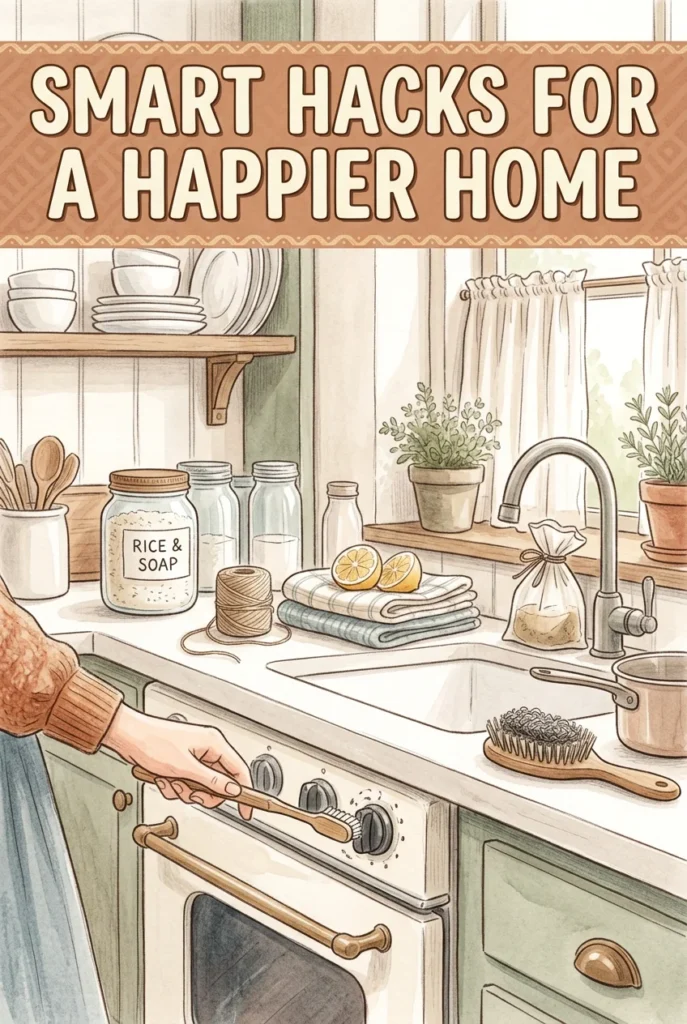
A practical, no-fuss collection of small cleaning shortcuts you can try with items many people already keep at home.
Cleaning doesn’t usually fail because you “don’t know how.” It fails because it feels bigger than the time and energy you have.
The good news: a few simple tools and tiny technique shifts can remove the most annoying parts of the job—odors, stuck-on grime, tight corners, and that “where do I even start?” feeling.
Why These Simple Hacks Matter
A clean home isn’t about perfection. It’s about making day-to-day life easier: cooking in a fresher kitchen, finding what you need faster, and preventing small messes from turning into bigger, harder-to-clean problems.
The ideas below focus on common household pain points—smelly sponges, gunky stove crevices, jars with residue, drains that trap food particles, and faucets that start to show rust. Each tip is meant to be quick to try, low-cost, and easy to repeat.
Quick Start: A Few Ground Rules for Easier Cleaning
Use these habits alongside the hacks
- Work small: tackle one annoying problem area at a time (like the stove knobs or one jar), not the entire room.
- Rinse and dry tools well: many “dirty tool” issues come from moisture left behind.
- Give products time: soaking (even for an hour) often does more than scrubbing harder.
- Test first: if you’re unsure how a surface will react, try the method on a small, hidden spot.
- Keep it simple: these tips are designed to reduce effort, not add complicated steps.
Easy Home Cleaning Tips and Hacks
1) Refresh a Smelly Scouring Pad with Coca Cola
If your sponge or scouring pad has picked up an unpleasant smell, a soak can help “reset” it before you decide to replace it.
How to do it
- Pour some Coca Cola over the sponge or scouring pad.
- Let it soak for about an hour (or so).
- Wash it with soap and hot water.
- Rinse thoroughly so no residue is left behind.
This is a simple refresh method for those times when the tool still has life left in it—just not the smell.
2) Make a DIY Grill Scouring Pad
Grills can be tough to scrub, especially when you want something that grips the grates well. This DIY version is designed to make the sponge more effective for the job.
How to do it
- Take a regular sponge and cut several slits into it.
- Cut pieces of Scotch-Brite so they match the slits you made.
- Glue the Scotch-Brite pieces into place.
- Let it dry fully before using.
Once it’s dry, you’ll have a more grill-focused scouring pad that can make the cleaning feel less frustrating.
3) Use Toothpaste to Freshen Up Knives
Some foods—like onions—can leave a stubborn odor on knives. If the smell lingers after regular washing, toothpaste can help.
How to do it
- Wash the knife with toothpaste.
- Rinse well and dry.
Toothpaste is designed to eliminate bad breath, and the same idea can help with removing unpleasant food odors from a knife.
4) Clean Stove Crevices with a Toothbrush
Stoves collect grime in tight corners, seams, and around knobs. Those little spaces are often what makes the whole stove feel “never clean,” even after you wipe it down.
How to do it
- Put a bit of soap on a toothbrush.
- Scrub the dirty creases, corners, and the area around the knobs.
- Wipe away loosened residue and rinse as needed.
A toothbrush gives you control and reach—especially in places a sponge can’t get into properly.
5) Pull Food Particles from a Drain with a Zip Tie
A sink drain that traps food is unpleasant and can be hard to deal with using only water flow. A zip tie can act as a simple “grabber” for debris.
How to do it
- Take a zip tie and cut tiny slits into it.
- Insert it into the drain and move it up and down.
- The slits help grip food particles so you can pull them out.
It’s a straightforward method when you want a quick mechanical way to remove the bits that are stuck.
6) Clean a Jar with Rice, Water, and Dish Soap
Jars can be awkward to clean when food residue sticks to the inside—especially if the opening is narrow or you can’t reach the bottom comfortably.
How to do it
- Add a cup of uncooked rice to the jar.
- Add a little water and some dish soap.
- Close the lid tightly.
- Shake vigorously to loosen stuck-on food.
- Rinse the jar clean.
This approach is especially handy for jars where residue clings stubbornly. It’s also a great method for peanut butter jars.
7) Make a Natural Orange Air Freshener
If you want a room to smell citrusy for the day, you can turn a fresh orange into a simple, natural air freshener.
How to do it
- Take a fresh orange.
- Slice off the top and bore a hole in the middle.
- Insert a fork to loosen up the juice inside the orange.
- Pour a little white vinegar into the orange.
- Insert a spray top and use it as a room freshener for the day.
For best results, use a very juicy orange. This is a short-term freshening trick—perfect when you want a quick lift without overthinking it.
8) Improve Rusty Faucets with Coca Cola
Coca Cola is widely known in many homes as a cleaning agent that can help with rust. If your faucets are starting to rust, this soak method is a simple one to try.
How to do it
- Pour some Coca Cola into a plastic bag.
- Tie the bag onto the faucet so the area can soak.
- Leave it overnight.
After soaking, you should see some improvements. Rinse and wipe the faucet afterward so it’s clean and ready to use.
9) Create a DIY Dusting Tool with a Clothes Rack and Pantyhose
Tight spaces—like corners of sofas and narrow gaps—are where dust likes to hide. This simple tool helps you reach areas that are challenging to access.
How to do it
- Take a clothes rack.
- Cut off the foot of a pantyhose.
- Slip the pantyhose foot over the rack.
- Use it to dust and clean tight areas, including sofa corners.
It’s an easy way to turn an everyday item into a reach-and-grab dusting helper.
10) Protect Your Hands: Pair Steel Wool with a Hairbrush Handle
Steel wool is useful in many kitchens, but holding it directly can be unpleasant. It can cut your fingers or even damage your fingernails. A simple handle makes it easier to control.
How to do it
- Take a clean (or new) hairbrush.
- Insert the brush into the steel wool.
- Hold the brush handle while you scour pots and pans.
This gives you a more comfortable grip while still getting the scrubbing power of the steel wool.
Extra Tips to Get the Best Results (Without Making It Complicated)
- Rinse thoroughly after any soak: whether it’s a sponge or a faucet, a good rinse helps finish the job.
- Let DIY tools dry fully: especially anything glued (like the grill pad) so it holds up during use.
- Use the right tool for the right spot: toothbrushes for crevices, jar-shaking for stuck residue, and a zip tie for drain particles.
- Keep a small “detail cleaning” kit: a spare toothbrush, a few zip ties, and dish soap can handle a surprising number of quick fixes.
Closing Thought
None of these ideas require a full-house deep clean. They’re small, targeted fixes for the little problems that make your home feel messier than it is.
If you found these tips helpful, feel free to comment and let me know. And if you have a cleaning tip of your own, share it too.