
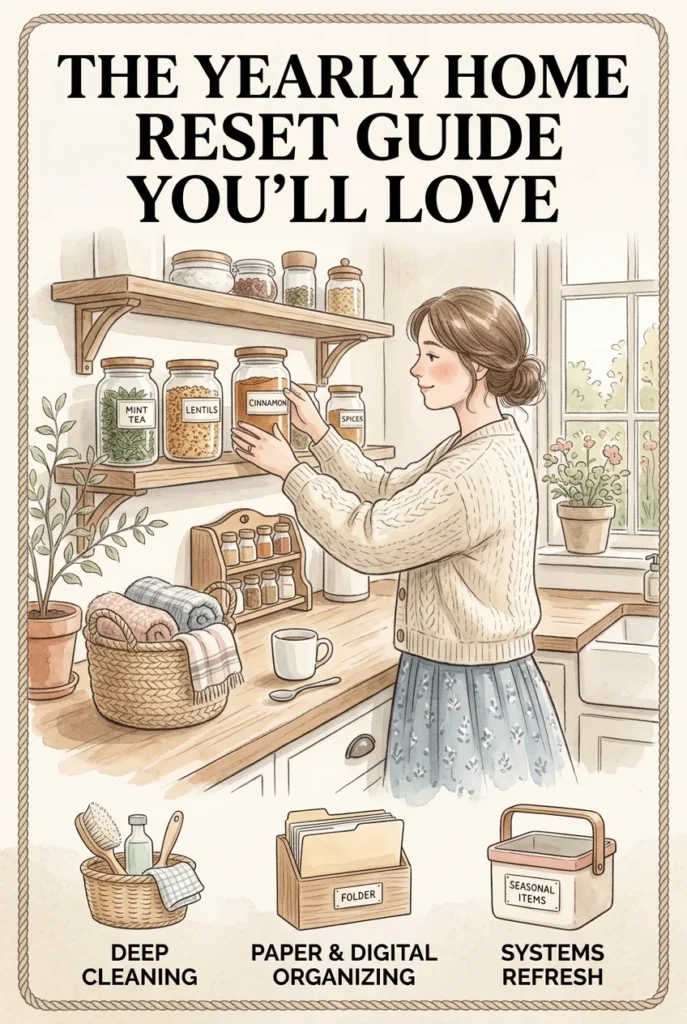
If your home feels “fine” but not quite easy, this is for you.
A yearly home reset is the missing link between everyday tidying and true peace of mind. In a single focused season (often at the start of the year, but any time works), you clear the clutter that quietly builds up, clean what rarely gets touched, and update the systems that run your household.
Think of it as spring cleaning—but deeper and more strategic. You’re not just making things look better. You’re making the home function better, so daily life takes less effort and creates less stress.
What a Yearly Home Reset Really Does (and Why It Matters)
Over time, every home accumulates “invisible friction”: overfilled drawers, expired products, neglected corners, paperwork piles, and routines that no longer fit your life. That friction costs you time and mental energy.
A yearly reset helps you:
- Reduce decision fatigue by owning less and organizing what remains.
- Create healthier spaces by removing dust and buildup from hidden areas.
- Stop scrambling for essentials, documents, and supplies.
- Rebuild household rhythms that match your current schedule and needs.
- Improve safety and maintenance with simple annual checks.
The goal is not perfection. It’s a home that supports you—calmly, reliably, and with fewer “little emergencies.”
How to Use This Guide
Work through the steps in order or pick the section that solves your biggest pain point first. Many people spread this across a weekend or a few short sessions over a month. The key is to stay room-by-room and category-by-category so you finish what you start.
1) Declutter Room by Room
Why it matters
Clutter isn’t only physical. It’s postponed decisions, visual noise, and low-level stress. A yearly reset clears it out before it multiplies—and makes your home easier to maintain all year.
How to do it
Choose one room at a time and use a simple sorting method:
- Keep
- Donate
- Toss
Use three boxes or bags. Start with the easiest, most visible zones (surfaces, floors, open shelves) and then move into drawers, cabinets, and closets.
What to be firm about
- Clothes you didn’t wear in the past year.
- Expired products (bathroom, pantry, medicine cabinet).
- Kitchen gadgets you never reach for.
- Duplicates that don’t serve a real purpose.
A question that makes decisions faster
“Would I buy this again today?” If the answer is no, it’s usually a sign the item doesn’t deserve valuable storage space.
Result
Rooms feel lighter, breathing space returns, and the items you truly use become easier to access and enjoy.
2) Deep Clean the Hidden Spots
Why it matters
The places you rarely notice often collect the most dust, grime, and allergens. A yearly deep clean improves comfort and freshness—and it prevents neglected areas from becoming “big jobs” later.
Deep-clean checklist
- Behind and under large furniture.
- Baseboards, light switches, and door handles.
- Window sills, blinds, and ceiling fans.
- Inside the oven and fridge, plus behind major appliances.
Make it sustainable
Create a “deep clean once a year” list and rotate through these areas every January so nothing piles up. The reset is powerful because it’s planned—not panic-driven.
Result
A cleaner, healthier environment and a noticeable “fresh house” feeling that lasts.
3) Reset Paper and Digital Clutter
Why it matters
Paperwork and digital mess create a specific kind of stress: the fear you can’t find what you need when you need it. A yearly reset gives you a simple, reliable system for both physical and digital information.
Paper reset
Set up two temporary containers:
- To file
- To shred
Then work through old bills, outdated statements, duplicates, and expired coupons. Gather warranties and important documents into one clearly labeled folder or box so they live in a single home.
Digital reset
- Clear your desktop.
- Back up photos.
- Delete old downloads.
- Organize email into folders.
Pro tip for peace of mind
Use cloud storage or an external drive. A clean inbox and tidy file system reduce daily friction more than most people expect.
Result
No more frantic searching for paperwork, receipts, or files. You’ll know where things are—and you’ll trust your system.
4) Refresh the Systems That Run Your Household
Why it matters
A yearly reset isn’t only about cleaning. It’s about updating how your home operates so it fits your current lifestyle. A routine that worked last year might not work now—and that mismatch creates constant catch-up.
Systems to review and refresh
- Cleaning schedule: Does it match your actual week, or an ideal week?
- Meal planning: Is your method simple enough to repeat consistently?
- Budget and bills: Are your trackers easy to maintain?
- Grocery routines: Are you shopping with a plan or re-buying the same forgotten items?
- Pantry and storage labels: Can anyone in the home put things away correctly?
Mini reset that pays off daily
Label pantry jars and storage bins so the “right home” for items is obvious. Clear labels reduce clutter because items stop migrating into random spaces.
Result
Your home starts working for you instead of against you—because good systems remove repeated decisions.
5) Restock Essentials
Why it matters
Running out of basics disrupts household rhythm and creates last-minute errands. A yearly check ensures the essentials are in place so your home feels prepared and steady.
What to check
- Cleaning supplies, sponges, and trash bags.
- Toiletries and personal care items.
- First aid kit (check expiration dates).
- Batteries, light bulbs, and candles.
How to do it without overbuying
Do a quick inventory first, then restock what’s low. Consider creating a yearly “restock box” in January so you don’t scramble mid-year when something runs out at the worst possible time.
Result
A home that feels calm and capable—because the basics are handled.
6) Tackle Seasonal Storage
Why it matters
Closets, attics, and storage rooms easily become clutter traps. A yearly reset keeps seasonal items organized so transitions are smooth instead of stressful.
How to do it
- Rotate seasonal clothes and store off-season items neatly.
- Store winter coats properly in breathable garment bags.
- Pack away summer items when the season ends (and vice versa).
- Review holiday bins: repair broken décor and donate what you no longer use.
- Label every storage bin clearly with its contents.
Pro tip
Create a “seasonal rotation calendar” so you don’t forget what you own or where it’s stored. The goal is quick swaps, not treasure hunts.
Result
Less digging, more streamlined seasonal changes, and storage areas that stay functional.
7) Do a Safety and Maintenance Check
Why it matters
Your home should protect you. A simple yearly walkthrough prevents emergencies and helps you catch small problems before they become expensive or dangerous.
Yearly safety checklist
- Replace smoke detector and carbon monoxide detector batteries.
- Check fire extinguisher expiration dates.
- Test windows and locks for security.
- Schedule HVAC filter changes and chimney/vent cleaning.
Extra walkthrough
Walk through your home like a guest seeing it for the first time. Notice loose steps, cracked tiles, sticky doors, and small leaks. Add repairs to a running list so they don’t linger for another year.
Result
Peace of mind—because you’ve confirmed your home is safer, more secure, and better maintained.
8) Refresh Décor and “Energy” (Without Redecorating)
Why it matters
Small visual updates can create a strong sense of renewal without spending much. This part of the reset is about restoring a home’s “fresh start” feeling with simple, practical changes.
Easy refresh ideas
- Swap cushion covers or throws.
- Add plants or fresh flowers.
- Rearrange furniture to improve flow.
- Change a lampshade or hang new art prints.
Fastest win
Declutter visible surfaces—kitchen counters, entry tables, nightstands. Clearing these hotspots instantly makes a room feel lighter and more intentional.
Result
Your home feels renewed and welcoming—without a full makeover.
9) Reevaluate How You Use Your Spaces
Why it matters
Your needs change, and your home should adapt. Spaces that once worked can become clutter magnets when they no longer match your current season of life.
Questions to ask
- Do you need a dedicated work-from-home zone now?
- Is the playroom still used, or would a reading nook serve better?
- Does the guest room function year-round, or mostly collect overflow?
Action step
Choose one space to repurpose so it supports how you live now. The reset doesn’t require big purchases—often it’s about removing what doesn’t belong and re-assigning the room’s purpose.
Result
A home that grows with you, instead of holding you to outdated routines.
10) Create a Yearly Home Binder (Your “Home User Manual”)
Why it matters
One reliable place for household information keeps life simple. When details are scattered, everything feels harder than it needs to be.
What to include
- Home maintenance checklist.
- Cleaning schedule.
- Budget and bill tracker.
- Emergency contacts and warranties.
- Seasonal to-do lists.
Pro tip
Update the binder every January. Over time, it becomes