
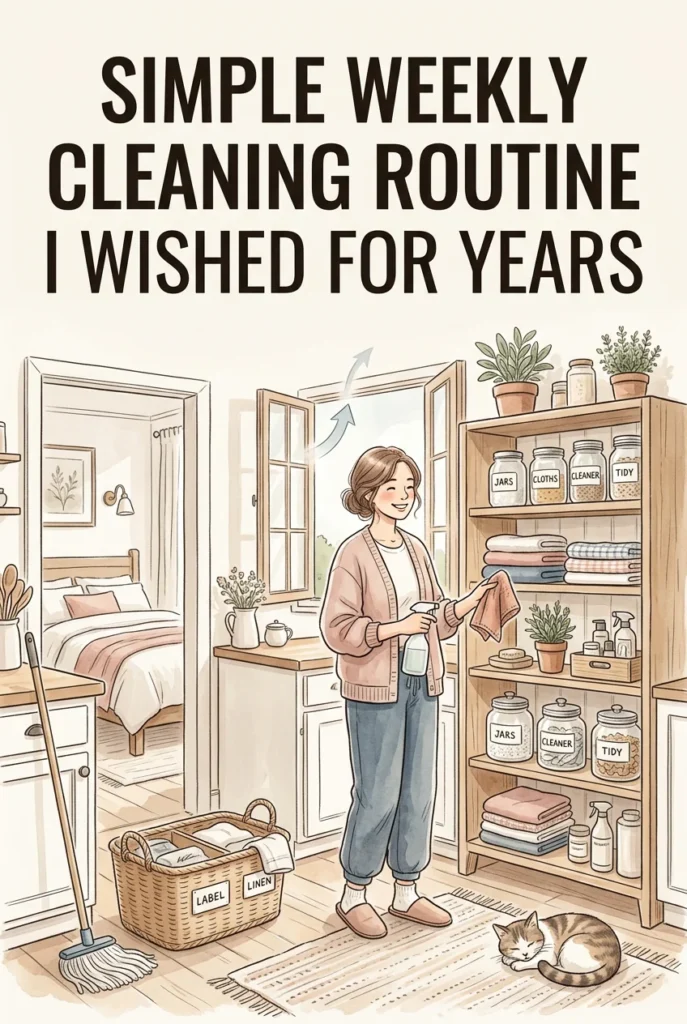
The Weekly Cleaning Routine That Keeps a Home Consistently Clean (Without a Daily Schedule)
A practical, repeatable rhythm for weekly cleaning—built to feel manageable, not punishing.
A home doesn’t usually get messy because you “don’t clean.” It gets messy because small resets don’t happen, clutter migrates, and cleaning becomes a single overwhelming event. When that happens, you’re not just cleaning dirt—you’re also catching up on decisions you postponed all week: where things go, what to keep, what needs washing, and what’s been quietly piling up.
This is the weekly cleaning routine I wish I’d started years ago: simple, structured, and realistic for real life—no rigid daily checklist required. It’s the kind of routine you can repeat even when you’re tired, busy, or not in the mood, because it relies on sequence, not motivation.
The goal is consistency, not intensity. A weekly reset that you can actually repeat will outperform an ambitious plan you only do once a month (and dread the whole time). When your baseline is “pretty good most days,” everything feels lighter: cooking, hosting, getting ready in the morning, and even resting.
Why This Routine Matters (More Than a Sparkling Floor)
A weekly routine works best when it reduces decision fatigue. You’re not waking up wondering what to do first. You’re following the same sequence each week, which makes the process faster, calmer, and easier to sustain. When the order is familiar, you stop negotiating with yourself. You simply begin.
Just as importantly, this approach keeps “deep cleaning” from turning into “undoing two weeks of piles.” The goal is a home that looks well-cared-for most days, with one consistent reset that brings everything back into order.
Weekly cleaning also protects your time. Instead of spending small, random bursts of energy worrying about what needs doing, you concentrate the effort into one predictable block. You don’t have to be “on” every day. You just have to show up once a week and follow the steps.
And while a clean home looks nice, the bigger payoff is how it feels: less background stress, fewer frantic searches for lost items, and a space that supports you instead of silently demanding attention.
The Foundational Rules That Make Weekly Cleaning Easier
Before “cleaning day” even starts, a few non-negotiables keep the house in flow. These aren’t about perfection; they’re about preventing the kind of chaos that makes weekly cleaning feel impossible.
Think of these as guardrails. They don’t require a daily schedule, but they do create a basic rhythm that stops mess from compounding. If you adopt even two or three of these, cleaning day will feel dramatically lighter.
1) Clear the sink the night before
I always wash the previous day’s dishes before cleaning day. The difference is immediate: starting with a clear sink makes the kitchen usable while you clean, and it keeps you from juggling pots and baseboards at the same time.
A clear sink also creates a psychological “starting line.” You begin the day already ahead, not already behind. If you have a dishwasher, run it at night so you can unload first thing in the morning and keep counters open for wiping.
2) Clean tools as you use them
When I use the blender, grater, or knives, I wash and dry them right away. It takes minutes in the moment and saves a surprising amount of time later. A pile of dirty tools can derail momentum fast.
This rule is especially helpful with anything that’s annoying to scrub once it dries—mixing bowls, oily pans, cutting boards, and sticky utensils. Quick washing prevents crust and keeps your kitchen from feeling like a second job.
3) Make the bed before you do anything else
Making the bed is a quick win that sets the tone for the day. Even if the rest of the house is mid-reset, one orderly surface signals that the day is moving in the right direction.
It also makes your bedroom easier to clean later. If the bed is made, you can dust, vacuum, or straighten in minutes instead of navigating blankets and pillows.
4) Put items back where they belong—daily
Often, what we call “deep cleaning” is really “putting away.” Returning items to their homes as part of everyday living means cleaning day becomes about cleaning—not sorting.
If this feels hard, it usually means one of two things: the item doesn’t have a home, or the home is inconvenient. Creating obvious “homes” (a tray for keys, a bin for chargers, hooks for bags) reduces the friction that causes clutter migration.
5) Maintain an “overflow” storage space
Whether it’s a cupboard, closet, or a dedicated room, having a place to temporarily tuck overflow reduces visual clutter. Less visual noise makes rooms feel calmer, even before you’ve cleaned.
The key is that overflow storage should be temporary, not a black hole. If you use a closet or cabinet for this, give yourself a simple rule: once a month, you do a quick pass to either put things away properly, donate them, or discard them. That keeps the overflow space helpful rather than hidden chaos.
6) Keep furniture intentional and easy to maintain
I’ve found that fewer pieces make a big difference—less to dust, less to move, less to manage. I prefer bold, functional pieces that earn their place, like my canopy-style four-poster bed: it’s a statement on its own, and I don’t need lots of extra furniture to “finish” the room.
In practical terms, intentional furniture means fewer “catch surfaces” for clutter. When you don’t have five extra chairs, side tables, and decorative stands, you also don’t have five extra places where piles form. The room stays easier to reset because there’s less to reset.
My Weekly Cleaning Day Routine (3–4 Hours, With Breaks)
I treat cleaning day like a small ritual. It typically takes me around 3–4 hours, and I take short breaks in between. The point isn’t to rush; it’s to move through a consistent sequence so the whole home gets refreshed without taking the entire day.
This routine is designed for maintenance cleaning: the kind of cleaning that keeps a home consistently clean. If you’re starting from a very messy baseline, the first few weeks may take longer. That’s normal. Once your home reaches a steadier state, the same sequence becomes much faster because you’re maintaining rather than rescuing.
Before you start: a quick supply check (2 minutes)
It’s much easier to keep momentum when you don’t have to stop mid-room to hunt for a cloth or replace an empty spray bottle. Before I begin, I make sure I have the basics available:
- Microfiber cloths (at least a few)
- An all-purpose cleaner
- A bathroom cleaner
- Toilet bowl cleaner
- A duster (or a cloth for high areas)
- A broom or vacuum
- A mop and mop pads (or a bucket and solution)
- Trash bags
This doesn’t need to be fancy. The goal is simply to avoid interrupting the flow once you start moving.
Step 1: Start early
I begin as early as I can. I open the windows and let fresh air move through the house. If I delay, the day drags and the work feels heavier. Starting early uses the energy I naturally have at the beginning of the day.
Fresh air also changes how a “clean” home feels. Even before you wipe a surface, ventilation helps reduce stale odours and makes the space feel more awake. If weather allows, I like to open windows in multiple rooms for a cross-breeze while I begin.
Step 2: Start the washer
I get laundry going right away so the machine works while I do. Ideally, laundry is already under control before cleaning day, but when it isn’t, starting a load at the beginning keeps things moving.
If possible, I keep laundry simple on cleaning day: one load that matters most (towels, bedding, or everyday clothes). That way I’m not switching loads every 45 minutes and constantly breaking focus. When the washer finishes, I move it along during a planned break so it doesn’t interrupt the cleaning rhythm.
Step 3: Clean top-to-bottom, room-by-room
For each room, I follow the same order. This matters: it prevents rework and keeps you from cleaning the same area twice.
“Room-by-room” doesn’t mean perfection in each room. It means a complete pass: dust, surfaces, floors, and a quick reset. When you finish a room, you can close the door or simply mentally check it off. That creates a satisfying sense of progress as the home improves in visible stages.
- Dust high areas first: ceilings, windows, and walls. I do this early while my arms still have energy. This includes fan blades, the tops of picture frames, and any ledges where dust settles unnoticed.
- Straighten, dust, and sanitise surfaces: tables, mirrors, shelves, picture frames, and any surface that becomes a “drop zone.” I focus on what you see and touch most: coffee tables, counters, remotes, handles, and bedside tables.
- Sweep last: only after dusting and tidying. That way, anything you’ve knocked down lands once, and you remove it once. If you vacuum, the same rule applies: floors are the final step in the room.
If you have pets, I find it helps to do a quick upholstery pass once a week: a fast vacuum of the sofa or a lint roller over pet-favourite spots. It’s not about making your home sterile; it’s about keeping fur and dust from building into a bigger job later.
Step 4: Mop everything at the end
Once every room is decluttered and swept, I mop the entire house in one final pass. Doing it all at once is faster and feels noticeably more satisfying than mopping room-by-room while dust and crumbs are still falling elsewhere.
Mopping at the end also lets you enjoy a clear “finish line.” The home has already been reset, and the final step is what makes everything feel truly fresh. If you have different floor types, you can still keep one pass by changing pads or adjusting your solution as needed—without changing the overall order.
Where breaks fit (and why they help)
I take short breaks on purpose. A quick pause to drink water, switch laundry, or sit down for five minutes keeps the routine sustainable. The key is to pause between stages, not in the middle of a task. For example, I’ll take a break after finishing two rooms, or right before starting floors, rather than stopping halfway through a bathroom.
Breaks also prevent the “all-or-nothing” mindset. You don’t need to power through nonstop to be effective. You just need to keep returning to the sequence until the cycle is complete.
Kitchen: The Extra Attention That Pays Off All Week
The kitchen affects how the whole home feels. When it’s under control, everything feels more manageable.
Because the kitchen is used constantly, small issues compound quickly: crumbs collect, grease builds, and one forgotten container can change the whole smell of the space. Weekly attention prevents the kitchen from turning into a bigger project that drains your energy.
What I focus on each week
- Stove knobs: they collect buildup quickly and are easy to forget. A quick wipe here makes the whole stove look cleaner without needing a full scrub every time.
- Fridge check: a quick refresh to avoid lingering odours and forgotten leftovers. I scan shelves, remove anything questionable, and wipe obvious drips before they harden.
- Pantry straighten: I like it to feel a little like a small store display—clear, visible, and easy to maintain. I don’t decant everything; I simply face items forward and group like with like so I can see what I have.
- Utensils and cookware: I reorganise just enough so nothing topples or gets jammed when I reach for it. This is less about “perfect organisation” and more about removing friction when cooking.
A simple weekly kitchen flow
To keep it manageable, I follow a basic order that mirrors the whole-house approach:
- Clear counters: put away groceries, mail, bottles, and anything that doesn’t belong.
- Wipe and sanitise: counters, backsplash, appliance fronts, and any handles you touch frequently.
- Sink reset: scrub the sink, rinse, and finish with a quick wipe around the faucet and drain area.
- Floors last: sweep thoroughly (especially around the stove and under table edges), then leave mopping for the end-of-house pass.
This sequence is simple, but it works because it targets the places that affect daily life most. A kitchen that’s easy to cook in stays cleaner naturally.
Bathroom: A Simple “Spray, Wait, Rinse” System
Bathrooms stay easier to maintain when you let products do the heavy lifting and you clean in a predictable order.
The biggest mistake I used to make was trying to scrub immediately. Letting the cleaner sit for a few minutes (often called “dwell time”) breaks down grime so you can wipe instead of fight. It’s one of the easiest ways to make weekly cleaning feel less punishing.
My weekly bathroom sequence
- Spray the shower and basin: I use a cleaner that breaks down grime, let it sit, then rinse with water. While it sits, I wipe the mirror and any quick surfaces.
- Toilet: I apply a proper toilet bowl cleaner and let it soak while I handle the rest of the bathroom. Then I brush and flush at the end so it finishes fresh.
- Future upgrade: I plan to start using a long-handled shower brush to reach corners more effectively.
Small weekly details that keep bathrooms looking “just cleaned”
- Faucets and handles: a quick wipe removes water spots and toothpaste residue.
- Base of the toilet: an easy place for dust and hair to gather; a fast pass makes a big visual difference.
- Bath mats and towels: swapping towels and shaking out mats keeps the bathroom feeling fresh without needing more products.
If you can, keep a dedicated bathroom cloth or small set of cloths for the bathroom. It simplifies the routine and reduces the mental friction of “which cloth did I use where?”
After-Clean Ritual: Close the Loop
Cleaning is about more than the house. It’s also about how you feel in it.
When you end the routine with a small reward, the habit becomes easier to repeat. The point isn’t to “earn” rest; it’s to mark the reset as complete. That completion is what makes a weekly rhythm feel stable instead of endless.
After I finish, I usually:
- Take a long shower
- Do a little self-care (wash my hair, trim my nails, or do a face scrub)
- Rest—sometimes even a nap
That final step matters because it turns cleaning into a completed cycle: effort, reset, then recovery.
I also like to do one quick visual pass right after cleaning: lights off in rooms I’m done with, cushions straightened, and a final emptying of the “tidy basket” if I used one. It takes less than two minutes and makes the home feel intentionally finished rather than “cleaned in a hurry.”
50 Practical Tips to Make Weekly Cleaning Easier
Use these as building blocks. You don’t need to do all 50. Choose the few that remove friction in your home and repeat them until they become automatic.
- 1) Use the mantra “Don’t put it down, put it away.” Ten seconds now prevents hours of sorting later, especially with daily items like keys, chargers, shoes, and mail.
- 2) Store cleaning tools where you use them. Keep supplies in zones so you can act immediately—bathroom cleaner in the bathroom, microfiber cloths in the kitchen, and a small brush where crumbs happen.
- 3) Keep a tidy basket for quick resets. Collect out-of-place items as you move, then put them away in one round. This stops you from ping-ponging between rooms.
- 4) Wear an apron with pockets (or carry a small caddy). Fewer trips means fewer interruptions, and interruptions are where motivation goes to die.
- 5) Decant frequently used products into labelled containers. It improves visibility and makes replenishing simpler, especially for staples you reach for constantly.
- 6) Play a podcast or playlist. A consistent soundtrack can help you keep pace and makes the routine feel like a familiar ritual.
- 7) Pre-treat stains immediately. The sooner you treat them, the less work later, and the less likely the stain becomes permanent.
- 8) Keep a “five-minute fix” list. Small resets between cleaning days prevent backlog—think wiping a counter, clearing a chair, or emptying a small bin.
- 9) Empty bins before cleaning day. Start fresh instead of working around overflow. It also prevents odours from lingering after you’ve cleaned everything else.
- 10) Choose one reliable all-purpose cleaner. Fewer bottles reduces stopping and switching, which helps the routine stay simple and repeatable.
- 11) Use a portable caddy. Move supplies with you so you don’t break momentum or forget what you meant to do next.
- 12) Keep microfiber cloths in multiple rooms. Quick wipes become effortless when you don’t have to go