
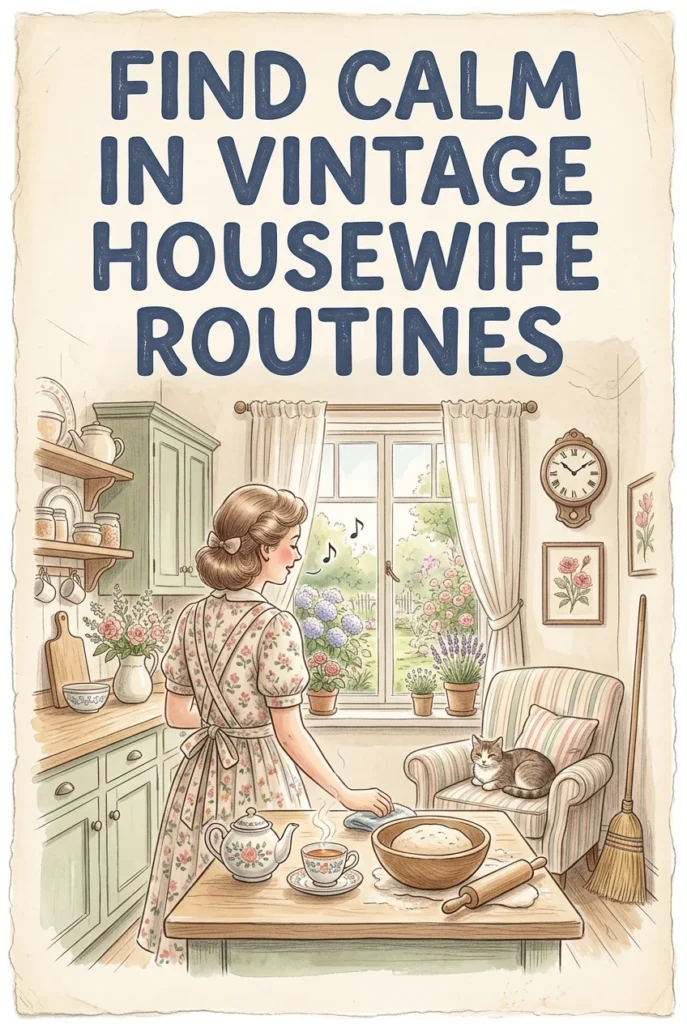
A clear, hour-by-hour look at 1940s–1950s homemaking rhythms—plus practical ways to adapt the best parts to modern life.
Before robot vacuums, microwaves, and online grocery delivery, many households ran on something simpler: a steady routine.
In the 1940s and 1950s, the “vintage housewife” kept the home functioning through structure, repetition, and a strong sense of daily rhythm. The day wasn’t only about cleaning and cooking; it was also about creating a warm, welcoming, efficient environment for the family.
Times have changed, but the underlying ideas still matter: a few consistent resets, planned tasks, and intentional meal habits can make home life feel calmer and more manageable.
Why a Vintage Routine Still Matters
It’s easy for home tasks to expand until they fill every spare moment. The vintage approach worked because it reduced decision fatigue: fewer “What should I do first?” moments, and more “Here’s what happens next.”
While you may not want (or need) to replicate every detail, the core value is timeless: a repeatable routine can keep a home organized without turning every day into a marathon cleaning session.
Morning: A Fresh Start
Vintage homemakers treated the morning as the foundation of the day. The first hours were about setting the household in motion and creating a sense of order early.
Rise early
Many housewives got up before the rest of the family. That quiet lead time made it easier to prepare breakfast, start laundry, and handle a few quick chores without interruptions.
Personal grooming
A common expectation in that era was to get dressed neatly—hair styled, makeup applied—before beginning housework. The aim was to feel “ready” for the day’s responsibilities, not to treat home life as something done in pajamas between other tasks.
Prepare breakfast
Breakfast was typically hearty and made at home—often eggs, toast, oatmeal, or pancakes. The point wasn’t complexity; it was consistency and nourishment before work or school.
Tidy the kitchen immediately
After breakfast, the kitchen was reset right away. Dishes were washed and put away before moving on. This one habit prevented the day from accumulating mess, and it kept the kitchen usable for lunch prep later.
Start the day’s laundry
Laundry often began early, sometimes with clothes set soaking in the morning. Washing took more time and effort than it does today, so getting it started was a practical choice.
Late Morning: Core Housekeeping
Once the family left for school or work, many homemakers shifted into the main block of cleaning and organizing. The focus was not on perfection in one day, but on steady maintenance across the week.
Make beds and air rooms
Bedrooms were opened up for fresh air. Beds were made neatly, clutter was cleared, and the home was “reset” so it looked and felt orderly.
A daily cleaning focus (day-by-day rhythm)
Rather than deep-cleaning everything at once, each day often had a designated emphasis:
- Monday: laundry
- Tuesday: ironing
- Wednesday: mending
- Thursday: cleaning bedrooms
- Friday: polishing and deep-cleaning
- Saturday: baking and marketing (shopping)
This kind of rotation created predictability. It also reduced the feeling that every room needed attention every day.
Dusting and sweeping
Common living areas were kept presentable through quick, frequent touch-ups—surfaces dusted, floors swept, and items returned to their places. These smaller passes kept the home from slipping into chaos.
Quick bathroom tidy
Bathrooms were refreshed with brief maintenance: sinks and mirrors wiped, towels straightened or replaced, and floors swept. It wasn’t a full scrub every time—just enough to keep things under control.
Midday: Meal Prep and Family Care
The middle of the day tended to revolve around food and household rhythm. Even when the tasks were ordinary, the structure made them easier to manage.
Prepare lunch
Lunch was often cooked from scratch and served to family members who came home midday—something that was more common in earlier decades. This required planning, but it also meant the day had a built-in pause and reset point.
Check the pantry and plan meals
Meal planning didn’t have to be elaborate. Many homemakers simply inventoried what they had and decided what to cook for the next day or two, sometimes building a shopping list as they went.
Errands or shopping trips
Shopping often happened daily or several times a week. With limited refrigeration and freezer space, many households relied on more frequent market, butcher, or bakery trips rather than large weekly grocery hauls.
Children’s care
If children were home, time might be spent checking homework, doing crafts, or teaching basic chores and skills. The goal was to keep the household running while also passing on practical know-how.
Afternoon: Projects and Polishing
Afternoons were commonly used for the tasks that weren’t urgent in the morning but still mattered for the household’s long-term smooth operation.
Ironing and mending
Clothes were ironed and small repairs were made by hand. These habits helped wardrobes last longer and kept everyone looking neat—especially important when clothing was not treated as disposable.
Special cleaning projects
Some tasks were saved for this quieter window: polishing silver, cleaning rugs, or reorganizing cupboards. By assigning these jobs a place in the day, they were less likely to be postponed indefinitely.
Creative homemaking
Many housewives used part of the afternoon for sewing, baking, or small home décor projects. These weren’t always “extra”; they were often practical ways to support the household and create a pleasant home environment.
Evening: Creating a Welcoming Home
As late afternoon arrived, attention shifted to the family’s return. The home’s atmosphere mattered, and the evening routine centered on food, order, and connection.
Start dinner
Meals were prepared from scratch—meat roasted, vegetables peeled, desserts baked. Dinner was usually treated as the primary meal, so it received the most planning and effort.
Set the table
The table was laid neatly with cutlery and plates, often with a simple centerpiece such as flowers or a fruit bowl. This wasn’t just decoration; it signaled that the family meal was important and intentional.
Freshen up
It was common for a housewife to change into a clean dress, touch up hair and makeup, and add finishing details—sometimes an apron or pearls—before the family meal. In that cultural context, it was framed as a gesture of respect and care.
Family dinner
Mealtime was central. Everyone gathered to eat, share the day, and connect. The routine created a predictable anchor point that helped the household feel steady and cohesive.
Night: Reset for Tomorrow
The day didn’t end when dinner was over. A few closing tasks helped ensure the next morning started smoothly.
Kitchen cleanup
Dishes were washed, counters wiped, and leftovers stored. Resetting the kitchen at night prevented waking up to yesterday’s mess and made breakfast prep easier.
Evening tidy
Living spaces were returned to order: items put away, blankets folded, toys picked up. This kind of “closing shift” kept clutter from becoming a bigger project later.
Finish the laundry loop
Clothes that had been soaking or washed earlier were hung to dry or folded. Laundry wasn’t just “washed”; it was moved through a full cycle so it didn’t stall in piles.
Quiet family time
Evenings often ended with something simple and calm: reading, listening to the radio, or enjoying dessert together. The day’s pace eased down instead of stopping abruptly.
Tips You Can Borrow for a Modern Home (Without Living Like It’s 1952)
You don’t need to copy a vintage routine exactly for it to be useful. The most transferable pieces are the ones that reduce stress and prevent buildup.
- Use “daily resets” to prevent backlog. A 5–15 minute kitchen reset after meals can save hours later.
- Assign themes to days of the week. Even a loose plan (laundry day, admin day, errand day) reduces constant decision-making.
- Keep meals simple but planned. A short list of repeatable breakfasts and dinners makes grocery shopping easier.
- Close the day with a quick tidy. Picking up the main living area at night makes mornings noticeably calmer.
- Batch the tasks that create friction. Put “mending/repairs,” “paperwork,” or “deep clean one zone” into a recurring slot.
- Let consistency beat intensity. A steady routine works better than occasional, exhausting cleaning bursts.
Lessons We Can Learn Today
Even if your life looks nothing like a mid-century household, the underlying principles still apply.
Routines simplify life
When tasks have a predictable place in the week, you spend less energy negotiating with yourself about when to do them. Structure creates breathing room.
Small resets matter
Daily dishwashing, quick bathroom wipes, and short tidying sessions prevent the kind of mess that feels overwhelming. Maintenance is usually easier than recovery.
Homemaking is an act of care
The effort to create order, beauty, and nourishment gave families stability and comfort. Today, that might look like a tidy entryway, a planned dinner, or a calm bedtime routine—different details, same intent.
Consistency is key
By sticking to a rhythm, vintage housewives made sure nothing was neglected for too long. The win wasn’t perfection; it was reliability.
How to Adapt the Vintage Rhythm to Your Own Routine
If you want the benefits without the pressure, start small and build momentum.
Step 1: Choose one “anchor habit” for mornings
Pick a single action that signals the day has started—making the bed, starting a laundry load, or resetting the kitchen. Keep it realistic and repeatable.
Step 2: Create a simple weekly task map
Borrow the idea of designated focus days. You can keep the traditional pattern (laundry, ironing, mending, bedrooms, polishing/deep clean, baking/marketing), or translate it into modern equivalents like “paperwork,” “declutter,” or “restock.”