
Split Leaf Philodendron Care Guide
The Split Leaf Philodendron (Thaumatophyllum bipinnatifidum) is a stunning tropical houseplant known for its deeply divided, glossy green foliage. Often confused with the Monstera deliciosa, this plant is actually a completely different species that can bring a dramatic, jungle-like atmosphere to your home. With proper care, these plants can thrive indoors for many years, growing into impressive specimens. This comprehensive care guide will help you understand everything you need to know about caring for your Split Leaf Philodendron.
Understanding the Split Leaf Philodendron
The Split Leaf Philodendron is a tropical evergreen shrub native to South America, particularly Brazil, Argentina, Bolivia, and Paraguay. It belongs to the Araceae family and was previously classified as Philodendron bipinnatifidum. This plant can grow quite large in its natural habitat, reaching heights of 10 feet (3m) and spreading up to 15 feet (4.5m) wide.
Indoors, it typically grows to about 6 feet (1.8m) tall and wide. Its most distinctive feature is its deeply lobed leaves that can grow up to 3 feet (1m) long. Unlike the Monstera deliciosa (often incorrectly sold as Split Leaf Philodendron), the splits in this plant’s leaves run from the edges inward, and it grows with a self-supporting trunk rather than climbing.
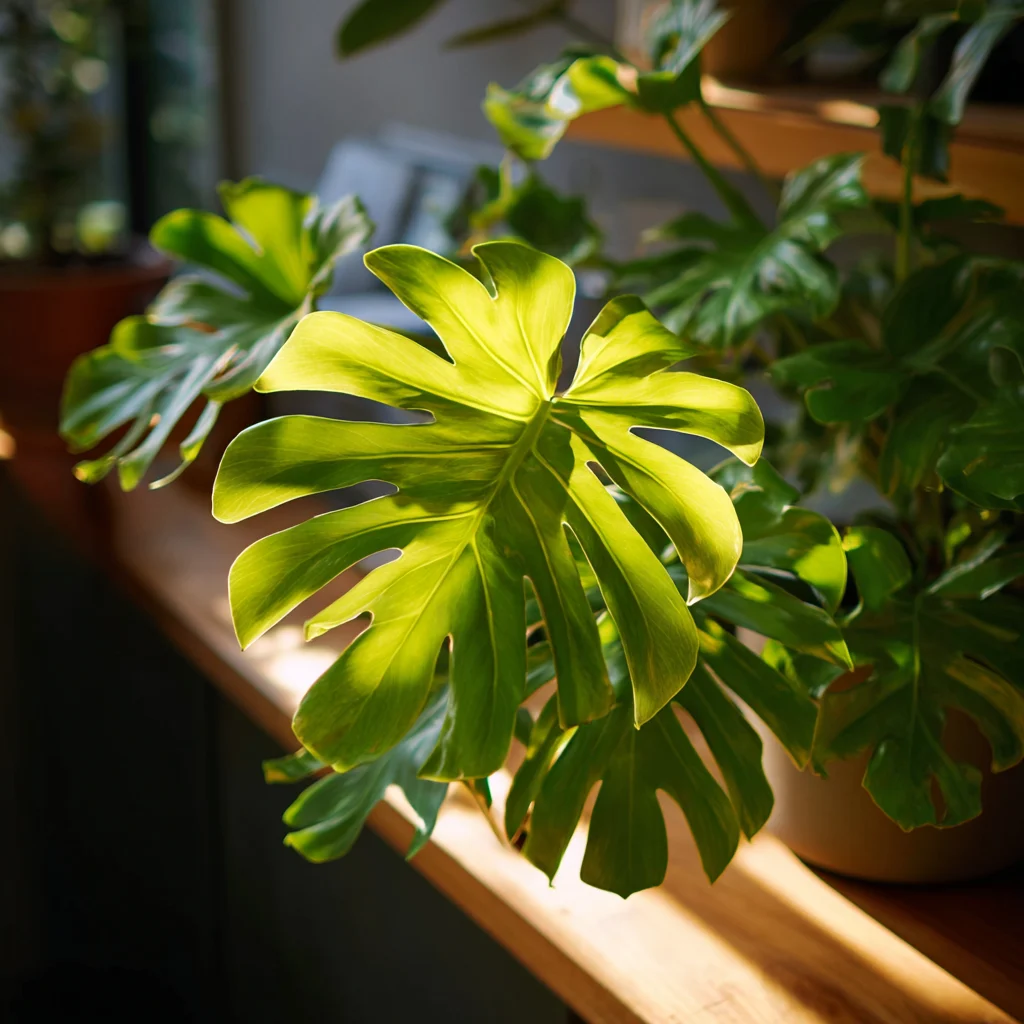
Common Varieties
- Philodendron Xanadu (‘Winterbourn’) – A more compact cultivar reaching only 3-4 feet
- ‘Gold Satin’ – Features bright yellow leaves
- ‘Little Crunchy’ – A dwarf variety with thick, lettuce-like foliage
- ‘Lime Fiddle’ – Displays attractive variegated patterns
Light Requirements
Split Leaf Philodendrons thrive in bright, indirect light. Place your plant within 3 feet of an east or south-facing window, but protect it from direct midday and afternoon sun, which can scorch the leaves. If your plant isn’t getting enough light, you might notice leggy growth or smaller leaves.
These plants can tolerate lower light conditions, but growth will be slower and the plant may become stretched as it searches for light. If you notice your plant leaning toward a light source, rotate it regularly to promote even growth.
Watering Needs
The Split Leaf Philodendron prefers consistently moist soil, but never soggy conditions. Water when the top 1-2 inches (2.5-5cm) of soil feels dry to the touch. Water thoroughly until it flows from the drainage holes, then empty any excess water from the saucer after an hour to prevent root rot.
During winter, reduce watering frequency as growth slows. Always check the soil moisture before watering rather than following a strict schedule, as environmental conditions can affect how quickly the soil dries out. Yellowing leaves often indicate overwatering, while brown, crispy edges suggest underwatering.
Soil and Potting
The ideal soil for a Split Leaf Philodendron is rich in nutrients but well-draining. A standard houseplant potting mix works well, or you can create your own by combining equal parts:
- Peat moss or coconut coir
- Perlite
- Standard potting soil
Choose a pot that’s 2-3 inches (5-7.5cm) larger than the root ball with adequate drainage holes. Terracotta pots work well as they allow the soil to breathe, but any container with drainage will suffice. Repot your plant annually in spring when it’s actively growing, moving up one pot size if the roots appear crowded.
Temperature and Humidity
Split Leaf Philodendrons prefer average household temperatures between 65-80°F (18-27°C). They cannot tolerate temperatures below 60°F (16°C) and should be kept away from cold drafts, air conditioning vents, and heating sources.
As tropical plants, they appreciate humidity levels of at least 40%. If your home is dry, especially in winter, consider these methods to increase humidity:
- Group plants together to create a microclimate
- Place the pot on a tray filled with pebbles and water
- Use a room humidifier
- Mist the leaves occasionally, but not excessively
Fertilizing Schedule
Split Leaf Philodendrons benefit from regular fertilization during the growing season (spring through fall). Apply a balanced liquid fertilizer (such as 10-10-10 or 20-20-20) monthly, diluted to half the recommended strength. Avoid fertilizing in winter when growth naturally slows.
If you repot your plant annually with fresh soil, you may not need to fertilize as frequently since new potting mix typically contains slow-release nutrients. Signs of nutrient deficiency include pale or yellowing leaves and stunted growth.
Pruning and Maintenance
Pruning isn’t essential for Split Leaf Philodendrons but can help maintain their shape and size. The best time to prune is in late winter or early spring before the active growing season begins. Use clean, sharp pruning shears to remove:
- Dead or damaged leaves
- Yellowing foliage
- Overgrown stems to control size
Always cut just above a node (the point where leaves emerge) to encourage new growth. Wipe the leaves occasionally with a damp cloth to remove dust and keep the foliage looking glossy and healthy.
Propagation Methods
There are several effective ways to propagate your Split Leaf Philodendron:
Stem Cuttings
Take a stem cutting with at least 2-3 nodes in spring. Remove lower leaves, let the cut end callus for a few hours, then plant in moist potting mix. Keep the soil consistently moist and place in bright, indirect light until roots develop (usually 4-6 weeks).
Division
When repotting, you can divide mature plants that have developed multiple growth points. Gently separate the root ball, ensuring each section has adequate roots and stems, then pot up individually.
Air Layering
For larger plants, make a small incision in a stem, wrap the area with damp sphagnum moss, and cover with plastic wrap. Once roots develop in the moss (after several weeks), cut below the rooted section and plant in fresh soil.
Common Problems and Solutions
Pest Issues
Split Leaf Philodendrons can occasionally attract common houseplant pests:
- Spider mites – Tiny pests that cause stippled, yellowing leaves and fine webbing. Treat with insecticidal soap or neem oil.
- Mealybugs – White, cottony insects that cluster in leaf joints. Remove with alcohol-dipped cotton swabs.
- Scale – Small, brown bumps on stems and leaves. Scrape off gently and treat with horticultural oil.
Regular inspection and cleaning of leaves can prevent serious infestations. Isolate affected plants immediately to prevent spread to other houseplants.
Disease Concerns
The most common diseases affecting Split Leaf Philodendrons are related to overwatering:
- Root rot – Caused by soggy soil conditions, resulting in yellowing leaves and mushy stems. Remove affected roots, repot in fresh soil, and adjust watering practices.
- Leaf spot – Brown or black spots on leaves, often from water sitting on foliage. Improve air circulation and avoid overhead watering.
- Bacterial blight – Wet-looking brown spots that spread quickly. Remove affected leaves and avoid wetting the foliage.
Growth Issues
If your plant isn’t thriving, check these common causes:
- Leggy growth – Usually indicates insufficient light. Move to a brighter location.
- Small leaves – May result from inadequate nutrition or light. Adjust fertilizing and lighting.
- Leaf discoloration – Yellow leaves often indicate overwatering; brown, crispy edges suggest underwatering or low humidity.
Toxicity Considerations
Split Leaf Philodendrons contain calcium oxalate crystals, which are toxic if ingested. Keep these plants away from children and pets, as chewing on the leaves or stems can cause irritation to the mouth, throat, and digestive system. Symptoms include drooling, vomiting, difficulty swallowing, and oral pain.
If you suspect ingestion, contact a medical professional, veterinarian, or poison control center immediately. Always wash your hands after handling the plant, especially before touching your face or eyes.
Displaying Your Split Leaf Philodendron
Due to their impressive size when mature, Split Leaf Philodendrons make stunning statement plants. Consider these display options:
- As a floor plant in a decorative pot in living rooms, offices, or entryways
- In bright bathrooms where they can benefit from the higher humidity
- As a natural room divider when they reach larger sizes
- Paired with smaller plants to create a layered, tropical display
Rotate your plant quarterly to ensure even growth, as it will naturally grow toward light sources. Place a plant saucer underneath to protect floors and furniture from water damage.
Seasonal Care Adjustments
Your Split Leaf Philodendron’s needs will change throughout the year:
Spring and Summer
During the active growing season, provide:
- More frequent watering as soil dries more quickly
- Regular fertilization monthly
- Protection from intense summer sun
- Higher humidity if air conditioning is running
Fall and Winter
As growth slows in cooler months:
- Reduce watering frequency, allowing soil to dry more between waterings
- Stop fertilizing until spring
- Keep away from cold drafts and heating vents
- Monitor humidity levels and adjust as needed
Conclusion
The Split Leaf Philodendron is a rewarding houseplant that offers dramatic tropical foliage and relatively easy care. With proper light, consistent watering, and occasional maintenance, these plants can thrive for many years, becoming impressive specimens that transform your indoor space.
If you encounter persistent problems with your Split Leaf Philodendron despite following these care guidelines, consider consulting with a local plant specialist or horticulturist. They can provide personalized advice based on your specific growing conditions and help diagnose any unusual issues your plant may be experiencing.