
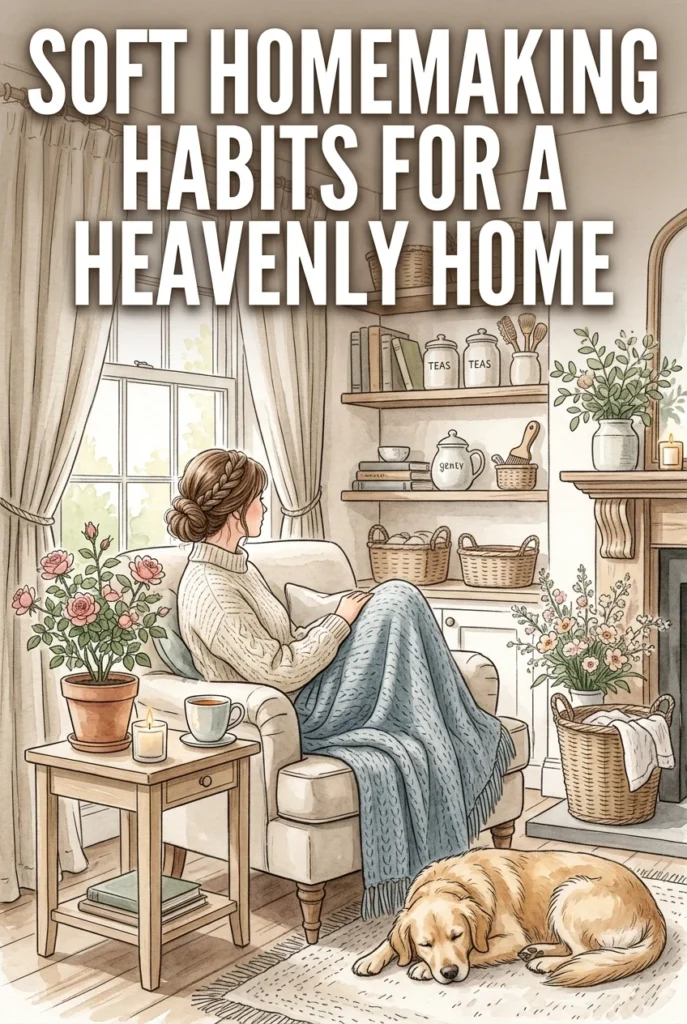
A calm, cared-for home doesn’t require perfection—it requires a few gentle, repeatable habits.
Your home can feel like a place that holds you up rather than a project that constantly asks more from you.
Soft homemaking is a practical approach to everyday home care that prioritises ease, comfort, and steady rhythms over performance or “doing it all.” It’s not about creating a picture-perfect space. It’s about shaping an environment that helps you breathe, reset, and move through the day with less friction.
Why it matters: the way a home looks is only one layer. The way a home feels—light, scent, sound, order, texture, and routine—directly affects your mood, energy, and capacity. Soft homemaking focuses on small choices that make daily living calmer, not harder.
What “Soft Homemaking” Really Means
Soft homemaking is the gentle, graceful art of tending to your space in a way that supports you emotionally as well as practically. You can light a candle and enjoy the mood, but you don’t need a dramatic transformation. This approach is built on simple rituals, kinder pacing, and realistic upkeep.
Think of it as creating cosy rhythms and tender routines that make your home feel like a welcoming exhale—especially on ordinary days.
1) Begin the Day With a Slow Awakening Ritual
Soft homemaking starts before any chore list. The first moments of your morning set the emotional temperature of your home.
How to make it work
Pour a warm drink, open a window, and give yourself a brief pause before you “do.” Even a few minutes of quiet helps your mind settle so you’re not starting the day in a rush.
Try a simple 3-step reset
Step 1: Let in fresh air (even briefly).
Step 2: Make a warm drink you genuinely enjoy.
Step 3: Sit or stand still long enough to feel your breathing slow.
A soft start can steady your nervous system, lift your mood, and bring a calmer energy into the home—one that says, “We can do today gently.”
2) Use Soft Lighting as Quiet Support
Lighting is one of the fastest ways to change how a room feels without changing the room itself.
What to focus on
Warm lamps, twinkle lights, and candles soften harsh corners and reduce the “busy” feeling of a space. Gentle light invites you to slow down, even when you’re doing practical tasks.
Make lighting do the heavy lifting
If you tend to feel overwhelmed by clutter or unfinished chores, try switching on warm, low lighting before you begin. It can turn folding laundry or clearing a countertop into something closer to a meditative act than a task you need to conquer.
3) Treat Chores Like Mini Rituals, Not Burdens
The work still gets done, but the experience of doing it changes when you bring intention into it.
Shift the internal script
Instead of “I have to do this,” aim for “I’m creating comfort.” This isn’t about romanticising labour; it’s about reducing resistance and rushing.
Make one small choice that softens the task
Put on music you like. Work at a calmer pace. Notice the sensory details: fresh sheets, warm water, clean surfaces, the feeling of a towel folded neatly. These cues help your brain register the outcome as care rather than pressure.
Soft homemaking doesn’t remove responsibility—it helps it feel more manageable.
4) Add Fresh Flowers (or a Foraged Touch)
A simple bouquet can change the mood of an entire room. It’s a small signal that the space is tended, not just lived in.
Keep it uncomplicated
Store-bought flowers work. A few stems from outside work too. The goal isn’t abundance; it’s a thoughtful touch that brings softness and a sense of quiet “cottage” comfort.
Where to place them for the biggest impact
Try a spot you naturally look at: the kitchen table, bedside, entryway, or near the sink. One arrangement is often enough to make a home feel cared for, even if everything else is in motion.
5) Keep One Cozy Corner Ready for You
Soft homemaking prioritises nourishment over constant productivity. A dedicated comfort spot makes that easier to practise.
Create a “default” place to land
Choose a chair, a blanket, and a small surface for a cup of tea or a book. Keep it simple and ready most days, not just when company is coming.
Why this helps in real life
When life feels loud, you don’t have to search for comfort—you can step into it. A prepared corner becomes a quiet reminder that rest belongs in the home too.
6) Bake Something Easy or Simmer a Simple Scent
Scent is powerful because it’s tied to emotion and memory. Soft homemaking uses that gently—without requiring complicated recipes.
Low-effort options that still feel special
You can bake if you enjoy it, but you can also keep it very simple: brew tea, warm something basic, or simmer cinnamon in water. These small scents help your home tell a calming story as you move through the day.
Make it part of your routine
Choose a time when your home often feels busiest—late afternoon, early evening, or after school/work hours. A familiar, comforting smell can become a cue that the day is shifting into a softer pace.
7) Choose Cleaning Tools That Are Pretty and Practical
Soft homemaking is partly about reducing friction. If your tools are unpleasant to use—or you avoid them because they feel messy or harsh—tidying becomes harder than it needs to be.
Make the everyday tools easy to reach
Consider glass spray bottles, soft cloths, a broom you don’t mind seeing in the corner, and basics that work well. When your tools feel nice in your hands, you’re more likely to do quick upkeep without building it up in your mind.
Small detail, real effect
These choices don’t change your standards. They change your willingness to start—and that’s often the biggest barrier.
8) Use Rhythms Instead of Rigid Routines
Schedules can be useful, but strict routines can also create pressure. Soft homemaking leans on rhythms—light structure that moves with your energy and your life.
Build a few reliable anchors
Think in gentle blocks rather than strict times. For example: a morning reset, an afternoon tidy, and an evening wind-down. These are flexible, and they can be short.
Why rhythms feel softer
Rhythms guide you without demanding perfection. They help you stay structured while still feeling soothed, which is the point of this approach.
9) Add Textures That “Love You Back”
Texture changes the emotional temperature of a room. It can make a space feel safer, warmer, and more inviting without adding clutter.
Simple texture upgrades
Plush throws, soft cotton bedding, airy curtains, woven baskets, and linen table runners aren’t just decorative. They support the body—comfort on contact—and signal that the home is a place to rest, not just function.
Focus on the places you touch most
Start with what you interact with daily: bedding, towels, a throw on the sofa, a bath mat, or a cushion you actually lean on. These small upgrades quietly communicate, “You’re safe here.”
10) End the Day With a Gentle Reset
A soft reset is not an intense cleaning session. It’s a few minutes of putting the home back into a calmer shape so tomorrow starts easier.
Keep it light and realistic
Put away items that are out of place. Dim the lights. Fluff cushions. Fold a blanket. Clear one surface if that helps your mind settle.
Think of it as preparation, not pressure
You’re not trying to “finish” your home. You’re giving future-you a softer landing spot. That small act of care can change how the next morning feels.
Tips: How to Make Soft Homemaking Stick (Without Overwhelm)
- Start with one habit: Choose the easiest one to repeat for a week (lighting, a gentle reset, or a cosy corner).
- Lower the threshold: Make the “minimum version” so easy you’ll do it on tired days (two-minute tidy, one candle, one cleared surface).
- Pair habits with existing moments: Turn on a lamp when you start dinner, open a window after you make your drink, reset the sofa before brushing your teeth.
- Use sensory cues on purpose: Soft light, calming music, and a simple scent can shift the whole mood without adding work.
- Choose function over fantasy: If something looks nice but creates extra effort, simplify it. Soft homemaking should support you.
- Notice what makes you exhale: Repeat what works. Let go of what feels performative or draining.
A Closing Thought
Soft homemaking is not a trend and not a standard you have to meet. It’s a choice to move through your home with tenderness.
It’s letting your daily routines become simple, grounding rituals. It’s creating comfort not out of obligation, but out of care for the people who live there—including you.
A soft home doesn’t demand anything from you. It supports you: quietly, beautifully, and gently—one small habit at a time.