
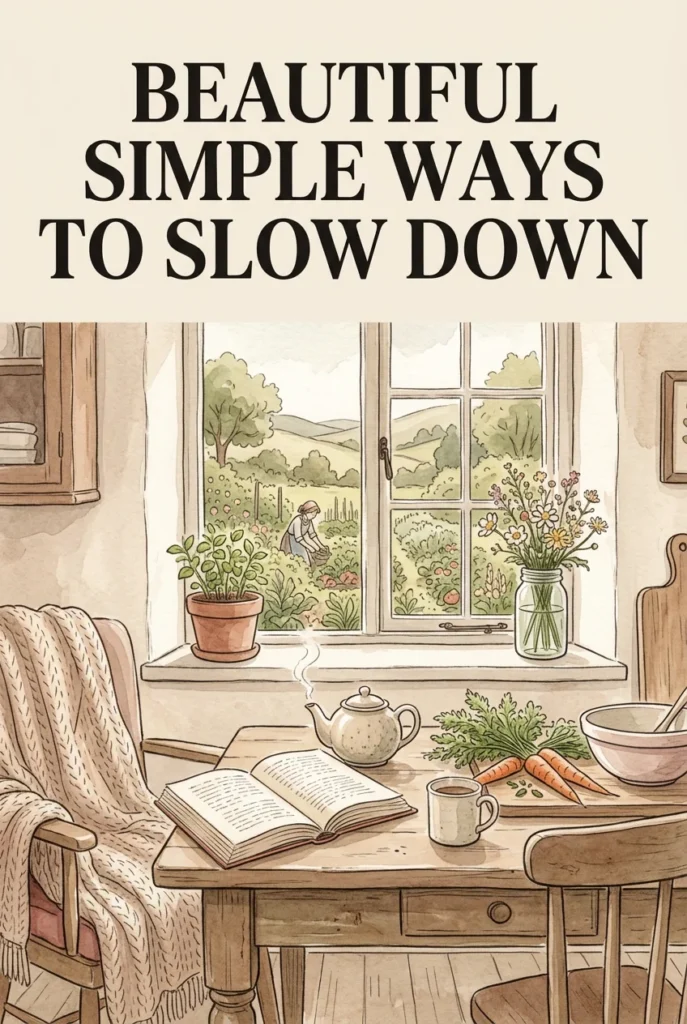
A calm, realistic approach to slowing down—without “doing everything” or living like a snail.
Modern life can feel like wind rushing through the trees—busy, loud, and constantly moving. You may catch yourself wondering, Where is all this speed taking me? And more importantly: Why am I going so fast?
Slow living isn’t about dragging your feet or rejecting responsibility. It’s about being present, choosing a steadier pace when you can, and creating small pockets of attention so your days don’t blur together. When you slow down on purpose, you start noticing what you’ve been missing: conversations, places, meals, and even your own thoughts.
Below are simple, grounded steps you can try. You don’t need to overhaul your entire lifestyle. Start where it feels easiest, and let the habit of slowing down build naturally.
Why Slow Living Matters
When everything is rushed, even good things can feel like chores. Slowing down gives you room to:
- Be more present in everyday moments (not just special occasions).
- Reduce stress and anxiety by removing unnecessary urgency.
- Enjoy processes—not only outcomes—whether that’s cooking, reading, or learning a skill.
- Reconnect with your surroundings and the people already near you.
The goal isn’t perfection. The goal is noticing your life as it happens.
Step 1: Read a Book (and Read It Slowly)
Make time to read a good book—not to “finish,” but to actually experience it. Slow reading is the opposite of skimming. It’s giving a story the space to unfold, or giving non-fiction the time to sink in.
How to practice slow reading
You don’t need a strict plan. A few small changes are enough:
- Choose a time of day when you can read without rushing (even 10–20 minutes helps).
- Read a little less than you think you “should,” and stop while you still feel interested.
- If you’re reading to learn, pause occasionally and reflect on what you just read.
Slow reading may not get you through two books a week. You might read one book a month, or even one per season. That’s not a failure—that’s the point.
Step 2: Cook From Scratch (and Enjoy the Process)
Cooking from scratch usually takes more time than putting a ready-made meal in the microwave. But it also creates a natural rhythm in your day: preparation, cooking, sitting down, and eating—without haste.
Make scratch cooking easier to maintain
Slow living works best when it’s practical. A few ways to keep it realistic:
- Set a general mealtime window so cooking doesn’t become a last-minute scramble.
- Start prepping earlier than you think you need, especially on busy days.
- Keep meals simple when your energy is low. “From scratch” doesn’t have to mean complicated.
The point isn’t gourmet cooking. It’s preparing food with attention, moving at a calmer pace, and letting meals become part of a slower day rather than another task to rush through.
Step 3: Walk or Cycle When You Can
Driving is one of the fastest ways to get where you want to go. But always choosing the quickest route can make life feel like a series of destinations instead of a lived experience.
When you walk or cycle, you slow down enough to actually see your surroundings. You notice streets you’ve never really looked at. You pass shops, gardens, and corners you would normally miss. You may even discover that people and places you “didn’t know” were there have been only two blocks away all along.
Small ways to add more walking or cycling
- Walk or cycle for short errands when it’s feasible.
- Park a little farther away and walk the last stretch.
- If you commute, consider walking part of the route when time allows.
Even occasional slow travel changes how you experience your neighborhood—and how you experience your day.
Step 4: Watch Nature on Purpose
Have you ever sat in a comfortable chair on your patio—or by a window—and watched the sunset? Or watched rain fall and change the look of everything outside?
Watching nature unfold in front of you can be deeply calming. It’s also a straightforward way to practice being present: no multitasking, no rushing, no “doing.” Just observing.
Create a simple weekly nature habit
Give yourself permission to do this regularly, not as a rare treat:
- Sit outside or by a window for a few minutes and watch the sky change.
- Notice small details: shifting light, wind in leaves, passing birds, the sound of rain.
- Leave your phone aside for the short time you’re watching.
It doesn’t need to be long to be effective. Consistency matters more than duration.
Step 5: Grow Your Own Food (Even in a Small Space)
You don’t have to be a farmer with a large property to grow some of your own food. A small backyard bed, a few pots, or a kitchen garden can still offer the quiet satisfaction of caring for something living and watching it develop over time.
Growing your own food can give you a sense of self-sufficiency. There’s something grounding about planting, tending, and eventually harvesting something you helped create.
Make gardening feel approachable
- Start small so it feels enjoyable rather than overwhelming.
- Build a routine: a short check-in with your plants every few days.
- Focus on the process. Harvesting is rewarding, but the daily care is where slow living happens.
That moment when you pick something from a garden you planted can feel genuinely satisfying—because it can’t be rushed.
Step 6: Make Something Instead of Always Buying It
In a fast-paced world, it’s normal to buy whatever you want or need as quickly as possible. That convenience has its place, but it can also pull you into a constant cycle of consumption and hurry.
Slow living invites you to make something for yourself. Creating takes time. It requires focus. And it often brings a quieter kind of pride than simply purchasing an item.
Ideas for simple, useful things to make
- Learn basic sewing—mending counts, and it’s a practical place to start.
- Bake something at home, like simple pastries or bread, and enjoy the steps.
- Try a hands-on project that suits your life and interests, even if it’s small.
You don’t need to become an expert. The goal is to reconnect with the experience of creating, not to produce perfection.
Tips: How to Start Slow Living Without Feeling Overwhelmed
- Pick one area first. Reading, cooking, walking, nature, gardening, or making something—choose what feels easiest right now.
- Go smaller than you think you should. Ten minutes of reading or a short walk still counts.
- Schedule margin. Starting meals earlier or leaving a little extra time for errands reduces the need to rush.
- Notice your “speed triggers.” Pay attention to what makes you hurry unnecessarily, and adjust where you can.
- Let it be imperfect. Slow living is a direction, not a performance.
Bringing It All Together
Living a slower life can help reduce stress and anxiety, but it can feel far-fetched at times—especially if your schedule is full or your responsibilities are heavy. The key is to look closely at your current life and begin where it feels most natural.
Try one change. Then repeat it often enough that it becomes a normal part of your days. Slow living isn’t a dramatic break from modern life; it’s a series of small choices that help you notice your life as it passes—so it doesn’t pass without you.
All the best on your journey to slow living.