
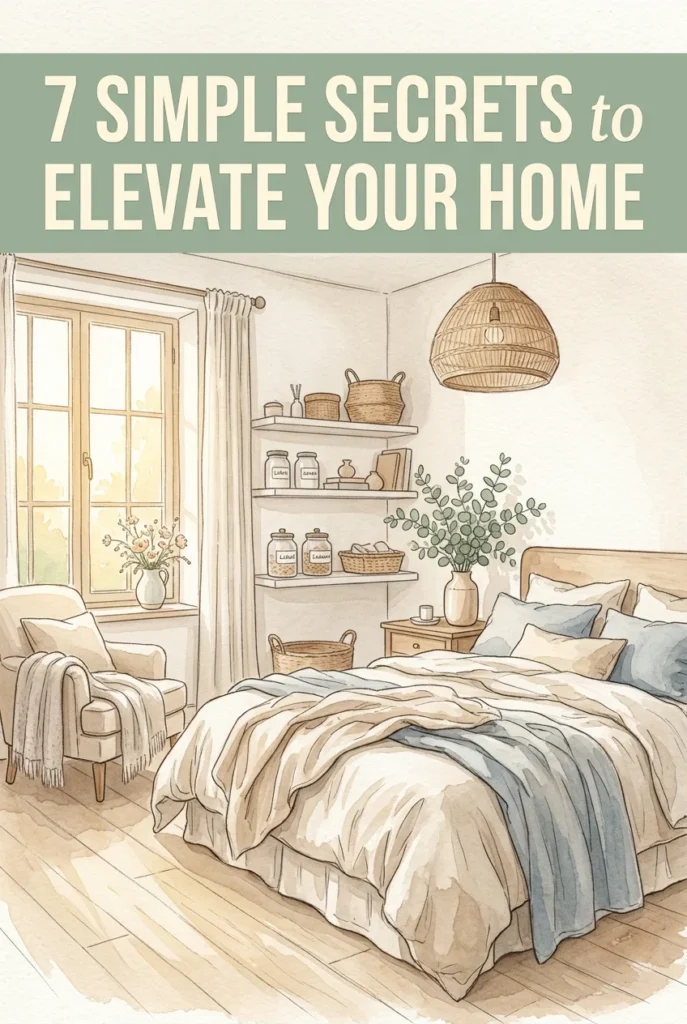
A calm, refined home isn’t built through excess—it’s built through intention, light, and thoughtful choices.
Luxury doesn’t have to be loud. Some of the most elevated homes are the quietest ones.
Picture a peaceful patio at golden hour: soft daylight, a gentle interior glow behind an open door, layered neutral bedding, a few woven textures, fresh flowers, and plenty of breathing room. Nothing is overdone—yet everything feels considered.
That’s the heart of a simple but luxurious home: not how much you own, but how thoughtfully you live. If you want your space to feel refined, serene, and deeply comfortable (without feeling overwhelming), the seven principles below will help you get there.
Why “Simple Luxury” Matters
A home that feels luxurious isn’t just about appearance. It affects how you move through your day.
When your environment is calm and intentional, you spend less time managing clutter, less time feeling visually overwhelmed, and more time actually enjoying your home. The goal is not to chase extravagance. The goal is to create a space that supports rest, confidence, and quiet elegance—on an ordinary Tuesday, not only on special occasions.
1) Focus on Light Before You Focus on Things
Light is often the fastest way to elevate a room, and it usually costs less than replacing furniture or redecorating. Before you buy more décor, look at how light behaves in your space—because light changes everything it touches.
Protect and enhance natural daylight
Start with your windows. Keep them as unobstructed as possible so daylight can move freely through the room. If privacy is needed, consider sheer curtains that soften the light rather than blocking it entirely. Even in smaller spaces, good natural light makes a home feel more open, more breathable, and more refined.
Layer warm lighting for evenings
Luxury feels luminous, not glaring. In the evening, rely less on harsh overhead lighting and more on layered, warm sources: table lamps, floor lamps, wall sconces, and a statement fixture if your room suits it. A gentle glow creates dimension and calm; bright overhead light can flatten a room and make it feel utilitarian.
Think of lighting as atmosphere, not just function. The right glow can make simple materials—linen, wood, ceramic—look richer and more intentional.
2) Choose Texture Over Clutter
A simple home doesn’t have to feel bare. The difference is selectivity. Instead of filling shelves and surfaces with “extra,” create depth through texture.
Texture adds warmth and character without adding chaos. It gives a space that layered, lived-in quality that reads as comfortable and elevated at the same time.
High-impact textures that stay visually calm
Consider adding or emphasizing tactile materials such as:
- Woven details (chairs, baskets, shades)
- Linen bedding and cushions
- Soft throws with a natural drape
- Stone, ceramic, or handmade-looking pottery
- Natural wood accents with a simple finish
One well-crafted woven chair can feel more luxurious than multiple mismatched pieces. A neatly made bed with breathable layers can look more refined than a room full of decorative objects.
A simple rule to keep it balanced
If a space feels busy, remove one item and replace “visual noise” with a single texture. Simplicity is not emptiness; it’s thoughtful layering.
3) Invest in One Statement Detail Per Room
One focal point can do more for a room than a dozen smaller accents. A glowing chandelier above neutral bedding, for example, transforms an otherwise simple bedroom into something memorable—without requiring clutter.
The key is restraint. Luxury tends to whisper. When everything is trying to be the statement, the room can feel confused rather than curated.
Pick the kind of statement that fits your space
Your “one thing” might be:
- A sculptural light fixture
- An oversized mirror that bounces light
- A striking piece of art with breathing room around it
- A beautifully framed view (kept clear, not crowded with extra décor)
Let the statement lead, then simplify around it
Once you choose your focal point, keep the rest of the room supportive: calmer colors, fewer competing shapes, and a clean visual line. This is how a room looks intentional without looking “done.”
| Room | One statement detail idea | What to keep simple around it |
|---|---|---|
| Bedroom | Chandelier or pendant light | Neutral bedding, minimal nightstand styling |
| Living room | Oversized art or mirror | Clean surfaces, cohesive textiles |
| Dining area | Statement fixture above the table | Simple centerpiece, uncluttered sideboard |
| Entry | Sculptural lamp or large mirror | One tray or bowl, clear landing space |
4) Embrace a Calm, Cohesive Colour Palette
Simple luxury often lives inside a restrained color story. Soft neutrals, warm whites, muted earth tones, gentle blush, subtle olive, and warm beige create a timeless foundation that reads as calm and elevated.
A cohesive palette also makes a home feel more intentional from room to room. When colors flow naturally—patio to bedroom to living room—your space feels curated and expansive, even if it’s modest in size.
How to keep color calm (without making it boring)
- Choose a quiet base: warm white, cream, beige, or a soft neutral that suits your light.
- Repeat tones: echo the same undertones in multiple rooms for continuity.
- Add personality through accents: bring in subtle color via textiles, books, or a small piece of art—while keeping the main surfaces soothing.
Avoid abrupt, dramatic color changes that interrupt visual calm. The goal isn’t to remove character—it’s to create harmony.
5) Prioritise Clean Surfaces and Clear Space
Luxury is strongly connected to breathing room. Negative space—empty space on purpose—signals order and ease.
Think of a small patio table holding only a glass of fruit-infused water and a simple vase of fresh flowers. There’s space around them. That “room to rest” is part of what makes the setting feel refined.
Create boundaries for countertops, tabletops, and nightstands
This isn’t about perfection; it’s about control. Give everything a home so surfaces can stay mostly clear. Avoid overfilling:
- Kitchen counters
- Dining tables
- Coffee tables
- Bathroom vanities
- Nightstands
Why this works
When surfaces are clear, your mind often feels clearer too. Light travels more freely, textures stand out, and your home feels calmer—even before you change anything else.
6) Elevate Everyday Rituals
Small details shape how a home feels. Luxury isn’t reserved for holidays or guests—it’s built into ordinary routines.
Opening the patio doors to let evening air move through. Sitting down with infused water in a glass you actually like. Making the bed neatly each morning. Turning on a lamp at dusk instead of relying on harsh overhead light. These choices make daily life feel intentional.
Rituals that create a refined atmosphere (without extravagance)
- Make the bed well: smooth layers, breathable fabrics, calm colors.
- Use the “good” glassware: not for show—because you’re living your life now.
- Add simple freshness: occasional flowers or greenery can shift a room instantly.
- Close the day gently: softer lighting in the evening signals rest and comfort.
The aim is mindful enjoyment, not performance. When your routines feel considered, your home naturally feels more refined.
7) Remove What Does Not Reflect the Life You Want
Creating a simple but luxurious home requires editing. This is often the most powerful “design” move you can make, because it costs nothing and changes everything.
Look around your space and ask a direct question: does each item contribute to the atmosphere you want—calm, beauty, intention—or does it add distraction and noise?
What happens when you edit with purpose
As unnecessary items leave, quality becomes more visible. Surfaces shine. Textures feel richer. Light moves more freely. Your rooms don’t look empty; they look clear.
A practical way to start
Choose one small zone—one shelf, one drawer, one tabletop. Remove anything that doesn’t support the feeling you’re creating. Put back only what you would intentionally choose again today.
Tips: A Quick Checklist for Simple Luxury (Use This Today)
- Do a lighting check at night: if the room feels harsh, add a warm lamp and rely less on overhead lighting.
- Clear one surface completely: then return only one functional item and one beautiful item (if needed).
- Pick one texture to add: linen, woven, ceramic, wood—choose one and repeat it once or twice.
- Limit each room to one focal point: one statement piece is elegant; too many compete.
- Unify your palette: keep base tones consistent across rooms for instant cohesion.
- Create one daily ritual: make the bed, light a lamp at dusk, or sit down with a drink—small actions, big effect.
- Edit one “noise” category: papers, random décor, mismatched containers—remove what distracts from calm.
Bringing It All Together: The Feeling You’re Creating
A simple but luxurious home is not about copying a specific aesthetic. It’s about refining your environment until it supports how you want to live.
That might look like a woven chair bathed in warm light. A softly glowing bedroom visible