
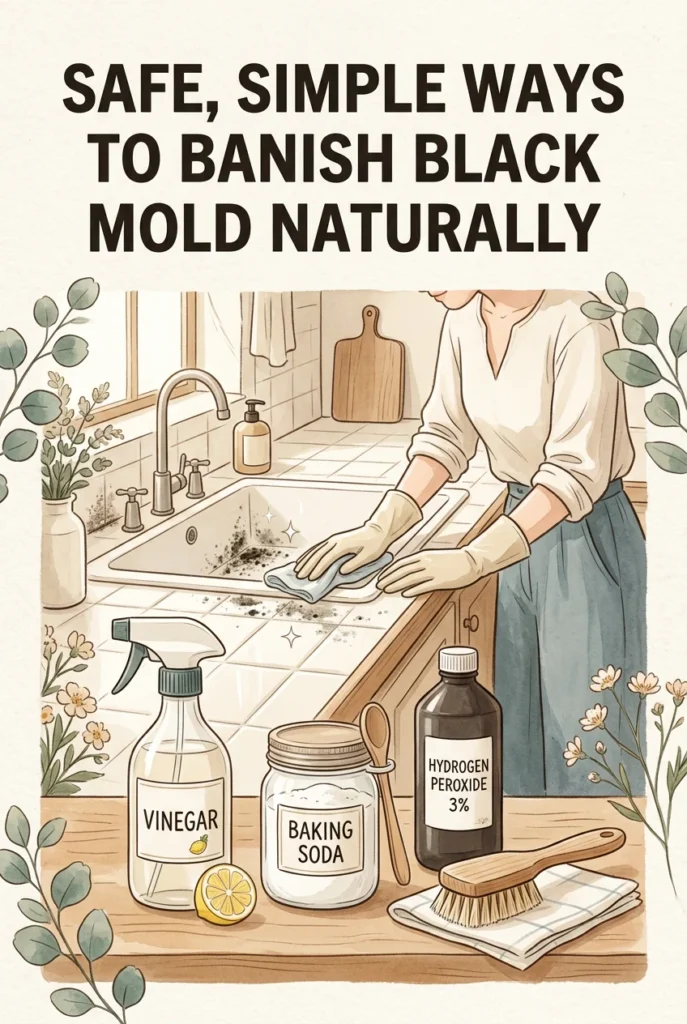
Practical, low-tox steps to tackle black mold with items many homes already have—without relying on harsh chemical cleaners.
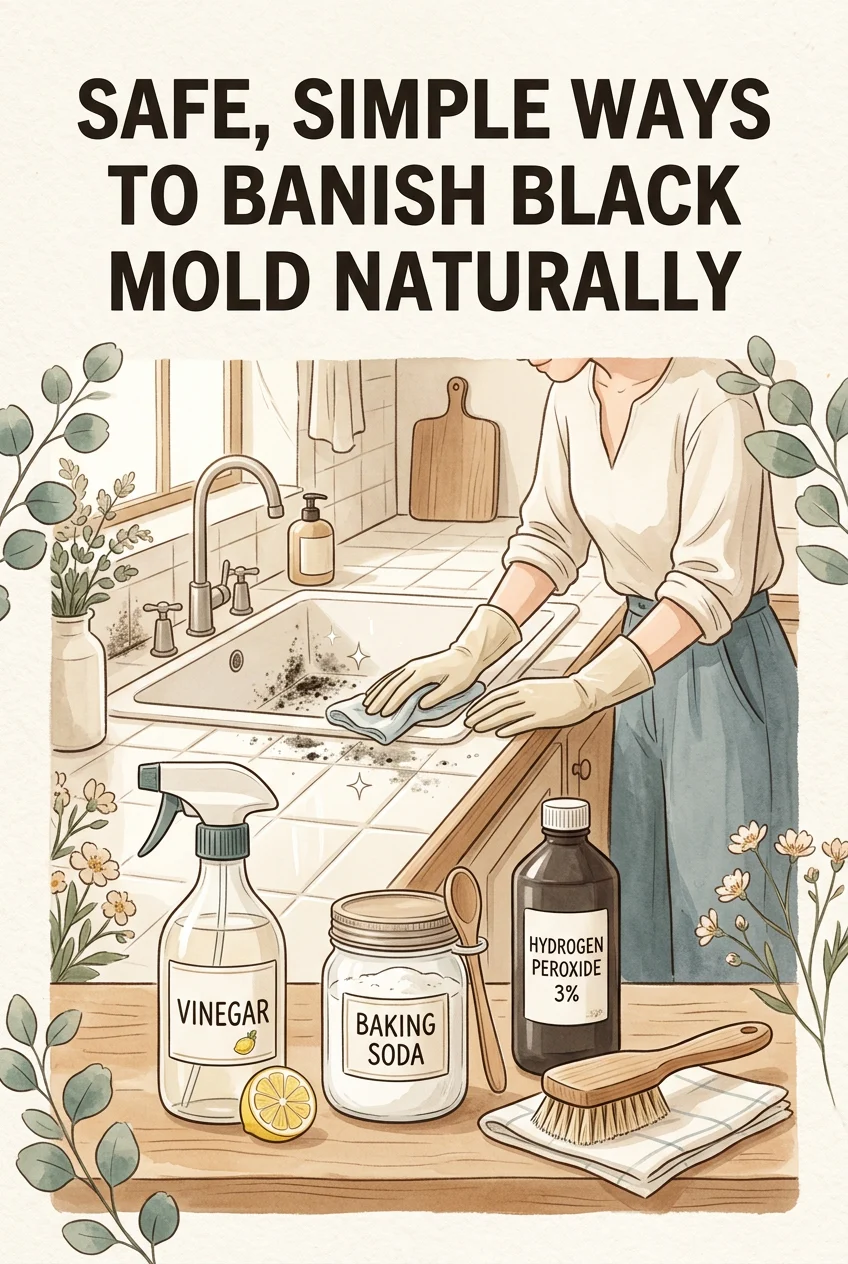
Black mold can be growing in your home without you realizing it. It tends to thrive in warm places, and it needs other bacteria that are in constant contact with moisture in order to grow. That combination is why bathrooms, basements, and kitchens are three of the most common problem areas.
This matters because black molds can contribute to allergies and respiratory illnesses. In other words: if you spot mold, it’s not something to ignore or “get to later.” At the same time, many people want to avoid harsh, toxic cleaning chemicals—especially in spaces where babies and children spend time—because toxic chemicals can help to develop respiratory problems.
The good news: there are non-toxic options that can be effective for eliminating black mold. Below are three straightforward approaches using vinegar, hydrogen peroxide, and baking soda—along with clear steps so you can work efficiently and safely.
Why Black Mold Shows Up (and Why You Should Act Quickly)
Black mold grows best in warm areas where moisture is present consistently. Moisture can linger on bathroom surfaces, around sinks, in kitchens, and in basements where the air may stay damp.
Leaving mold untreated isn’t a great idea. Because black molds can be linked with allergies and respiratory issues, it’s worth addressing as soon as you see it—then following up with basic habits that reduce moisture so it’s less likely to return.
Before You Start: A Simple, Non-Toxic Game Plan
You don’t need a complicated setup. What you do need is a repeatable process: apply your chosen solution, give it time to work, then wipe, scrub, and rinse (when appropriate) so you remove what’s on the surface.
Quick prep checklist
- Choose one method below (vinegar, hydrogen peroxide, or baking soda).
- Use a spray bottle so you can saturate the affected area evenly.
- Have a scrub brush and clean cloths ready.
- Work in short rounds so you can let the solution sit for the recommended time.
Method 1: Vinegar
Vinegar is a popular household cleaner and a practical first choice for many homes. It works because it contains a mild acidic substance, which makes it effective for killing black mold.
How to use vinegar on black mold
- Pour the amount of vinegar you need into a spray bottle.
- Do not add water.
- Spray vinegar directly onto the surface where black mold is visible.
- Let it dry for about one hour.
- Once dry, wipe the surface with a dry cloth.
Practical note
If you’re treating multiple spots, work in sections. Spray one area, let it sit while you move to the next, then come back to wipe once each section has had time to dry.
Method 2: Hydrogen Peroxide (3% Concentration)
Hydrogen peroxide isn’t only for first aid kits. It can also be used for multiple tasks around the house. The anti-viral, fungal, and bacterial solution it contains can kill black mold.
When purchasing hydrogen peroxide for this purpose, look for 3% concentration. Other percentages exist, but 3% is the best one mentioned for eliminating black mold in this method.
How to use hydrogen peroxide on black mold
- Pour hydrogen peroxide into a spray bottle.
- Spritz the affected area thoroughly.
- Let it soak for about one hour.
- After soaking, scrub the area to remove the black mold.
- Wipe the surface thoroughly to remove any residue left behind.
Mini-point: Don’t rush the soak time
Letting hydrogen peroxide sit for the full hour is part of the process. A quick spray-and-wipe may not be as helpful as a proper soak followed by scrubbing.
Method 3: Baking Soda
Most households already have baking soda tucked into a pantry or bathroom cabinet. This mineral powder can be used to kill black mold, and it’s a safe solution for families and pets.
Beyond cleaning, baking soda also helps absorb moisture, which can help prevent mold from showing up at all. That makes it useful not only for tackling visible mold, but also as part of a moisture-conscious routine in mold-prone areas.
How to use baking soda on black mold
- Measure one-quarter of a tablespoon of baking soda.
- Add it to a spray bottle filled with water.
- Shake vigorously to mix.
- Spray the solution onto black moldy areas.
- Use a scrub brush to remove the black mold.
- After scrubbing, rinse the area well with water.
Mini-point: Baking soda supports prevention, too
Because it helps absorb moisture, baking soda can be a helpful option in areas where dampness is a recurring issue—especially in bathrooms, basements, and kitchens.
Tips for Better Results (and Fewer Repeat Cleanups)
- Focus on moisture-prone rooms. Bathrooms, basements, and kitchens are key areas to monitor because moisture is often present.
- Be consistent with dwell time. Vinegar and hydrogen peroxide both rely on waiting about one hour before wiping or scrubbing.
- Use the right motion. After soaking, scrub where the mold is clinging to the surface, then wipe thoroughly so residue isn’t left behind.
- Keep it simple. These non-toxic options work best when used exactly as outlined—no need to complicate the mixture.
- Think beyond removal. Since black mold grows with moisture, reducing lingering dampness helps keep it from returning.
Key Takeaway
Black mold can develop quietly, especially in warm, damp areas like bathrooms, basements, and kitchens. Because black molds can be associated with allergies and respiratory illnesses, it’s wise not to leave mold untreated. If you prefer to avoid toxic chemical cleaners—particularly in homes with babies—vinegar, hydrogen peroxide (3%), and baking soda are three non-toxic options you can use to eliminate black mold with a clear, practical process.
If black mold surfaces in your home, start with what you already have on hand, follow the steps carefully, and stay consistent about reducing moisture in the areas where mold is most likely to return.