
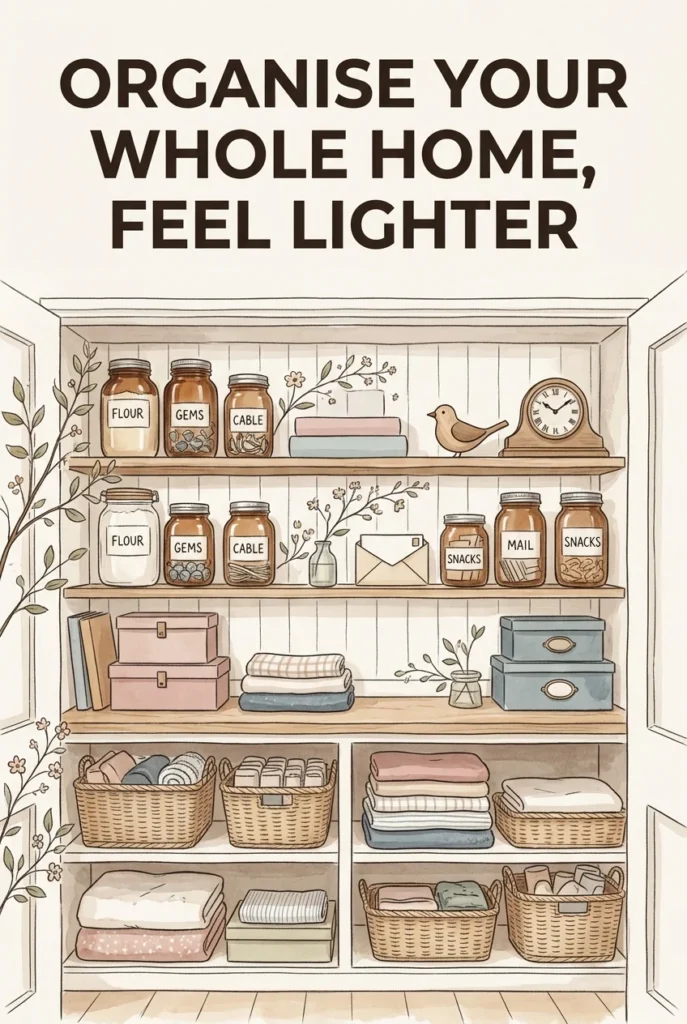
A soft, systematic approach to creating calm, functional spaces—one small zone at a time.
Your home isn’t meant to feel like a storage unit. It’s where you rest, reset, and live your daily life. When your space is overloaded, your brain keeps working overtime—stepping around piles, hunting for essentials, and carrying a constant sense that something is “unfinished.”
The good news: organising your entire home doesn’t require a single massive makeover day. It works better when you build order in small, repeatable systems. This guide walks you through a practical, room-by-room (and zone-by-zone) method that helps you tame clutter, set up simple storage, and keep it all working long after you’re done.
Why an Organised Home Matters (Beyond “Looking Nice”)
Organisation is less about perfection and more about reducing friction. When things have a clear home, everyday routines become easier: getting out the door, cooking, cleaning, paying bills, and putting items away without thinking too hard.
A well-organised space supports:
- Faster decision-making (you can find what you need and see what you already own)
- Less visual noise (fewer piles competing for attention)
- Smoother routines (put-away becomes quick and automatic)
- Better maintenance (small resets replace marathon clean-ups)
Step 1: Start With Zones, Not Rooms
If “organise the kitchen” feels too big, that’s because it is. A full room is made of many micro-areas with different purposes. Instead of organising rooms, organise zones. Small wins build momentum quickly.
Good zones to start with
- The cutlery drawer
- The fridge door
- The bathroom cabinet
- The sock drawer
- The entryway basket
How to choose the right first zone
Pick a zone that causes daily irritation—something you touch every day. The goal isn’t to start with the hardest spot; it’s to start with the spot that will immediately make life feel easier.
Step 2: Declutter With Boundaries, Not Emotions
Decluttering can get emotionally heavy if you try to “feel your way through” every item. Instead, use clear boundaries and make quick, consistent decisions. This keeps you moving—and reduces the mental load.
Use the 3-bin method
As you empty a zone, sort into three simple categories:
- Keep (you use it and it earns its space)
- Toss (broken, expired, worn out, or no longer useful)
- Relocate (belongs elsewhere in the home)
Ask three grounding questions
When you’re unsure, let these questions guide you (not guilt):
- Do I love this?
- Do I use this weekly or monthly?
- Would I buy this again today?
Boundary reminder
If a drawer can only hold a certain amount, that limit becomes your boundary. You don’t have to keep everything. You only have to keep what fits your real life and your available space.
Step 3: Group Like With Like
Once a zone is cleared and you’ve chosen what stays, the next step is to create simple categories. Your brain loves patterns—when similar items live together, you stop losing things and stop buying duplicates.
Examples of “like with like” categories
- Hair accessories together
- Charging cords together
- All baking tools in one spot
Make categories match your habits
There’s no single correct organising style. If you bake weekly, baking tools deserve an easy-to-reach home. If you rarely bake, they can live higher up or deeper in a cabinet. Organisation works best when it reflects how you actually live.
Step 4: Contain and Label Everything
Containers create structure. Labels protect it. When a category has a defined container, it stops spreading into other areas. When it has a label, everyone in the home knows where it goes—making tidying faster and more consistent.
Use what you already have first
You don’t need a full set of matching bins to get organised. Start with simple, practical options:
- Shoeboxes
- Jars
- Baskets
- Bins
Simple label options
- A label maker
- A strip of washi tape
- Handwritten tags
What to label (so it actually stays tidy)
Label the categories that tend to become messy: “Batteries,” “First Aid,” “Snacks,” “Lunch Supplies,” “Cables,” “Travel Toiletries,” “Light Bulbs.” The point is clarity at a glance, not aesthetics for their own sake.
Step 5: Create a Home Admin System (Paperwork Included)
Home organisation isn’t only about closets and drawers. Paper clutter can quietly create stress because it represents unfinished tasks: bills to pay, forms to file, warranties to keep, and details you’re afraid to lose. Give paperwork a calm, dedicated home.
A simple home admin setup
- An inbox tray for incoming papers (mail, school notes, forms)
- A file box for receipts and warranties
- A drawer for stationery and postage
- A binder or digital hub for bills and passwords
Keep it usable, not complicated
The best filing system is the one you’ll actually maintain. Make it easy to drop papers into the right place quickly, and schedule short check-ins so the inbox tray doesn’t turn into a permanent pile.
Step 6: Use Weekly Mini Resets
Organisation isn’t “once and done.” It’s a living system that needs light maintenance. Instead of waiting for chaos to build, use a gentle rhythm: reset one zone each week.
Example weekly reset rotation
- Week 1 – Kitchen drawers
- Week 2 – Bathroom baskets
- Week 3 – Clothing hangers
- Week 4 – Pantry shelves
What a mini reset looks like
A reset is not a deep clean. It’s a quick return to “baseline”: toss trash, return out-of-place items, wipe a shelf if needed, and re-align categories. Done consistently, these small resets prevent clutter from creeping back in.
Step 7: Make It Pretty (Yes, It Counts)
Function comes first—but aesthetics can support maintenance. When a space looks calm and intentional, you’re more likely to keep it that way. “Pretty” doesn’t have to mean expensive; it means pleasant and coherent.
Simple ways to add charm to order
- Matching hangers
- Linen drawer liners
- Soft baskets
- A sprig of dried herbs in the pantry
Use beauty as a cue
If opening a drawer feels satisfying, you’ll naturally want to put things back where they belong. That’s not fluff—it’s a practical strategy for long-term upkeep.
Tips to Organise Faster (and Stay Organised Longer)
- Set a small finish line. Choose one drawer, one shelf, or one basket—then stop when it’s done.
- Clear the surface before you sort. Empty the zone so you can see the full category and make better decisions.
- Relocate immediately. Put “Relocate” items away before starting a new zone to avoid creating new piles.
- Store by frequency of use. Daily items at eye level; occasional items higher up or farther back.
- Keep open space on purpose. A little breathing room in drawers and cabinets makes maintenance easier.
- Label for real life. Labels should be obvious and practical, especially in shared spaces.
Final Thoughts
An organised home doesn’t just look better—it feels better. It supports your routines, reduces the constant background stress of clutter, and gives your mind more space to focus on what matters.
You don’t need to overhaul everything in a day. Start small. Pick one zone. Use simple categories, calm containers, and clear labels. Then protect your progress with weekly mini resets.
Soft systems, steady steps, and a little charm can take you from “shuffling clutter” to living in a home that functions with calm and clarity—room by room, drawer by drawer.