
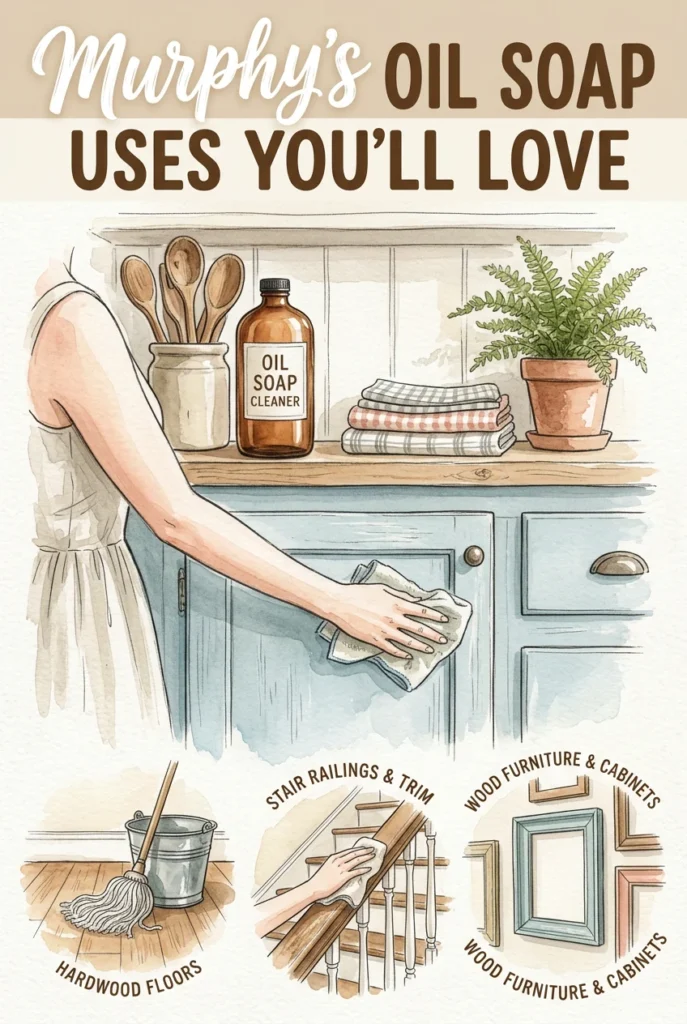
A single, wood-safe cleaner can do far more than polish furniture—when you use it thoughtfully and dilute it correctly.
Murphy Oil Soap has been a trusted cleaning agent for generations, best known for caring for wood surfaces. What many people overlook is how versatile the formula can be across the house, garage, and even on-the-go—especially for routine cleaning where you want to cut grime without reaching for harsher products.
Because it’s designed to lift everyday buildup (dust, skin oils, light grease, fingerprints, tracked-in dirt), it’s especially useful for “maintenance cleaning”—the kind of regular wipe-down that keeps surfaces looking good so you don’t have to deep-clean as often. It can also help when you’re trying to simplify your cleaning lineup: one reliable cleaner, used correctly, can cover a surprising number of jobs.
Why it matters: The more you can rely on one dependable cleaner for everyday messes, the easier it is to keep a consistent routine, simplify your supply closet, and maintain finishes (wood, vinyl, leather, laminate, metal) without over-scrubbing.
In practice, Murphy’s is most helpful when you think of it as a “finish-friendly wash.” You’re not trying to strip or refinish; you’re simply removing the dull film that slowly builds up from normal life. A light, properly diluted solution plus good technique (gentle pressure, controlled moisture, and a final dry buff) can be the difference between a surface that looks hazy and one that looks clean and cared for.
Below are practical, surface-safe ways to use it throughout a home. Many of these ideas work best as quick, repeatable habits—five minutes here and there—so dirt doesn’t have time to settle in and harden.
Before You Start: Smart, Surface-Safe Basics
Most of the ideas below use Murphy’s Oil Soap diluted in warm water (follow the label directions), applied with a soft cloth, sponge, or mop. For specialty materials—especially vintage items, delicate finishes, electronics, and porous stone—use a light touch and test a small hidden spot first.
In day-to-day use, a small amount of diluted solution often goes a long way. If you notice streaking, a tacky feel, or slipperiness underfoot, it’s usually a sign you used too much product or didn’t rinse as needed. In those cases, re-wipe with clean water and dry with a soft cloth.
To get the most out of any gentle cleaner, focus on process: remove loose dust first, wash with a well-wrung cloth, and finish by drying. This helps prevent muddy smears on trim, water marks on wood, and any residue that could attract more dust later. When you’re cleaning around seams (like cabinet edges, floor transitions, or veneered furniture), keep moisture minimal and avoid letting liquid sit in joints.
If you’re unsure whether a surface has a sensitive coating, treat it like it does: use a barely damp cloth, keep the solution mild, and dry immediately. Many “mystery marks” on finished surfaces aren’t permanent stains; they’re simply buildup that needs a gentle wash and a careful buff.
Quick Safety Notes (Worth Reading Once)
- Spot test first: Especially on painted surfaces, leather, suede, antiques, and anything lacquered.
- Don’t soak sensitive materials: Use a damp—not dripping—cloth for wood, instruments, and collectibles.
- Rinse when needed: On food-contact items (like cutting boards) and anything that might feel slippery if residue remains.
- Cleaning vs. disinfecting: Murphy’s is commonly used to clean high-touch areas; if you need true disinfection, clean first, then follow with an appropriate disinfectant.
- Avoid mixing cleaners: Don’t combine Murphy’s with bleach, ammonia, or other cleaners; use one product at a time and rinse between steps.
- Mind unfinished or specialty finishes: Unfinished wood, waxed finishes, and some specialty coatings can react differently—test first and use a very light application.
- Ventilation helps: For larger jobs (floors, cabinets), open a window or run a fan so the space dries faster and stays comfortable.
- Keep water away from seams and edges: On laminated pieces, veneered furniture, and some floors, avoid letting water pool at joints.
- Electronics need extra caution: Power off first and apply solution to the cloth—not directly to the device—using only a barely damp wipe.
- Store diluted solution carefully: If you mix a spray bottle for quick cleanups, label it and refresh it regularly so it stays effective and pleasant to use.
- Use the right cloth: Microfiber and soft cotton reduce the risk of micro-scratches on shiny finishes and painted surfaces.
- Watch for traction: Any cleaner can make floors slippery if overapplied; use a well-wrung mop and dry as needed.
- Protect raw edges: On particleboard or MDF furniture with thin laminates, avoid wetting exposed edges where swelling can occur.
- Heat can set residue: On cabinets near stoves or on warm appliances, clean with a mild mix and finish with a clean-water wipe.
Tips Section: Make Murphy’s Oil Soap Work Better (Without Overdoing It)
- Use two-bucket logic for floors: One bucket for cleaning solution, one for rinsing your mop/cloth to avoid spreading grime.
- Work top to bottom: Shelves, then counters, then baseboards/floors so you don’t re-clean the same dust.
- Buff for shine: After wiping, a dry microfiber cloth can improve the finish on wood and metal without leaving streaks.
- Use soft tools: Old toothbrushes help with grout, seams, and hardware details; soft cloths prevent micro-scratches.
- Let it sit (briefly) on stuck-on messes: For grease or sticky residue, a short dwell time can reduce scrubbing.
- Start with the mildest mix: It’s easier to increase strength slightly (still following label guidance) than to remove leftover residue from an overly strong solution.
- Pre-dust first: A quick dry dusting (microfiber cloth or duster) keeps you from turning dust into muddy streaks when you wet-clean.
- Change your water sooner than you think: Fresh solution cleans better; dirty water just redistributes grime and can dull shine.
- Wring well: Floors, cabinets, and furniture look best when you clean with a well-wrung mop or cloth and then dry as needed.
- Use a soft-detail brush for crevices: A small brush is ideal around handles, hinges, trim grooves, and textured surfaces.
- Keep a “quick-clean kit” handy: A small spray bottle of diluted solution and two cloths (one damp, one dry) makes it easier to maintain surfaces as you go.
- Follow with a clean-water wipe when in doubt: If the surface feels slick or looks hazy, a rinse-wipe plus a dry buff usually fixes it.
- Don’t skip drying on wood: Drying is a big part of keeping wood looking even and preventing water marks.
- Use gentle pressure: On finished surfaces, patience and multiple passes are often safer than aggressive scrubbing.
- Make it part of a seasonal routine: A light wipe-down of doors, trim, cabinets, and railings a few times a year keeps buildup from turning into a major project.
- Use small batches: Mix only what you’ll use that day for the freshest, most consistent results (especially for floors).
- Fold your cloth: Work with clean sides as you go so you’re not pushing grime back onto the surface.
- Dry corners and grooves: Use a dry cotton swab or corner of a towel for panel edges, trim details, and carved areas.
- Use a spray bottle for control: Spraying the cloth (not the surface) helps prevent overspray on walls, upholstery, or electronics.
- Take fingerprints seriously: On dark finishes, oils show quickly; frequent light wipe-downs look better than occasional heavy scrubbing.
- Separate “food” cloths from “floor” cloths: Keep basic cleaning hygiene by dedicating cloths to certain tasks.
- Don’t chase perfection on textured finishes: A soft brush plus a gentle wipe is safer than forcing product into texture.
- Work in sections: On floors and large wall paneling, wash and dry one small area at a time for a more even finish.
- Keep a dry towel nearby: Immediate drying is the easiest way to prevent streaks on glossy paint and finished wood.
- Use warm (not hot) water: Warm water improves cleaning and is generally gentler on finishes than very hot water.
- For hardware, clean around it first: Wash the surrounding wood, then detail-clean handles and hinges to avoid drips.
- Know when to stop: If a mark doesn’t improve after gentle cleaning and a rinse-wipe, it may be wear, not dirt.
Wood, Floors, and Finish Care
These are the classic and most common uses—where Murphy’s Oil Soap has built its reputation. The goal is usually to remove daily grime and restore a clean, even look without harsh abrasion. Use a soft cloth, keep moisture controlled, and buff dry for the most natural finish.
- Wooden furniture revival: Wipe furniture to refresh the look and remove everyday grime, especially on arms, edges, and tabletops.
- Wood cabinet touch-ups: Cut kitchen buildup on wood cabinet fronts with a soft cloth, paying attention to corners and around knobs.
- Baseboard cleaning: Remove dust and scuffs along trim and baseboards; a damp cloth followed by a quick dry wipe helps prevent streaks.
- Laminate floor cleaning: Mop with a diluted solution to lift dirt without heavy residue; wring the mop well to avoid pooling.
- Ceramic tile floors: Mop for a clean, streak-free finish, especially in entryways and kitchens where dirt builds up fast.
- Wooden handrails: Wipe down stair rails and banisters to remove skin oils and grime, then buff for a clean feel.
- Wooden window sills: Clean sills and frames, especially where dust and moisture collect, and dry the corners well.
- Wicker furniture refresh: Wipe wicker to lift dust and bring back its natural tone; use a soft brush for tight weaves.
- Wooden bowls: Maintain wooden salad bowls; wipe, rinse well, and dry thoroughly so moisture doesn’t linger in the grain.
- Wood coasters: Remove drink rings and residue from wooden coasters, then wipe dry to prevent water marks.
- Wooden toy chests: Refresh wooden toy storage without relying on harsh cleaners; keep the cloth only lightly damp.
- Wooden rolling pins: Clean off dough residue after use, then wipe dry so the surface stays smooth for the next baking day.
- Wooden cutting boards: Wipe, rinse thoroughly, and let dry completely before the next use to reduce lingering film.
- Wooden model ships: Gently clean detailed wooden models with a barely damp cloth, using cotton swabs for crevices.
- Wooden trophies: Renew the finish so they look clean and well-kept, especially around engraved plates and bases.
- Wooden walking sticks: Wipe down trekking sticks to remove grime and restore shine, then dry to keep the grip comfortable.
- Faux wood mantels: Maintain faux fireplace mantels so they stay dust-free; buffing helps reduce dull haze.
- Display shelves: Keep wood or metal retail display shelves looking polished, especially where hands leave prints.
- Magazine racks: Wipe wooden or metal racks to remove dust and fingerprints, especially along handles and edges.
- Hardwood floor maintenance (sealed): Use a well-wrung mop for routine cleaning of sealed hardwood to lift tracked-in dirt.
- Wooden dining tables: Clean sticky spots from spills, then buff dry so the surface looks even and feels smooth.
- Wooden coffee tables: Remove fingerprints and ring marks from daily use, especially around coasters and remotes.
- Wood desks and workstations: Wipe down desktops and keyboard trays (when not electronic) to remove skin oils and dust.
- Nightstands and dressers: Refresh frequently touched drawer fronts and top surfaces that collect lotion, dust, and cup rings.
- Wooden chairs: Clean chair backs and arms where hands rest; a quick buff helps prevent a tacky feel.
- Wood headboards: Wipe away dust and hair product residue that can cling to bedroom furniture.
- Wood bed frames: Clean the outer rails and posts to remove dust buildup along edges.
- Wood interior doors: Spot clean smudges around knobs, panels, and push points without stripping the finish (test first).
- Door frames and trim: Remove scuffs and dust from wood trim, especially near entryways and hallways.
- Crown molding (painted or finished): Lightly wipe to remove accumulated dust—always spot test painted finishes first.
- Stair treads (sealed wood): Clean the dull film that builds up from daily foot traffic; dry thoroughly for traction.
- Wood paneling: Wipe paneling to remove haze and fingerprints; work in small sections and dry as you go.
- Wood shutters and wooden blinds: Clean slats gently with a cloth and minimal moisture to prevent drips.
- Bamboo items: Refresh bamboo trays, utensils (non-food contact parts), and organizers with a light wipe and thorough drying.
- Rattan accents: Lift dust and grime from rattan side tables and baskets using a soft brush and a carefully damp cloth.
- Wooden picture ledges: Remove dust rings and grime where frames sit, then buff to keep the ledge looking crisp.
- Wooden coat racks: Wipe hooks and rails where hands and wet coats leave marks.
- Wooden stair spindles: Detail-clean spindles and rails; cotton swabs help with carved areas.
- Wooden drawer sides (exteriors): Remove sticky residue from drawers that are constantly handled.</li