
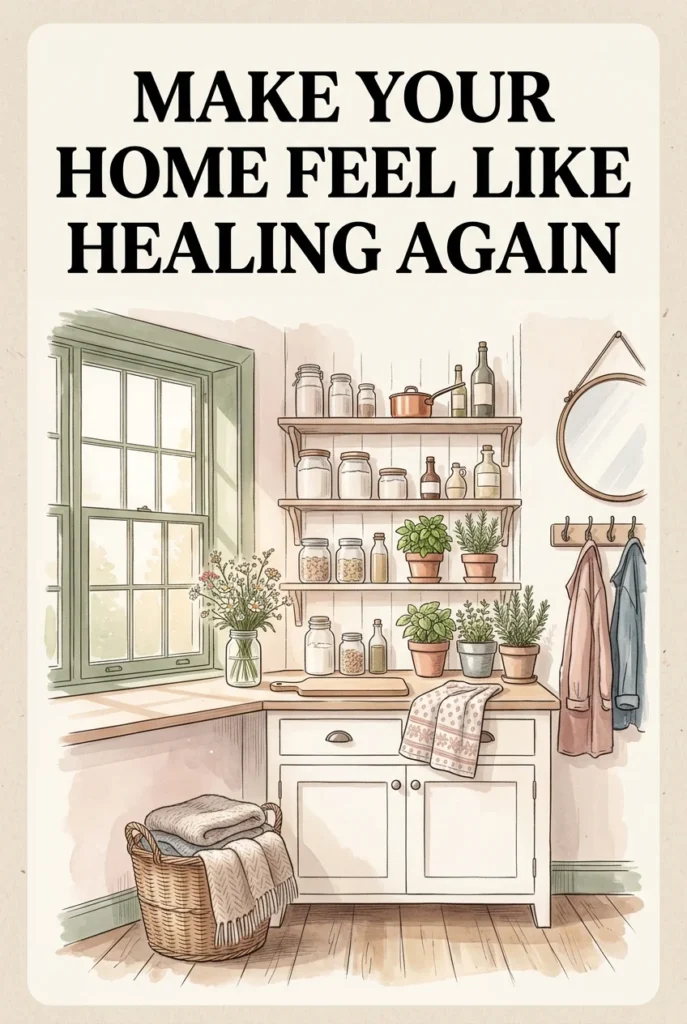
A healing home isn’t about perfect design. It’s about how your space supports your nervous system, your routines, and the people who live there.
Your home influences you every day—often more than you realize. The sounds you wake up to, the air you breathe, the clutter you see (or don’t see), the lighting at night, and the small rituals you repeat all shape how safe, steady, and restored you feel. Over time, those small signals add up. A crowded counter can quietly raise tension. A clear landing spot for your keys can prevent a daily scramble. A soft lamp in the evening can make bedtime feel like a gentle transition instead of a sudden shutdown.
A “home that heals” doesn’t require trendy furniture, spotless cupboards, or an expensive renovation. It’s built through intentional choices that create comfort, reduce friction, and make daily life gentler. Some ideas are practical (decluttering, cleaning rhythms, simplifying storage). Others are sensory (music, scent, light, texture). Many are relational (family routines, seasonal traditions, shared meals, honest conversation). Together, they help your home feel like a place where you can exhale.
This isn’t about turning your house into a showroom. It’s about letting your space support who you are and what you need right now—especially in busy seasons, hard seasons, or seasons of healing. Even one corner of calm can change how the whole day feels.
Why a Healing Home Matters
When your environment feels supportive, it becomes easier to:
- Recover from stress rather than carrying it from room to room.
- Maintain healthy routines because your space makes them simpler.
- Connect with others through shared meals, rest, and small traditions.
- Sleep better with calmer evenings and a more soothing bedroom setup.
It also helps you conserve energy. When your home is set up in a way that “holds you,” you spend less time making constant micro-decisions: Where did I put that? What are we eating? Why is the living room stressful to walk into? You don’t have to control every detail to feel better in your space.
The goal is not to control every detail. It’s to design your home so it regularly sends the message: you are safe here.
The Core Principles (So the Ideas Actually Work)
Before the list, keep three principles in mind:
- Start small. One habit that sticks is more healing than ten that never happen. A single drawer, one playlist, or a five-minute reset can matter more than a weekend overhaul you resent.
- Work with your real life. Choose rituals and routines that fit your household, schedule, and energy. If you have young kids, shift work, chronic fatigue, or a busy caregiving role, your “healing home” needs to meet you where you are.
- Prioritize what you feel. If something looks good but makes life harder, it’s not serving your home. Aesthetic choices are only helpful if they support daily living.
One more helpful guideline: don’t try to optimize everything at once. Healing is often built through repetition. Choose ideas you can return to on an ordinary Tuesday, not just what sounds lovely on a perfect Saturday.
29 Ways to Create a Home That Heals
1) Music: Let Your Home “Breathe” Through Sound
Sound shapes mood quickly. A simple way to shift the atmosphere is to create intentional soundscapes throughout the day—calm in the morning, steady energy in the afternoon, softer tones in the evening. Sound can also “fill in the gaps” when a home feels too quiet or too tense. For some people, music keeps the nervous system from scanning for problems; for others, silence is the most restorative backdrop.
You can also use sound to create gentle boundaries: a playlist that signals “we’re cleaning,” an instrumental track that signals “quiet work time,” or soft music that makes dinner feel less hurried.
Make it practical
- Create playlists by purpose: focus, cleaning, rest, cooking, family time.
- Keep the volume low enough to feel soothing, not overstimulating.
- If silence heals you, protect it—silence can be a powerful “soundtrack,” too.
- Try nature soundscapes (rain, ocean, forest) when you want calm without lyrics.
2) Movies: Choose Comfort and Beauty on Purpose
Entertainment can either drain you or restore you. Intentional movie nights turn watching into a ritual rather than background noise. When you choose what you watch on purpose, you also protect your evenings from the “endless scroll” that leaves you feeling wired and tired at the same time.
A healing movie ritual can be simple: one familiar story, warm lighting, a blanket, and permission to rest. It’s less about the screen and more about how you use it—shared laughter, predictable comfort, or quiet beauty that helps you decompress.
Make it practical
- Build a small “comfort list” you can return to when you’re tired.
- Dim the lights, put phones away, and treat it as a real break.
- Try seasonal viewing: lighter stories in spring, cozier films in winter.
- Set a gentle boundary: decide the end time so sleep doesn’t get pushed later and later.
3) Healing Herbs: Let Nature Be Part of Your Medicine Cabinet
Herbs such as chamomile, peppermint, lavender, rosemary, ginger, and thyme are simple ways to bring nature into everyday care—through tea, cooking, steams, baths, or gentle home fragrance. Many people find that herbs create a sense of “being tended to,” even in small ways, because they slow you down and invite you to notice your body and your needs.
You don’t have to become an herbalist to benefit. A basic, well-loved herb shelf can support everyday comfort: warm tea at night, soothing steam during a stuffy season, or rosemary added to roasted vegetables for a grounding, homey scent.
Make it practical
- Store dried herbs in glass jars with clear labels so they’re easy to use.
- Start with one or two herbs you genuinely enjoy, then expand slowly.
- Use what you already have: even a single jar of chamomile can become a nightly ritual.
- Keep a small “tea corner” so making tea feels easy, not like another task.
4) A Recipe Book of Nourishing Meals: Feed the Heart of the Home
A home becomes steadier when you can reliably return to a few meals that feel supportive. A simple recipe collection—handwritten or printed—reduces decision fatigue and strengthens family culture. It also keeps you from reinventing the wheel on low-energy days, when cooking feels like one more thing to solve.
This can be as formal as a binder or as simple as a note on your phone that you print later. The point is to have a small set of meals that your household actually eats, made in a way that fits your schedule.
Make it practical
- Include soups, stews, broths, baked basics, and easy comfort meals.
- Add notes: substitutions, “busy-night” shortcuts, and who in the house loves it.
- Leave room for seasonal favorites and family recipes.
- Keep a short “emergency list” of meals made from pantry staples for weeks when everything feels harder.
5) Self-Care: Tend to the “Home Within”
Your home is easier to care for when you are cared for. Self-care here isn’t framed as indulgence; it’s maintenance—simple actions that keep you regulated and present. A healing home supports the person living in it, not an idealized version of that person.
This can mean hydration, stretching, stepping outside for fresh air, taking a slower shower, or having a few minutes of quiet before interacting with others. When your body feels steadier, your space often feels easier to manage, too.
Make it practical
- Pair self-care with existing routines: stretch after brushing teeth, moisturize after showering.
- Create small cues: a candle near the bath, tea in a visible spot, a notebook on the bedside table.
- Go slowly on purpose: a calm pace can be part of the healing.
- Keep self-care “small enough to do”: two minutes counts, especially on hard days.
6) A New Year’s Tradition: Begin the Year with Intention
A simple annual ritual gives your home a sense of rhythm and meaning. The focus is on beginning in a grounded way—through cleaning, reflection, or a quiet celebration at home. Traditions don’t have to be elaborate to be powerful; they work because they repeat, and repetition creates a feeling of stability.
For some households, this is a reset clean. For others, it’s a special breakfast, a home-cooked dinner, a walk, or a few minutes of reflection about what you want the year to feel like.
Make it practical
- Choose one tradition you can repeat: a reset clean, a candlelit dinner, a letter to your future self.
- Keep it realistic; the point is consistency, not a big production.
- Let it signal a fresh start for the household.
- Consider a simple “release” practice: donate one box of items or clear one area that feels heavy.
7) Family Days: Make Room for Togetherness
Homes heal through connection. Setting aside a recurring time for togetherness—weekly or monthly—builds belonging and makes your space feel emotionally safer. Togetherness doesn’t require constant conversation; it often grows through shared experiences, familiar foods, and time spent without rushing.
Family days can reduce conflict, too, because they create a predictable place for repair and closeness. When the home contains memories of calm connection, it can feel easier to return to calm after stressful moments.
Make it practical
- Cook as a team, play a board game, do a shared creative project, or take a walk together.
- Keep it low-pressure. “Simple and present” is the standard.
- If you live alone, a “family day” can still exist: call someone, host a friend, or spend time with neighbors.
- Choose a repeating anchor (first Sunday breakfast, Friday soup night) so it’s easier to keep.
8) Decluttering: Let What’s Stale Leave
Decluttering is not only about aesthetics. For many people, it reduces mental load and makes daily tasks easier. When your home holds fewer unnecessary items, it often feels lighter to live in. Clutter can also create background stress because it’s a constant visual reminder of unfinished decisions.
Decluttering becomes more sustainable when it’s not emotionally punishing. You’re not trying to “fix yourself.” You’re simply choosing what supports your current life and letting the rest move on.
Make it practical
- Work room by room, not everywhere at once.
- Use a simple question: Does this support the life I’m trying to live?
- Donate, gift, recycle, and dispose responsibly—then stop for the day.
- Create a small “outgoing box” in a closet for items you’re ready to release as you notice them.
9) A Cleaning Routine: Treat Care as a Ritual, Not a Punishment
Cleaning can become a reset rather than a burden when it’s approached as regular care. A consistent rhythm helps your home feel stable and easier to manage. You’re not chasing perfection; you’re keeping the space functional and breathable.
A healing cleaning routine is often gentle and predictable: a few daily resets, one weekly deeper clean, and permission to adapt when life gets full. The goal is to avoid the cycle of “ignore everything, then panic clean,” which can make home feel stressful.
Make it practical
- Pick a weekly “baseline” routine you can maintain even in busy seasons.
- Use scents you genuinely like (lemon, vinegar, herbs, essential oils if you use them) to make the process more pleasant.
- Pair cleaning with music or a podcast to make it feel less heavy.
- Try a 10-minute evening reset: clear surfaces, reset the sink, and prep the next morning.
10) Decor: Let Each Corner Tell a Gentle Story
Decor doesn’t need to be expensive or dramatic to be healing. The goal is to create visual cues of safety and rest—through color, texture, lighting, and meaningful objects. A few well-chosen pieces can do more than an entire room filled with “stuff,” because they create clarity and emotional warmth.
Decor can also be functional: baskets that hold blankets, a tray that gathers daily items, or art that calms you when you walk by. The most healing decor is often the most personal: reminders of love, memory, nature, or identity.
Make it practical
- Choose calming colors and materials that feel comfortable to you.
- Place items intentionally: family photos, books, candles, dried flowers, a mirror that brightens a dim spot.
- Aim for “inviting,” not “impressive.”
- Try “one surface, one story”: keep a shelf or table styled with a small, meaningful grouping rather than many scattered items.
11) Plants: Bring Living Green Into Your Rooms
Plants add softness and a sense of life. Caring for them can also become a grounding ritual that marks time—watering, rotating toward the light, noticing new growth. Even if you don’t have a green thumb, the presence of something living can make a room feel less sterile and more supportive.
The key is choosing plants that match your lifestyle. A healing home isn’t helped by plants that constantly struggle; it’s helped by plants that quietly thrive with the care you can realistically give.
Make it practical
- Place plants where you’ll interact with them naturally (kitchen, desk, entryway).
- Start with one resilient plant, then expand if it fits your lifestyle.
- If live plants aren’t possible, focus on other natural elements (wood, stone, dried botanicals).
- Set a simple reminder for watering until it becomes a habit.
12) Flowers: Invite Beauty to Bloom Indoors
Fresh flowers—store-bought, garden-cut, or gathered on a walk—change the emotional tone of a room quickly. They signal care and attention without requiring a major effort. Flowers also create a sense of seasonality: spring branches, summer wildflowers, autumn foliage, winter evergreen clippings.
Even one stem in a small glass can make a kitchen feel gentler. It’s not about luxury; it’s about noticing beauty and bringing it close.
Make it practical
- Use a small vase and a modest bunch; scale is not the point.
- Place them where you’ll see them often (kitchen table, bedside, entry).
- Replace when you can, or switch to dried flowers for longer-lasting beauty.
- Make it a ritual: refresh water and trim stems while the kettle boils.
13) Pets: Gentle Companions that Shape the Mood of a Home
Pets add presence and connection—whether it’s a dog’s energy, a cat’s calm, or even the steady movement of fish in an aquarium. Their routines also create helpful structure. Feeding times, walks, and play breaks can pull you out of your head and back into the present moment.
Pets can also make a home feel more emotionally alive. Many people experience a stronger sense of companionship and comfort when an animal shares their space.
Make it practical
- Create a small “pet station” with bedding, water, and supplies.
- Build pet care into your daily rhythm so it feels steady rather than rushed.
- Notice how animals often encourage rest, play, and routine—qualities that support a healing home.
- Keep cleaning tools nearby (lint roller, small vacuum) so pet care stays easy and sustainable.
14) Candles: Use Warm Light to Soften the Day
Candles can turn ordinary moments into small rituals—meals, baths, evening reading, quiet conversation. If you enjoy scented candles, choose scents that match the mood you want to create. Warm light can signal “you can slow down now,” especially in the late afternoon and evening when the day is transitioning.
If candles aren’t practical in your household, you can still create the same effect with warm lamps, fairy lights, or battery-operated candles. The healing quality comes from the cue and the atmosphere, not the specific product.
Make it practical
- Use candles as a cue: “the day is winding down.”
- Keep them in consistent places so they’re easy to reach.
- Choose a scent you associate with safety and comfort, and reserve it for restful moments.
- Practice basic safety: never leave flames unattended, and keep away from pets, kids, and curtains.
15) Lighting: Support Your Body’s Natural Rhythms
Lighting affects how your home feels at every hour. Bright, cool light can help with focus, while warm, low light can help evenings feel calmer. A healing home often uses layers of light—overhead lighting when you need it, plus softer lamps for comfort and transition.
When you reduce harsh lighting at night, you also make bedtime feel more natural. The goal isn’t darkness all day; it’s matching the light to the moment.
Make it practical
<ul