
Jade Plant Meaning
The jade plant (Crassula ovata) is more than just a beautiful succulent—it carries rich symbolism across various cultures. Often called the “money plant” or “money tree,” jade plants are believed to attract prosperity, success, and good fortune. Their plump, coin-shaped leaves have made them popular houseplants not just for their easy care requirements, but also for their meaningful associations with wealth and abundance. Let’s explore the various meanings and symbolism behind this beloved succulent.
Why Jade Plants Symbolize Prosperity
The association between jade plants and prosperity isn’t coincidental. Their round, coin-shaped leaves resemble currency, which has led to their reputation as money-attracting plants. The vibrant green color of healthy jade plants further reinforces this connection, as green traditionally symbolizes wealth and growth in many cultures.
In Chinese tradition, the jade plant is particularly revered for its ability to attract financial success. Business owners often place these plants in their shops or offices to encourage prosperity. Some people even place coins at the base of their jade plants to amplify the money-attracting properties.
Jade Plants in Feng Shui
Feng shui practitioners consider jade plants powerful tools for cultivating positive energy or “chi.” These plants are believed to balance energies and create harmony in living spaces while attracting prosperity.
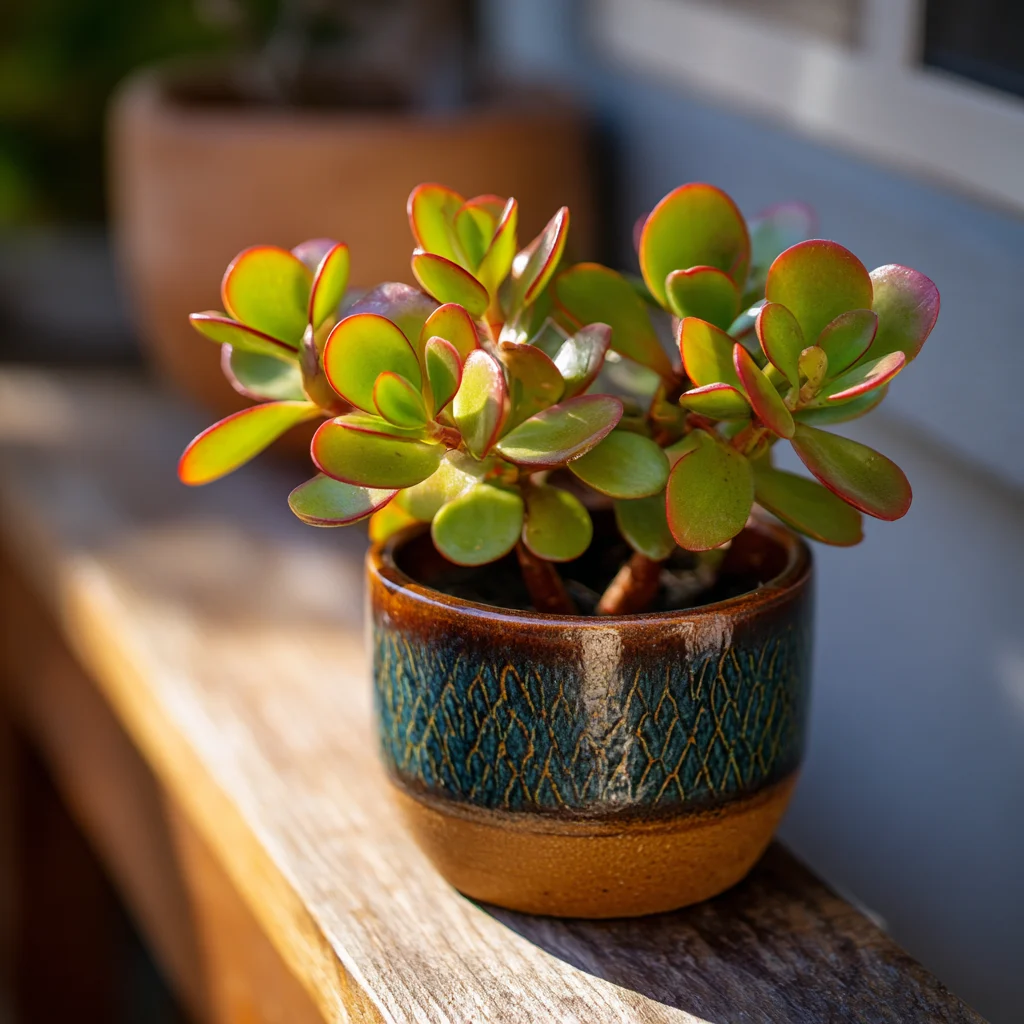
According to feng shui principles, jade plants work best when placed in specific areas of your home or office:
- Southeast corner – the wealth area of your home
- East area – associated with family health and growth
- Near the entrance of a business – to welcome prosperity
- By cash registers in shops – to enhance financial success
For maximum benefit, keep your jade plant healthy with proper care. A thriving plant symbolizes growing wealth, while a declining one might suggest stagnant finances according to feng shui beliefs.
Placement Considerations
While jade plants can bring positive energy to many areas, some locations should be avoided. Don’t place jade plants in bathrooms or bedrooms according to feng shui principles. Bathrooms may “drain” the positive energy, while bedrooms should remain restful spaces without the active energy plants generate.
Jade Plants as Symbols of Friendship
Beyond wealth, jade plants also carry meanings related to friendship and relationships. Sometimes called “friendship trees,” these plants are given as gifts to symbolize growing bonds between people. The sturdy, long-lived nature of jade plants represents enduring friendship.
When a jade plant flowers (which happens rarely and only under optimal conditions), it’s considered especially auspicious. The small, star-shaped white or pink blossoms are said to bring extra good fortune and represent the blossoming of relationships.
Cultural Significance Around the World
The jade plant holds special meaning in various cultures beyond its feng shui applications:
- In Chinese culture, jade plants are traditional gifts for business openings and housewarmings
- During Chinese New Year celebrations, jade plants are displayed to attract prosperity for the coming year
- In some Asian traditions, people attach red envelopes containing money to jade plants using red ribbon to enhance good fortune
- In Western cultures, jade plants are often given as housewarming gifts to wish the recipients success and abundance
Jade Plants as Symbols of Growth and Renewal
As evergreen succulents, jade plants represent permanence, resilience, and continuous growth. Their ability to thrive with minimal care symbolizes strength and adaptability. Many people view these hardy plants as reminders of personal growth and the ability to flourish despite challenges.
The jade plant’s growth pattern—starting small and gradually developing into a tree-like form—mirrors personal and financial development. This makes them meaningful gifts for graduates, new homeowners, or anyone embarking on a new chapter in life.
Gifting Jade Plants: Meanings and Traditions
Giving a jade plant as a gift carries specific intentions depending on the occasion:
- For new businesses: Wishing financial success and stability
- For new homes: Bringing prosperity and positive energy to the space
- For friendships: Symbolizing a growing, enduring relationship
- For graduates or job seekers: Representing future growth and success
When gifting a jade plant, consider including a small note explaining its meaning. This adds a thoughtful touch and shares the plant’s symbolic significance with the recipient.
Caring for Your Prosperity Symbol
To maintain the positive energy of your jade plant, proper care is essential. A thriving plant amplifies its symbolic properties, while a struggling one may counteract them.
- Place in bright, indirect sunlight
- Water only when the soil is completely dry
- Use well-draining soil specifically for succulents
- Repot every 2-3 years to encourage growth
- Prune occasionally to maintain an attractive shape
- Keep leaves dust-free to maintain their vibrant green color
Remember that jade plants are toxic to pets, so keep them out of reach of curious animals. This practical consideration ensures your symbol of prosperity doesn’t bring any unwanted problems.
Conclusion
Jade plants carry rich symbolism across cultures, primarily representing prosperity, friendship, and enduring growth. Their coin-shaped leaves and vibrant green color have made them beloved symbols of wealth and good fortune, especially in feng shui practice where their placement is believed to influence the flow of positive energy.
If you’re looking to invite prosperity into your home or wish to give a meaningful gift, consider adding a jade plant to your collection. For specific concerns about plant care or optimal placement according to feng shui principles, consulting with a plant specialist or feng shui practitioner can provide personalized guidance for your space.