
How To Water Cactus
Cacti are known for their resilience and ability to thrive with minimal care, but proper watering is crucial for their health and longevity. After a decade of growing various cacti species, I’ve learned that watering these desert plants requires understanding their unique needs. Unlike typical houseplants, cacti have evolved to store water in their tissues and survive long periods of drought. This comprehensive guide will help you develop a watering routine that keeps your cacti thriving without risking root rot or dehydration.
Understanding Cactus Watering Needs
Cacti have adapted to survive in arid environments by developing specialized water storage tissues. Their natural habitat influences how we should water them in cultivation.
Most cacti should only be watered when their soil is completely dry—at least 90% dry throughout the pot. This typically means watering small to medium indoor cacti every 10-14 days during spring and summer, and only every 4-6 weeks during fall and winter when growth slows.
Remember that each cactus is unique. Desert cacti generally need less water than jungle cacti (like Christmas or Easter cacti), which prefer slightly more frequent watering.
Factors Affecting Watering Frequency
Seasonal Considerations
During spring and summer (the growing season), cacti are actively developing new growth and may flower. They require more water during this period to support their development.
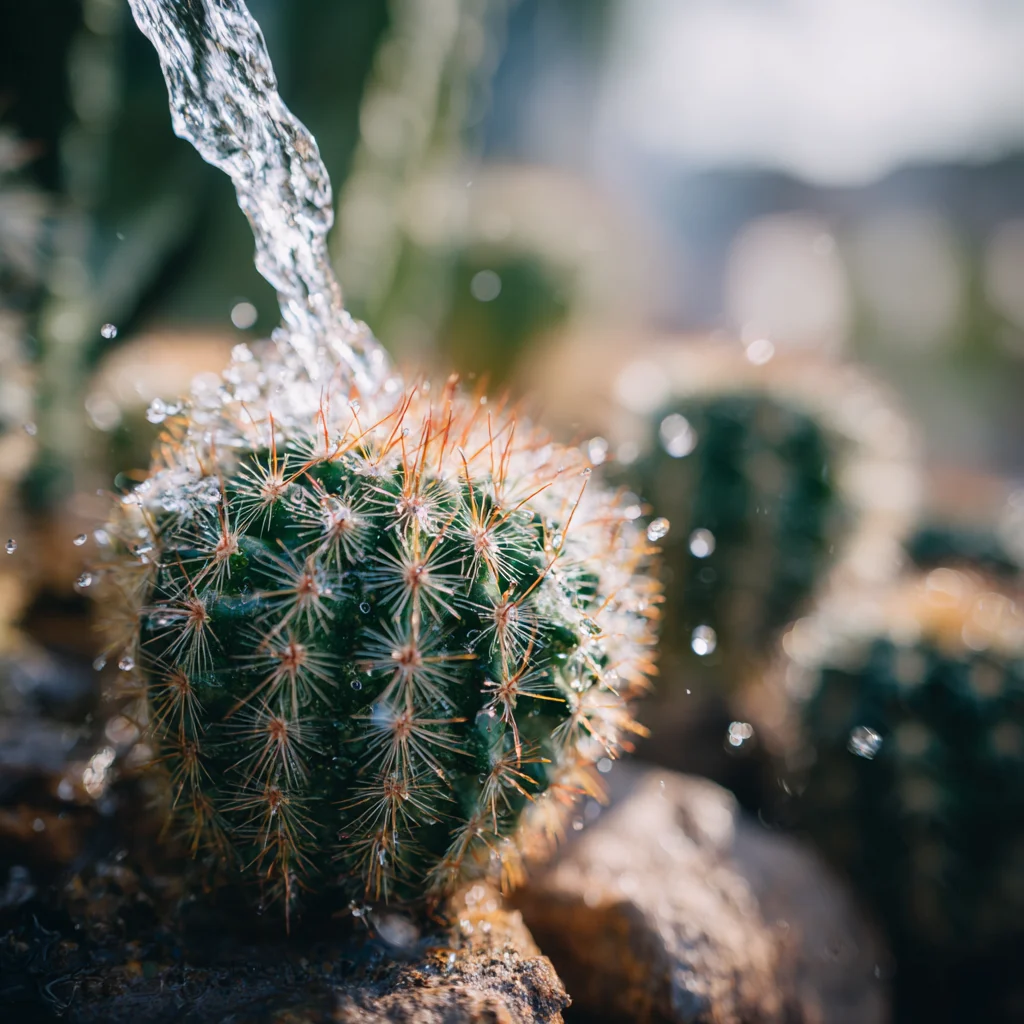
In fall and winter, most cacti enter a dormant phase where growth slows or stops completely. During dormancy, significantly reduce watering to prevent root rot.
Environmental Conditions
Indoor cacti in air-conditioned or heated environments may need slightly different care than those outdoors. Consider these environmental factors:
- Temperature: Higher temperatures increase water evaporation, requiring more frequent watering
- Humidity: Low humidity environments cause soil to dry faster
- Light exposure: Cacti in bright, direct sunlight need more water than those in lower light
- Air circulation: Good airflow helps soil dry more quickly
Pot and Soil Characteristics
The container and soil mix significantly impact watering needs:
- Pot material: Terracotta pots dry out faster than plastic or glazed ceramic
- Pot size: Smaller pots dry out more quickly than larger ones
- Drainage: Essential for preventing water accumulation around roots
- Soil composition: Well-draining cactus mix allows excess water to flow away from roots
How to Check if Your Cactus Needs Water
Before watering, always verify that your cactus actually needs moisture. Here are reliable methods to check:
- Finger test: Insert your finger 2-3 inches (5-7.5 cm) into the soil—if it feels completely dry, it’s time to water
- Wooden skewer: Insert a wooden skewer into the soil and leave it for a few minutes—if it comes out dry, watering is needed
- Weight test: Lift the pot—a lightweight pot indicates dry soil
- Soil color: Dry soil appears lighter in color than moist soil
- Moisture meter: For precise readings, especially in larger pots
Proper Watering Techniques
Bottom Watering Method
Bottom watering is often ideal for cacti as it encourages deep root growth and prevents water from sitting on the plant’s surface:
- Place the pot in a container with 1-2 inches (2.5-5 cm) of water
- Allow the soil to absorb water through the drainage holes for 10-30 minutes
- Remove the pot once the top soil feels slightly moist
- Let excess water drain completely before returning to its display location
Top Watering Method
When top watering, take care to avoid wetting the cactus itself:
- Use a watering can with a narrow spout to direct water to the soil only
- Pour water slowly around the base of the cactus until it begins flowing from drainage holes
- Allow all excess water to drain completely
- Empty any water that collects in the saucer
Best Water Types for Cacti
The quality of water matters for long-term cactus health:
- Rainwater: Ideal as it’s naturally free of chemicals and contains beneficial minerals
- Distilled or filtered water: Good alternatives, especially in areas with hard tap water
- Tap water: Let it sit for 24 hours to allow chlorine to evaporate if using
- Room temperature water: Cold water can shock cactus roots
Avoid softened water, which often contains sodium that can build up in the soil over time.
Special Watering Situations
Newly Potted or Repotted Cacti
After repotting, wait 5-7 days before watering to allow any damaged roots to heal. This prevents rot from developing in freshly disturbed root systems.
Watering After Dormancy
When spring arrives and growth resumes, gradually increase watering frequency. Don’t suddenly drench a cactus that’s been dry all winter—ease it back into a regular watering schedule over several weeks.
Outdoor Cacti
Cacti planted in garden beds may need different care than potted specimens:
- Established outdoor cacti often survive on natural rainfall in appropriate climates
- In rainy regions, ensure excellent drainage by planting in raised beds or mounds
- Protect outdoor cacti from extended periods of rain with temporary covers
Signs of Improper Watering
Overwatering Symptoms
Overwatering is the most common cause of cactus death. Watch for these warning signs:
- Soft, mushy tissue, especially at the base
- Yellowing or translucent appearance
- Black or brown spots that spread
- Foul odor from the soil or plant
- Mold on soil surface
- Rotting roots (appear brown and mushy rather than white and firm)
Underwatering Symptoms
While cacti tolerate drought, extended periods without water will cause stress:
- Wrinkled, shrunken, or puckered appearance
- Slow or stopped growth
- Browning or corking at the tips
- Leaning or toppling (from root shrinkage)
- Failure to flower
Seasonal Watering Schedule
While each cactus has individual needs, this general schedule provides a starting point:
Spring (March-May)
As growth resumes, gradually increase watering frequency. Water thoroughly when soil is completely dry, typically every 10-14 days for indoor cacti.
Summer (June-August)
Continue regular watering when soil is dry. During extreme heat, you may need to water slightly more often—every 7-10 days for smaller pots.
Fall (September-November)
As temperatures cool and daylight decreases, begin reducing watering frequency. By late fall, water only every 3-4 weeks.
Winter (December-February)
During dormancy, water minimally—only every 4-6 weeks for most desert cacti. Some species may need no water at all if kept cool (around 50°F/10°C).
Troubleshooting Common Watering Issues
Recovering from Overwatering
If you’ve overwatered your cactus:
- Stop watering immediately
- Move the plant to a bright, warm location with good air circulation
- If soil remains soggy after several days, repot into fresh, dry cactus soil
- Remove any rotted portions with a clean, sharp knife
- Apply fungicide to cut surfaces if available
- Allow callusing before resuming minimal watering
Reviving an Underwatered Cactus
For severely dehydrated cacti:
- Water thoroughly using the bottom watering method
- Provide slightly increased humidity temporarily
- Avoid direct sunlight until the plant recovers
- Resume normal watering schedule once the cactus shows improvement
Conclusion
Proper watering is the foundation of successful cactus care. By understanding your cactus’s natural growth cycle and environmental conditions, you can develop a watering routine that promotes health without risking rot. Remember that it’s always better to underwater than overwater—cacti can recover from drought much more easily than from soggy conditions.
If you’re unsure about your cactus’s specific needs or notice concerning symptoms despite following these guidelines, consider consulting with a local nursery specialist or experienced cactus grower. Different species may have unique requirements, and getting expert advice can help you fine-tune your care routine for optimal growth.