

How to Grow Shiitake Mushrooms on Logs: Complete Guide for Delicious Homegrown Fungi
Intro for growing shiitake mushrooms on logs
Shiitake mushrooms (Lentinula edodes) are prized for their rich, earthy flavor and impressive health benefits. Growing these gourmet mushrooms on logs mimics their natural habitat and produces harvests that can continue for years. This traditional Japanese cultivation method requires minimal equipment and provides a sustainable way to produce your own nutrient-dense food. Shiitake logs can be grown in shady areas of your garden where other crops might struggle, making them perfect for utilizing woodland edges or spaces under tree canopies. With some patience and the right techniques, you can enjoy multiple flushes of these delicious mushrooms throughout the growing season.
When to plant shiitake mushrooms on logs
The ideal time to inoculate logs with shiitake spawn is during the dormant season when the trees’ sugar content is highest. In most temperate regions, this means late fall through early spring (November to March). Avoid extremely cold periods when temperatures drop below freezing (0°C/32°F) as the mycelium won’t colonize effectively. Similarly, hot summer temperatures above 27°C (80°F) can dry out logs and inhibit mycelial growth. The sweet spot for inoculation is when daytime temperatures consistently reach 10-21°C (50-70°F), allowing the spawn to establish before the heat of summer arrives.
Best time to plant shiitake mushrooms on logs
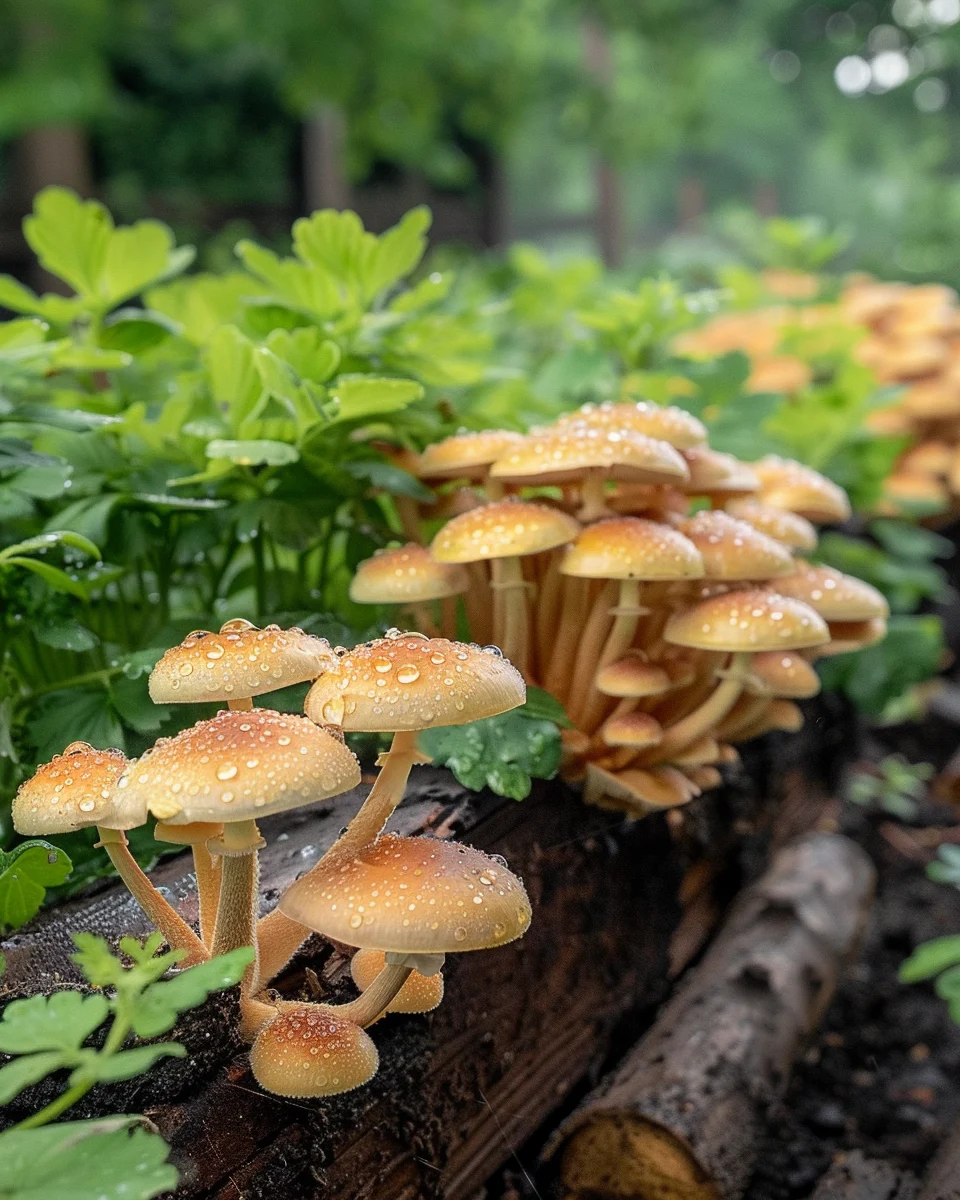
In cool temperate regions (UK, Northern US, Canada), aim to inoculate logs between February and April when trees are still dormant but temperatures are warming. In warmer regions (Southern US, Mediterranean), December to February provides ideal conditions. Freshly cut logs should rest for 2-4 weeks before inoculation to allow natural fungicides in the wood to dissipate, but don’t wait longer than 2-3 months as competing fungi may colonize the wood. Time your inoculation to coincide with seasonal rains if possible, as moisture is crucial for successful spawn establishment.
Best shiitake mushroom varieties to grow
- WR46 – A cold-weather strain that fruits prolifically in temperatures as low as 7°C (45°F), perfect for northern climates.
- Night Velvet – Produces large, thick-capped mushrooms with excellent flavor and a distinctive dark brown color.
- West Wind – A warm-weather strain that fruits well in temperatures up to 27°C (80°F), ideal for southern regions.
- Native Harvest – Reliable producer with excellent drought resistance and consistent fruiting patterns.
- Snowcap – Features beautiful white-speckled caps and excellent cold tolerance, fruiting heavily in spring and fall.
- Japanese 3782 – Traditional variety with excellent flavor and medicinal properties, known for its reliable production.
- Jumbo Brown – Produces exceptionally large caps up to 15cm (6 inches) in diameter with excellent texture.
How to plant shiitake mushrooms on logs
Materials needed:
- Freshly cut hardwood logs (oak, maple, beech, or hornbeam) 10-15cm (4-6 inches) in diameter, 1-1.2m (3-4 feet) long
- Shiitake spawn plugs or sawdust spawn
- Drill with 8-12mm (5/16-inch) bit for plug spawn or 12mm (1/2-inch) bit for sawdust spawn
- Hammer or rubber mallet
- Cheese wax or beeswax and a way to melt it
- Paintbrush or dauber for applying wax
- Tags or labels for marking logs
Step-by-step process:
- Select healthy, disease-free hardwood logs cut from living trees during their dormant season.
- Allow freshly cut logs to rest for 2-4 weeks before inoculation, keeping them off the ground to prevent contamination.
- Drill holes in a diamond pattern around the log, spacing holes about 10-15cm (4-6 inches) apart in rows, with rows staggered 5-7cm (2-3 inches) apart.
- For plug spawn, tap the wooden dowels into the holes with a hammer until they’re flush with the bark.
- For sawdust spawn, use an inoculation tool to inject the spawn into each hole, filling completely.
- Melt the wax and use a paintbrush to seal each inoculation site to prevent contamination and moisture loss.
- Also seal the cut ends of the logs with wax to prevent competing fungi from entering.
- Label each log with the mushroom strain and inoculation date.
- Stack the logs in a shady location where they’ll receive rainfall but won’t dry out.
- Keep logs elevated off the ground using bricks or small logs to prevent soil fungi contamination.
How to grow shiitake mushrooms on logs
After inoculation, shiitake logs enter the incubation phase, which requires patience. Place logs in a shaded area with 75-85% shade, such as under evergreens or a shade cloth structure. Moisture is crucial—logs should receive natural rainfall or be watered during dry periods to maintain 35-45% moisture content (the logs should feel damp but not soaking wet). During the colonization period (6-18 months depending on log size and mushroom strain), stack logs in a crib pattern to allow air circulation while conserving moisture.
Once logs are fully colonized (indicated by white mycelium visible at the log ends), they’re ready for fruiting. Initiate fruiting by “shocking” the logs—submerge them in cold water for 24 hours, then stand them upright or lean them against supports. Mushrooms should begin appearing within 7-14 days after shocking. During fruiting, maintain high humidity (80-90%) by misting logs daily or covering with breathable fabric during dry periods. After harvesting, allow logs to rest for 6-8 weeks before shocking again for another flush.
Caring for shiitake mushroom logs
Ongoing care for shiitake logs is relatively simple but requires attention to moisture levels. During dry periods, water logs thoroughly once or twice a week. In winter, protect logs from extreme cold by covering with straw or moving to a sheltered location if temperatures drop below -10°C (14°F). Logs will naturally produce mushrooms for 3-5 years, with peak production typically in years 2-3.
The main pests affecting shiitake logs are slugs and insects that feed on the fruiting mushrooms. Remove these manually or create barriers with diatomaceous earth. Competing fungi may appear as colored molds on the logs—remove any affected bark and seal with wax. Green or blue molds on inoculation sites indicate contamination; remove and re-wax these areas. Harvest mushrooms when caps are 70-90% open by gently twisting and pulling from the log. Store fresh shiitakes in paper bags in the refrigerator for up to one week, or dry them for long-term storage.
Understanding bolting in shiitake mushrooms
While “bolting” isn’t applicable to mushrooms in the same way as leafy vegetables, shiitake mushrooms can experience stress-related issues that affect production. Extreme temperature fluctuations can cause premature or stunted fruiting. If logs dry out completely, the mycelium may go dormant or die. Excessive heat (above 32°C/90°F) can kill the mycelium, while extended freezing can damage the fungal network.
To prevent these issues, maintain consistent moisture levels and protect logs from extreme weather. If logs stop producing after previously fruiting well, try a more aggressive shocking method—soak for 48 hours in cold water, then tap each log firmly on the ground to stimulate fruiting. Remember that shiitake logs naturally have productive and dormant cycles, so occasional pauses in fruiting are normal.
Why does shiitake mushroom production decline?
- Insufficient moisture – Logs have dried out; soak thoroughly and maintain regular watering.
- Log depletion – After 3-5 years, logs naturally exhaust their nutrients; start new logs to maintain production.
- Competing fungi – Other fungi have colonized the log; remove visible contaminants and isolate affected logs.
- Temperature extremes – Excessive heat or cold has damaged the mycelium; move logs to a more protected location.
- Insufficient shocking – Logs need stronger stimulation; try longer soaking times or temperature differentials.
Companion planting for shiitake mushroom logs
While traditional companion planting doesn’t apply directly to mushroom logs, certain plant arrangements can create beneficial microclimates:
- Ferns – Help maintain humidity around logs and indicate suitable growing conditions.
- Hostas – Provide shade and create a woodland aesthetic while thriving in similar conditions.
- Woodland wildflowers – Enhance biodiversity and attract beneficial insects that may deter mushroom pests.
- Moss – Indicates good moisture levels and can help retain humidity around logs.
- Shade-tolerant herbs – Plants like mint and lemon balm can deter slugs that might feed on mushrooms.
Avoid placing logs near:
- Conifers – Pine needles can increase soil acidity and some contain natural fungicides.
- Plants requiring frequent watering – May create overly wet conditions leading to contamination.
- Plants harboring fungal diseases – Could potentially spread to your mushroom logs.
Seasonal calendar
- January-February: Cut logs during dormant season; prepare for spring inoculation.
- March-April: Prime inoculation period; set up log stacks in growing area.
- May-June: Monitor moisture levels; increase watering as temperatures rise.
- July-August: Protect logs from excessive heat; maintain moisture during dry periods.
- September-October: Natural fruiting period in many regions; harvest first-year logs if colonized.
- November-December: Protect logs from extreme cold; reduce watering in rainy regions.
In warmer regions (Zones 8-10), inoculation can occur earlier (December-January), with fruiting possible year-round if moisture is maintained. In colder regions (Zones 3-5), extend the colonization period and provide extra winter protection.
Problems & solutions
| Problem | Quick Fix |
|---|---|
| Logs not producing after 18+ months | Shock logs by soaking for 48 hours, then striking firmly against ground |
| Green or blue mold on inoculation sites | Scrape away contamination, apply fresh wax, and move log to drier location |
| Bark falling off logs | Normal during later stages; no action needed unless excessive |
| Slugs eating mushrooms | Create barriers with copper tape or diatomaceous earth around logs |
| Mushrooms growing but small or deformed | Increase humidity by misting or covering with damp burlap during fruiting |
| Logs drying out completely | Soak for 24-48 hours, then return to stack in shadier location |
| Mushrooms growing from unexpected areas | Normal behavior; harvest as usual regardless of location on log |
Common questions about growing shiitake mushrooms on logs
How often should I water my shiitake logs?
During dry periods, water logs thoroughly once or twice a week. Logs should feel damp but not soaking wet. In rainy seasons, natural precipitation is usually sufficient. If the bark feels completely dry to the touch, soak logs for 1-2 hours.
How much sun can shiitake logs tolerate?
Shiitake logs prefer 75-85% shade. Direct morning sun is acceptable, but protect logs from afternoon sun, especially in summer. Too much sun will dry out logs and inhibit mycelial growth and fruiting.
How many shiitake mushrooms will one log produce?
A typical 1-meter (3-foot) hardwood log can produce 0.5-1 kg (1-2 lbs) of mushrooms per year for 3-5 years. Production peaks in years 2-3, with 3-4 flushes annually depending on climate and care.
Can I grow shiitake mushrooms indoors?
While logs are best suited to outdoor cultivation, they can be kept in a basement, garage, or shed if conditions are cool, humid, and have indirect light. Indoor logs will need regular misting to maintain humidity and may require more frequent soaking to induce fruiting.
How do I know when shiitake mushrooms are ready to harvest?
Harvest shiitakes when the caps are 70-90% open but before the edges flatten completely. The ideal size is when caps are 5-10 cm (2-4 inches) in diameter with gills visible but not fully exposed. Mushrooms should feel firm and have a rich brown color.
How long does it take for shiitake logs to produce mushrooms?
Expect to wait 6-18 months after inoculation before the first fruiting, depending on log diameter, wood type, and climate. Larger logs take longer to colonize but will produce for more years. Oak logs typically take 12-18 months, while softer hardwoods like maple may fruit in 6-12 months.
What’s the best wood for shiitake logs?
Oak (especially white oak) is considered ideal for shiitake cultivation due to its density and longevity. Other excellent options include maple, beech, hornbeam, and ironwood. Avoid softwoods like pine or cedar, which contain resins that inhibit mushroom growth.