
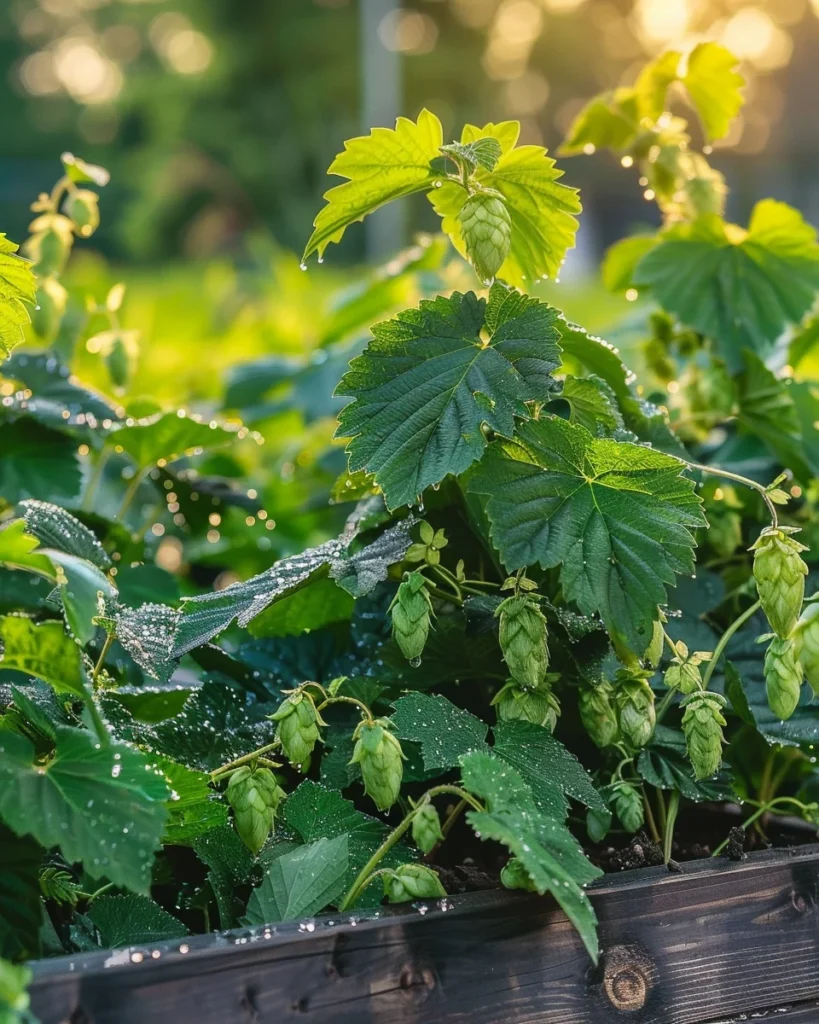
How to Grow Hops on a Balcony: When to Plant, Best Varieties & Space-Saving Techniques
Intro for growing hops on a balcony
Hops (Humulus lupulus) aren’t just for commercial breweries—they can thrive in small spaces like balconies, bringing vertical interest and the potential for home brewing to urban gardeners. These vigorous climbing perennials produce the fragrant cones used to flavor and preserve beer, but they also make stunning ornamental plants with their rapid growth and lush foliage. Growing hops on a balcony allows you to utilize vertical space efficiently while enjoying their aromatic qualities and potential culinary uses. With proper support systems and container selection, balcony hop gardens can yield impressive harvests even in limited square footage. Hops grow best in temperate climates with cool winters for dormancy and warm summers for vigorous growth.
When to plant hops on a balcony
Hops should be planted after the danger of frost has passed and soil temperatures have reached at least 10°C (50°F). In most temperate regions, this falls between mid-spring and early summer. Hops rhizomes or young plants need time to establish before the heat of summer, but they also require protection from late frosts that could damage new growth. For balcony growers, the advantage is being able to move containers to protected areas during unexpected cold snaps. Hops require a winter dormancy period with temperatures below 4°C (40°F) for at least 4-6 weeks to produce well the following season, so consider your climate’s winter conditions when planning your balcony hop garden.
Best time to plant hops on a balcony
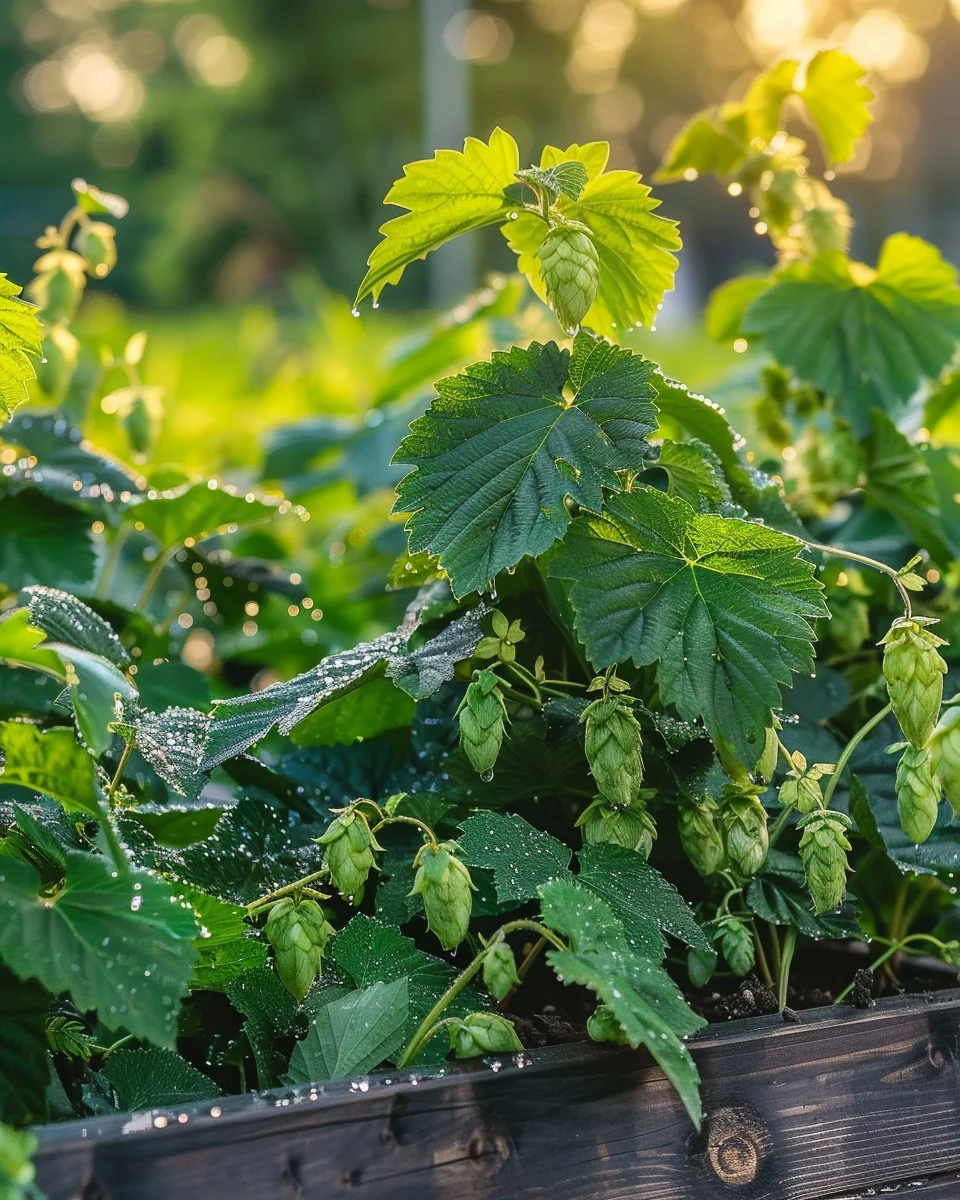
In cool temperate regions (UK, Northern US, Canada), plant hops between mid-April and early May when night temperatures consistently stay above 8°C (46°F). In warmer regions (Southern US, Mediterranean), you can plant as early as March, but ensure plants are established before summer heat intensifies. Potted hop rhizomes can be started indoors 2-3 weeks before your outdoor planting window, giving them a head start. For balcony gardeners in apartments, this indoor starting period can be extended to 4 weeks, allowing for stronger root development before moving containers outdoors. Regardless of your climate, aim to have hops in their final growing position by late spring for optimal first-year growth.
Best hop varieties to grow on balconies
- Cascade – Compact growth habit makes it ideal for containers, with excellent disease resistance and classic citrusy aroma.
- Centennial – Known as “Super Cascade” for its higher alpha acids, it remains manageable in height and thrives in containers.
- Fuggle – An English variety with moderate vigor that won’t overwhelm balcony spaces, offering woody, earthy notes.
- Crystal – Relatively compact with excellent mildew resistance, perfect for humid balcony environments.
- Willamette – A lower-alpha hop with restrained growth habit, making it suitable for smaller containers.
- First Gold – A dwarf variety reaching only 2-3m (6-10ft), ideal for balconies with height restrictions.
- Mount Hood – Moderate vigor with good disease resistance and a pleasant herbal aroma, adapts well to container growing.
How to plant hops on a balcony
Materials needed: Large containers (minimum 40-50L/10-13 gallon), quality potting mix, compost, hop rhizomes or young plants, trellis or strong twine, bamboo stakes, slow-release fertilizer, and drainage material.
- Select containers at least 40cm (16in) deep and 40cm (16in) wide with multiple drainage holes.
- Place a layer of drainage material (broken pottery, gravel) at the bottom of your container.
- Mix quality potting soil with 25% compost and a handful of slow-release fertilizer.
- Fill containers to within 5cm (2in) of the top with your soil mixture.
- Plant rhizomes horizontally 5cm (2in) deep with any visible buds pointing upward, or transplant young plants at the same depth they were previously growing.
- Water thoroughly until water runs from drainage holes.
- Install a sturdy trellis system that can support the weight of mature plants (they can grow 15-25cm/6-10in per day during peak season).
- Position containers where they’ll receive at least 6-8 hours of direct sunlight.
- Space multiple hop containers at least 60cm (24in) apart to allow for adequate air circulation.
- Mulch the soil surface with compost or straw to retain moisture and suppress weeds.
How to grow hops on a balcony
Hops require full sun, so position your containers where they’ll receive 6-8 hours of direct sunlight daily. During the growing season, water deeply when the top 2.5cm (1in) of soil feels dry, typically every 2-3 days during hot weather and less frequently during cooler periods. Container-grown hops need more frequent watering than ground-planted ones. Feed with a balanced liquid fertilizer every 2-3 weeks during the growing season, switching to a phosphorus-rich formula when cones begin to form.
Training is essential for balcony hops. Select 2-3 strongest bines (stems) per plant and train them clockwise around your support structure, removing excess shoots. Hops can grow up to 7.5m (25ft) tall, so create a zigzag or spiral trellis system to maximize vertical space while keeping the plant accessible. For balconies with height restrictions, consider training bines horizontally along railings after they reach your ceiling height.
Container-grown hops benefit from annual root pruning and soil refreshment. In late winter, remove about one-third of the root mass and replenish with fresh potting mix to prevent the plants from becoming root-bound and maintain vigor year after year.
Caring for hops on a balcony
Monitor soil moisture carefully, as container-grown hops dry out quickly, especially in windy balcony conditions. Apply a layer of mulch to retain moisture and moderate soil temperature. Prune lower leaves up to 60cm (2ft) from the soil to improve air circulation and reduce disease pressure. In mid-summer, trim lateral branches that extend too far from your trellis system to maintain a manageable plant.
Common pests include aphids and spider mites, which can be controlled with insecticidal soap or neem oil. Watch for signs of downy mildew (yellow leaf spots with gray undersides) and powdery mildew (white powdery patches), treating promptly with copper fungicide or potassium bicarbonate spray. Ensure adequate spacing between plants and avoid overhead watering to minimize fungal issues.
Harvest hops when cones feel dry and papery, spring back when compressed, and release a strong aromatic scent—typically in late summer to early fall. Dry harvested cones in a single layer in a warm, dark place with good air circulation until they’re completely dry and brittle, then store in airtight containers in the freezer for maximum freshness.
Understanding bolting in hops on a balcony
Unlike leafy vegetables, hops don’t bolt in the traditional sense. However, they do undergo a growth phase transition from vegetative to reproductive growth that’s controlled by day length. As days shorten after the summer solstice, hop plants switch from producing foliage to developing flowers (cones). This is a natural part of their growth cycle rather than a problem.
If your hops produce cones too early or have stunted growth, this could be due to stress factors like inconsistent watering, extreme heat, or nutrient deficiencies. Container-grown hops are particularly susceptible to these stresses. Maintain consistent moisture, protect from extreme heat with temporary shade during the hottest part of the day, and ensure regular feeding to prevent stress-induced early flowering. If plants flower too early, remove the first set of cones to encourage continued vegetative growth before allowing later cones to develop fully.
Why does hops turn bitter?
- Overmaturity – Cones left too long on the plant develop higher alpha acids; harvest when cones are light green and springy.
- Improper drying – Drying at temperatures above 60°C (140°F) can cause excessive bitterness; dry slowly at room temperature.
- Variety selection – High alpha acid varieties naturally produce more bitter cones; choose lower alpha varieties for milder flavor.
- Heat stress – Plants exposed to extreme heat may produce more bitter compounds; provide afternoon shade on hot balconies.
- Nutrient imbalance – Excessive nitrogen can increase bitterness; switch to lower-nitrogen fertilizers when cones begin forming.
Companion planting for hops on a balcony
Strategic companion planting can maximize your balcony space and benefit your hops:
- Marigolds – Repel aphids and other pests while adding color to your balcony garden.
- Garlic – Deters spider mites and aphids, common hop pests, and can be grown in the same container.
- Chamomile – Improves the flavor of hops and attracts beneficial insects.
- Nasturtiums – Act as trap crops for aphids, drawing them away from your hops.
- Mint – Repels flea beetles (keep in separate containers to prevent spreading).
Avoid planting hops near:
- Fennel – Inhibits growth of many plants including hops.
- Brassicas – Compete for similar nutrients and can attract pests that may affect hops.
Seasonal calendar
- February-March – Order rhizomes; prepare containers and soil mix.
- April – Plant rhizomes or young plants; install trellis systems.
- May – Train emerging bines; begin regular feeding schedule.
- June – Continue training; increase watering as growth accelerates; prune lower leaves.
- July – Maintain consistent watering; watch for pests and diseases; trim lateral growth if needed.
- August – Continue care; early varieties may begin cone development.
- September – Harvest cones as they mature; begin drying process.
- October – Complete harvest; prepare plants for dormancy by reducing watering.
- November-January – Protect containers from freezing with insulation; ensure plants receive required chill hours.
For warmer regions, shift the calendar earlier by 2-4 weeks. For cooler regions, delay by 2-4 weeks.
Problems & solutions
| Problem | Quick Fix |
|---|---|
| Yellowing leaves | Check for overwatering; ensure proper drainage; apply balanced liquid fertilizer. |
| Stunted growth | Increase sunlight exposure; check for root binding; repot into larger container if needed. |
| Few or no cones | Ensure plant receives at least 6 hours of direct sun; apply phosphorus-rich fertilizer; check day length requirements. |
| Aphid infestation | Spray with strong water jet; apply insecticidal soap; introduce ladybugs. |
| Powdery mildew | Improve air circulation; apply potassium bicarbonate spray; remove affected leaves. |
| Wind damage | Create windbreak with fabric or neighboring plants; secure trellis firmly; reduce height by training horizontally. |
| Root rot | Reduce watering frequency; ensure proper drainage; repot with fresh soil if severe. |
Common questions about growing hops on a balcony
How often should I water my balcony hops?
Water when the top 2.5cm (1in) of soil feels dry, typically every 2-3 days in summer and less in cooler weather. Container-grown hops need more frequent watering than ground-planted ones, especially on windy balconies.
What size container do hops need?
Use containers at least 40-50L (10-13 gallons) in volume and 40cm (16in) deep. Larger containers (60-80L/15-20 gallons) will produce better yields and require less frequent watering.
How much sun do balcony hops need?
Hops require at least 6-8 hours of direct sunlight daily. South or west-facing balconies typically provide ideal light conditions.
Can I grow hops in hanging baskets?
Standard hanging baskets are too small for hops. However, you can use wall-mounted large containers with a trellis system above to create a similar cascading effect.
How tall will hops grow on a balcony?
Hops can grow 4-7m (13-23ft) tall even in containers. Plan your trellis system accordingly, or train bines horizontally once they reach your height limit.
When will my balcony hops produce cones?
First-year plants may produce a small harvest, but full production typically begins in the second or third year. Harvest usually occurs in late summer to early fall, depending on variety and climate.
Do hops plants survive winter in containers?
Yes, but container-grown hops need winter protection. In zones 5-9, insulate containers with bubble wrap or burlap and place in a sheltered location. In colder regions, consider moving dormant containers to an unheated garage or basement.