

How to Grow California Poppies in Dry Soil: When to Plant, Best Varieties & Care Guide
Intro for California Poppies in Dry Soil
California poppies (Eschscholzia californica) are drought-tolerant wildflowers native to the western United States that thrive in poor, dry soil conditions. With their vibrant orange, yellow, or pink cup-shaped blooms and delicate blue-green foliage, these low-maintenance annuals bring a splash of color to gardens while requiring minimal water. California poppies are perfect for xeriscaping, meadow gardens, or any area with full sun and well-draining soil. Their ability to self-seed makes them an economical choice for gardeners looking to establish long-lasting displays, and their deep taproots help them access moisture deep in the soil, making them ideal candidates for dry garden conditions.
When to plant California poppies in dry soil
California poppies perform best when planted during cool weather. In most temperate regions, fall or early spring planting is ideal. For fall planting, sow seeds 4-6 weeks before the first frost to allow seedlings to establish before winter dormancy. For spring planting, sow once soil temperatures reach 10-15°C (50-60°F). California poppies are frost-tolerant once established and can withstand light freezes down to -7°C (20°F). In Mediterranean climates, fall planting is preferred as it allows plants to develop strong root systems during winter rains before summer drought conditions arrive.
Best time to plant California poppies in dry soil
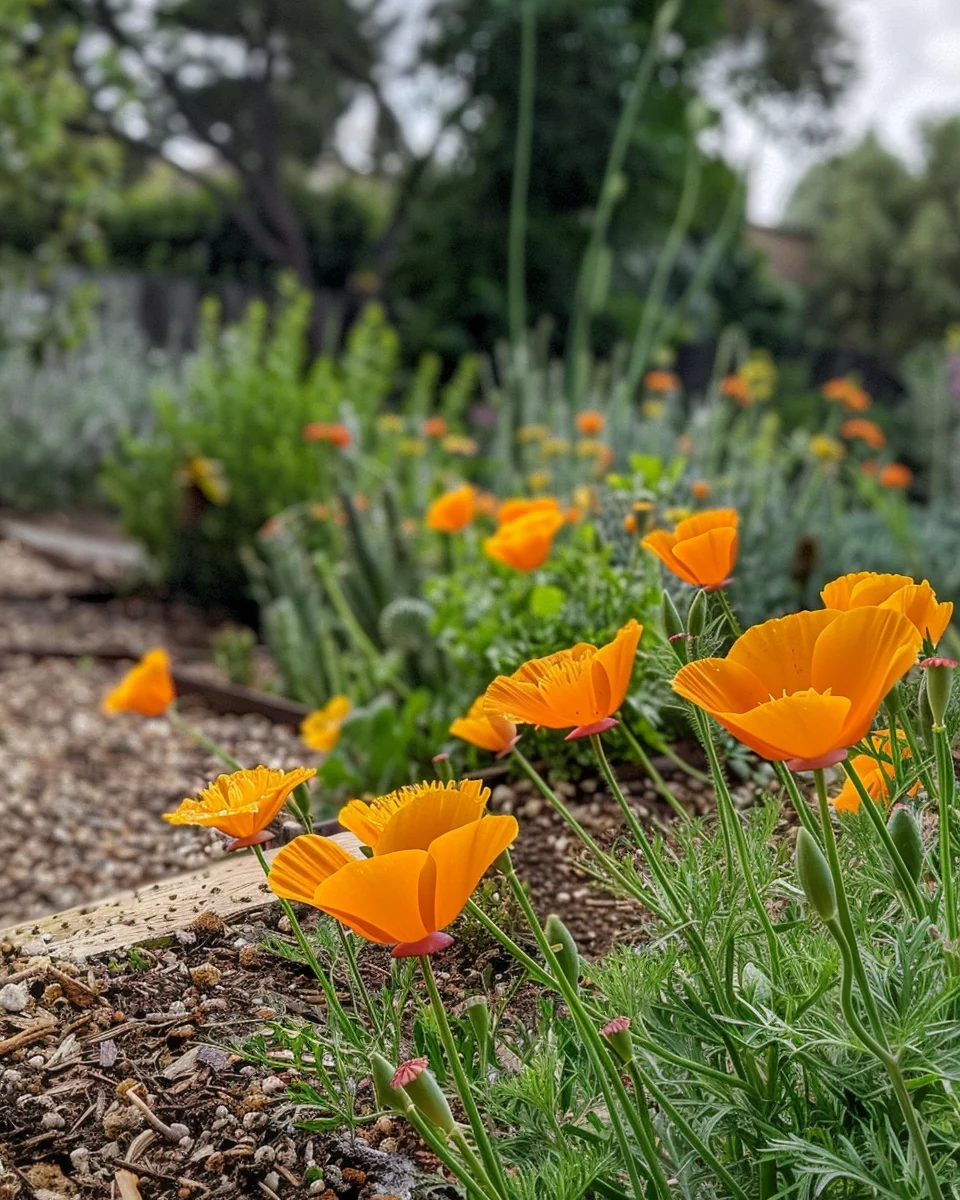
In cool temperate regions (UK, US Zones 4-6), plant California poppies from mid-March to early May or from September to early October. In warmer regions (US Zones 7-10), plant from late January to March or from October to November. Direct sowing is strongly preferred for California poppies as they dislike root disturbance. If transplanting is necessary, use biodegradable pots and plant seedlings when they’re very young (2-3 weeks old) to minimize root disruption. In hot summer regions, fall planting often produces stronger plants with more abundant spring blooms.
Best California poppy varieties to grow
- ‘Golden West’ – The classic bright orange variety with exceptional drought tolerance and reliable self-seeding.
- ‘Mikado’ – Features striking deep orange petals with crimson centers, creating a dramatic bicolor effect.
- ‘Thai Silk Mix’ – Semi-double flowers in a range of colors with frilled petals that add texture to dry gardens.
- ‘Red Chief’ – Deep red-orange blooms that maintain their color even in intense heat and drought.
- ‘Alba’ – Pure white flowers that create a cooling visual effect in hot, dry garden settings.
- ‘Purple Gleam’ – Unusual lavender-purple blooms that contrast beautifully with traditional orange varieties.
- ‘Ballerina Mix’ – Compact plants (25-30cm/10-12in) with frilled, semi-double flowers ideal for containers.
- ‘Champagne & Roses’ – Dusty rose and cream-colored blooms that blend well with other drought-tolerant perennials.
How to plant California poppies in dry soil
Materials list:
- California poppy seeds
- Sand or fine vermiculite (for mixing with seeds)
- Garden rake
- Watering can with fine rose attachment
- Compost or aged manure (optional, for very poor soils)
- Mulch material (gravel or decomposed granite preferred)
Step-by-step planting:
- Select a site with full sun (at least 6-8 hours daily) and well-draining soil; California poppies prefer poor to moderately fertile soil.
- Clear the area of weeds and debris, then rake the soil surface to create a fine tilth.
- If soil is extremely poor or compacted, work in a small amount of compost to improve structure, but avoid over-enriching.
- Mix seeds with sand at a 1:10 ratio to ensure even distribution, as the seeds are tiny.
- Scatter seeds thinly over the prepared area; aim for approximately 1 seed per 5-10cm (2-4in).
- Rake very lightly to incorporate seeds into the top 3mm (1/8in) of soil; California poppy seeds need light to germinate.
- Water gently with a fine spray to avoid displacing seeds.
- For very dry areas, apply a thin layer of gravel mulch (about 1cm/½in) to conserve moisture during germination.
- Keep soil lightly moist until germination occurs, typically within 10-15 days.
- Once seedlings reach 5cm (2in) tall, thin to 20-30cm (8-12in) apart to prevent overcrowding.
How to grow California poppies in dry soil
California poppies require full sunlight for at least 6-8 hours daily to thrive and produce abundant blooms. Their watering needs are minimal once established—water newly planted areas once or twice weekly until plants are established, then reduce to occasional deep watering during extended drought periods (every 2-3 weeks). Avoid overhead watering which can damage delicate blooms. California poppies actually perform better without fertilizer; excess nutrients promote lush foliage at the expense of flowers. If soil is extremely poor, apply a light application of balanced organic fertilizer (5-5-5) at half the recommended strength once at the beginning of the growing season.
A thin layer of mineral mulch like gravel or decomposed granite helps conserve moisture while allowing good drainage around the crown. Thinning seedlings is important to prevent overcrowding and disease issues. No staking is required as California poppies have sturdy stems that rarely flop. For container growing, use a deep pot (at least 30cm/12in) with excellent drainage, filled with a lean soil mix (add 30% sand or perlite to standard potting soil). Container-grown plants may need slightly more frequent watering but should still be allowed to dry between waterings.
Caring for California poppies in dry soil
Deadhead spent blooms regularly to extend the flowering period, but allow some late-season flowers to form seed pods for self-seeding. California poppies have few serious pest problems, though aphids may occasionally appear on new growth—a strong spray of water or insecticidal soap usually resolves the issue. Powdery mildew can affect plants in humid conditions; improve air circulation by thinning plants and avoid overhead watering. Snails and slugs may damage young seedlings; apply organic slug bait or create barriers with copper tape or diatomaceous earth.
Harvest California poppy flowers when buds are just beginning to open for longest vase life (though they typically last only 1-2 days as cut flowers). For seed saving, allow pods to turn tan and begin to split, then collect and store in paper envelopes in a cool, dry place. California poppies are drought-deciduous, meaning they may die back during extreme summer heat and drought, but often resprout when conditions improve in fall.
Understanding bolting in California poppies
Unlike vegetable crops, “bolting” is not a concern with California poppies as flowering is their desired state. California poppies naturally complete their lifecycle by producing flowers followed by seed pods. However, they may enter dormancy (die back) prematurely during periods of extreme heat or drought. This survival mechanism allows the plant to conserve energy and resources until conditions improve.
To prevent premature dormancy, provide occasional deep watering during extended hot, dry periods. If plants do die back in summer heat, trim dead foliage to ground level but don’t remove the roots—plants often resprout from the crown when temperatures cool or rainfall returns. In very hot regions, providing afternoon shade may extend the blooming period. Consider California poppies as cool-season annuals in hot climates, expecting them to perform best in spring and fall.
Why does California poppy turn bitter?
California poppies are ornamental plants, not culinary herbs, so bitterness is not typically a concern for gardeners growing them for their flowers. However, if you’re referring to medicinal uses (which should only be undertaken with proper knowledge and caution), the following factors may affect plant compounds:
- Age of plant – Older plants may develop stronger, more bitter compounds
- Growing conditions – Extreme drought stress can increase certain alkaloids
- Harvest timing – Plants harvested during peak heat may have different chemical profiles
- Soil mineral content – Soils high in certain minerals may affect plant chemistry
- Genetic variation – Different varieties may naturally contain varying levels of compounds
Companion planting for California poppies in dry soil
Good companions for California poppies include:
- Lavender – Similar water requirements and the purple flowers contrast beautifully with orange poppies
- Blue fescue grass – Provides year-round structure and complements the blue-green foliage of poppies
- Yarrow – Another drought-tolerant native that attracts beneficial insects
- Sedum – Succulent foliage provides textural contrast and thrives in the same dry conditions
- Salvia – Drought-tolerant spikes create vertical interest among the rounded poppy blooms
- Mexican feather grass – Adds movement and texture while tolerating the same dry conditions
Avoid planting California poppies near:
- Thirsty annuals like impatiens or begonias, which require frequent watering that can rot poppy roots
- Aggressive spreaders like mint that may outcompete the more delicate poppy seedlings
- Heavy feeders like roses that require rich soil and frequent fertilization incompatible with poppies’ preferences
Seasonal calendar
- January-February: Prepare planting areas in warm regions; start seeds indoors in very cold regions
- March-April: Direct sow in most temperate regions; thin seedlings; enjoy early blooms in warm areas
- May-June: Peak flowering period in most regions; deadhead spent blooms; allow some seed pods to form
- July-August: Plants may enter dormancy in hot regions; provide occasional deep watering during drought
- September-October: Direct sow for next year in mild winter regions; cut back dormant plants
- November-December: Collect and store seeds; monitor fall-sown seedlings in mild regions
For hot regions: Expect a shorter spring bloom period and possible summer dormancy, with potential fall rebloom.
For cool regions: Delayed spring planting and extended summer blooming period, with plants often continuing until first frost.
Problems & solutions
| Problem | Quick Fix |
|---|---|
| Seeds germinated but seedlings disappeared | Likely slug or snail damage; apply organic slug bait or create protective barriers |
| Plants growing but not flowering | Ensure full sun exposure (6+ hours daily) and avoid over-fertilizing |
| Plants died back in summer | Normal dormancy response to heat; trim dead foliage and wait for cooler weather for potential regrowth |
| Powdery white coating on leaves | Powdery mildew; improve air circulation, avoid overhead watering, apply organic fungicide if severe |
| Plants look leggy with few flowers | Insufficient sunlight or overcrowding; thin plants and ensure full sun exposure |
| Seedlings emerging everywhere | Self-seeding in progress; remove unwanted seedlings early and deadhead more promptly next season |
| Yellow, stunted growth | Possible overwatering; reduce frequency and ensure excellent drainage |
Common questions about growing California poppies in dry soil
How often should I water California poppies?
Water newly planted seeds and young seedlings lightly every 3-4 days until established. Once plants are growing well, reduce to deep watering every 2-3 weeks during dry periods, or rely entirely on natural rainfall in regions with occasional summer precipitation.
Can California poppies grow in partial shade?
California poppies perform best with at least 6-8 hours of direct sunlight daily. In partial shade (4-6 hours of sun), they will grow but produce fewer flowers and may become leggy. In hot summer regions, afternoon shade can be beneficial during the hottest months.
What size container is best for growing California poppies?
Use containers at least 30cm (12in) deep to accommodate their taproot. Width depends on how many plants you want—allow 20-25cm (8-10in) diameter space per plant. Ensure containers have excellent drainage with multiple drainage holes.
How far apart should I space California poppy plants?
Space plants 20-30cm (8-12in) apart. While they can grow in closer proximity, proper spacing improves air circulation, reduces disease pressure, and allows each plant to develop its full form.
Can California poppies survive frost?
Established plants can tolerate light frosts down to about -7°C (20°F). Young seedlings are more vulnerable but still surprisingly resilient to light frost. In severe winter regions, they’re grown as annuals, while in mild winter areas they often persist for multiple seasons.
How can I extend the blooming season of California poppies?
Regular deadheading prevents seed formation and encourages continued flowering. In hot regions, providing afternoon shade and occasional deep watering during extreme heat can prevent premature dormancy. Succession planting (sowing seeds every 3-4 weeks through spring) can also extend the overall bloom period in your garden.
Will California poppies return next year?
California poppies readily self-seed in favorable conditions. Allow some late-season flowers to form and drop seeds for natural reseeding. In mild winter regions (USDA zones 8-10, UK zones 8-9), plants may also regrow from the roots for several seasons before eventually declining.