
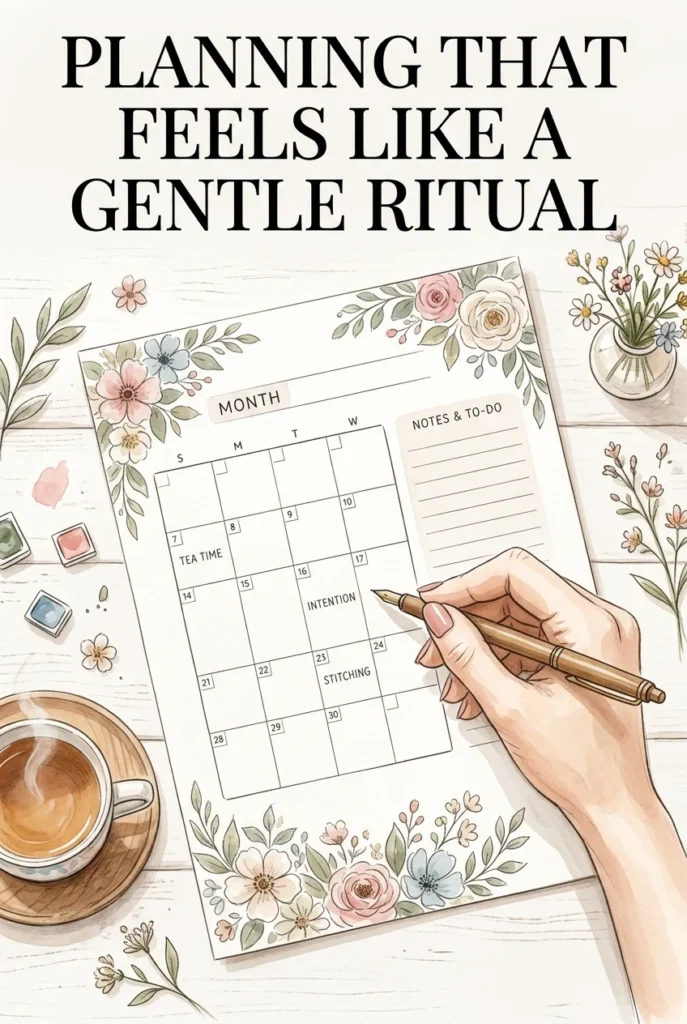
A calming vertical monthly layout with notes and a simple to-do list—designed to help you plan with intention, not pressure.
A monthly planner can do more than hold appointments. It can shape how you enter a new month.
If your current system feels loud, crowded, or demanding, this soft floral monthly planner offers a different approach: clear structure wrapped in a calm, watercolor aesthetic that makes planning feel inviting.
This free printable monthly planner page was created for people who want to stay organised while keeping a gentle, romantic, and beautifully feminine feel on the page. Think pastel tones, delicate floral accents, and breathable space—enough guidance to keep you on track, without the harsh “boxed-in” look that can make planning feel like a chore.
Why a “soft” monthly planner matters
Most of us don’t struggle with having plans. We struggle with returning to the plan consistently.
When a planner feels calming and easy to use, you’re more likely to sit down with it regularly—whether that’s once a week, every morning, or in a quiet moment with a cup of tea and a favourite pen. Over time, this consistency is what creates clarity. You don’t just record your month; you actively shape it.
This watercolor layout is designed to support that rhythm. It balances beauty and function, so the page feels like a small ritual rather than another responsibility.
What’s included on the Soft & Floral Monthly Planner page
The design centres on three practical areas: a month header, a vertical calendar grid, and supportive space for notes and priorities. Each element is intentionally simple, so you can adapt it to your life rather than forcing your life into an overly rigid template.
1) Month header: name the chapter you’re in
At the top of the page, you’ll find a month header with room to write the month. This sounds small, but it can be surprisingly grounding. Writing the month becomes a pause point—a moment to consider what you want this season to hold.
Some months are about focus. Others are about rest, creativity, growth, or simply getting through a busy stretch with steadiness. This header gives you space to begin intentionally, before you fill in the details.
2) Vertical monthly grid: structured, but breathable
The main calendar is built as a vertical layout. Each day provides enough room for key entries—appointments, deadlines, reminders—without crowding the page. The spacing is designed to feel open rather than overwhelming, which can make it easier to scan your month quickly.
Because the layout is vertical, it works well in a variety of formats:
- Printed planning: slip it into a binder, planner, or folder for a clean month-at-a-glance view.
- Digital planning: import it into a digital planning app if you prefer scrolling or page-flipping on a tablet.
- Hybrid use: keep a printed copy for visibility, and mirror only essential dates digitally for reminders.
The goal is flexibility: you should be able to use the same page for a traditional schedule, a content calendar, a wellness overview, or even a light memory-keeping practice.
3) Notes section: a home for what doesn’t fit in a box
Not everything belongs inside a day square. The notes area is there for the “in between” content—ideas, reminders, reflections, or the kind of small details you don’t want to lose.
Depending on how you plan, this section can hold:
- intentions for the month
- affirmations or gentle prompts
- project brainstorms
- meal ideas or household reminders
- events to look forward to
- little moments you want to remember as the month unfolds
It’s a flexible space, which means you can change how you use it from month to month without changing your entire system.
4) Simple to-do section: prioritise what actually matters
Instead of pushing endless lists, the to-do area stays intentionally modest. This keeps your focus on the tasks that genuinely support your life and home, rather than encouraging an unrealistic “do everything” mindset.
That simplicity can be a practical advantage. A shorter list makes it easier to see what needs attention, choose what to do next, and feel progress without needing to fill a page with checkboxes.
Who this monthly planner is best for
This page is designed for anyone who wants planning tools that feel aligned with a softer lifestyle. It’s especially suited to:
- Romantic planners who want their organisational system to feel calming and aesthetically pleasing
- Cottagecore lovers drawn to watercolor washes, florals, and gentle visuals
- Creative entrepreneurs who need a monthly overview without a corporate look
- Students who want structure with less visual stress
- Busy homemakers managing routines, appointments, and household priorities
- Anyone who plans better when the page feels welcoming
Practical ways to use a monthly planner like this (beyond scheduling)
A monthly page can be more than a calendar. If you want extra value from a single printable, try using the same layout for different purposes across the year.
Content planning
Use the day spaces for posting days, draft deadlines, batch-creation sessions, or campaign themes. Keep the notes section for ideas, hooks, and topics you want to revisit.
Wellness tracking
Add simple markers—walks, hydration, sleep goals, rest days, or appointments. The goal isn’t perfection; it’s visibility. Seeing your month helps you notice patterns without overcomplicating the process.
Home management and routines
Mark weekly resets, laundry days, meal planning sessions, or cleaning focus areas. The monthly view makes it easier to prevent tasks from piling up.
Memory keeping (light and simple)
If you like the idea of recording your life without maintaining a full journal, add a tiny highlight to each day: a moment, a win, a kind interaction, a good meal, or something you learned.
Tips to make this planner work beautifully in real life
Pretty pages are helpful, but sustainable planning comes from simple habits. Use these tips to turn the printable into a tool you’ll actually return to.
Tips (quick, practical, and flexible)
- Pick one planning day: Choose a consistent day each week to update your month at a glance (for many people, it’s Sunday or Monday).
- Use gentle categories: Try small labels like “Home,” “Work/Study,” “Family,” and “Rest” instead of writing everything in the same style.
- Keep the daily entries short: Use brief phrases so the calendar stays readable and calm.
- Reserve the notes section for what matters most: If everything becomes a note, nothing stands out. Capture the important items and let the rest go.
- Let the to-do list stay small: Write only the tasks that meaningfully support your month—then add more later only if you truly need to.
- Use it as a check-in tool: Mid-month, glance at what’s coming and adjust. Planning works best when it’s a living page, not a one-time setup.
How this page supports a calmer planning mindset
The visual tone of a planner can influence how you feel while using it. This soft floral design uses delicate watercolor elements and pastel washes to create a calmer experience. Instead of hard lines and visually heavy blocks, the page feels open and gentle.
That matters because planning isn’t only about time management. It’s also about attention. A page that feels soothing can make it easier to slow down, think clearly, and choose priorities that match your actual season of life.
Over time, using a planner that feels supportive can shift your monthly rhythm. You may find yourself approaching tasks with more intention, returning to your plan more often, and feeling less resistance to the process.
Download the free Soft & Floral Monthly Planner
Download the planner page here: Free Printable Monthly Planner Page
You can print the page for a binder or planner, or use it digitally if that fits your routine better. Either way, the aim is the same: a monthly overview that brings structure and softness together.
Make the most of your month: a simple way to start
If you want a straightforward starting point, try this the first time you use the page:
- Write the month at the top and choose a word for the season (examples: “steady,” “rest,” “focus,” “reset,” “create”).
- Add fixed dates first (appointments, deadlines, events).
- Choose 3 monthly priorities and place them in the notes area so they stay visible.
- List a short, supportive to-do that reflects your real capacity.
- Check in weekly to adjust, simplify, and keep your plan realistic.
Suggested reading (if you want more gentle routines and structure)
- 10 Soft Homemaking Habits That Turn Your Home Into a Haven
- The Weekly Budget Routine That’ll Save You Time & Money
- The Weekly Evening Routine That’ll Keep Your Life & Home On Track
- The Weekly Laundry Routine That’ll Keep You On Top Of Laundry All The Time
- 10 Routines That Make Your Life Simpler & Home Easier To Manage
- The Daily Routine Of A Vintage Housewife
- 10 Evening Routine Tips That Will Transform Your Home
- How To Create A Home Reset Sunday Routine
- How To Create a Morning Routine That Heals
- Christmas Morning Routines of People Who Make the Day Feel Magical
Posted in: Lifestyle, Routines